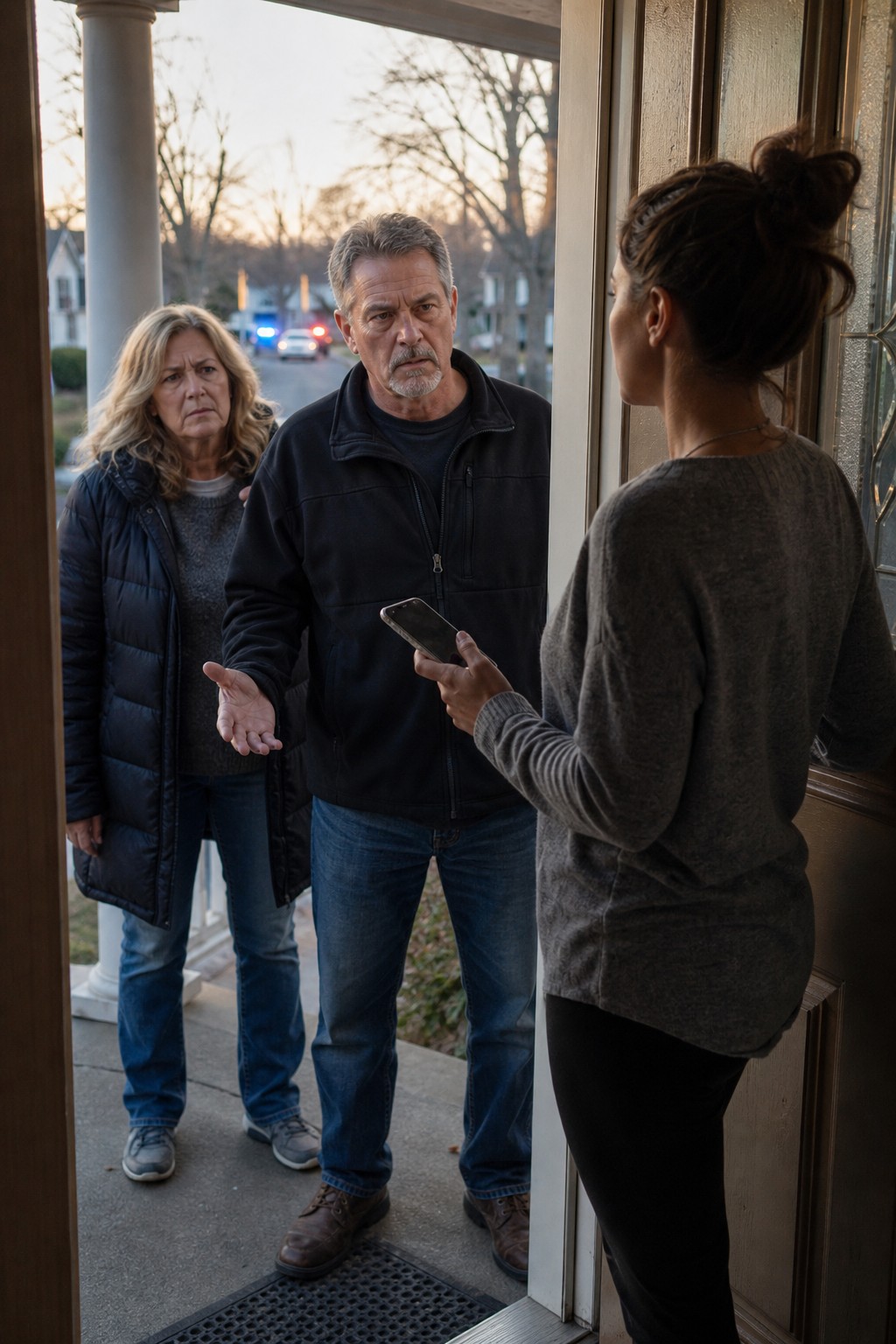
I Rolled Up to My Son's Door in a Wheelchair and Begged for a Place to Sleep, but He Closed It Like I Was a Stranger. The Next Morning, I Found My Late Husband's Old Banking Card in a Forgotten Drawer, and the Manager Stood So Fast His Chair Hit the Wall Before Whispering, "Mrs. Ellis, You Need to See This."
Our son is too easily led by money and status. Marian's inheritance must remain protected from his knowledge and influence until she chooses otherwise.
I read it three times.
Daniel had seen what I refused to see.
When I returned home that afternoon, I carried copies of accounts, trust papers, and corporate records in a plain blue folder. Before I could take off my coat, Andrew called.
"Mom, Lauren and I found someone who can help you."
His voice was warm in the way people sound when they want to feel generous without being inconvenienced.
"Who?"
"A case manager. She works with seniors. She can explain subsidized housing and government assistance."
Twenty-four hours earlier, those words would have crushed me.
Now I simply said, "That sounds perfect."
The Visitor Who Knew Daniel's Plan
Paula Grant arrived the next afternoon with forms, brochures, and genuine kindness. She believed she was meeting a broke widow whose family could not help her.
Andrew had told the story exactly that way.
I listened, thanked her, and accepted every pamphlet. None of this was Paula's fault.
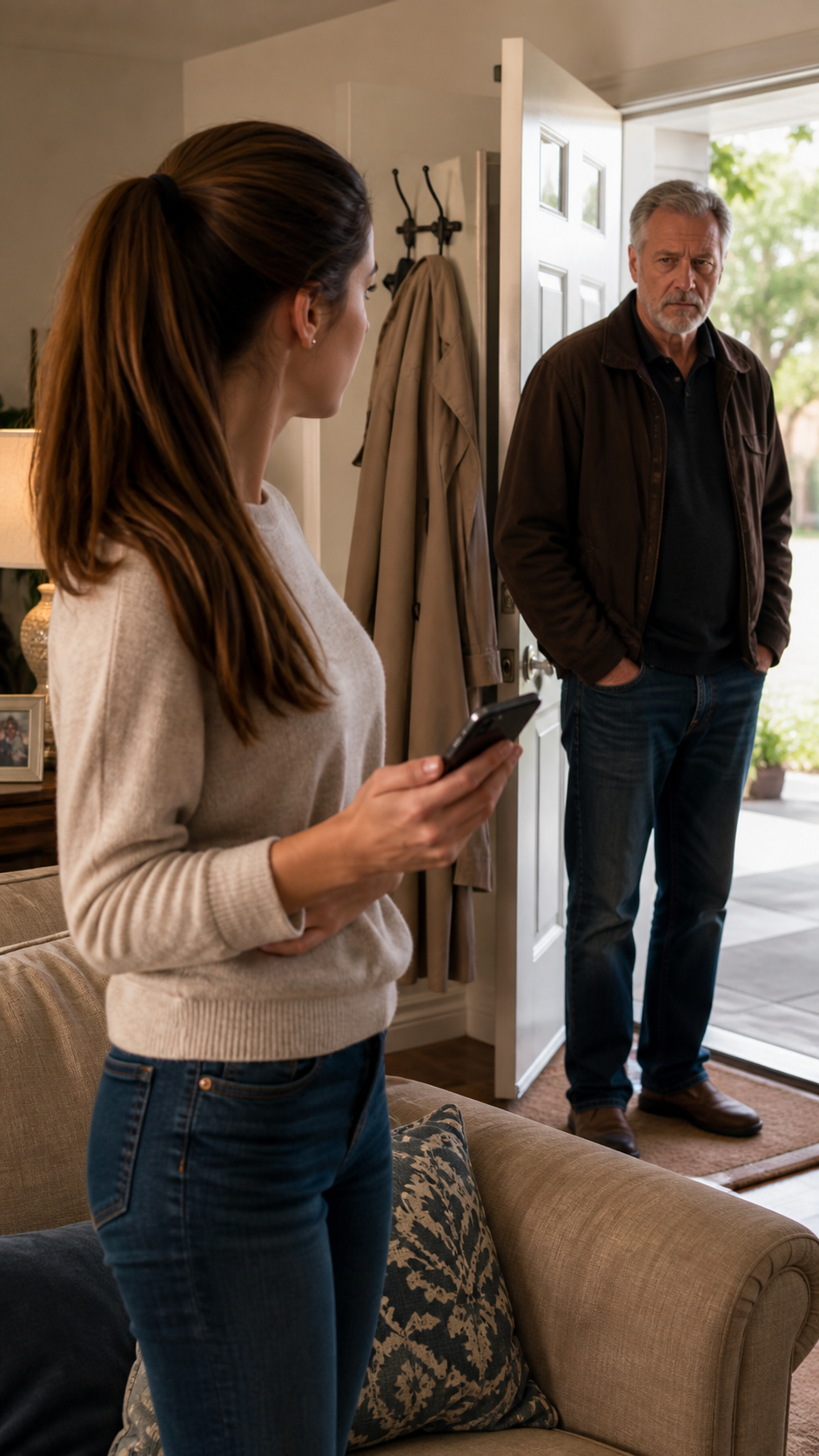
After she left, another knock came at the door.
The woman on my porch wore a gray suit and carried a leather briefcase.
"Mrs. Ellis, my name is Nora Whitfield. I was Daniel's attorney."
I let her in.
Nora had known about the private account, the foundation, the businesses, and the instructions tied to my welfare. She also knew something Elliot had only hinted at.
"Daniel asked me to contact you if relatives tried to exploit your medical condition or separate you from your property," she said.
"Andrew turned me away," I replied. "That was cruel, but it wasn't legal exploitation."
Nora opened her briefcase.
"It triggered the first safeguard. The second began when he sent Ms. Grant to document you as an unsupported senior."
My stomach tightened.
"Document me?"
"Daniel feared Andrew might eventually try to put you under guardianship."
The word sounded clinical. Then Nora explained what it meant: a court petition claiming I could not manage my own life, a request for control over my decisions, my house, and any assets Andrew could find.
"He thinks I have nothing."
"Exactly," Nora said. "That is why Daniel's plan works."
She handed me a sealed letter.
In it, Daniel apologized for keeping secrets. He wrote that he had loved me too much to let his wealth become a magnet for people who saw me as access instead of family. Near the end, one sentence made my hands go cold.
If Andrew ever comes after you legally, the trap is already set. He just has not stepped into it yet.
Nora explained the trap.
Years earlier, Daniel had discovered Andrew's gambling debts and risky business loans. He had quietly guaranteed some obligations under conditions Andrew never bothered to read.
Then Daniel built clauses that would accelerate repayment if Andrew attempted to use guardianship, coercion, or elder exploitation to gain access to Marian's property.
Every trust, account, and company was insulated from Andrew. Every attorney involved had instructions. Every paper trail Daniel needed was already organized.
"He did not want to punish your son," Nora said. "He wanted Andrew's choices to reveal themselves before you were placed in danger."
I sat in silence for a long time.
For years, I had called Daniel cautious. Secretive, sometimes. I had not understood that he was building a shield.
The Door Opened Again
Three weeks later, Andrew filed the petition.
He claimed I was medically fragile, financially confused, and unable to maintain my home. He asked the court to appoint him guardian so he could "protect" me.
The petition described me as helpless.
It did not mention the rainy porch, the closed door, or the case manager he had sent to guide me toward low-income housing.
Andrew believed I owned a small house, a tiny retirement account, and nothing else worth fighting over. He thought becoming guardian would give him the authority to sell my home and manage whatever scraps remained.
He had no idea he had just stepped into Daniel's last lesson.
Nora responded immediately.
In court, she presented medical evaluations showing that I was physically disabled but mentally sound. Elliot provided verified records proving I understood my estate. Paula testified, honestly and reluctantly, that Andrew had described me as abandoned before she ever met me.
Then Nora produced Daniel's documents.
The courtroom changed.
Andrew's attorney asked for a recess.
By the end of the week, the guardianship petition had collapsed. At the same time, the conditional guarantees Daniel had left behind came due.
Andrew's lenders demanded repayment. Lines of credit froze. Investors withdrew. The lifestyle he and Lauren had built on borrowed confidence began to fall apart.
A few days later, Andrew returned to my front door.
This time, Lauren stood behind him without a practiced smile. Both of them looked as though sleep had become impossible.
"Mom," Andrew said, "we made a mistake."
I moved my wheelchair back and let them enter.
For nearly an hour, he talked. He admitted the debts. He admitted he had thought guardianship would let him "organize things." He admitted he had expected me to be grateful once he placed me somewhere cheaper.
Finally, his voice broke.
"Can you help us?"
I reached for the blue folder and handed him one statement.
His face drained of color.
"You inherited all of this?"
"Yes."
"Why didn't you tell me?"
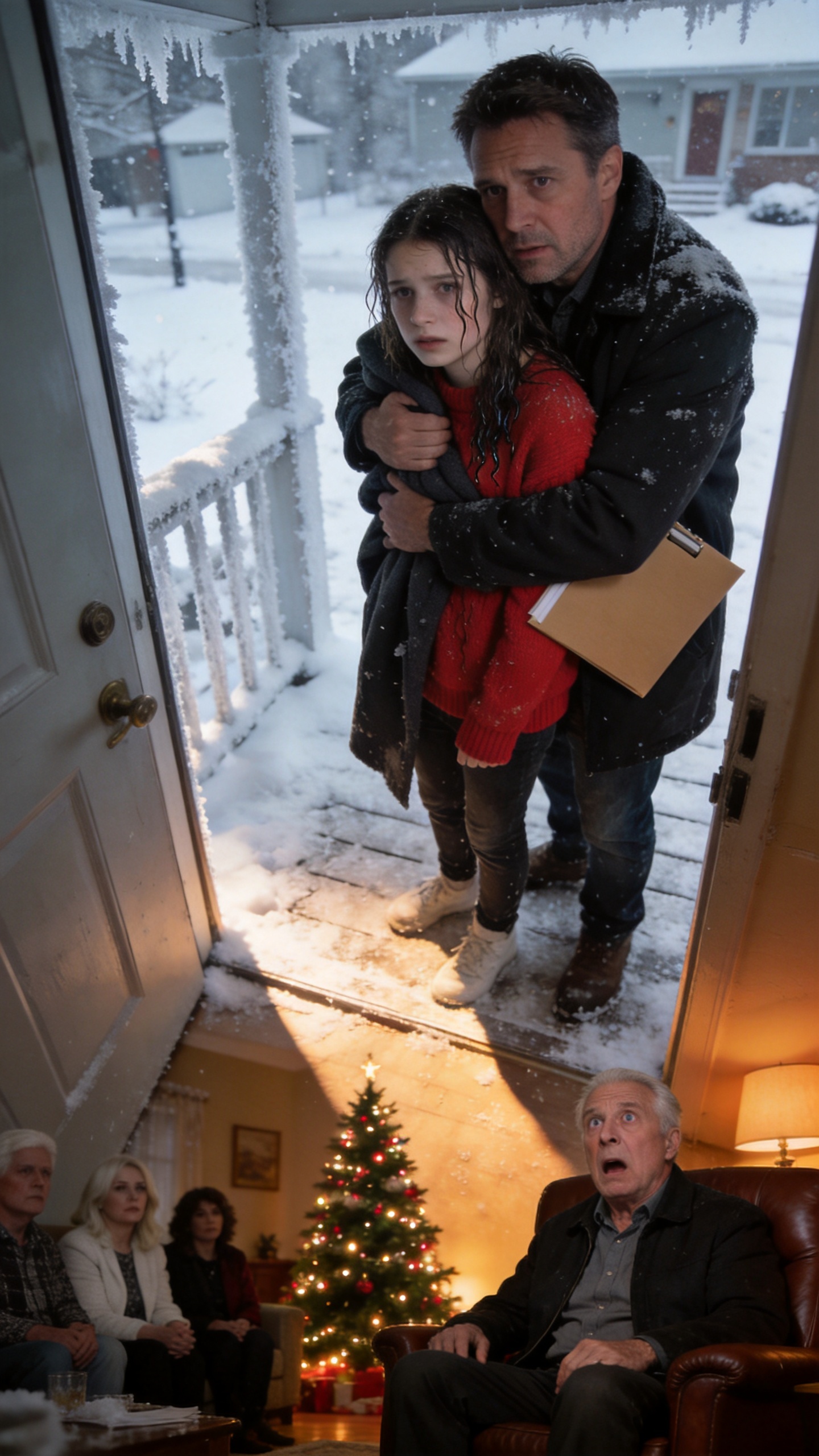
I looked at my son, remembering the porch, the rain, and the way he had pulled the door shut so his children would not have to see me.
"Because you showed me who you were before you knew the money existed."
No one spoke.
For the first time, Andrew understood that he had not lost a fortune because of lawyers, banks, or bad luck.
He had lost it when he looked at his mother in a wheelchair and decided she was someone else's responsibility.
I did not rescue him.
I paid for accessible renovations in my own home. I hired caregivers I chose myself. I expanded the Ellis Foundation's clinics and funded emergency housing for older people whose families had vanished when care became inconvenient.
I still loved my son. Love does not always mean opening the vault.
Sometimes love means refusing to reward the wound.
Daniel left me forty-seven million dollars, but that was not the greatest inheritance.
The real gift was the truth he had protected until I was ready to see it.
And when I finally saw it, I did not roll away from my son's door as a rejected woman.
I rolled forward as the owner of my own life.