I Rolled Up to My Son's Door in a Wheelchair and Begged for a Place to Sleep, but He Closed It Like I Was a Stranger. The Next Morning, I Found My Late Husband's Old Banking Card in a Forgotten Drawer, and the Manager Stood So Fast His Chair Hit the Wall Before Whispering, "Mrs. Ellis, You Need to See This."
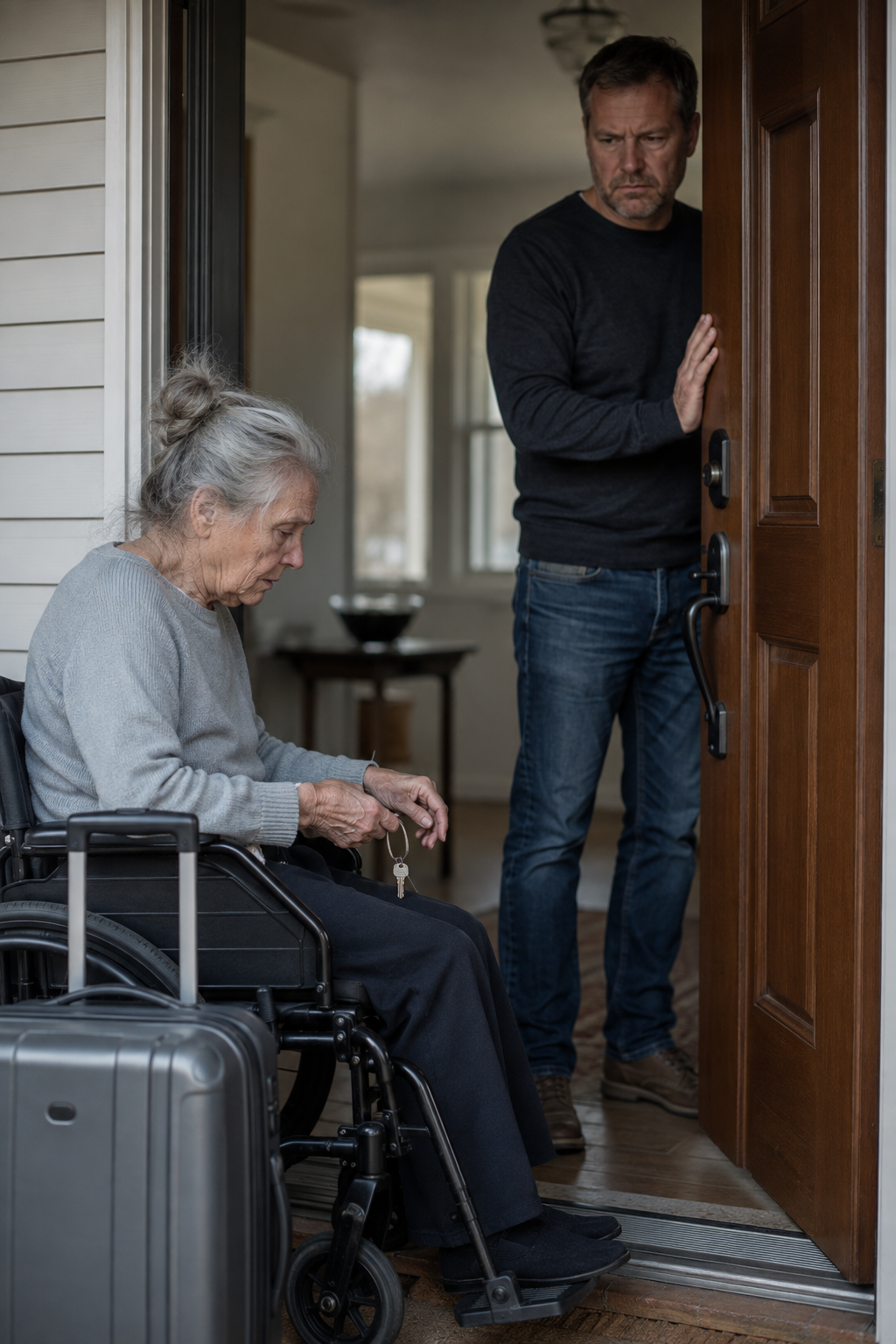
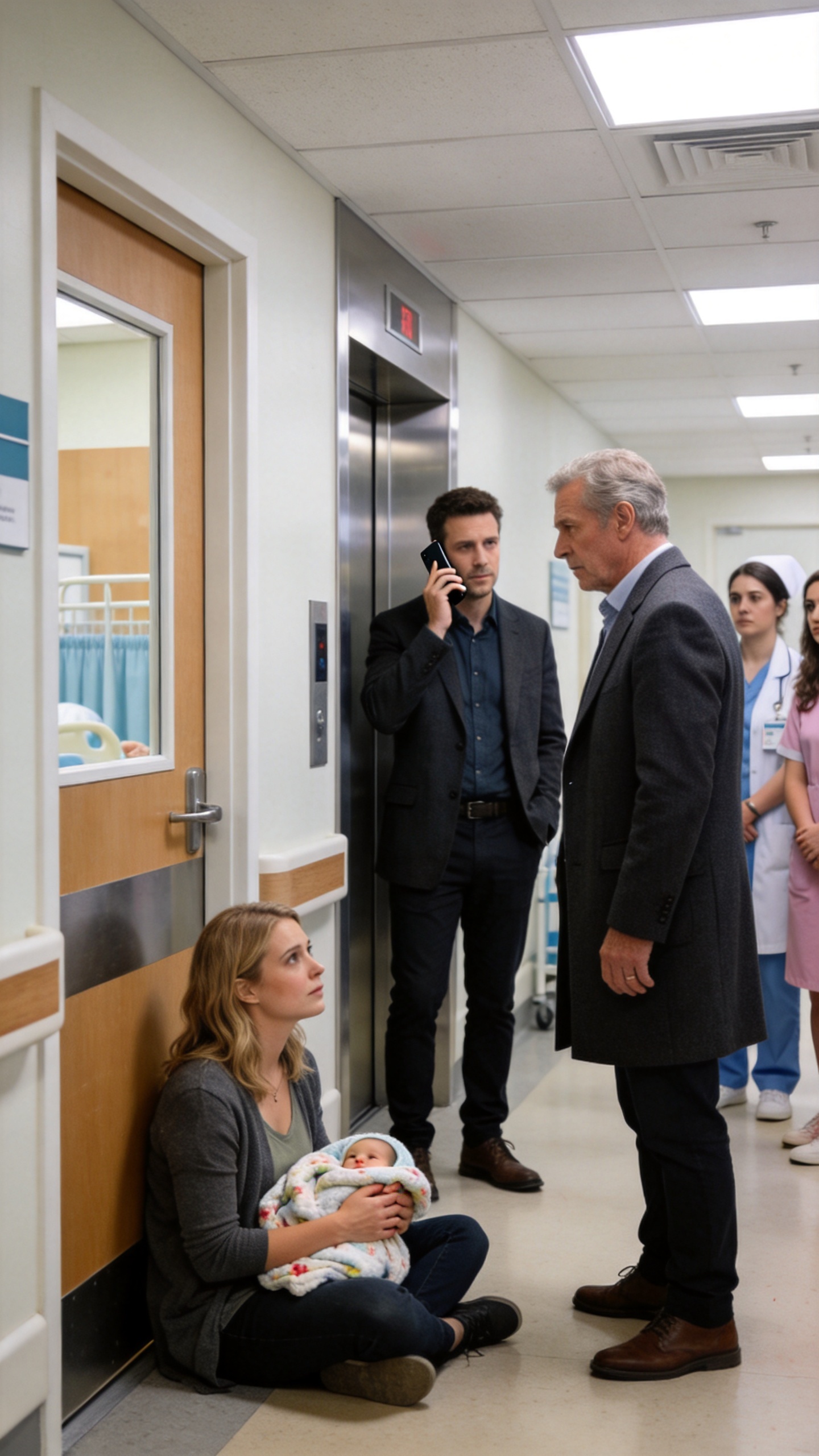
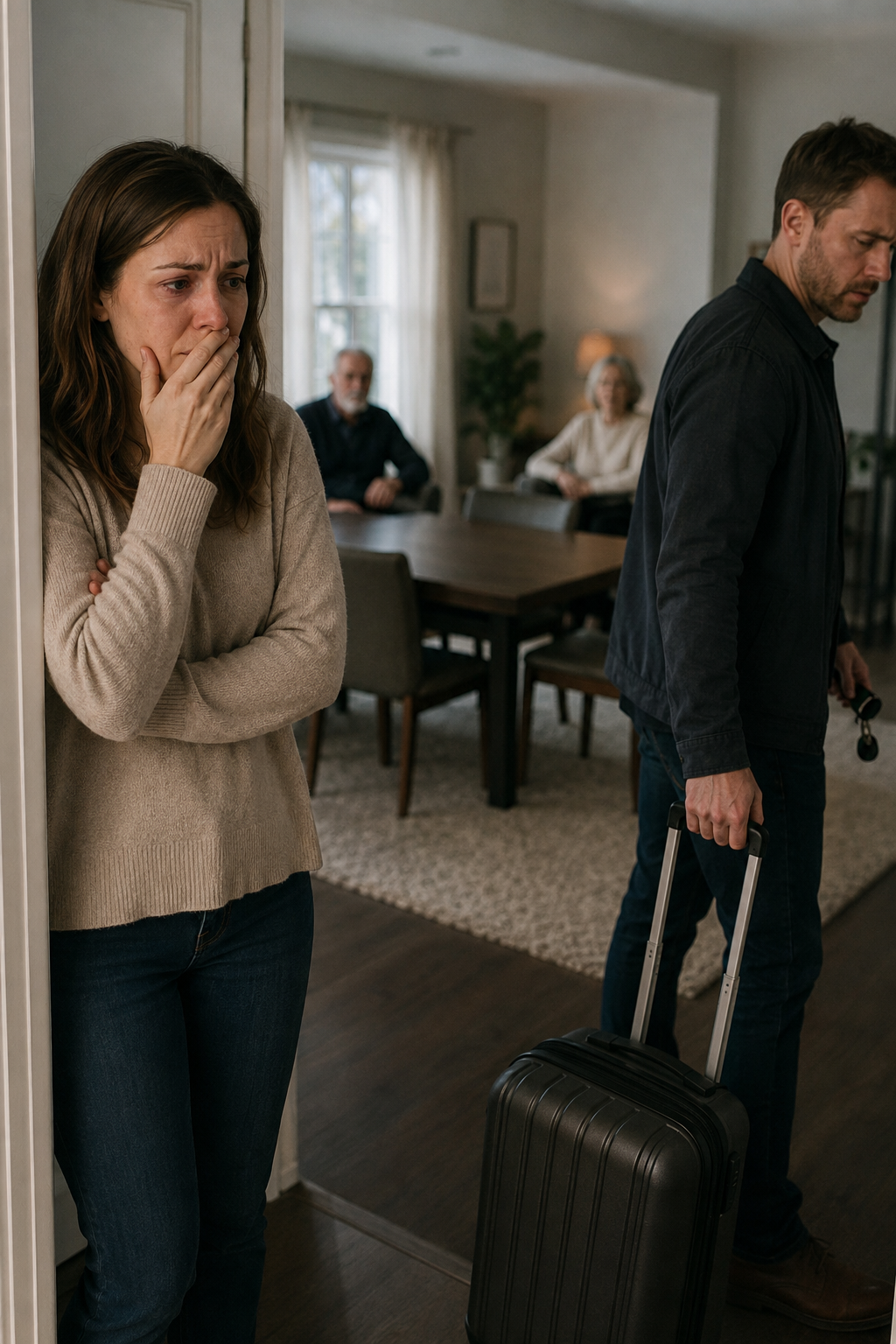
Rain was dripping from my coat onto my son's welcome mat when I pressed the doorbell with one shaking hand. My suitcase sat beside my wheelchair. I had rehearsed a calm speech in the cab, but the moment Andrew opened the door, all I could say was, "I need somewhere to stay."
For eight months after my husband, Daniel, died, I had told myself I was managing. I stretched an $812 Social Security check, ignored the ache of an empty house, and pretended the stairs were only a nuisance.
Then I fell outside a grocery store.
My hip broke in two places. Three surgeries and a long rehabilitation left me in a wheelchair. The bedroom, bathroom, and laundry room in my old house were all upstairs, and every day became a negotiation with pain, pride, and neighbors who could not keep rescuing me forever.
Andrew had visited twice after the accident.
Both visits were brief. He checked his watch. His wife, Lauren, stood in the doorway with her phone in her hand and a smile that never reached her eyes. Their children were kept busy in other rooms, as if sadness might be contagious.
When I finally called him, I tried not to sound frightened.
"Andrew, I need help."
"What kind of help, Mom?"
"Somewhere to stay. Just for a little while, until I can arrange something safer."
He sighed softly. "Let me talk to Lauren."
He never called back.
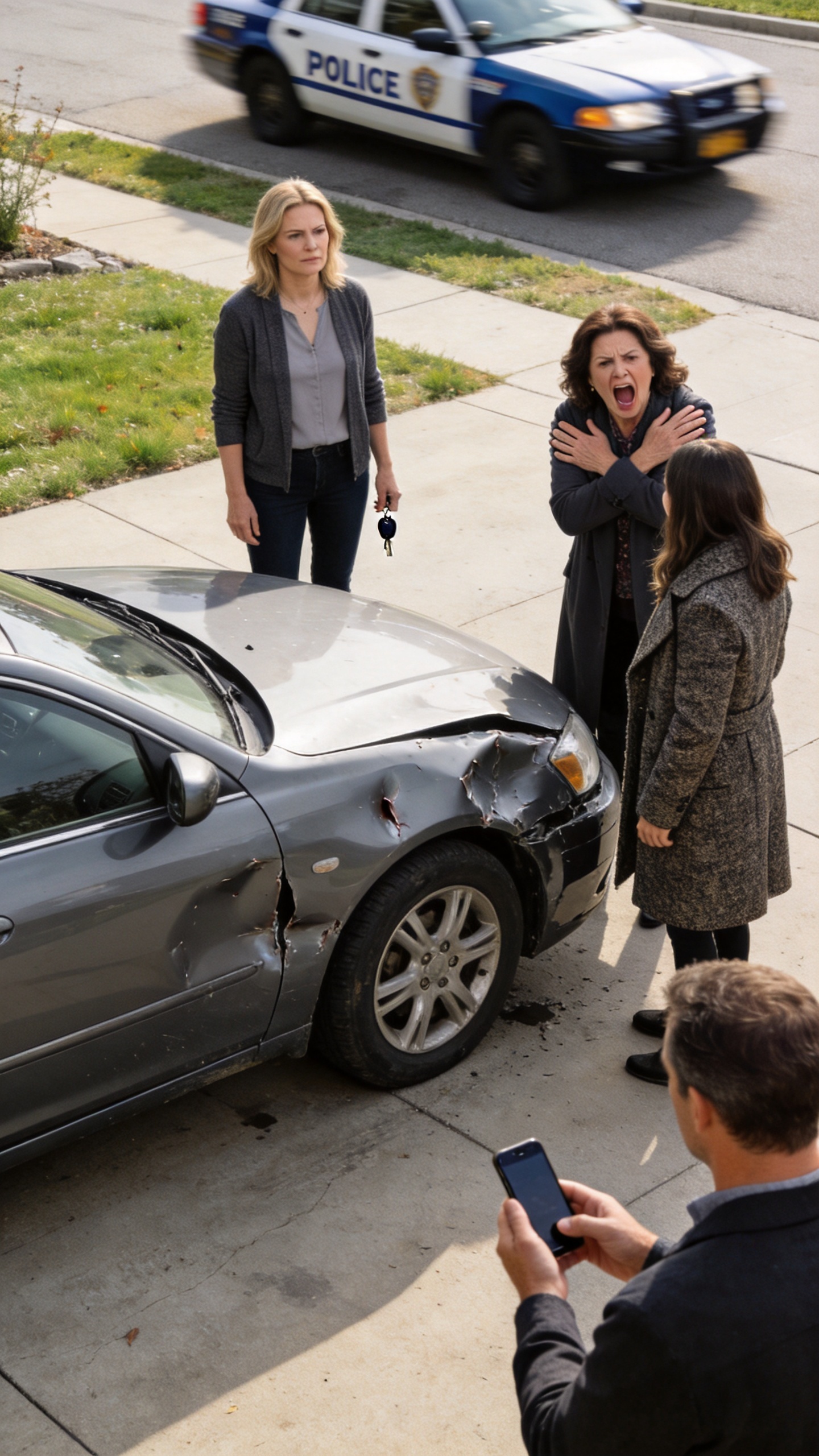
The next afternoon, I hired a cab and went to his house anyway. I thought if he saw me sitting there, soaked from the rain and unable to stand, he would remember who I was.
Instead, he stepped onto the porch and pulled the door nearly shut behind him.
"Mom, you can't just show up like this."
Behind him, Lauren glanced toward me, then quickly guided the children away from the foyer.
"I can't live in that house anymore," I said. "Everything I need is upstairs. I only need a week or two."
Andrew's face tightened with embarrassment, not concern.
"We have routines. The kids have school. Lauren has a full schedule. This isn't something we can absorb overnight."
Absorb.
That was the word he used for his mother.
I reminded him, quietly, that Daniel and I had helped him buy the very house he was standing in. We had sold investments early and emptied a savings account because he said his family needed stability.
"That was a loan," Andrew said. "And we paid you back."
We both knew that was only partly true.
Lauren came outside then, wrapping a cardigan around herself as though my situation had made the air colder.
"Marian, we wish we could help," she said. "But the guest room is being redone, and the kids have lessons all week."
The hallway behind her looked spotless. Nothing was being renovated.
Andrew offered to help me look into assisted living.
"It costs more than three thousand a month," I said. "I receive eight hundred and twelve."
"There are programs," Lauren said brightly. "People in your circumstances qualify for things."
People in my circumstances.
Not Andrew's mother. Not the woman who had stayed up with him through fevers, packed his lunches, and signed over money when he said he could not breathe under a mortgage.
Just an elderly problem to be sent somewhere else.
I thanked them because I still knew how to be polite when my heart was breaking.
As I rolled back toward the cab, Andrew called after me, "Mom, don't make this dramatic."
I did not answer.
That night, I slept on the couch because I could not reach my bedroom. The house creaked around me, full of Daniel's absence. By morning, grief had hardened into something quieter.
If I was truly alone, I needed to know exactly what I had.
I wheeled myself into Daniel's old office and began opening drawers I had avoided since his funeral. Most held tax folders, appliance manuals, medical bills, and the neat envelopes he had always labeled in black ink.
At the back of the lowest drawer, behind a file marked utilities, my fingers touched thick cream paper.
It was a business card from Meridian Private Banking.
On the back, Daniel had written an account number and four words.
Emergency access only.
The Card in the Drawer
I stared at the card until the numbers blurred.
Daniel had been careful with money. He clipped coupons, drove an old sedan, and turned off lights in empty rooms. The idea that he had a private banker sounded like a joke I was too tired to understand.
Still, the next morning I put on my best coat, tucked the card into my purse, and took a cab downtown.
Meridian Private Banking occupied the top floors of a glass tower. The lobby smelled like polished stone and fresh flowers. I almost turned around at the reception desk, ashamed of my wheelchair, my worn purse, and the panic I could not hide.
Then I handed the card to the receptionist.
Her smile changed.
"One moment, Mrs. Ellis."
I had not given her my name.
Within minutes, a man in a dark suit hurried toward me. "Mrs. Ellis? I'm Elliot Mercer. Please come with me."
In his office, he asked for my identification, my marriage certificate, and Daniel's death certificate. His voice was gentle, but his hands moved with the care of someone handling a loaded secret.
When he typed the account number into his computer, he went completely still.
Then he stood so fast his chair slammed backward into the wall.
"Mrs. Ellis," he whispered, turning the screen toward me, "you need to see this."
The balance on the screen made no sense.
"That can't be mine," I said.
"It is," Elliot replied. "Your husband maintained this account for twenty-two years. The current balance is accurate."
Forty-seven million dollars.
I laughed once, because the alternative was fainting.
"Daniel was a bookkeeper," I said. "We worried about the electric bill."
Elliot opened a folder and placed statement after statement in front of me.
"Your husband was more than a bookkeeper. He quietly bought interests in medical clinics, restaurants, manufacturing companies, and several early technology firms. He reinvested almost everything. He also kept your household life intentionally modest."
"Why would he hide this from me?"
Elliot's expression softened.
"His instructions were very specific. You were to be informed only after his death if you faced a true emergency."
"What kind of emergency?"
He looked down at the paper before answering.
"Financial hardship. Medical vulnerability. Or family abandonment."
The last phrase hit harder than the number.
Daniel had imagined a day when our son might close a door in my face. He had prepared for it while I was still defending Andrew to anyone who noticed his distance.
Elliot showed me more documents. Daniel had arranged monthly support for me whenever I asked. He had established the Ellis Foundation, funded community clinics, and built a restaurant group called Marian's Table.
My name had been on buildings I had never visited.
Then Elliot slid one sealed envelope across the desk.
"This concerns Andrew."
Inside was a note in Daniel's steady handwriting.