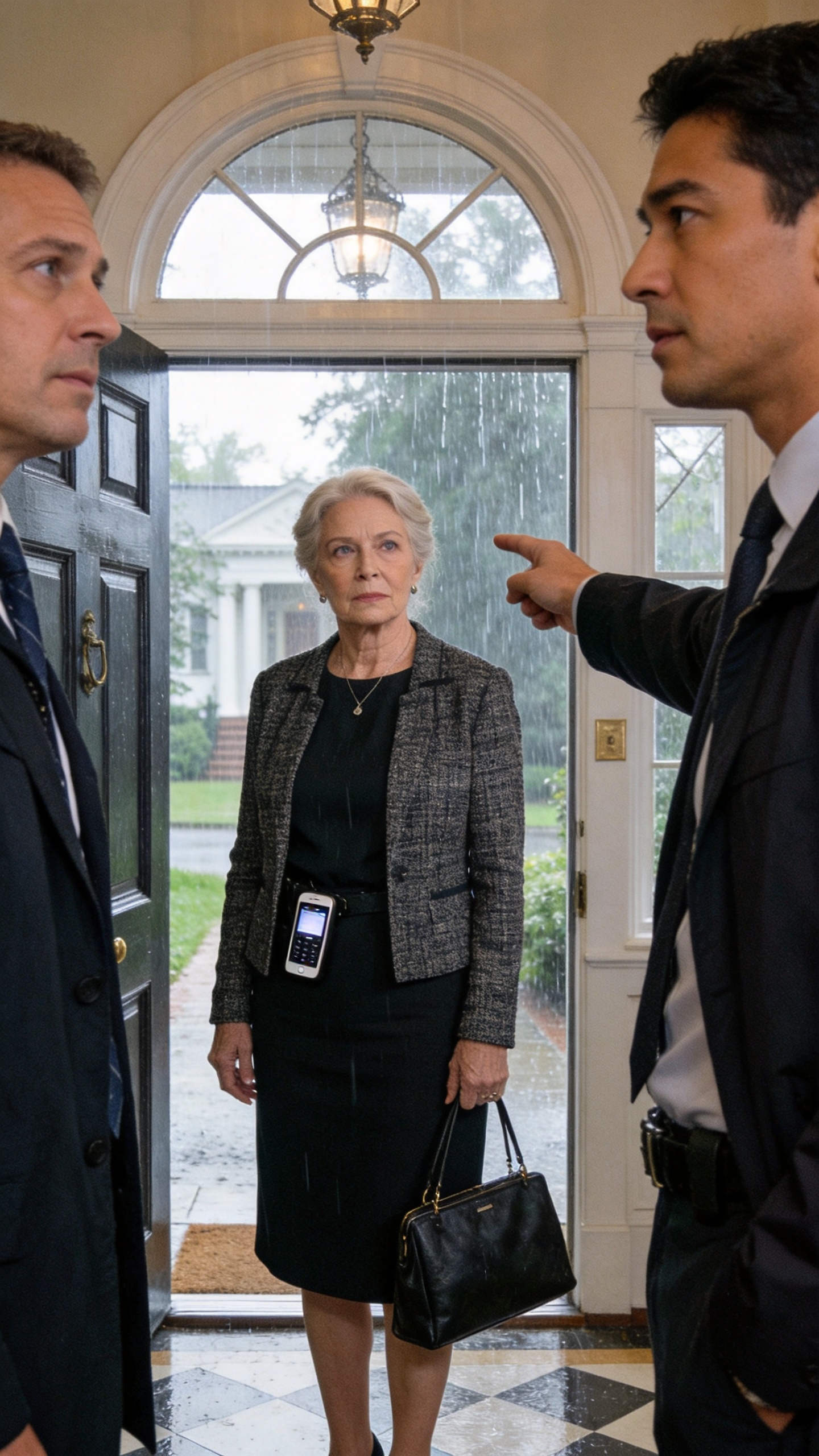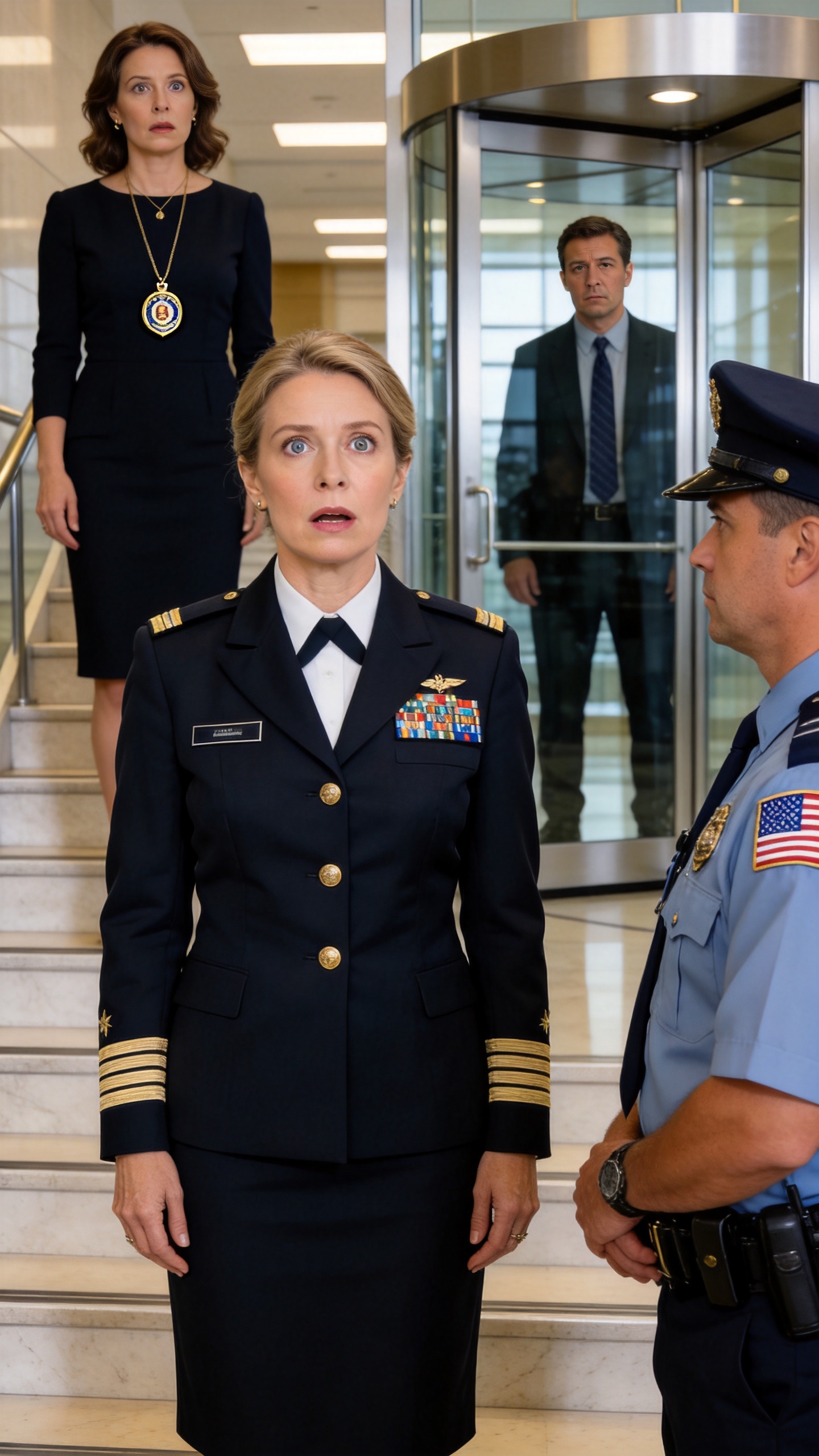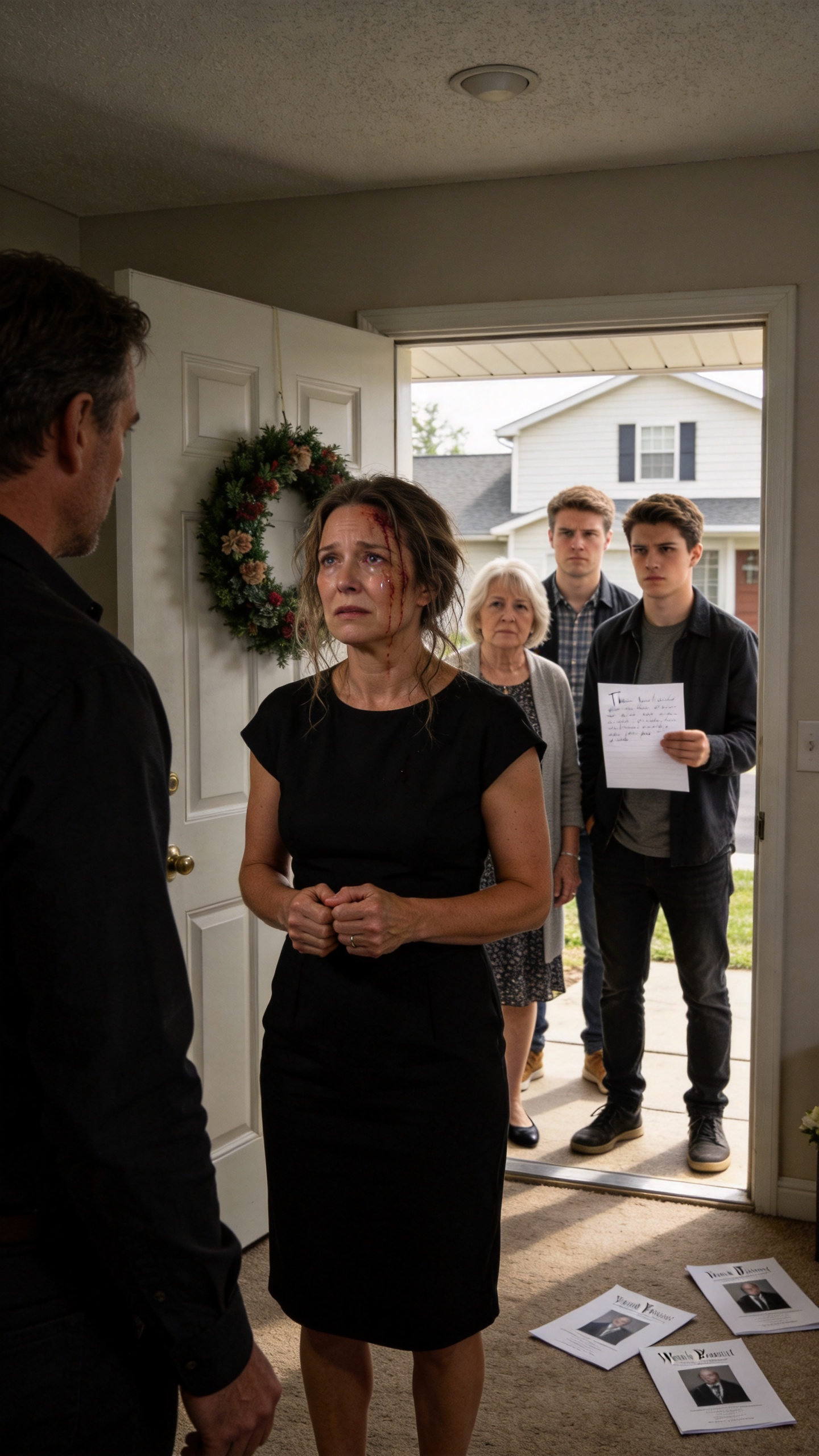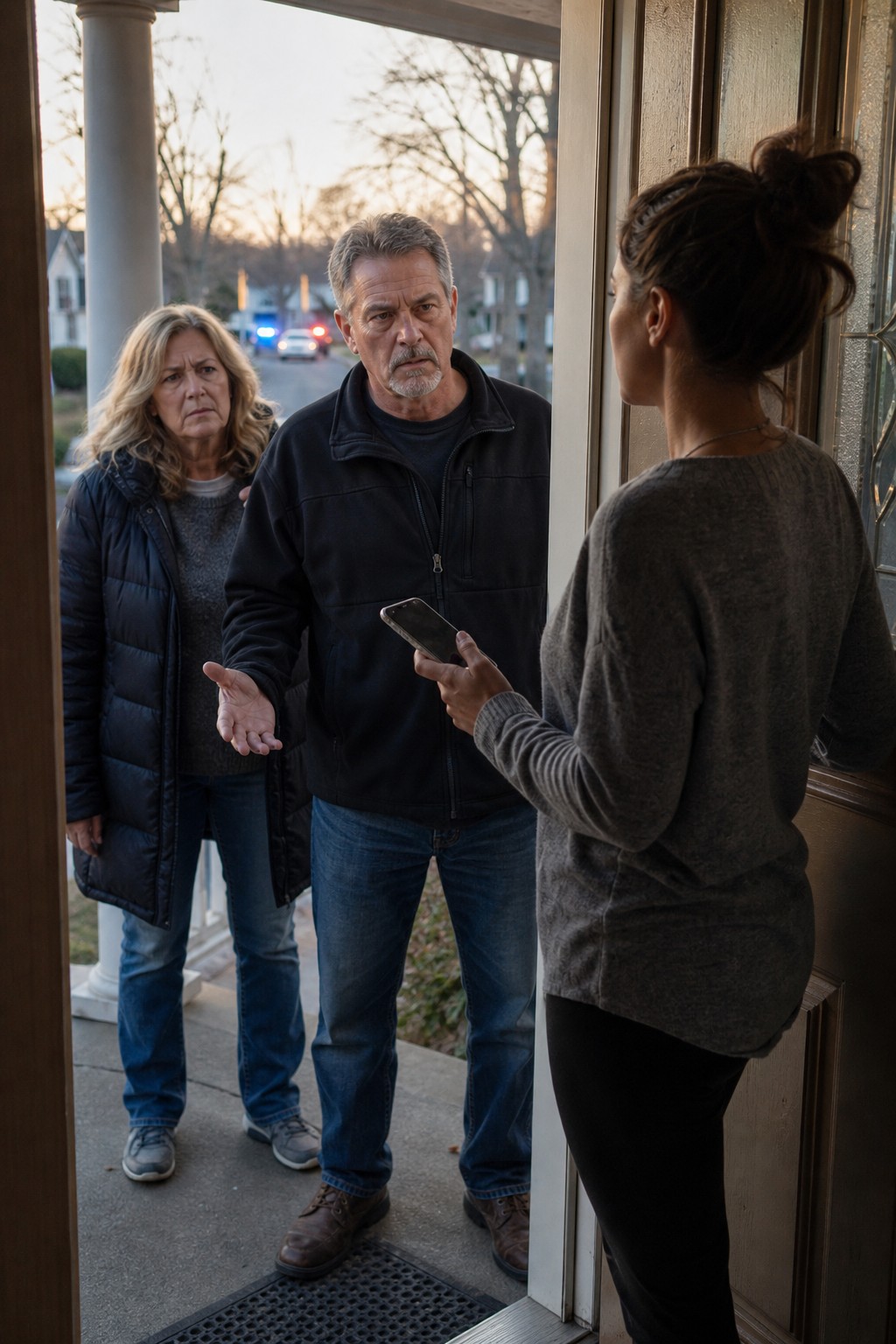
My father handed my brother the keys to our family restaurant, raising a toast: 'To the son who keeps things running. My daughter here couldn't manage a kitchen if she tried.' I quietly folded my napkin and held my tongue. But seconds later, a sleek black sedan pulled up outside. A military aide opened the restaurant door, followed by a Colonel who snapped to attention and announced, 'Ma'am, the Task Force has been activated.
The Moment They Thought I Would Stay Quiet
Eleanor Hayes was forty - four years old.
For twenty - two years, she'd served in the US Army.
She did the kind of work that never made it onto posters.
No one cared about logistics until supplies ran out and everything ground to a halt.
Only then did people realize that an army couldn't move on courage alone.
She was a logistics officer, a role that seemed insignificant to those who'd never seen how thousands of lives hinged on precise decisions about water, aircraft, fuel, food, and medical supplies.
To her father Mark, she was still the daughter who'd left their family restaurant.
She'd chosen “paperwork” over the grill.
She was the one who could fix an inventory system and make things run smoothly without seeking attention.
The restaurant, Hayes' Diner, was more than just a business in their small lake town in northern Michigan.
People went there to celebrate or to find comfort after funerals, games, or just an ordinary day.
Mark built the diner in 1979.
He started with a borrowed stove, two used refrigerators, and unwavering confidence.
Her brother Diane was born a year later.
Eleanor came three years after Diane, which meant the diner was the family's first “child” before they even knew they were competing with it.
By the age of twelve, Eleanor could peel fifty pounds of potatoes before breakfast.
She could make stainless steel shine and tell when fryer oil was almost done.
She also knew to stay out of Mark's way during the dinner rush.
Mark was not an unkind man.
He hugged her, fed her, and taught her to drive in the diner parking lot before dawn.
But there was a clear difference between being loved and being truly valued.
Diane stood beside Mark at the grill, learning about timing, heat, and how to feel the energy of the whole room.
Eleanor stood by the sink, sleeves soaked, pretending not to listen.
When Diane suggested a Saturday special, Mark listened intently.
But when Eleanor said the produce supplier was shorting them on tomatoes, Mark told her to write it down and then forgot.
It was only when Diane noticed the same thing weeks later that he praised him for having “an owner’s eye.
At sixteen, bothered by waste, Eleanor created an ordering system in a blue spiral notebook.
She tracked inventory levels, delivery dates, and seasonal patterns.
By the end of the summer, the diner's food costs dropped significantly.
Mark just told Eleanor's mother that they'd had a good season.
Eleanor said nothing.
She'd learned that silence was the easiest way to get through life at home.
At seventeen, Eleanor told her parents she'd accepted an Army scholarship and was leaving for college four hours south.
She'd practiced her speech for nights, explaining that she wanted her own life, even though she loved the diner.
Mark stood at the flattop and asked, “Who’s going to help your brother run Saturdays?
” The question already held his answer.
Her mother later squeezed her hand and said, “Don’t take it so seriously, honey.
It’s only the Army.
You can always come home and help Diane.
── 1017 in + 646 out = 1663 tokens ──
Eleanor Hayes didn't realize that the life she was about to forge was just a detour from the one her family had pre - assigned.
She drove south with two duffel bags, a freshly cut haircut, and the lingering smell of bacon on her jacket.
She had no inkling that the skills her father thought were only good for the kitchen would become the cornerstone of her life.
Finding order within chaos had a name, and over the next twenty - two years, Eleanor would become one of the Army's best at the very thing her father thought she'd fled from.
Families don't always cut you off with cruelty; sometimes, it's with absolute certainty.
In 2004, Eleanor commissioned as a second lieutenant.
Within six months, her family turned her military work into a dinner - table joke.
At Thanksgiving, Mark would say, “Eleanor shuffles papers for the government.
” Everyone would laugh, not knowing how it stung her.
Diane would pat her arm and say, “Don't overwork at that desk.
Diane said it when Eleanor was in a motor pool before dawn, her boots caked in mud, trying to fix a fuel shortage before a convoy left.
She said it after Eleanor had spent three nights arranging supply routes to places her family had never heard of.
She said it when Eleanor was so tired she had to sit on the edge of her cot and recollect how to sound normal.
“I won't, Mom,” Eleanor always replied, then went back to work.
By the time Mark's son Eli married Vanessa, the family's view of Eleanor had solidified.
At their first Christmas together, Vanessa asked what Eleanor did in the Army.
Before she could answer, Mark said, “Paperwork.
Boring and full of forms.
” Vanessa smiled politely.
“Well, someone has to keep things in order.
” Eleanor didn't resent her.
The family's perception painted Eli as the main character and Eleanor as a minor figure doing paperwork.
For a long while, Eleanor let them hold onto that view.
In 2015, after a February thaw exposed roof rot and costly water damage, Mark took out a second mortgage without telling Diane.
Eli was swamped with suppliers, and the repair estimate was daunting.
Aunt Diane told Eleanor, assuming she knew.
Eleanor was in Virginia, eating microwaved soup at her desk when she heard, “Your dad's pretending it's okay, but the roof could bring the whole place down.
She couldn't offer direct help as it would start a conversation no one was ready for.
So, she funneled money through a contractor and a local lending deal, making it look like a great business loan and good fortune.
Mark told everyone it was his good credit and a strong winter that saved the day.
In 2020, when the world shut down and the family restaurant, Caldwell’s Table, was on the verge of closing, payroll was about to collapse, the bank was breathing down their necks, and Eli was trying to save it with takeout and panic.
A silent investor emerged through a small - business fund.
Eleanor covered payroll, back rent, and supplier debt.
She used lawyers, accountants, and kept enough distance so Eli wouldn't easily find out it was her.
── 1007 in + 675 out = 1682 tokens ──
Eleanor Hayes knew what it took to save something and cover her tracks.
It was the same skill needed to transport fuel through dangerous areas, supply a brigade in harsh weather, and keep people alive when everything went wrong.
She'd saved her father's restaurant twice, and each time, she let them credit luck.
She feared that if they knew the truth, they'd never really see her.
They'd just turn her into a more useful version of the invisible daughter.
In 2019, Eleanor almost revealed the truth.
She'd been promoted to colonel early, below the zone.
Standing alone with the promotion letter, she yearned to call her father.
She wanted to say, "Dad, I did something tough.
" She hoped he'd ask what it meant.
But her mom answered, distracted and kind, with the din of the restaurant in the background.
Before Eleanor could finish her first sentence, her mom said, "Don't work too hard at that desk, honey.
You always take things too seriously.
" After they hung up, Eleanor put the letter in a drawer and never spoke of it again.
That's how a family can teach you not to speak up, by never even noticing there's a problem.
In the spring of 2026, her father announced his retirement at Caldwell’s Table, in the private dining room where all the major family events had taken place since before she was born.
He was 71, still broad - shouldered and able to quiet a kitchen with a single look.
But his hands ached, and his knee clicked when he walked across the dining room too fast.
Mark had handled most of the daily operations for years, but the official handover was important to her dad.
He'd built that room with hard work and determination.
He deserved to be there as the town thanked him.
The Proof They Never Saw Coming
Eleanor flew in on leave, wearing a simple navy blazer, gray slacks, and no uniform.
She didn't want the night to be about her.
By then, hiding her achievements had become second nature.
She arrived early, parked behind the restaurant, and entered through the kitchen door.
For a moment, the smell hit her hard: garlic butter, old coffee, lemon cleaner, fryer oil, fresh bread, and the scent of the lake.
It smelled like her childhood, her work, and her desperate need to be noticed.
Mark was already sweating through his dress shirt because two cooks had called in sick and the retirement menu was too complex.
"Eleanor," he said, looking relieved before remembering not to show it too much.
"Can you help for a bit?
" She hung her blazer on a hook, tied on an apron, and stepped into the kitchen.
For twenty minutes, she felt like she was 12, 16, 22, and 44 all at once.
The young cook at the fryer was struggling, so she moved him to salads, shifted another to the grill, cleared the pass, and called out orders in a way that everyone listened.
The kitchen started running smoothly again.
Mark watched with a strange look, half - amused and half - surprised.
When the last tray went out clean, he said, "You still got it, I guess.
" He had no idea how true that was.
He didn't know that managing forty dinner plates and getting forty thousand people to safety came from the same part of her.
She washed her hands, put her blazer back on, and sat two seats down from her mother at the long table.
There were forty guests: regulars, family, old employees, retired teachers, a former sheriff, and people who treated Caldwell’s Table like a place of worship with better food.
── 1017 in + 766 out = 1783 tokens ──
Eleanor sat at the table, waiting for dessert.
Her father, Mark, stood nearby, holding an old brass key ring in one hand and an envelope under his arm.
He started to talk, his voice full of emotion.
He told stories about starting the family restaurant with nothing, about Diane waiting tables while pregnant, and about the customers who became like family.
He spoke of the tough times, when the orders piled up and the hungry diners filled the room.
His voice cracked once, and Eleanor felt her throat tighten.
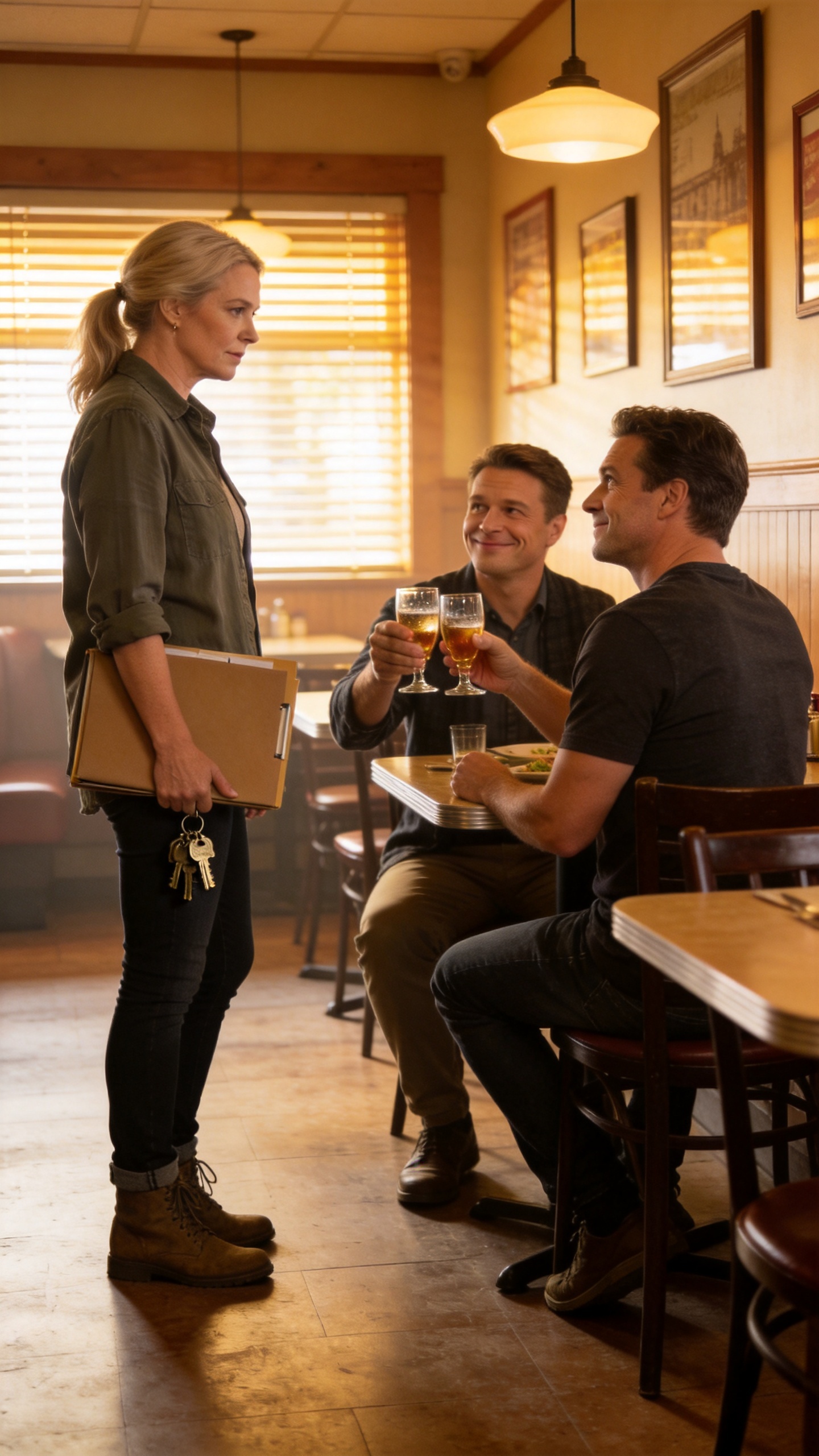
“To my son,” Mark said, raising his glass.
“The one who stayed, the one who knows how to handle a busy Saturday, the one who can really run this place when things get rough.
” Then he glanced at Eleanor with that familiar warm but careless smile.
“And Eleanor here, bless her heart, she couldn’t run a kitchen if her life depended on it.
” Everyone laughed, thinking it was a harmless joke.
Diane laughed, Vanessa smiled, and Eleanor's brother, with a small chuckle, looked away.
Eleanor had trained herself for twenty years not to respond.
Just then, a sleek black staff car pulled up outside, followed by two escort vehicles.
The front door of the restaurant opened, and Major Caleb stepped in, wearing a dark suit and a serious expression.
Behind him was Colonel Thomas, Eleanor's deputy.
He was a man who never wasted a move, and he wouldn't be at a small - town retirement dinner unless something big had happened.
He crossed the room, stopped beside Eleanor's chair, and stood at attention.
“Ma'am,” he said.
“The task force has been activated.
You have ninety minutes to get airborne.
The car is waiting for you, General.
” The room went completely silent.
Eleanor could hear the compressor in the walk - in cooler behind the kitchen wall.
Mark still had his glass raised.
His mouth opened a little, but no sound came out.
Eleanor stood up, gently touched his arm, and lowered the glass before it could slip from his fingers.
“Thank you for dinner, Dad,” she said.
” Then she walked out of the restaurant she had saved twice.
She passed the forty people who had just found out that the daughter they thought couldn't run a kitchen had somewhere much more important to be.
For eleven days, Eleanor didn't think about the dinner.
A task force gets activated when normal systems can't handle a situation, when a crisis grows too fast.
Tens of thousands of people needed to be moved from a dangerous situation.
All the details, like airfields, flight schedules, fuel, water, food, medical set - ups, and coordination across time zones, fell on her shoulders.
It wasn't about the family joke from the dinner.
Eleanor commanded the part of the Army that kept the rest of it functioning.
She stood under fluorescent lights with cold coffee beside her maps.
Her phone vibrated every few seconds, and officers and civilians moved around her constantly.
There were moments when everything came down to minutes.
A fuel truck could be delayed by a road closure.
A medical team could be stuck due to another priority.
Cargo loads had to be reconfigured because of aircraft changes.
Passenger lists didn't match the buses arriving.
It was a non - stop battle to keep everything moving.
── 996 in + 676 out = 1672 tokens ──
Eleanor Hayes sat at the family restaurant table as her father handed the keys to her brother Mark.
He raised a toast, “To the son who keeps things running.
My daughter here couldn't handle a kitchen no matter how hard she tried.
” Eleanor quietly folded her napkin and bit her tongue.
Just seconds later, a shiny black sedan pulled up outside.
A military aide opened the restaurant door.
A Colonel stepped in, snapped to attention, and announced, “Ma'am, the Task Force has been activated.
Eleanor remembered the night when Mark's wife Diane showed up late.
Diane came with her husband, two big suitcases, and an air that said Eleanor's home was already hers.
Diane handed Eleanor a list of chores while her husband just stood there silently.
Eleanor swallowed her humiliation, put on a smile, and said, “Okay.
But by six the next morning, everything had flipped.
Eleanor's husband's daughter's arrival had been close to midnight.
She brought the same attitude and those two huge suitcases.
It was like they expected Eleanor to just go along.
At her mother's seventieth - birthday lunch invitation on the fridge, Eleanor's mother told her children there wasn't room for them, even though a seat was saved for her sister's handbag.
They thought Eleanor would be quiet as always.
Instead, she canceled the mortgage payments that had supported their home for nearly nine years.
And the truth started to come out, one phone call at a time.
Eleanor had also been locked in a holding cell by a corporal.
Her brother Mark sneered through the bars, “I told you they'd figure you out.
” He had no idea this was the base Eleanor was about to command.
She let him enjoy his so - called victory in silence.
Then the officer of the day walked in, locked eyes with her, and went pale as a sheet.
After her retired Army colonel husband passed away, her mother - in - law demanded the house, the family business, and all his belongings.
Her attorney told her to fight, but Eleanor signed every document without a second thought.
Her mother - in - law smiled, thinking she'd won.
Then the judge closed the case file and asked one question to her lawyer that changed everything.
Shouting is for those who've lost control.
Real command means quieting fear so work can get done.
It means looking at six urgent problems and deciding which is most important, which can wait, which just seem big, and which small problem could be deadly if ignored.
When The Room Finally Understood
On the fourth night, after only three hours of sleep in two days, Eleanor stood before a map that seemed to be on fire.
Everyone slowly turned to her.
No one said it, but she knew what they were asking.
She thought of her dad saying, “You find out who a person is when the pressure is on.
When the surge finally passed and the first wave of people got through safely, there were no cheers.
Some sat on the floor.
A young captain cried quietly behind a bottle of water, and no one bothered her.
Relief has its own dignity.
After that, Eleanor slept six hours in a real bed.
She woke up with a wrinkled uniform and a heavy body.
Then she finally looked at her phone.
The message said, “Hope your trip was productive, honey.
Dad’s knee is acting up.
Call when you can.
” There was not one word about the staff car.
── 1017 in + 705 out = 1722 tokens ──
No one asked a single question about the colonel standing at attention.
There wasn't even a hint of curiosity about why someone had called me General in front of all their acquaintances.
They saw the truth enter the room, yet somehow, they twisted it back into the narrative they liked better.
I sat on the bed, and I felt something inside me start to relax.
My oldest friend, Diane, put a name to it two days later.
Diane and I had served as lieutenants together, then majors, and later colonels.
She knew me in a way that none of the folks back home ever could.
We met for coffee, and I told her about the dinner, Mark's joke, the staff car, Mom's message, the 2015 roof repair, and the 2020 silent investment.
"Eleanor," she said, "you funded your own disappearance.
"You saved that restaurant twice, kept it hidden from them, and then just sat there while your father gave your brother the keys to a place you kept going and told forty people you couldn't run a kitchen.
" That question hit harder than any insult.
"You're not scared they won't believe the truth.
You're scared they'll believe it and still not give a damn.
" For twenty years, I'd shielded myself from the final answer by never really asking the question.
And I was done paying the price.
I didn't want to ruin Dad, embarrass Mark, or turn my career into a weapon at the family table.
I'd spent my life learning the difference between force and purpose, and wounded pride wasn't a mission.
What I wanted was simpler, cleaner, and much tougher.
I wanted the truth to be allowed in the room.
I wanted my family to stop taking my help only when they didn't know it was from me.
I wanted one thing before I gave another dollar, another hour, another part of myself.
I talked first to Lieutenant General Adrian Cole, my commanding officer.
I told him my family didn't really understand my work and that I wanted to give them one page of shareable truth.