My Neighbor Took My Blind Father to "Doctor's Appointments" for 8 Years; After Dad's Funeral, He Finally Explained What Those Thursdays Had Been For
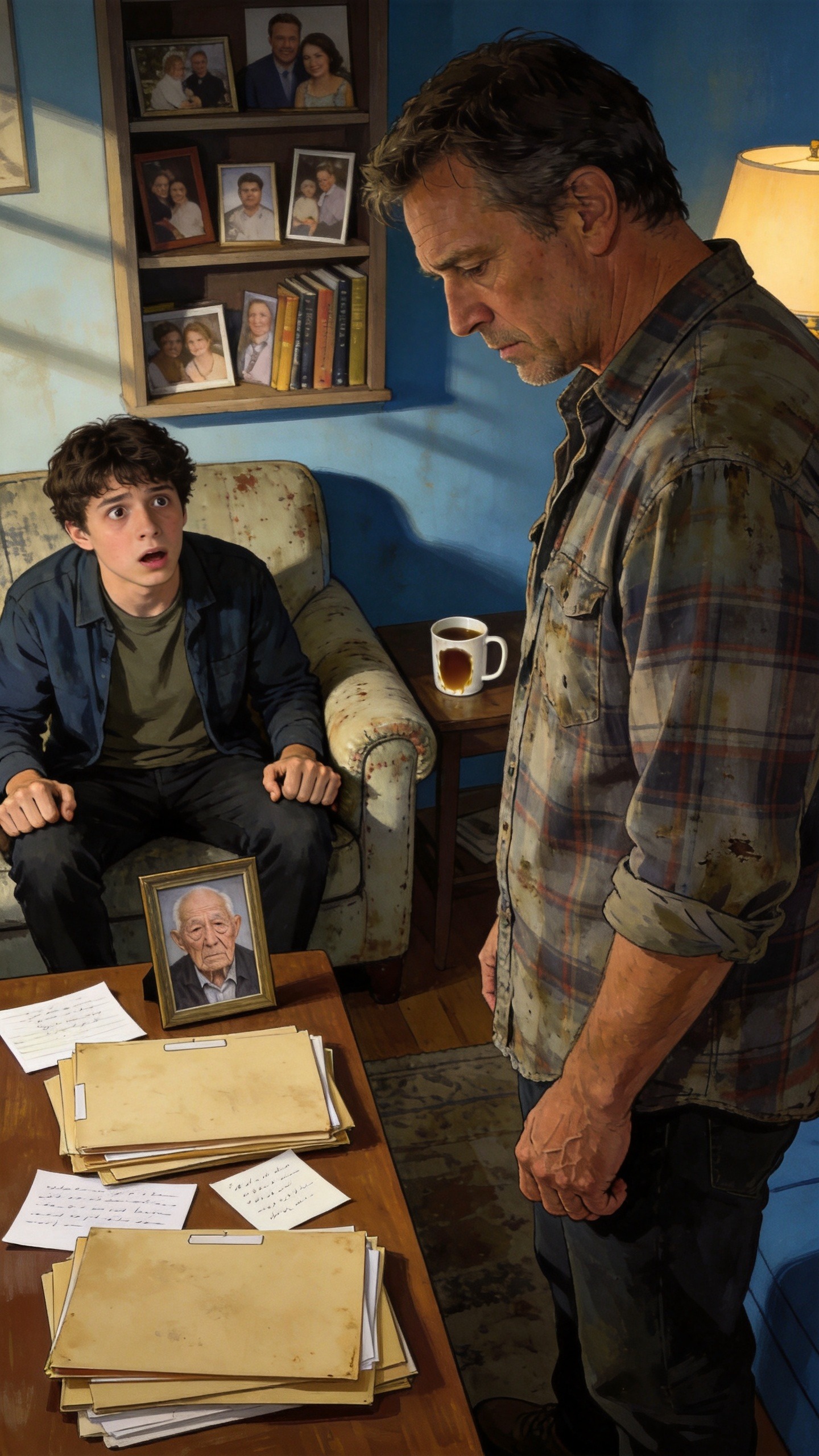
For eight years, I believed my father spent every Thursday in waiting rooms.
He was blind, stubborn, and determined to stay in the old house where my mother had died, so when our neighbor offered to drive him to appointments, groceries, and lunch, I was grateful enough not to question it.
Then Dad died in his sleep.
Less than an hour after the burial, that same neighbor pressed a sealed envelope into my hand and said the sentence that made the rain, the cemetery, and my grief go still.
"Your father made me promise to tell you what those Thursdays were really for."
The Arrangement That Let Me Breathe
My father, Arthur Price, began losing his sight ten years before his death.
Glaucoma stole the world from him slowly at first, then cruelly. By the end, he could make out light and shadows, but not faces. He learned the distance from his bed to the kitchen by counting steps. He labeled spices by smell. He folded dollar bills in different ways so he could tell them apart.
What he refused to do was leave the house.
"Your mother is still in these walls," he told me whenever I suggested assisted living. "The dent from your bicycle is still in the hallway. I am not moving into a place with beige soup and strangers calling me buddy."
I lived almost a thousand miles away with two children, a job that never ended, and a marriage that required more attention than I was giving it. I called Dad every day, but guilt sat beside me like luggage I could never put down.
That was when Martin Hale, the retired man next door, stepped in.
Martin had known my father for years. He was gruff, punctual, and the kind of man who could complain about a cloud blocking the sun. Still, he treated Dad with a careful respect I trusted.
Every Thursday, I paid Martin to drive Dad wherever he needed to go.
The routine became part of our family calendar. Dad would call me after every trip and give me a report.
"The doctor remains fascinated by my ancient bones," he would say.
Sometimes I heard Martin in the background, announcing, "Your carriage is ready, Your Majesty."
Dad always answered, "If this is royalty, the kingdom smells like old coffee."
Their laughter made me believe the arrangement was not only practical, but happy.
The Envelope at the Grave
Dad died on a Wednesday night.
He went to bed after our usual call, probably with the radio murmuring beside him, and never woke up. The funeral was small, gray, and impossible to remember clearly. People hugged me. Someone put soup in my hands. Someone else told me Dad had been proud of me.
All I could think about was our last conversation.
He had said Thursday had been "productive."
When I asked what that meant, he chuckled and told me not to cross-examine an old man before dinner.
Now there would be no dinner call. No Thursday report. No voice asking whether my youngest had finally learned to tie his shoes.
After the burial, I stayed beside the grave after everyone else began walking back toward their cars.
Martin approached with his hat in both hands.
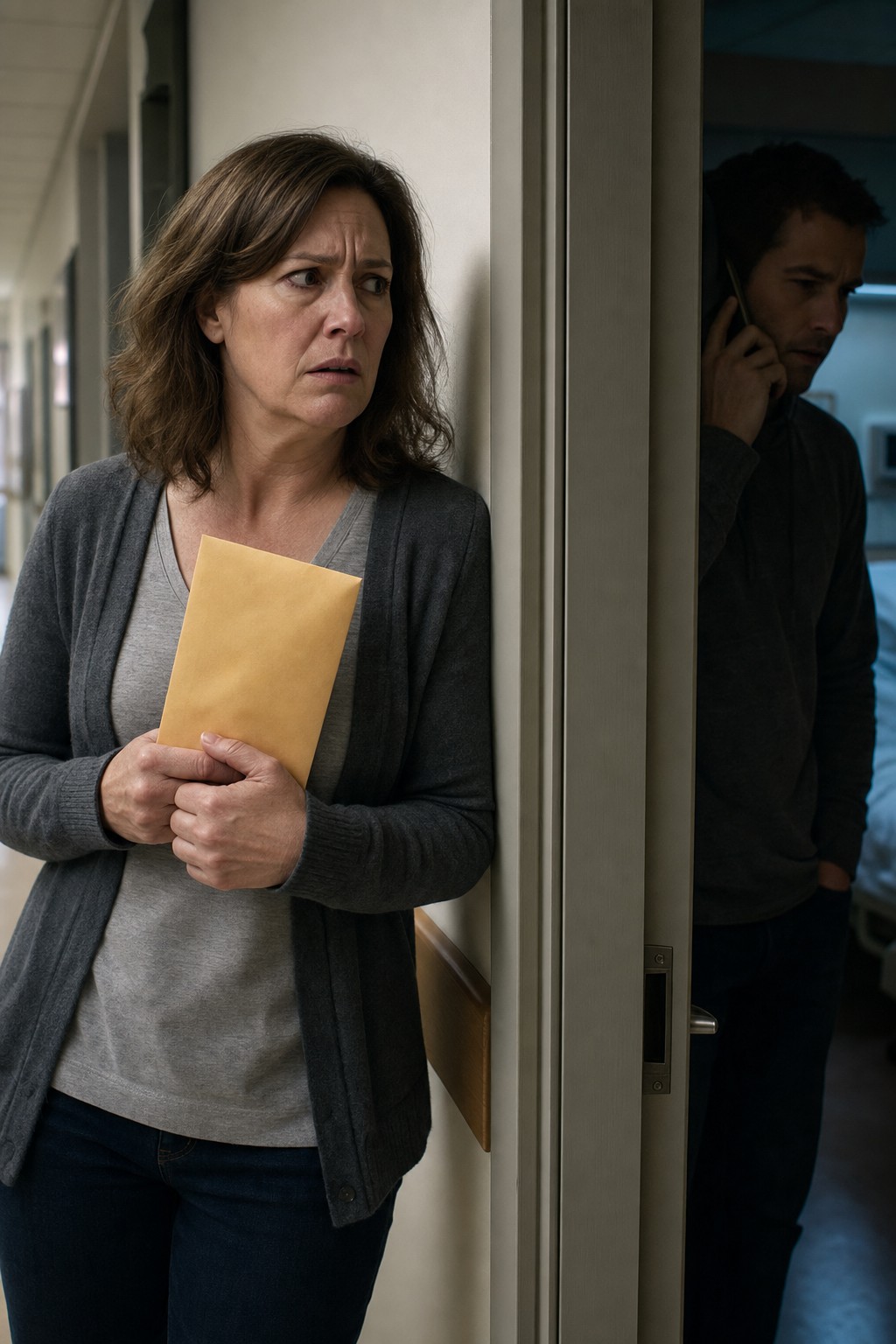
The envelope he held was sealed. My name was written across the front in Dad's uneven handwriting.
"He made me promise," Martin said, and his voice broke on the last word. "He made me promise to explain what those Thursdays had really been for."
For one absurd second, I imagined casinos. Secret breakfasts. Some harmless rebellion involving too much pie.
Martin shook his head as if he could see the guesses crossing my face.
"It started with my daughter," he said.
The Daughter I Had Never Heard About
Martin's daughter was named Elena.
I had lived in Dad's house as a child, visited for holidays as an adult, and spoken to Martin dozens of times. Not once had he mentioned a daughter.
He told me they had been estranged for years. Elena had built a life three hours away. She had a garden, a husband, and children Martin barely knew. Every call between them had turned into an argument until Elena stopped calling at all.
Martin blamed her.
Dad did not.
On one of those Thursday drives, Dad apparently heard enough bitterness in Martin's voice to ask what had really happened.
Martin said Elena was ungrateful. She never visited. She ignored his advice. She had made him feel unnecessary.
Dad listened until Martin ran out of excuses.
Then my blind father said, "You criticize the life she built, then act wounded that she will not invite you into it."
Martin told me he nearly turned the car around.
Dad only tapped his cane against the floor mat and told him to keep driving.
But they did not go to the clinic that day.
They went to the public library.
What Those Thursdays Really Were
At the library, a patient employee taught Martin how to send photos, record videos, and write messages that did not sound like orders.
Dad sat beside him, listening.
Whenever Martin grumbled that he was too old for phone nonsense, Dad reminded him that Elena had spent childhood trying to learn things just to please him.
"You can learn one thing for her," Dad said.
The next Thursday, they went to a bakery.
Elena had loved cinnamon rolls as a child, so Dad made Martin buy ingredients and practice in our kitchen. The first batch burned. The second came out raw in the middle. The third was edible only if a person had no standards and excellent dental insurance.
Dad still made Martin pack them carefully.
"A sincere apology can survive ugly pastry," he said.
Then came the letters.
Martin wrote drafts and read them aloud while Dad sat at the kitchen table with his hands folded over his cane.
Dad rejected most of them.
"That is not regret," he would say. "That is you explaining why she should not be angry."
Another draft earned, "You are apologizing for the argument, not the wound."
One Thursday after lunch, Martin lost patience and demanded to know what Dad wanted from him.
Dad answered, "Tell her why she matters. Stop telling her why you were right."
That sentence was in the envelope too, underlined in Dad's handwriting.
The Note That Broke My Anger
At first, I was furious.
I had just buried my father, and Martin was standing in the rain handing me unfinished business that did not belong to me.
"I cannot fix your family today," I told him.
"He knew you would say that," Martin whispered. "There is another note. That one is for you."
I opened it because it was the last thing my father had left for me.
Dad wrote that Martin had given him more than rides. Martin described curbs, doors, faces, and rooms so Dad could move through the world without being treated like a burden. He waited during appointments but never answered for him. He offered an arm without grabbing. He made blindness feel less like helplessness.
Helping Martin repair things with Elena, Dad wrote, was his way of returning that dignity.
Then I reached the line that made my knees weaken.
You may think I kept a secret from you. I did. Those Thursdays let me matter to someone again.