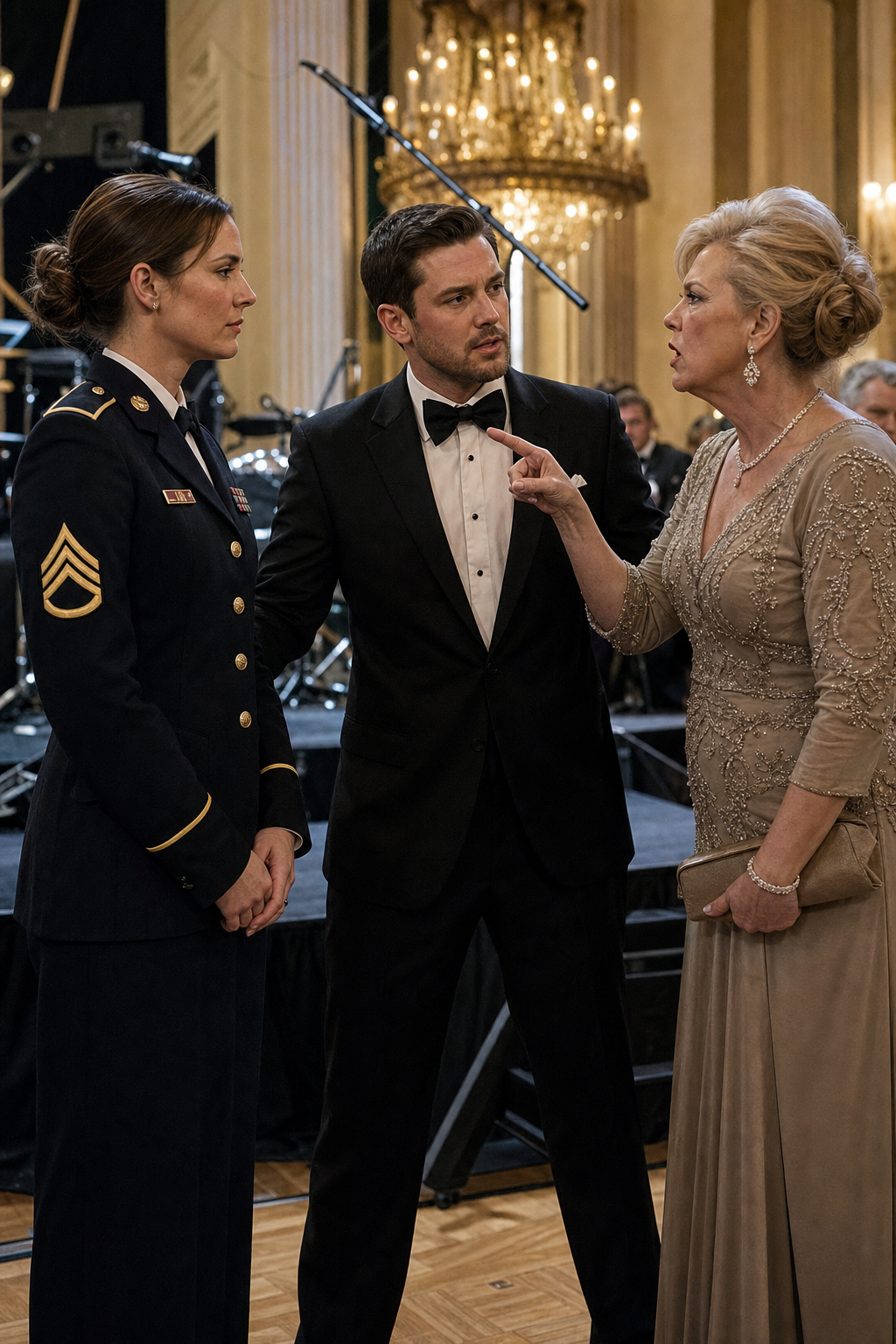
After Four Months Away, I Walked Into My Living Room in Uniform With Our Baby. My Husband Held Up a DNA Report, Told Us to Leave in Front of His Family, Then His Open Laptop Revealed What Had to Happen Before Monday
The result came back with the certainty I had already lived with: Grant was Lena's father.
His reply was almost bored.
"Labs make mistakes."
That was when his younger sister, Clara, called me.
Her voice trembled the whole time. She said she had seen Grant burn an envelope behind the garage the night after the confrontation. She believed he had received a legitimate result before the fake one appeared.
Mara subpoenaed records. Hotel charges, calls, transfers, and messages began stacking up in a way no apology could explain.
Elise changed sides when she realized Grant planned to blame her if everything collapsed.
She said he had told her our marriage was already over. He had told her Lena was not his. He had told her the house sale was only a business move I was too difficult to approve.
Then she gave Mara recordings.
In one of them, Grant said my return date was perfect.
"Once Avery comes back, everything will already be arranged. If she argues, we make her look unstable. If she leaves, we say she abandoned the home."
I listened to that recording once.
Only once.
I did not need to memorize cruelty to understand it.
The Signature
The emergency order stopped the Monday sale, froze the suspicious accounts, and forced everyone into the light.
But one question still mattered.
Who had signed my name?
The closing office had security footage. Mara obtained it.
The video showed Marjorie entering with a copy of my employee identification. Beside her was a woman I recognized before my mind was ready to accept it.
My cousin, Tessa Vaughn.
Tessa had known me since childhood. She had eaten holiday dinners at my table and held my hand at my father's funeral. After he died, she helped me sort boxes of papers in his study.
She also knew exactly how I signed my name.
Grant had paid her nine thousand dollars.
When Mara and I confronted her, Tessa did not deny it. She cried so hard she could barely speak. Marjorie had approached her when she was behind on rent. Grant had promised it was temporary, just a shortcut because I was out of state and difficult to reach.
"I did not know they were going to take Lena," she whispered.
"But you knew you were becoming me on paper."
She covered her face.
The answer was yes.
Tessa also confirmed why Grant's relatives had been invited that night. They were supposed to be witnesses.
Later, if he needed them, they could say I stormed out after the paternity accusation. They could say Grant was devastated. They could say he had been forced into action by my betrayal.
Even his refusal to hold Lena had been part of the performance.
He needed the room to believe he no longer saw her as his child.
The complaints multiplied after that: forged signature, hidden marital assets, attempted fraudulent transfer, and misuse of a false paternity document in a custody setup.
A judge restricted Grant from removing Lena from daycare or contacting me outside approved channels. The accounts stayed frozen. The house stayed protected.
Only then did Grant begin sending gentle messages.
"We should settle this privately."
"We can still fix things."
"Think about what a public fight will do to Lena."
He had not worried about Lena when he called her "the baby" in a room full of people.
He worried when the room changed.
The Hearing
At the divorce hearing, Grant's attorney tried to make him sound panicked rather than calculating.
Mara answered with documents.
The accredited paternity result. The hidden account. The early legal consultation. The below-market sale. The forged power of attorney. The footage from the closing office. Elise's recordings. Clara's statement about the burned envelope.
Then the judge read one of Grant's messages aloud.
"She will never learn the first test was not real."
The courtroom went very quiet.
The judge looked at Grant.
"That is not uncertainty. That is preparation."
Primary custody was granted to me. Grant received supervised visitation until he completed counseling and a parenting program.
The missing money had to be returned to the marital estate. He was ordered to pay a substantial portion of my legal fees, and the house could not be sold without proper legal process.
In the hallway afterward, Grant stopped beside me.
"So you think you won?"
I looked at him, really looked at him, and felt no triumph.
"This was never about winning," I said. "It was about making sure your choices did not become Lena's future."
He had no answer for that.
For a while, life became smaller and quieter.
I rented an apartment near the aviation center. Lena learned which cabinet held her cereal bowls. I learned how to sleep without listening for footsteps in a house that no longer felt safe.
Grant attended counseling because the court required it. At first, his visits were stiff. Lena hid behind my legs. He brought toys she did not like and asked questions he should have known the answers to.
Then, slowly, he began learning.
He brought the books she loved. He remembered her allergy medicine. He asked about daycare without turning the conversation into a complaint.
I did not rush to forgive him.
But I did not confuse my anger with Lena's needs either.
Marjorie came to my apartment six months after the hearing carrying a cream-colored baby blanket from Grant's childhood.
She looked older than I remembered.
"I believed my son because it was easier than asking what kind of man he had become," she said. "I treated an innocent child like she could be thrown away."
She did not ask for instant forgiveness.
She asked whether, someday, under my rules, she might earn the right to know her granddaughter again.
I accepted the blanket. The first visits were twenty minutes long. Marjorie read picture books, brought cut fruit, and left the moment Lena became tired.
Trust did not return as a speech.
It returned, if it returned at all, as repeated behavior.
Tessa faced legal consequences, paid back the money, and completed community service. Her apology sounded sincere. It did not rebuild what she had broken.
Some betrayals do not destroy love entirely.
They change where love is allowed to stand.
Elise cooperated with the investigation and disappeared from our lives. I never thanked her as a friend, but I accepted that her evidence helped expose the truth.
A year later, I stood in uniform again, this time at my promotion ceremony.
Lena wore a red dress and clapped whenever the adults clapped, delighted by the sound more than the reason for it. Director Reeves pinned the new insignia to my jacket.
"You became the leader we hoped for," he said quietly. "And you stayed the mother your daughter needed."
The house was eventually sold legally. My share went into a protected education fund for Lena.
My life was not flawless after that.
It was simply honest.
For years, I had mistaken endurance for strength. I thought being a good wife meant absorbing doubt, smoothing over cruelty, and keeping peace even when peace demanded silence from me.
Grant's false report taught me another definition.
Strength can be leaving with your child before the shouting becomes your home.
Strength can be saving screenshots with shaking hands.
Strength can be letting facts speak when people are desperate for drama.
My greatest victory was not proving Grant wrong, stopping the sale, or recovering the money.
It was making sure the harm did not inherit my daughter.
Truth rarely arrives all at once.
Sometimes it comes as one notification on a laptop, one frozen bank account, one frightened witness, one recording played in a courtroom.
But when truth is protected carefully, it enters with a power no staged lie can copy.
It does not need an audience.
It only needs to be preserved.