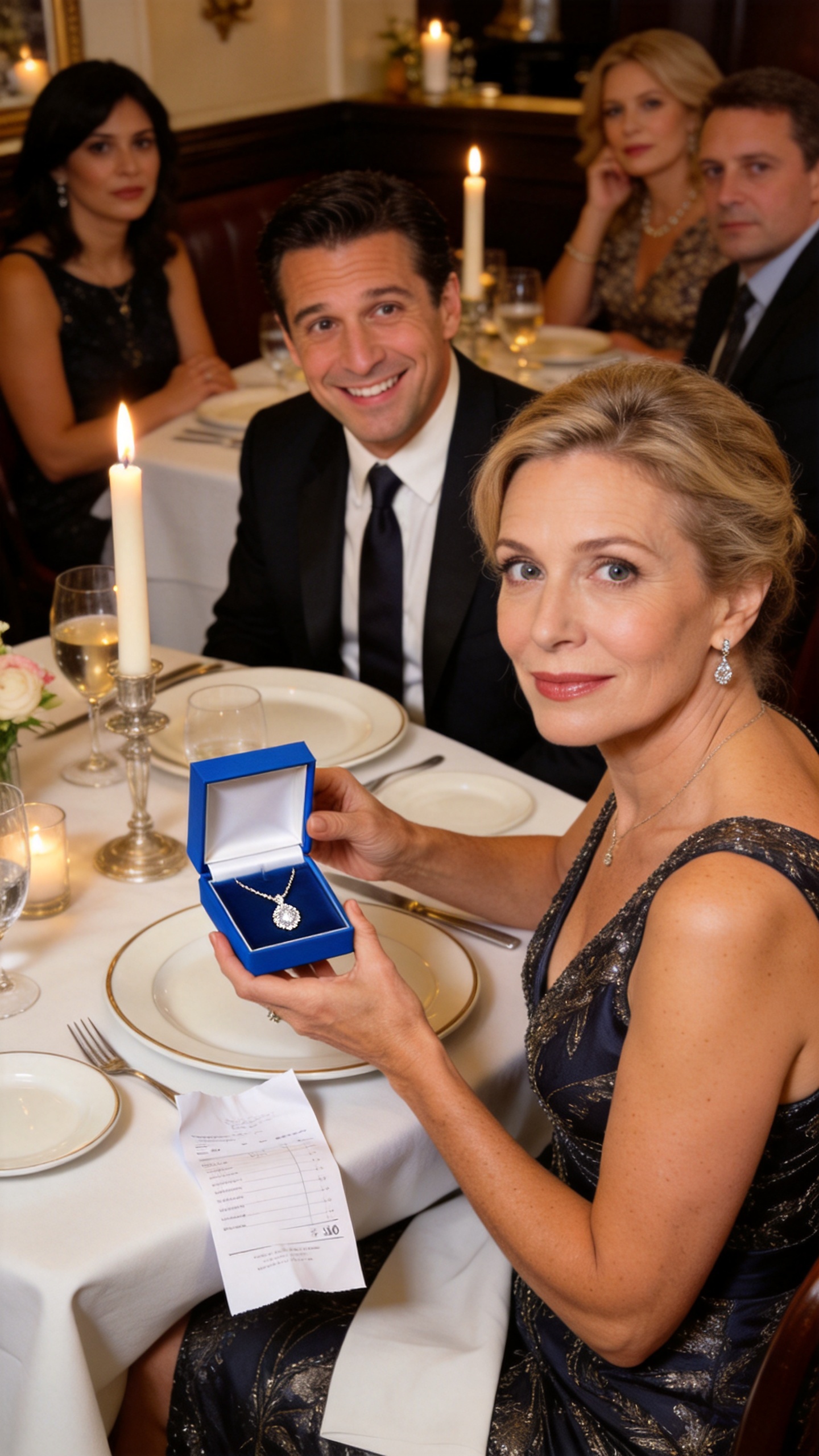
While I lay fighting for my life in the ICU, my parents ignored nine urgent calls. Days later, my dad laughed off my ordeal, calling me a wrecked
My father loved public victories.
I could almost hear him imagining applause.
"That would mean a great deal to your mother."
"I want the full family there," I said.
"Lena, Adrian, company board members, everyone involved."
After the call, Tessa studied my face.
"They chose a ballroom for your surrender."
"Then we use the same room for the truth."
They did not know investigators would be in that ballroom.
They did not know Colonel Reeves would walk in with my medical records.
And they did not know the document in my folder was not a settlement release.
It was a sworn statement confirming I had never authorized them to touch one dollar of Ruth's trust.
The night before the gala, I opened my uniform bag.
My dress uniform smelled of cedar and pressed fabric.
Each ribbon represented a place, a patient, or a moment my family rarely asked about.
The uniform did not make me invincible.
It reminded me I had existed before their approval and would continue existing without it.
Before leaving, I fastened Ruth's silver watch around my wrist.
The Hawthorne Ridge Club stood on a hill beyond bare trees.
Its tall windows glowed over polished cars and white roses.
My sister's engagement party looked like a celebration.
Behind those doors, my father was preparing to announce my surrender.
Behind me, investigators were preparing to document his confession.
Conversation softened when I entered in uniform.
Some guests recognized my rank.
Others stared because I did not match the soft blue dress my mother had ordered me to wear.
Grace crossed the room before I had taken ten steps.
"Mara," she whispered.
"What are you wearing?"
"Clothes."
"Do not turn tonight into a military display."
"I walked through a door, Mother."
She was not worried that I was in pain.
She was worried I looked like someone with a life beyond the Reed family.
Lena stood near the stage in white silk.
Her smile stiffened, then recovered for the photographer.
"My brave sister finally made it."
Adrian appeared beside her.
"Did you bring the signed documents?"
"I brought everything necessary."
His eyes dropped to the folder in my hand, and satisfaction crossed his face before he hid it.
Victor stepped onto the stage after dinner.
The music faded.
He spoke about love, legacy, and the future of Ellison Crest Properties.
Then his tone changed.
"Our family has also faced a private challenge," he announced.
"My eldest daughter, Mara, recently suffered a serious accident."
Cold settled over me.
"She has struggled emotionally during recovery, and at times that pain has caused her to misunderstand the intentions of those who love her."
He was doing exactly what we expected.
"Tonight, Mara has chosen healing over conflict. She has agreed to place the assets inherited from my mother under responsible family management."
Soft applause began near the front.
Victor extended his arm toward the stage.
I walked up slowly.
My boots struck the polished floor in a rhythm steadier than my ribs felt.
He placed the gold pen beside the papers.
I picked up the microphone instead.
"You told everyone I misunderstood your intentions."
His smile stayed fixed.
"This is not the time."
Before Adrian could reach the presentation controls, the ballroom doors opened.
Maya Stone entered with her financial-crimes team.
Colonel Reeves walked beside Tessa, carrying a sealed folder of medical records.
My father looked from them to me.
"My family asked me to make this transfer publicly," I said.
"So the refusal will be public too."
The screens behind us changed.
The first certified record showed an attempt to take five million dollars from my trust while I was unconscious in intensive care.
No one spoke when the timestamp appeared.
I remembered the phone shaking in my hand.
I remembered the automated voice telling me no one was available.
The next image showed the forged trust authorization with my copied signature under language transferring control to Ellison Crest.
Beside it was the digital report linking the document to Adrian's device.
"This is fabricated," Adrian said.
Maya stepped forward.
"The records were certified by the trust administrator and independently verified."
My father grabbed for the microphone.
"This is a private estate disagreement."
A photo appeared of Ellison Crest employees removing boxes from my cottage.
Another showed the fraudulent property authority used to change the locks while I was still injured.
Then Colonel Reeves opened the medical folder.
"Captain Reed was in an ICU bed when those calls were ignored," he said, his voice carrying through the room.
"Her medication logs are complete. Her medical records are clean. Your draft complaint was coercion, not concern."
He looked my parents dead in the eye.
"You abandoned your own daughter to die for a payday."
The sentence landed harder than shouting.
It left the room with nowhere to hide.
Then Maya played the desk recording.
Victor's voice filled the ballroom.
"Sign the settlement release. The complaint disappears."
"Then you may lose the uniform you care about more than your own family."
Silence did what anger never could.
It left them alone with their own words.
The Boundary They Could Not Cross
Adrian was detained first.
The words fraud, forgery, coercion, and unlawful access moved through the ballroom like cold air.
"This was Victor's plan," he said immediately.
"He told me the trust belonged to the company."
Lena turned toward him.
"Adrian?"
My father tried to leave the stage.
An investigator stopped him before he reached the steps.
Victor's face hardened when he realized the room no longer obeyed his authority.
"You would really have your own father arrested?"
"You made your choices while I was lying in intensive care."
"I was protecting everything I built."
"You were willing to let me die because it made the paperwork easier."
For the first time, his expression changed.
After investigators escorted him away, my mother rushed toward me.
"Please tell them I did not understand."
Her tears came quickly.
"Your father said the hospital would call if it was serious."
"The hospital called nine times."
"I was trying to keep the party from falling apart."
"I was trying to keep breathing."
Even then, her first instinct was to explain herself.
I removed her hand from my sleeve.
"You were my mother when the phone rang."
The criminal case lasted fourteen months.
Ellison Crest tried to survive by removing Victor from leadership.
Investors withdrew.
Projects collapsed.
Auditors found other financial irregularities hiding behind the same polished language my father had used at the gala.
Victor eventually pleaded guilty to fraud and coercion rather than face a public trial.
Adrian accepted a separate agreement after providing records showing how long the scheme had been planned.
Lena ended the engagement two days after the gala.
For months, she claimed she had been manipulated.
Investigators found enough messages to prove she had known far more than she admitted.
Grace called every Sunday at first.
She left long messages about being trapped between her husband and her daughters.
She said families did terrible things under pressure.
She never said, "I saw your name on the phone and silenced it."
After three months, I blocked her number.
Physical rehabilitation took nearly a year.
The first time I crossed the therapy room without a cane, the fluorescent lights reflected off the floor like they had in the ICU.
For one second, I heard the monitor again.
Then Nurse Lisa appeared in the doorway with two paper cups of coffee.
"You look steadier," she said.
She never asked about the money.
She asked whether I had eaten.
Small questions show the difference between concern and performance.
I eventually returned to medicine in a limited training role, then resumed surgical duties.
The first patient I treated after returning was a young mechanic hurt during a field exercise.
His mother answered the hospital's call before the second ring.
She arrived in house slippers, hair still wet from the shower, caring only that her son was alive.
Watching her sit beside him hurt in a quiet place I had not expected.
The love I wanted from my parents was real.
I saw proof of it every day.
They simply had not chosen to give it to me.
I kept Ruth's trust, but I did not use it to rescue Ellison Crest.
With independent advisers, I created a fellowship for military clinicians specializing in emergency trauma care.
It carried Ruth's name.
Just resources for people who ran toward emergencies.
Two years after the gala, a letter arrived without a return address.
My father had written from prison.
He said he was sorry the situation had gone so far.
He hoped time would help me understand he had acted under unbearable business pressure.
I placed the letter in the fireplace.
Family was not a word someone could use as a key after changing the locks on my home.
It was not a claim on my money, career, obedience, or silence.
Family was who answered when the phone rang.
Family was who came when the room was cold and the machines were loud.
Family was who cared whether I survived even when my survival offered them nothing.
My parents ignored nine calls from my ICU bed because they believed I would always return, explain, forgive, and give them one more chance to use me.
When they finally needed my signature, I gave them something else.
A boundary they would never cross again.
What The Records Could Not Repair
The investigation gave me facts, but facts did not make recovery simple.
For months, I woke before sunrise with my hand reaching for a call button that was not there.
Some mornings, I checked my phone before my feet touched the floor.
Nine missed calls had become a number my body remembered.
Colonel Reeves never pretended discipline could cure betrayal.
He adjusted my return schedule, assigned another surgeon to cover emergency rotations, and told me the same thing every Friday.
"You are allowed to heal without proving you deserved rescue."
That sentence did more for me than most speeches about strength.
Tessa helped me file civil claims to recover the cost of the lock change, storage fees, legal expenses, and damage to my property.
The money mattered less than the wording in the final judgment.
Fraudulent access.
Coercive settlement attempt.
Retaliatory threat against military medical credentials.
Those phrases turned family excuses into official language.
My parents could no longer call it a misunderstanding.
They could only call it what the court called it.
When the trust administrator asked whether I wanted to dissolve Ruth's trust and take the money outright, I said no.
Ruth had built protections because she understood people like Victor before I did.
I kept the structure.
I replaced every adviser connected to Ellison Crest.
Then I added one new rule.
No family member could request access, loans, collateral, emergency transfers, or "temporary management" without my written consent and independent counsel present.
It was the legal version of changing the locks.
One afternoon, I visited Ruth's grave with her silver watch on my wrist.
I told her about the fellowship, the cottage, the gala, and the letter I had burned.
Wind moved through the cemetery grass.
For the first time, I did not feel foolish speaking to someone who could not answer.
She had answered years earlier.
She had answered in documents, safeguards, and a sentence on an envelope.
Open when you finally need to know.
I knew now.
I knew that being useful was not the same as being loved.
I knew that surviving did not obligate me to make my survival convenient for anyone else.
And I knew that the next time a phone rang in an ICU, I would still be the kind of person who answered.
Not because my parents had taught me family.
Because their failure had shown me exactly what family was not.
Colonel Reeves visited the fellowship opening in plain dress blues.
He stood at the back while the first group of young military clinicians introduced themselves.
One of them told me she wanted to specialize in trauma care because someone had answered a call for her brother in time.
I had to look down at Ruth's watch until the room steadied.
After the ceremony, Colonel Reeves handed me a copy of the medical-record packet from the gala.
"For your archive," he said.
I almost refused it.
Then I realized those pages no longer belonged to the night my family ignored me.
They belonged to the day I proved I had been telling the truth.
I placed the packet in my office beside Ruth's letter.
Not as a wound.
As a boundary with a paper trail.
When new patients came in frightened and alone, I never promised them everyone they loved would come.
I promised them someone would stay.
Sometimes that someone was a nurse.
Sometimes it was a medic.
Sometimes it was a doctor with a silver watch and a memory of nine unanswered calls.
That was enough to keep answering.
On quiet nights, I still thought about the ninth call.
Not as proof that I had been unwanted.
As proof that I had tried.
I had reached for family before I reached for lawyers, investigators, trusts, or court orders.
They were the ones who chose silence.
That difference mattered.
It kept grief from turning into shame.
It let me miss the parents I wished I had without reopening the door to the parents I actually had.
The machines in the ICU had counted my heartbeats.
The records had counted their lies.
I counted something else now.
The people who stayed.
That count was smaller than the family tree I had been born into.
It was also stronger.
Every name on it had been earned by action, not inherited through obligation.