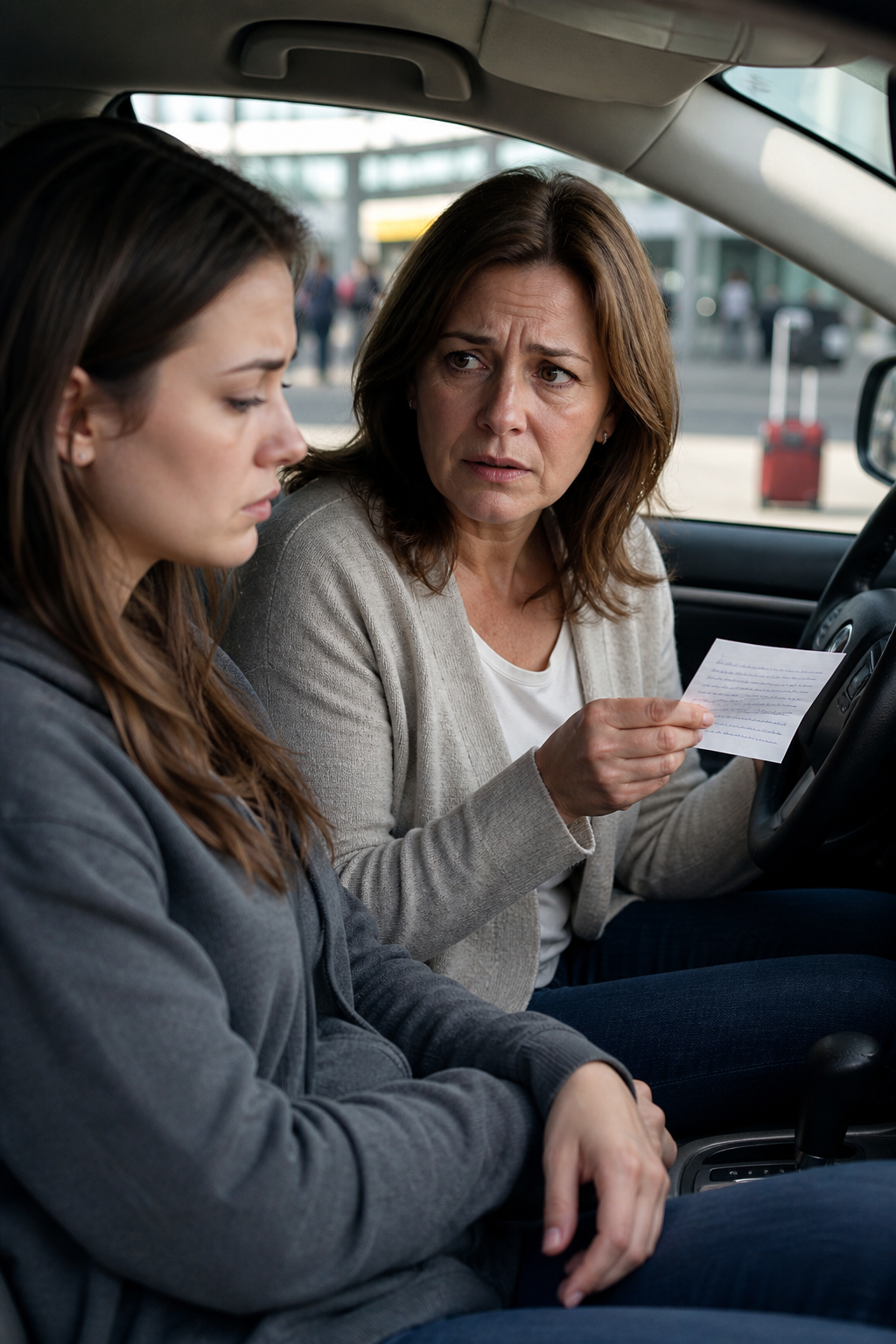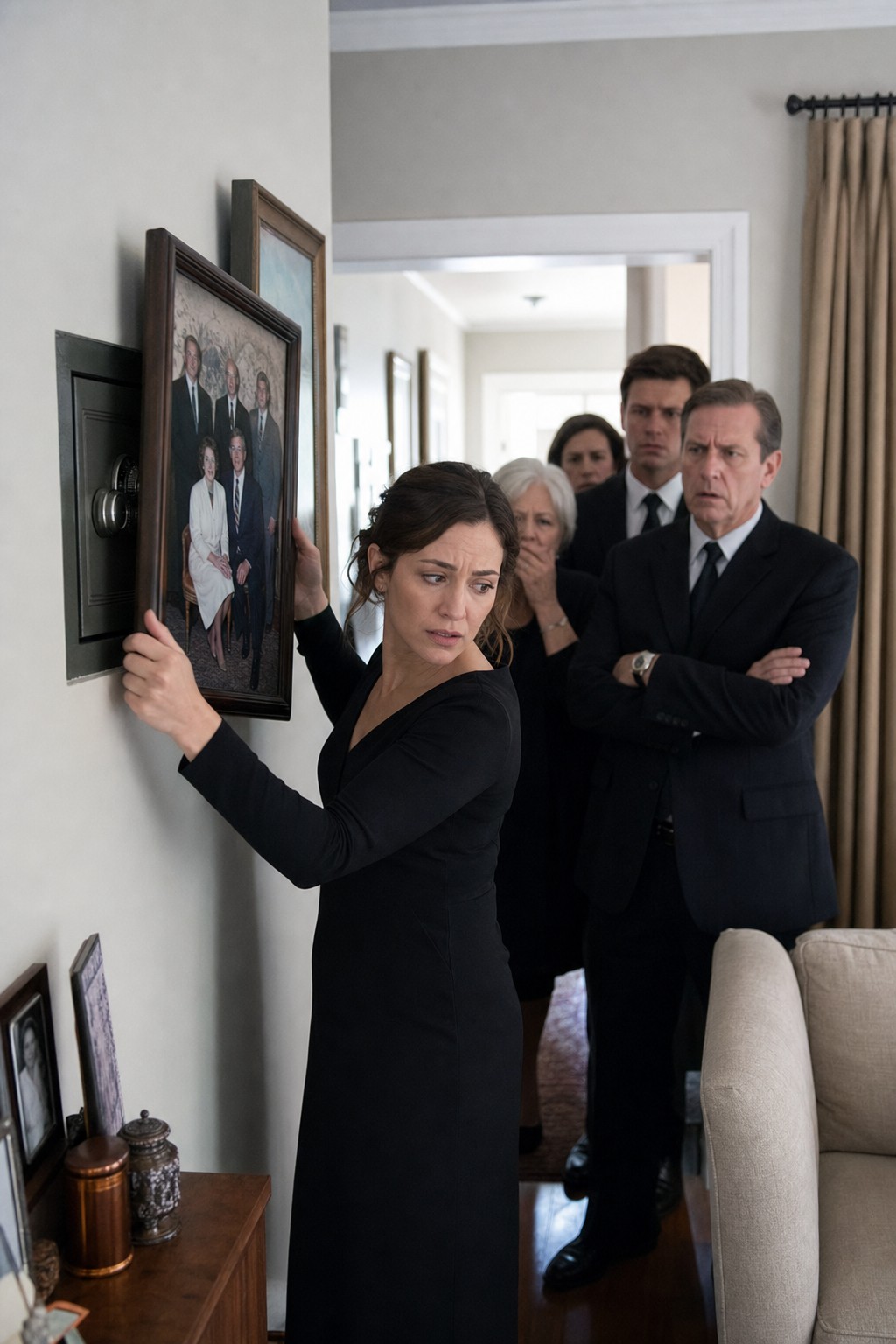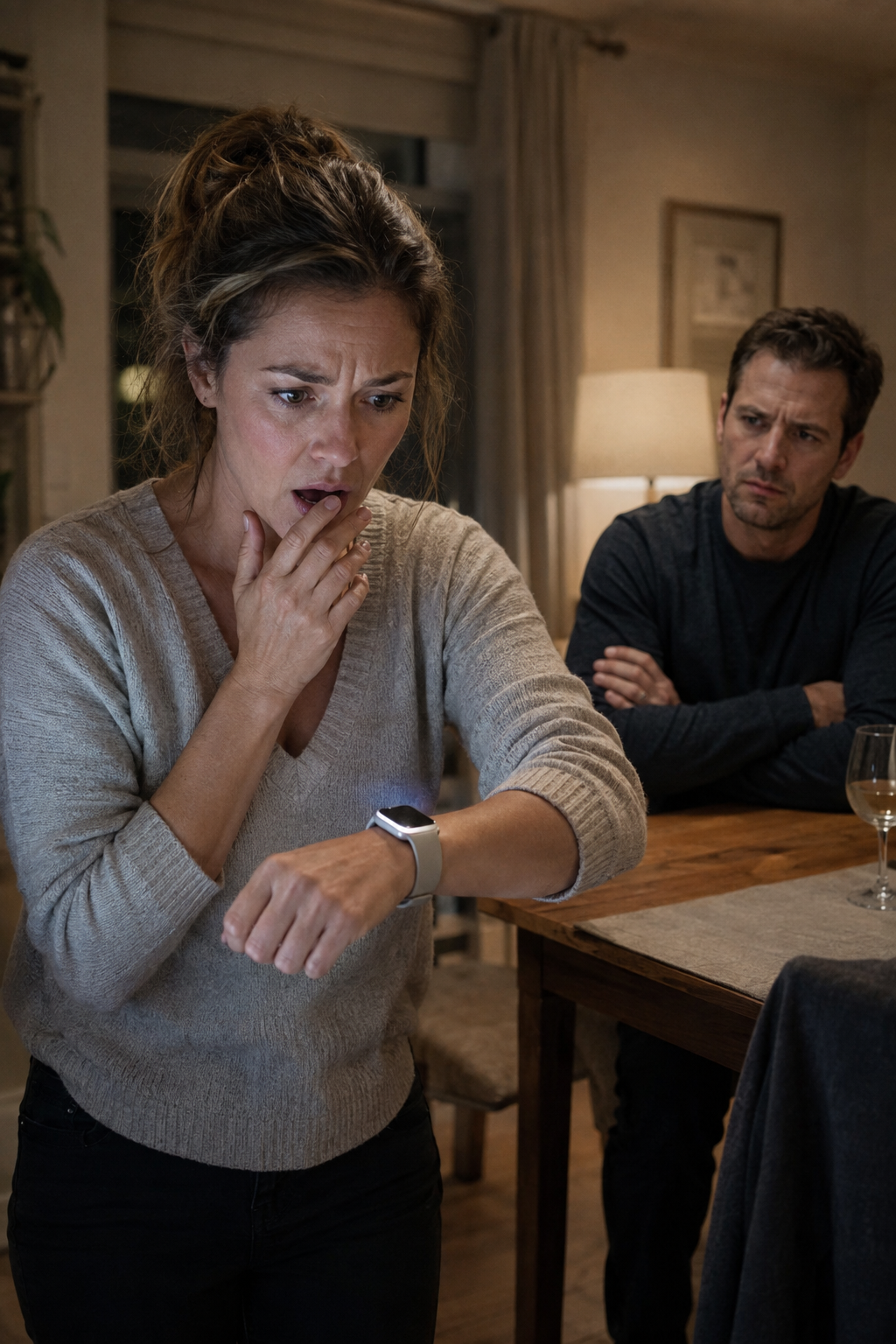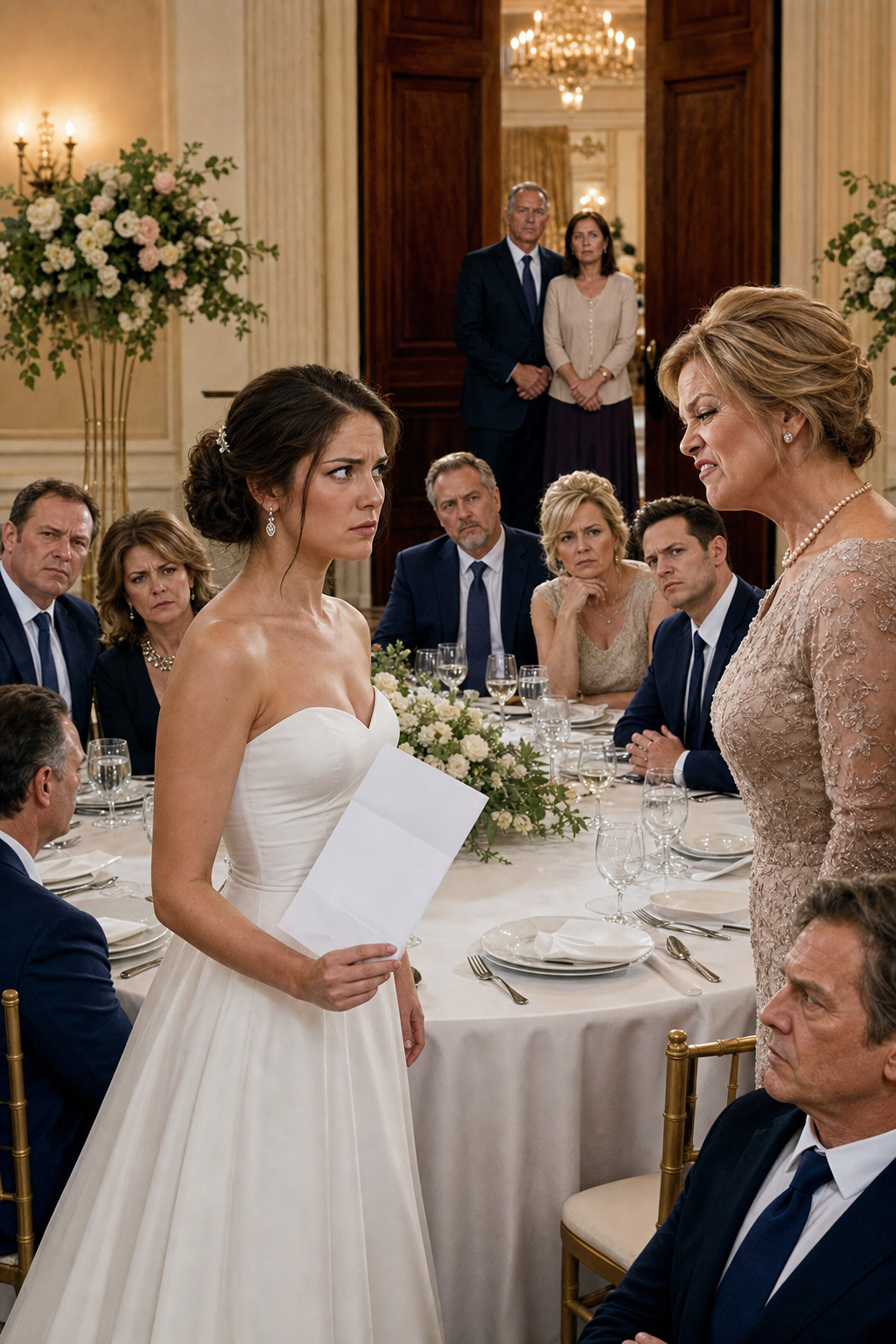
My son looked me in the eye and said, “Sometimes I wish I could choose a different mother.” I did not raise my voice. I did not answer back. I simply stood there, smiled through the silence, and walked away.
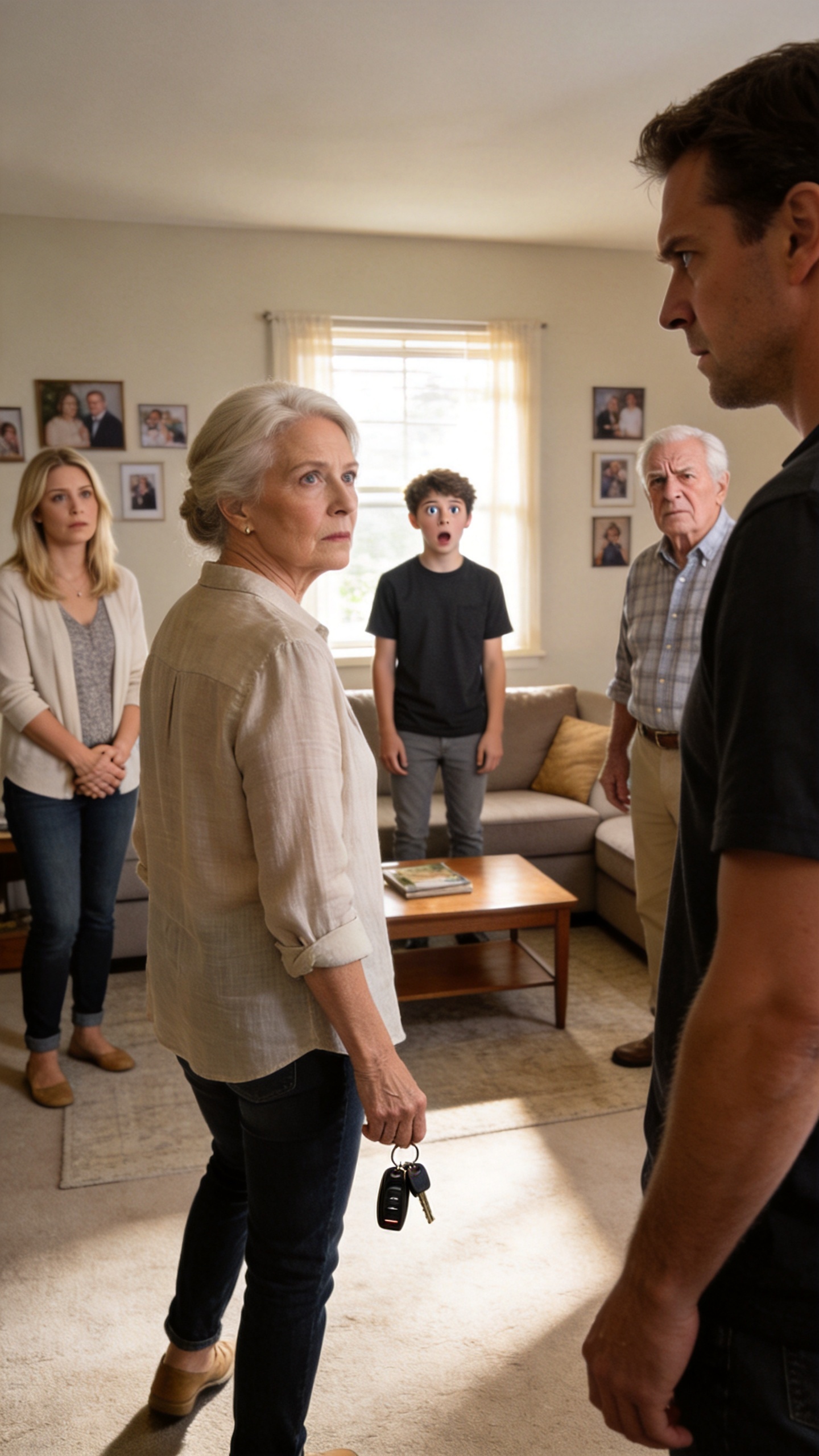
The Moment They Thought I Would Stay Quiet
Eleanor sat across the dining table from Mark. He locked eyes with her and said, “I wish I could choose my own mother.”
For a few seconds, the only sounds in the Pacific Heights house were the gentle tick of the brass clock above the built - in shelves and the soft rustle of fog against the windows. The roast chicken Eleanor had spent hours making sat untouched between them.
Its once - crispy skin was losing its shine under the dining room light. The rosemary potatoes in the blue ceramic dish were getting cold, and the salad was starting to droop.
There were three place settings with linen napkins, Diane's silverware, and the fine wineglasses Eleanor still washed by hand. Her late husband had thought some things needed special treatment.
Mark wasn't a frustrated kid throwing a tantrum or a teen slamming doors. He was thirty - two, wearing a well - fitted gray sweater that probably cost a fortune.
He sat in the house where Eleanor had raised him, expecting her to give up what his father had made sure would be hers.
Eleanor gave a small, almost secretive smile. She looked down at her phone, tapped the screen with a neatly manicured finger, then looked back at Mark as if waiting to see if he'd break.
After her husband died, grief had taught her body a strange kind of control. She could be falling apart inside but still straighten a napkin. She could hear words that broke her heart and still lift a glass of water without spilling.
She folded her napkin twice and placed it beside her plate. An envelope lay near Mark's elbow. It was cream - colored, made of thick paper, with her attorney's office address stamped in the corner.
Inside were the property papers he'd brought, saying he wanted to “simplify the estate. ” He'd said that twice before dinner.
First in the foyer when Diane took off her camel coat, and then in the kitchen while Eleanor stirred the gravy and he pretended to admire the backsplash his father had put in fifteen years ago.
What he really meant was getting her to transfer the house to him. The Pacific Heights house had been her husband's pride. It wasn't just because it was nice, but because it had seemed impossible to own when they first dreamed about it.
When they bought it, the electrical wiring was old, the porch steps were uneven, and one upstairs window was so stuck that her husband joked it was more stubborn than half the men in his firm.
They fixed it up little by little. They planted hydrangeas by the front path. They marked Mark's height on the pantry door with a pencil until he turned twelve and said he was too old for it.
They'd had Thanksgiving dinners, school fundraisers, board meetings, and a rain - soaked graduation party under rented white tents while the Golden Gate Bridge disappeared in the fog.
Her husband had left the house solely to her, not to a trust, not to Mark, and not to some so - called future business plan with fancy brochures and iffy calculations. Mark knew all this. He also knew she'd rarely said no to him when it mattered.
“Mom,” he said, lowering his voice like he was the rational one and she was being unreasonable, “you're acting like I'm trying to take something from you.”
Eleanor eased back in her chair. Her white blouse was neatly tucked into high - waisted slacks, and the diamond studs in her ears sparkled in the chandelier light every time she turned her head. “Diane, no one is trying to take anything,” she said.
“We're just discussing strategy. This house isn't being fully utilized. ”
The words hit Eleanor like a cold draft under a closed door. She pictured Mark in the study on Sunday mornings, sipping coffee while reading the newspaper.
She remembered him as an eight - year - old, fast asleep on the living - room floor after building a fort with couch cushions.
She saw herself in the kitchen after her husband's funeral, one hand on the marble counter, unable to remember why she'd opened the drawer.
Mark let out an annoyed sigh. “This house could be the start of something big. Do you understand what the San Jose deal means? It's not just a lease. It's a major step for my firm.
If I can get the right space and show investors I have real collateral, everything will change. ”
“You already get a payout from your father's trust every year,” Eleanor said. “That's not enough for this,” Mark replied. “It was enough to start your business debt - free,” she countered.
Mark's jaw tightened. Diane looked down, but Eleanor noticed the corner of her mouth twitch up. Mark slid an envelope towards Eleanor. “Dad would have understood.” It wasn't just a plea; it was a threat.
For thirty - eight years, Eleanor's husband had stood by her through every tough decision. He listened calmly, making any room feel secure. He loved Mark deeply but understood him better than Eleanor ever had.
When Mark's first company failed in his twenties, her husband advised letting him face the consequences. Eleanor ignored him and secretly paid the suppliers. When Mark wanted his first apartment, her husband suggested he save for another year.
Eleanor paid the down payment. Whenever Mark overspent, missed deadlines, changed plans, or thought confidence was the same as preparation, Eleanor cushioned his falls. Near the end of his life, her husband called it meddling.
“He would have wanted you to be independent,” Eleanor said. Mark's face darkened. “Easy for you to say. You're sitting on everything he built.”
Diane's phone lit up beside her plate. Before she flipped it over, Eleanor saw a message preview. Diane knew Eleanor had seen it. For the first time that evening, a look of doubt crossed Diane's face.
Eleanor didn't grab the phone or demand to know who sent the message. She just looked back at Mark and realized, clearly and painfully, that this dinner wasn't a discussion. It was a negotiation meant to end.
They'd come expecting her signature as casually as someone expects a valet to bring their car.
“You've always been controlling,” Mark said. “Diane's family actually supports ambition. They don't hoard property like it's a sacred relic. ” Diane gently placed a hand on Mark's arm.
“We just think it's time for someone focused on the future to manage the assets. ”
Eleanor was sixty - one. She was active on two nonprofit boards, evaluated foundation grants, and managed the family trust with more care than Mark ever put into his presentations. She knew the return on every account to the last cent.
But because she didn't brag about her decisions at cocktail parties or use trendy words like “venture,” “scale,” and “disruption,” they'd confused responsibility with fear.
Mark was taken aback by how calmly Eleanor sat there.
The Proof They Never Saw Coming
Eleanor Hayes gathered the plates. First, Mark's, which he hadn't touched. Then Diane's, and finally her own. The silverware made a soft tapping sound against the china. As she carried the dishes to the kitchen, neither Mark nor Diane said a word.
The light over the kitchen island seemed warmer than the chandelier in the dining room. She put the plates next to the sink and held onto the counter. She rinsed each plate slowly, listening to their muffled voices from the dining room.
Diane whispered, and Mark replied in an annoyed mumble. A chair scraped on the floor.
When Eleanor went back, the envelope was still on the table. Mark stood there with his coat over one arm, wearing that familiar hurt look he always used to make her feel bad for disappointing him.
“We’ll give you a few days,” he said. “I won’t sign over the house. Not now, not next week, not ever,” Eleanor said. Mark let out a short, bitter laugh. “So that’s it?” “Are you really choosing a house over your son?”
Eleanor looked around the room she and her late husband had built over the years. A framed black - and - white photo showed Mark at ten, with a missing front tooth.
The old piano was against the far wall, still a bit out of tune because her husband had loved its imperfect sound. Rain tapped on the bay window. The envelope on the table was like a test she finally knew how to pass.
“No,” she said. “I’m choosing to stop confusing love with giving in.”
Mark stared at her as if she were speaking a language he thought was beneath him. Diane stood up smoothly. “Come on, Mark. She’s made her point.”
Mark stayed there for a moment, waiting for her to give in. She'd always given in to him. She could almost see him counting on it, just like he counted on gravity.
The old urge came over her - to fix things, call him back, promise to talk it over, make soup, write a check, and protect him from life's harshness. But then she remembered what he'd said. Sometimes I wish I could choose a different mother.
The front door slammed so hard the glass panel beside it shook. The noise echoed through the house and faded into the silence that follows the end of something long - standing.
For three weeks, Eleanor didn't contact Mark. It might seem easy to someone who hadn't built their identity around being available. For her, it was like learning to breathe with half her lungs.
Every morning, she made coffee and stared at her phone on the kitchen island. In the afternoons, she worked in the garden, trimming lavender and removing dead rose petals as fog drifted over the roofs.
At night, she sat in her husband's study, reading the trust papers he'd arranged with his usual precision.
On the fourth evening, she found the letter. It was behind the original trust binder in the lowest desk drawer, sealed in an envelope with her name written in her husband's careful blue handwriting.
She recognized the pressure of his pen, the slight slant of his letters, and how the capital L in Eleanor always rose a bit too high.
She sat in his leather chair and opened the letter. The desk lamp cast a warm glow over the page.
If you're reading this, I'm gone. And you're probably shouldering more than one person ever should. I know you well. You'll want to shield Mark from everything, even from his own mistakes. But our son has to learn the true cost of his choices.
Don't let grief turn you into his personal bank. Don't let guilt shrink you. The house is yours. You need a place in this world where your peace can't be bargained away.
Love him. Guide him. But don't save him from every outcome. And even if he never changes, you still have to live with yourself.
By the last time I read the letter, my tears had fallen on the page and smudged the word “peace.”
The next afternoon, Mark's lawyer called. He spoke with that careful politeness young lawyers use when they know the family drama behind a legal issue is a mess.
He said Mark wanted to talk about “restructuring the trust distribution schedule” and “an early cash - out related to a commercial lease deal. ”
I jotted the phrases on a yellow legal pad. I knew right away what Mark wanted: his money early.
Before, I'd have called him as soon as the lawyer started talking. I'd have asked how much he needed, when, if he'd eaten, if he was sleeping, and if Diane was mad. I'd have fixed things fast and convinced myself I was saving our relationship.
Instead, I opened the trust binder and read the rule out loud. “No early payouts without all trustees agreeing,” I said. “And I don't agree.”
The lawyer paused. “Mrs. Hayes, Mark said this was urgent.” There was another silence, then the sound of papers shuffling. “Would you talk to him directly?”
I watched the phone vibrate next to a bowl of lemons on the kitchen island before answering.
“Mom, what are you doing?” Mark demanded. “You know what I'm talking about. The landlord needs the deposit by Friday. If I lose this lease, months of work are gone.”
I walked to the bay window with the phone. Down the hill, a cable - car bell rang softly. A woman in a red raincoat walked a terrier on the sidewalk.
“You made a business deal with money you don't have,” I said. “That's not my problem.”
Mark laughed without humor. “You've changed.”
“No,” I said. “I've stopped paying for you to stay the same.”
I stood at the window for a long time, waiting for guilt to wash over me. It came. It squeezed under my ribs.
It made me think of Mark at six with a fever, at thirteen after his first heartbreak, and at twenty - three calling from a parking garage because his business partner had run off with half the company's money. My body remembered how to save him.
But Richard's letter lay open on the desk behind me.
A month later, the annual Vance Foundation gala was in a hotel ballroom near Nob Hill. The room had huge windows, white orchids, and donors chatting about charity while secretly checking stock prices under the table.
Richard and I had helped start the foundation's youth mentorship program. Walking in without him still felt like I was only half there.
I wore a navy dress and the pearl earrings he'd given me for our twenty - fifth anniversary. While talking to two old colleagues near the silent - auction display, I saw Mark on the other side of the ballroom.
When The Room Finally Understood
Eleanor Hayes spotted Mark across the crowded ballroom. He looked well - groomed but clearly on edge. Diane stood beside him in a sleek black dress, forcing a smile that was a bit too wide.
They had cornered David, a long - time friend of Eleanor's late husband and a well - known commercial developer in the Bay Area.
Mark was gesturing with one hand while holding a barely - sipped glass in the other. Diane kept nodding, as if her body language could convince David's wife to support their cause. Eleanor recognized the tense set of Mark's shoulders.
At first, David listened politely. But then his expression changed to one of polite discomfort, like he was looking for a graceful exit. He asked a question. Mark answered too quickly. David followed up with another, and Mark's smile started to look forced.
Diane jumped in, talking about "family legacy. " David's wife turned to the auction display, feigning interest in a watercolor of Half Moon Bay.
Mark stormed across the ballroom, with Diane trailing behind. He kept his anger in check only because there were people who knew their family around. "Did you say something to David? " he asked Eleanor quietly.
"He shut me down like he had already made up his mind. "
Diane spoke softly, but there was a hard edge to her voice. "Eleanor, everyone knows you and Richard had influence here. One word from you could have helped us. " Eleanor studied Diane.
She was good at looking concerned, like it was a carefully chosen accessory.
"I didn't close the door," Eleanor said. "And I won't pretend Mark is ready for a deal he can't make on his own." Mark's face turned red. "You want me to fail," he said.
"No," Eleanor replied. "I want you to know the difference between running a real business and just putting on a show." Mark's eyes grew cold as his wounded pride flared up. "That's rich coming from someone who inherited everything."
Once, those words would have stopped Eleanor. She would have smiled, touched his arm, and led him away to spare him the embarrassment. But this time, she put her glass on a nearby table and looked him in the eye. "I inherited grief," she said.
"The rest was built with your father over forty years of hard work you never saw. "
Diane was the first to look away. Mark said nothing. He clenched his jaw, took a step back, and disappeared into the crowd. Eleanor watched him go, feeling the familiar pain, but there was a new sense of strength within her.
A mother could love her child but not let his disappointment control her.
Two weeks after the gala, Mark showed up at the house alone. When Eleanor opened the door, he looked younger, but not in a sweet way. His hair was a mess, and there were dark circles under his eyes. He was wearing jeans and a navy jacket.
There was no more polished confidence, and Diane was nowhere in sight.
On the porch, under the gray afternoon sky, he looked like the boy who used to come home from school pretending he wasn't hurt. In the living room, he refused tea. That told Eleanor things were worse than he was letting on.
Mark always drank tea when he was trying to butter her up.
He sat on the edge of the sofa, elbows on his knees, eyes fixed on the rug. "The San Jose lease fell through," he said. Eleanor sat in the chair that had belonged to her late husband. "The architecture firm wants payment for the preliminary layouts.