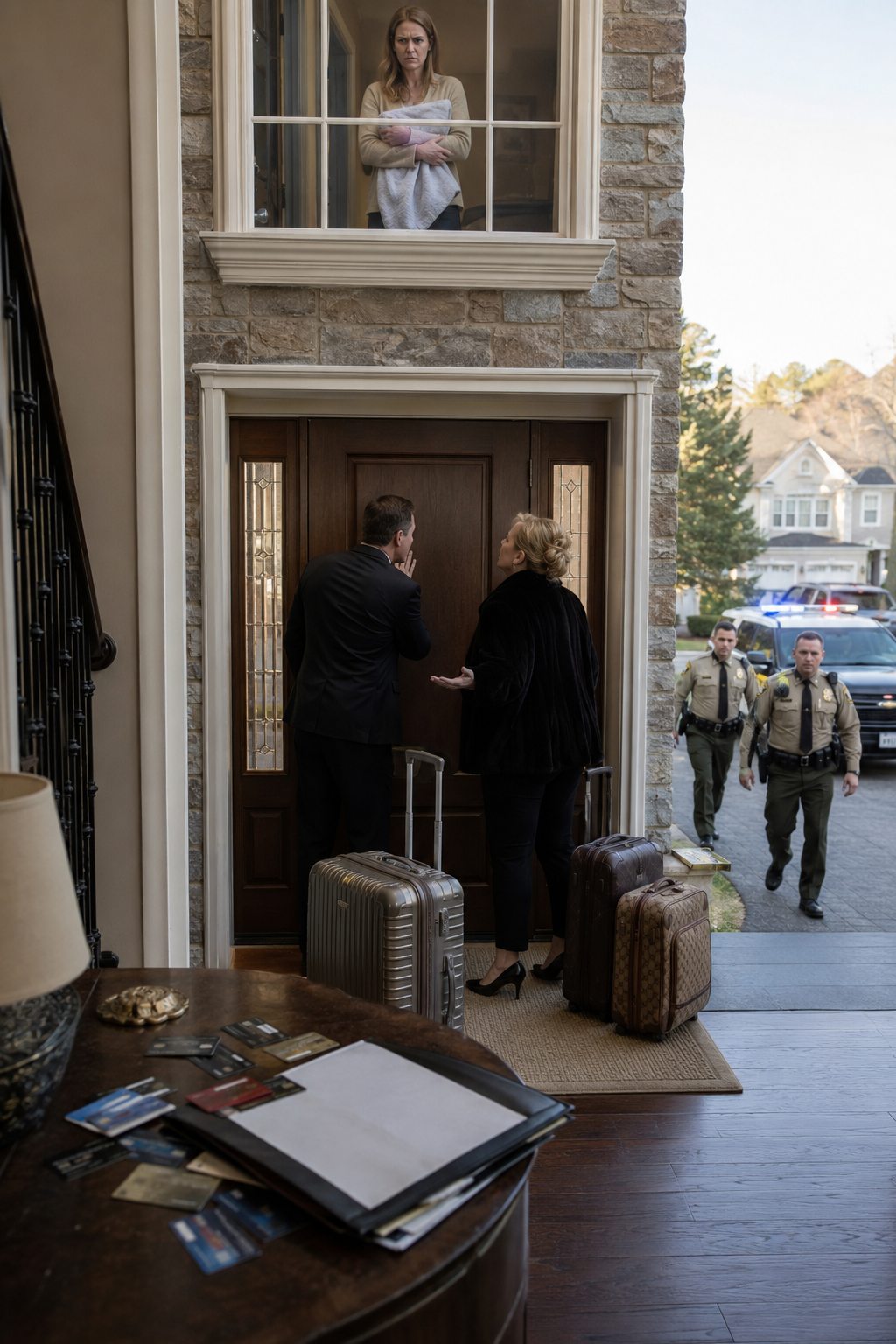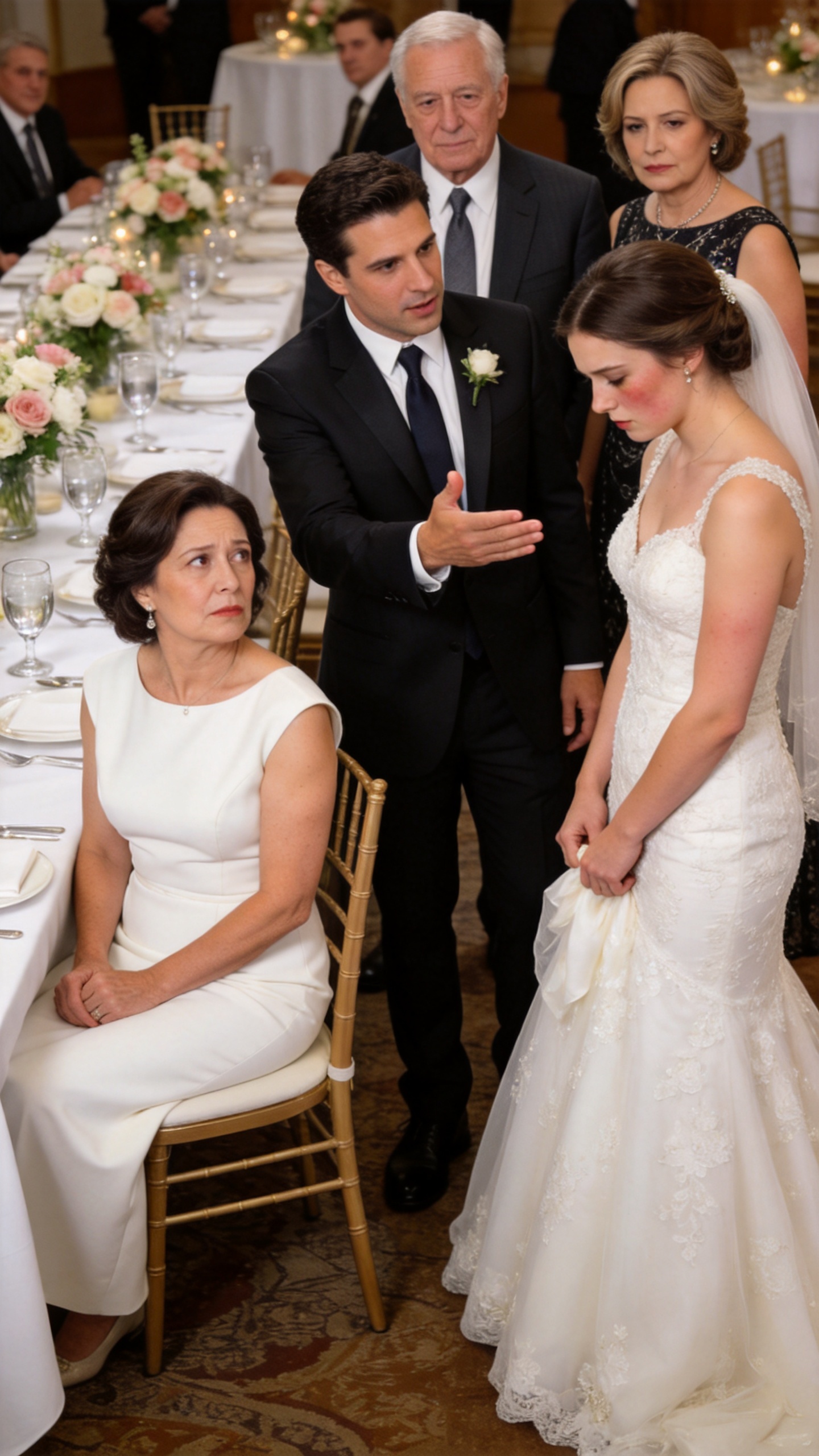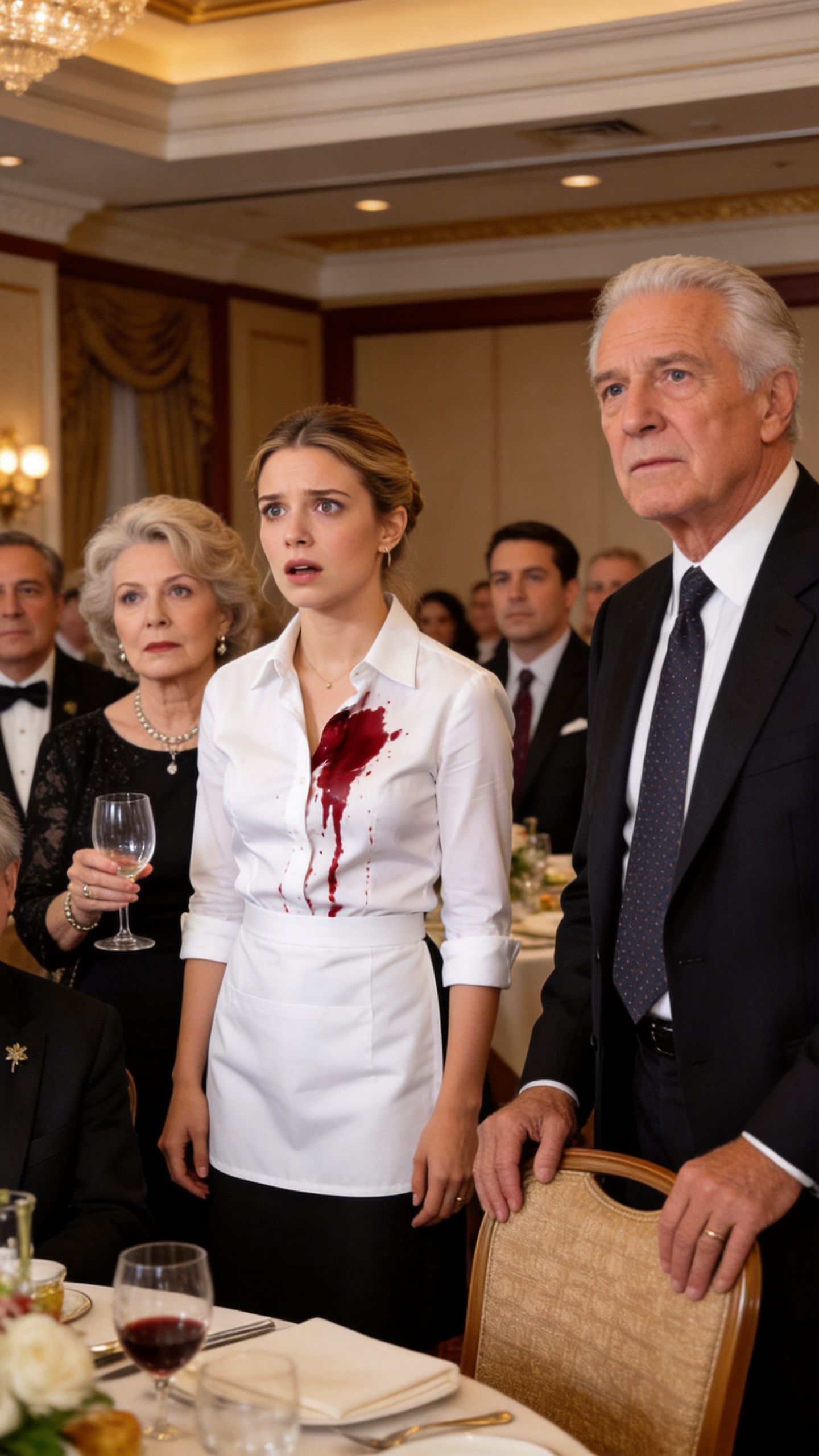
My son looked me in the eye and said, “Sometimes I wish I could choose a different mother.” I did not raise my voice. I did not answer back. I simply stood there, smiled through the silence, and walked away.
We missed the retainer deadline, and now they're demanding the balance under the contract. It's fifty thousand dollars. "
There it sat. Not as much as the house was worth, but plenty to be a real eye - opener. He finally met my gaze. Under that grown - up face, I saw the same old pleading look.
“It'd just be a short - term loan. I'll pay you back once the next trust money comes in,” he said.
His request unlocked a long - shut part of me. Behind that mental door were decades of gut feelings. I could write the check right then. I could wipe out his worry before nightfall. I could make him thankful for a week or maybe two.
I could buy a bit of peace and call it kindness. But peace bought that way always cost more later.
He stared at me. “What do you mean, no?”
“I mean I won't lend you fifty thousand dollars,” I replied.
Shock froze his face, and then it turned to anger. “That's nothing compared to the estate.”
“It's a big deal when it comes to your habits,” I said.
He jumped up so fast the coffee table shook. “My habits?”
“Are you going to let your own son get buried in a contract fight just to prove a point?” he demanded.
“I'll pay for a good financial advisor to look at your company's debts and help you work out payment terms. But I won't pay the debt for you,” I told him.
“I don't need an advisor,” he snapped. “I need money.”
“No,” I said softly. “You need good sense. You've been using money as a substitute.”
He looked at me with shocked and bitter eyes, like I'd changed the locks on a house he thought was his. “You're punishing me for what I said at dinner.”
“It hurt me,” I said. “But this isn't punishment. It's the first real limit I've set for you in years.”
He grabbed his jacket off the sofa arm. “Jessica was right,” he said. “You use money to control people.”
I stood up but didn't try to stop him. “If that were true,” I said, “I'd write the check and keep you relying on me.”
This time, he closed the door quietly.
The months after that were calmer than I'd thought but more painful than I'd admit. Eleanor settled the dispute with some of her own savings.
She left her swanky downtown office for a shared workspace with glass walls, lousy coffee, and young startup founders who carried their laptops like shields.
She sold the fancy SUV she'd once said was a must for impressing clients and got a used sedan from a Daly City dealership.
A mutual friend who loved to share news said Diane was unhappy. “She's adjusting,” my friend Elaine said one morning over coffee in Laurel Village. “That's the nice way to put it.”
I stirred my drink and watched people walk on the sidewalk. Being tired didn't mean being beaten. It didn't mean being owed something. It meant she was finally taking responsibility.
Diane called near the end of October. Her voice had lost its usual sparkle. “Eleanor's barely sleeping,” she said. “This whole thing is taking a toll on our marriage.”
I stood in the pantry, my hand near the faded pencil marks that showed Eleanor's childhood height on the doorframe. “Business stress affects a lot of marriages,” I said.
I spoke carefully, keeping my voice even because any sharp words could be used against me. “Eleanor's had an education with no debt, a trust payment most people would dream of, and more second chances than she can remember.
If this time seems impossible, it might be because no one's ever made her build the strength to handle it. ”
“Do you really think you're helping her?” Diane asked.
“I'm not sure about a lot of things,” I said. “But I'm sure that rescuing her isn't helping anymore.”
What Their Cruelty Cost Them
Eleanor ended the call abruptly. She saw Mark and Diane again at Thanksgiving, at her sister Diane's place in Marin. The house was filled with the scents of turkey, sage, woodsmoke, and damp earth.
Diane's grandkids were running through the hallway in their socks. The adults were gathered around the kitchen island, holding their dinner plates and chatting about family news.
Mark and Diane showed up late. Mark hugged Eleanor politely, like he was greeting a far - off relative at a funeral. Then he spent most of the meal near the drinks, only speaking when someone asked him a question.
Diane wore a simple brown sweater and hardly any jewelry. She seemed less put - together than usual, or maybe just more vulnerable.
After dessert, Eleanor found Mark on the back patio. The rain had stopped, making the stone under the porch lights dark and shiny. Mark stood with his hands in his pockets, looking out at the black outline of the bay. Without turning, he gave a little smile.
“You still say that. ” The silence between them was thick but not angry. Eleanor stood beside him and let it be.
“I’m tired,” Mark said finally. Eleanor studied his face. In the soft porch light, she could still see the little boy who used to focus so hard when tying his shoes. “Your father made things seem easier than they were,” she told him. Mark nodded.
“I used to think he just knew what to do. ”
“Three big times before you were ten. One almost made us lose this house when we didn't have enough equity. He didn't hide it from you because he was ashamed. He hid it because we thought childhood should be safe,” Eleanor explained.
Mark looked back at the yard. “And you kept hiding things after I was grown,” he said.
“I thought I was protecting you,” Eleanor said. “Sometimes I was. Sometimes I was protecting myself from seeing you in pain. ” Mark looked at her again. There was still resentment in his eyes, but now there was something else too.
“It felt like you cut me off because I hurt your feelings. ”
“You did hurt my feelings,” Eleanor said. “Badly. But I changed because I saw what my kind of love was doing to you. You started to think support meant getting what you wanted. You started to see me as a problem when I wasn't useful. ” “No,” Eleanor said.
“You shouldn't have. ”
The patio door opened behind them, and warm air and laughter spilled into the cold night. Diane appeared in the doorway, saw them talking, and quietly went back inside. That small act of restraint was the first nice thing Eleanor had seen from her in months.
One of the tenants in a retail property Mark managed broke the lease after an expansion failed. The empty unit caused a cash - flow problem, and the mortgage payment on the building was due before a new tenant could move in.
When Mark called Eleanor this time, his tone was sincere. “Mom,” he said, “I'm not asking you to pay it. ”
Eleanor was sitting at Richard’s desk under the old brass lamp, with foundation proposals stacked beside her. “I have a letter of intent from a new tenant. They need sixty days for permits and to set up.
The bank has a default clause if I miss the payment date. I need a short - term loan, but I know what you'll say,” Mark told her. The old Eleanor would have already been getting the bank details. “What do your projections show? ” she asked.
Mark hesitated. “You want the real numbers?” He let out a tense breath. “They're tight. But with the new tenant, the building will be okay by the second quarter. Without the extension, I'm in trouble.”
“Because I wanted to see if you'd offer help right away. ” At least he was honest. “I won't give you a bridge loan,” Eleanor said. “But I'll call Martin Vance and tell him you'll ask for a formal meeting. Not a favor, not a waiver. A proper meeting.
Your father respected him, and Martin will take the call. You'll go alone. Bring clean financial records, the signed letter of intent, updated cash - flow projections, and a repayment plan. If the numbers add up, you'll get the extension on your own. ”
Eleanor spent the morning outside, wearing gardening gloves. She pulled weeds that didn't really need it and trimmed roses she'd already pruned. Every few minutes, she peeked at her phone on the patio table.
She could tell from his voice before he even said it. She sat down on the stone wall next to the lavender. “Yes,” he said. His laugh was a bit shaky but sincere. “Martin made me redo the vacancy assumptions in front of two loan officers.
He said Dad would've thrown my spreadsheet across the room. ”
Tears welled up in Eleanor's eyes as she smiled. “My hands were shaking,” Mark admitted. “But I got through it. Diane helped me clean up the expense sheet last night. We found three subscriptions I'd forgotten we were paying for.
It wasn't a lot, but it made the numbers look less sloppy. ” “Yeah,” he said. “I'm starting to get it. ” It was the first time in years he'd shared a problem without expecting Eleanor to fix it.
By spring, the new tenant moved into the building. Mark and Diane spent weekends painting the unit themselves to save money. Without Eleanor asking, a mutual friend sent her a photo. Mark stood on a ladder in old jeans, with blue painter's tape on his sleeve.
Diane sat on the floor next to a tray of rollers, her hair pulled back as she laughed at something out of the frame. For the first time, they seemed like a real couple living a normal life, not just in a fancy show.
It arrived on a Thursday morning, between a foundation report and a catalog Eleanor had never ordered. The paper was cream - colored again, but this time it wasn't from a lawyer. Mark had written one word on the front.
Inside was a hand - written invitation to Sunday brunch at their apartment. There was no mention of money, the trust, or some hidden plea for help. Eleanor read the invitation twice at the kitchen island before putting it beside Richard's letter.
Their apartment was in a simple Noe Valley building with a narrow staircase, a sticky buzzer, and a small entry table where Diane had put a bowl of lemons, like she was trying to make the place brighter. Mark opened the door before Eleanor knocked again.
It wasn't the quick, forced hug of a son doing his duty. It was real, like the hugs he used to give before he thought being tender was a weakness.
Diane stood at the kitchen counter in an apron, chopping chives. She looked a bit nervous. “I made frittata,” she said, then gave a little smile. “Actually, Mark made it. I just watched the parts with the oven.
” Mark rolled his eyes, but it was a friendly gesture.
They ate at a small round table by the window. Fresh berries, toast, coffee, and three tulips in a vase filled the space between them.
They talked about the new tenant, their neighborhood, Eleanor's garden, and a documentary Diane had watched about small - company accounting, a topic she'd once thought was boring.
What Their Cruelty Cost Them
Eleanor sat at the table with her son Mark. Mark said, “This is so boring.” Eleanor replied, “That’s exactly why it’s important.” She let out a laugh before she could stop herself.
After the dishes were cleared, Diane stood up. “I’ll give you two some time alone,” she said. It was an unspoken apology.
Once Diane left, Mark reached over to the windowsill and picked up an envelope. For a split - second, Eleanor was transported back to the dining table, facing official papers and her son’s demands. Mark saw the fear on her face.
“It’s not what you think,” he said quickly.
Inside the envelope were copies of the deed - transfer papers he had once made her sign. Across the first page, he had written “VOID” in thick black marker. “I told my lawyer to close the request for good,” he said.
“No new offers, no changes, no sneaky ways through the trust. ”
Eleanor’s fingers touched the edge of the paper. “The house is yours,” Mark said. “It always was. I convinced myself that because Dad built a life there, I had a right to it. But he left it to you because he trusted you. I should have too.”
Mark looked down at his hands. “I need to really apologize,” he said. “I already said sorry for my words. I need to apologize for what I believed.”
Outside the window, a delivery truck rumbled. Upstairs, a child laughed, followed by the sound of running feet. The normal noises of other people’s lives filled the silence between them.
Mark said, “I thought love meant you’d always take away the hard parts of my life. When you stopped, I thought you stopped loving me. But you were the only one telling me the truth. I wasn’t building a business.
I was building a life thinking you’d fill every gap. ”
He looked up, his eyes shiny with tears. “I’m ashamed of what I said at dinner.” Eleanor reached across the table and held his hand. “I was ashamed too,” she said softly. “Not of you, but of what my fear made happen.”
Diane came back and stopped in the doorway, her arms crossed over her apron. She clearly knew something had changed. Her eyes moved between Mark and Eleanor. “I owe you an apology too,” she said.
She took a breath. “I pushed him. I wasn’t the only one, but I did. I thought the house was the key. I thought if we had enough support, everything would be okay. I didn’t realize I was asking you to give up your security so we could pretend we earned ours.”
That admission meant more to Eleanor than any fancy speech. Diane wiped her hand on her apron, embarrassed by her emotions. “We’re learning.”
That afternoon, as Eleanor drove home, the late - day sunlight covered the city. Silver light flashed across the bay between buildings. Colorful houses dotted the hills, each with its own mix of love, money, regret, and healing.
She pulled into her driveway and sat in the car for a moment before going inside. The house was quiet when she entered, but it no longer felt like a place under siege.
She walked to the pantry and traced the pencil lines that marked Mark’s growth. Richard had written the date next to each mark. The last line was a bit crooked because Mark had measured himself.
Children grow because it’s nature. A man grows when life makes him stand on his own.
That evening, Eleanor Hayes went back to Mark's study. She opened the trust binder. She didn't change the house's ownership. She didn't loosen the distribution rules. She didn't create a false sense of generosity.
Instead, she signed a separate amendment. It set up a financial education program through the family foundation. It was for young entrepreneurs who needed guidance more than a bailout. Mark would take part in the program's first year.
If the board approved later, he could come back as a mentor. It wasn't about carrying someone to success.
Months later, at the program's simple reception, Mark stood at the front of a community hall in Oakland. It wasn't a fancy ballroom or a private club. He wore a plain navy blazer.
He talked to young founders about cash - flow errors, pride, bad projections, and relying on family wealth.
Eleanor stood at the back with Diane. Onstage, Mark looked at his notes, then looked up and saw Eleanor in the crowd. For a moment, he was like a little boy looking for his mom. But he didn't look like he needed rescuing.
He wanted her to see him standing on his own.
"The best lesson my mom ever taught me was the one I hated at first," Mark said. When he finished, the audience clapped. It wasn't because of his family name or Mark's reputation. It wasn't because Eleanor knew important people.
They clapped because he spoke honestly and earned their respect.
After the talk, Mark came to Eleanor and kissed her cheek. "Mom," he said softly, "thanks for not signing. " Eleanor remembered that night in the dining room. The untouched roast chicken. Diane's secret smile. The cream envelope.
The words that broke her heart and made her see her love's true form.
She looked at Mark. He was no longer shielded from tough consequences. He wasn't polished by unearned money. He didn't mix access with affection.
And for the first time since Mark's passing, Eleanor felt the future enter the room without forcing her to let go of the past.