My Husband Gave My Car to His Mother, Until My Father's Quiet Phone Call Changed the Whole Dinner
For once, the room did not bend around his comfort. It held its shape, and he had to sit inside the shape of what he had done.
I had never seen him look so alone with his own decision.
That was what frightened him most, I think. Not the tow truck. Not the paperwork. Not even the possibility that his mother might have to hand back the keys in public.
Colin was used to arguments that happened in hallways, bedrooms, parked cars, and late-night kitchens, where he could lower his voice and make me question whether I had misunderstood him.
At that table, there were too many eyes and too many straight-backed chairs. He could not turn the story into my mood. He could not call it a private marital issue after announcing his version over dinner.
What His Mother Admitted
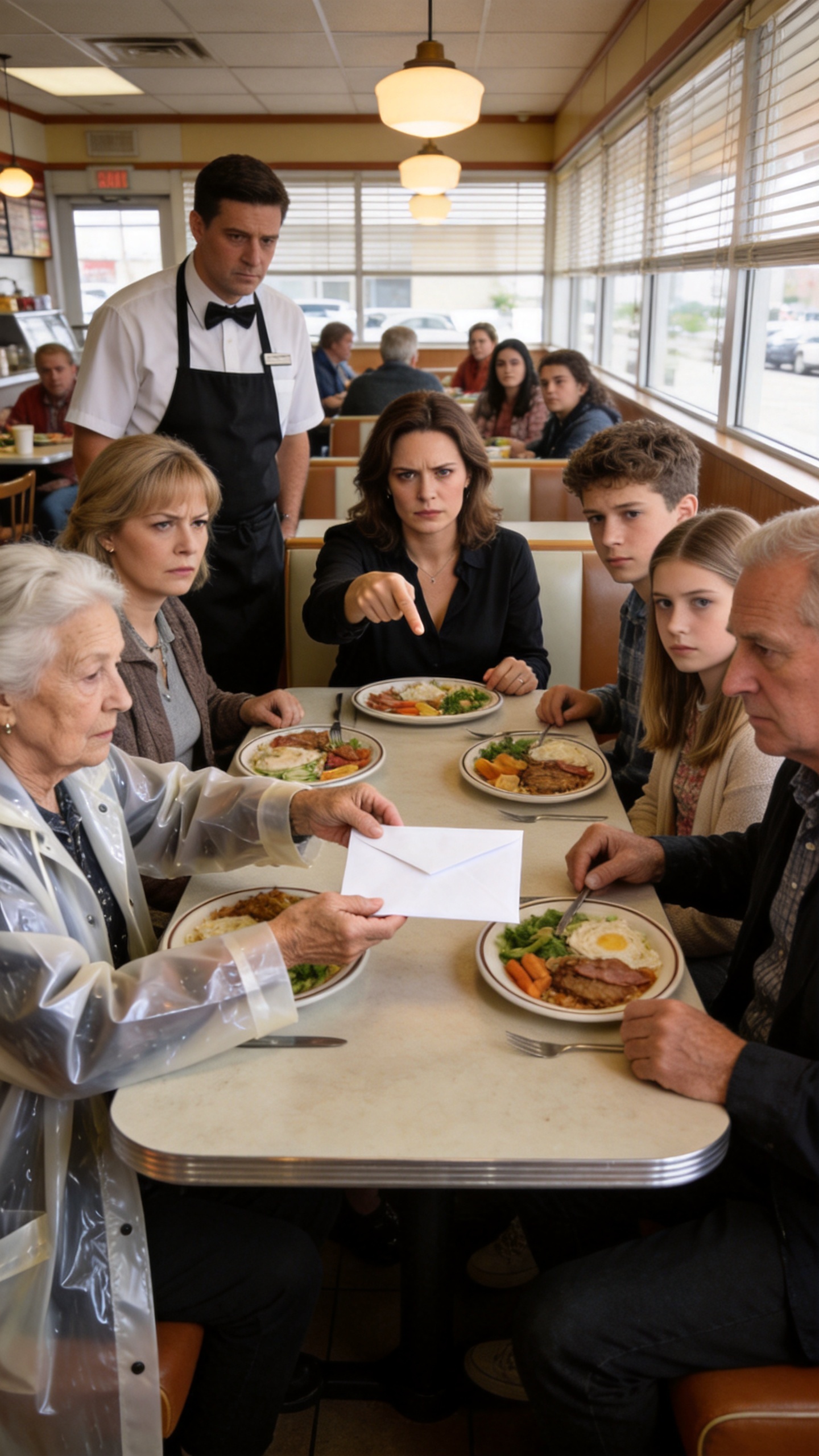
My father told Colin to put Denise on speaker.
For once, Colin obeyed.
Her voice filled the dining room, furious and shrill. She said a man was trying to take her car. She said Colin had promised it was hers. She said I should be ashamed for letting my father humiliate an older woman.
My father waited until she ran out of breath.
"Mrs. Harrow," he said, "Colin could not pass along a car that was never his. Give Mr. Benton the keys, sign the unauthorized-possession release, and let him close the recovery. If you refuse, he has instructions to call the police."
Denise began arguing again, but the confidence had gone out of her voice too.
She asked whether this was necessary. She said Colin had told her the arrangement was settled. She said she had already moved her rosary, coupons, and grocery bags into the back seat.
My father did not raise his voice.
"Then remove them," he said.
The silence that followed felt bigger than the shouting.
Colin gripped the edge of the table so hard that his knuckles changed color.
I realized he was waiting for me to soften it. That had always been my part in our marriage. He would create the damage, then look at me until I made the damage easier for everyone else to accept.
But the phone speaker crackled between us, and for once, I let the discomfort stay where it belonged.
Then Denise said, much more quietly, "Colin told me Mara agreed."
Every person at the table looked at me.
For the first time in months, my voice came out steady.
"I did not."
Colin turned on me at once.
"You could have helped my mother."
There it was again, the old trick. He had taken my car, lied to his mother, stranded me at work, and still tried to make the injury proof of my selfishness.
My father did not let Colin drag the room back into excuses.
He turned to me instead. "Where should Mr. Benton bring the Corolla when he is finished with the paperwork?"
The question was plain, almost practical.
It broke something open in me because it was the first time in a long while that anyone had asked what I wanted and waited for the answer.
"Here," I said.
My father nodded as if my choice was the only instruction he needed.
Not a debate. Not a negotiation with Colin. Not a family vote about whether I had been reasonable enough.
Just my answer, finally allowed to matter.
Colin stared at me. "You are really doing this?"
"No," I said. "You did this. I am only finished covering for it."
The Folder Beside My Bed
My brother stood first. Then my uncle. Then my sister's husband pushed back his chair.
Nobody threatened Colin. They did not need to.
The room he had expected to control with confidence had turned into a witness stand.
My father pointed toward the study and told Colin the conversation at the table was over.
"Mara will not be leaving with you tonight."
Colin gave an ugly little laugh, but fear sat underneath it.
"She is my wife."
My father looked at him for a long, quiet second.
"She is my daughter," he said. "And being married to you did not make her disappear as a person. You seem to have forgotten both facts."
Colin opened his mouth, then closed it again.
For years, he had been strongest in private, where he could twist one sentence into another and make exhaustion look like agreement.
In my parents' dining room, with the speakerphone still glowing beside his plate and my family watching every reaction, his tricks had nowhere to hide.
I went upstairs to my childhood bedroom and locked the door. My hands shook so badly I had to sit on the floor before I could breathe normally.
At 9:04, my father knocked.
He placed the Corolla keys on the dresser beside me.
Then he handed me a folder containing the recovery record, the signed unauthorized-transfer release from Denise, screenshots of Colin's texts, and the compliance report showing exactly where the car had been found.
"No life-changing answer is due from you before morning," he said.
It was the gentlest sentence anyone had given me in months.
He did not hover in the doorway after saying it.
That mattered too.
Colin's apologies had always arrived with a deadline. Forgive me before bed. Smile before we reached the party. Stop being upset before his mother called again.
My father left the folder on the dresser and gave me the one thing Colin had never offered after hurting me: space without punishment attached.
He did not tell me to file for divorce.
He did not tell me I should have spoken sooner.
He simply put the evidence where I could reach it and gave me back the time Colin had always tried to steal from me.
So I did not decide everything.
But I decided enough.
I did not go home with Colin.
The next morning, I called my bank and removed him as an authorized user. I changed every password. My brother came with me to the apartment while I packed my documents, clothes, laptop, and the mug my grandmother had painted for me when I was twelve.
Colin swung between apologies and anger.
One minute he promised counseling. The next he accused me of destroying our marriage over a car.
Denise left seven voicemails calling me cruel, spoiled, and ungrateful.
Then my father's attorney sent a short letter requiring every future message to go through a written record.
The calls stopped.
What the Scratch Reminds Me Of
Over the next few weeks, I learned how much confusion Colin had built around me.
He had used my credit cards far more often than I knew. He had told friends I was irresponsible with money while spending my income to make himself look generous. He had borrowed from my patience the same way he borrowed from my accounts, assuming both would always be available.
The Corolla was not the beginning.
It was simply the first thing he had become arrogant enough to steal in public.
The divorce was quieter than people imagine. It was paperwork, bank statements, passwords, signatures, cardboard boxes, and nights when I woke up wondering whether I had overreacted.
Whenever that doubt came for me, I opened the folder beside my bed.
Colin called it a misunderstanding.
The release said otherwise.
He claimed I had given permission.
His messages proved I had not.
He accused my father of interfering.
My attorney replied that a spouse should not need another man to explain that his wife's car was not a family favor he could redistribute.
That sentence became a kind of hinge in my mind.
For years, Colin had made every boundary sound like betrayal. If I wanted my own bank password, I was secretive. If I wanted a receipt, I was insulting his family. If I wanted to drive a car registered for me, I was selfish.
Seeing those arguments reduced to plain words on legal paper stripped away the fog he had depended on.
There was no speech dramatic enough to compete with a clean timeline and his own messages from that week.
Half a year has passed, and the Corolla is still mine to drive.
A thin tow mark cuts across the rear bumper. At first, I hated seeing it.
Now I leave it there.
It reminds me that getting something back does not erase the damage done when it was taken.
It also reminds me that repair is not the same as pretending nothing happened.
Some mornings I run my thumb over the mark before I get in. It is not beautiful, and it is not something I would have chosen. But it is honest in a way my marriage had stopped being honest.
It also brings back that dining room: the blue light hidden under the tablecloth, Colin's confidence draining away, and the second I stopped shielding a man who had never shielded me.
For years, Colin taught me that silence was the easiest way to survive our marriage.
That night, my father taught me a different kind of quiet.
Quiet does not always mean defeat.
Sometimes it is the held breath before the truth is said clearly enough for the whole room to hear.