At My Sister's Wedding, My Mother Called Me "No Degree, No Future" In Front Of 200 Guests. I Raised My Glass And Said, "This Is The Last Time You Will Ever See Me." Then The JAG Lawyer Walked In
"Your mother is about to give a toast. If she repeats the lie again, I can serve notice in front of witnesses and preserve the recording context. You do not have to speak."
I thought about going home.
I thought about the little girl in the coat closet, trying to breathe quietly so nobody would remember to laugh at her.
"No," I said. "I want to hear her say it."
Nobody Was Laughing Anymore
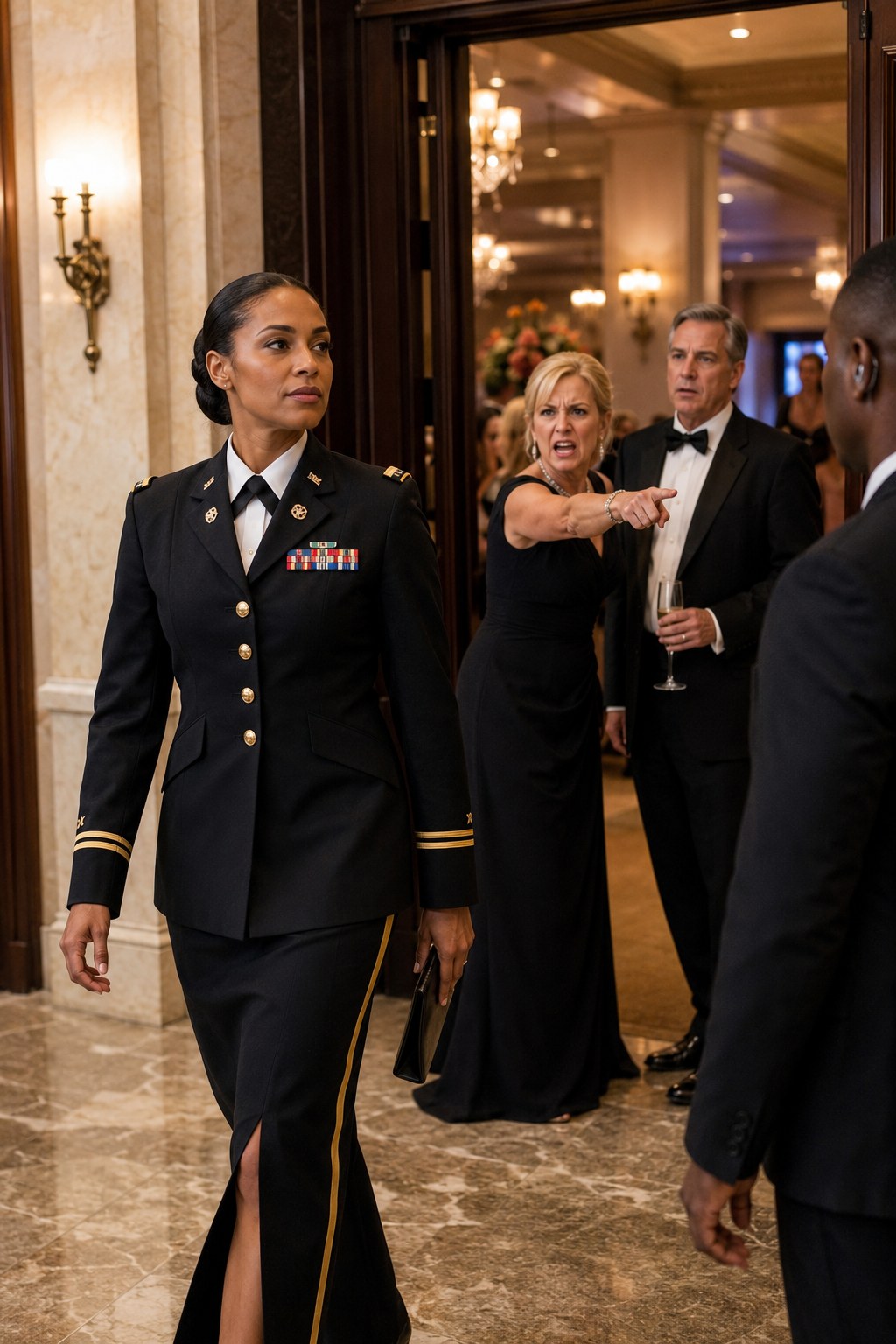
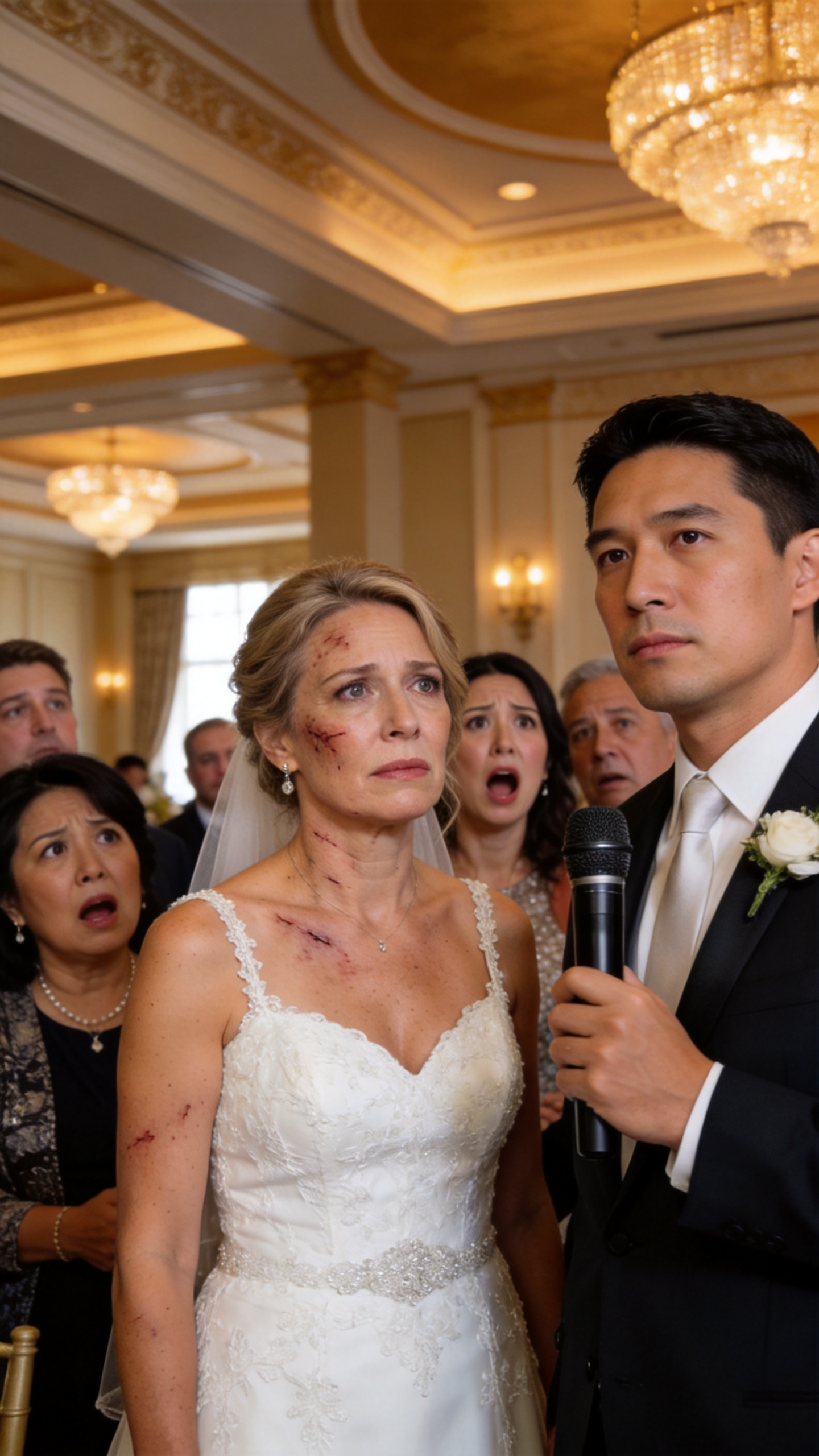
The room changed when I walked back in.
At first, people only noticed me. Then they noticed Dana beside me. Then they noticed Paul, the sealed envelope, and the way several officers at the front table sat up straighter.
My mother was already onstage.
"Families are complicated," she said into the microphone. "Some children grow into gratitude. Others grow into uniforms and grievances."
Laughter came again, weaker this time.
Brielle glanced toward the door and froze.
Grant saw Dana first.
His face lost color so quickly it looked like someone had switched off a light behind his eyes.
Dana did not hurry. She walked to the edge of the dance floor and waited until Marlene noticed her.
"Mrs. Vale," Dana said, clear enough for the microphone to catch. "I am Lieutenant Colonel Dana Merrick, Judge Advocate General's Corps. I represent Major Clara Vale regarding the misappropriation of her education trust and the defamatory statements made here tonight."
The ballroom went silent.
My mother laughed once.
It sounded thin and wrong.
"This is a private family event."
"Then you should not have made your accusations to two hundred people," Dana replied.
Grant stepped down from the head table.
"You have no right to come in here."
Dana turned to him.
"Mr. Sutton, I have certified bank records, trust documents, and a witness recording. I also have confirmation that funds assigned to Clara Vale were routed through accounts connected to your consulting business."
Brielle whispered, "Grant?"
He did not look at her.
My mother tried to recover the room with her old smile.
"Clara is emotional. She has always exaggerated."
Dana opened the folder.
"Then you will have no objection to hearing Mrs. June Vale's recording."
My mother's smile vanished.
Paul connected the small speaker to his phone.
Grandma June's voice filled the ballroom.
"Marlene, that money was left for Clara. You were trustee, not owner."
My mother's younger voice answered, sharp and impatient.
"Clara will waste it chasing uniforms. Brielle has a real future."
"You cannot transfer a child's trust because you prefer another child."
"Watch me."
A guest gasped.
The sound seemed to open the room.
People turned toward my mother. Then toward Brielle. Then toward Grant.
Dana paused the recording.
"For clarity," she said, "the documents show subsequent transfers matching those statements."
Brielle stood so fast her chair scraped the floor.
"Mom, what is she talking about?"
For the first time in my life, my stepsister sounded young.
Marlene gripped the microphone.
"This is not the time."
"You used Clara's money for my school?"
Grant snapped, "Sit down, Brielle."
Her new husband stood beside her.
"No. She should not sit down."
The room moved after that, not loudly, but decisively.
Guests who had laughed ten minutes earlier looked at the floor. One of Grant's business partners walked out. An uncle on Brielle's side pulled his wife away from the head table. The photographer lowered his camera as if the lens had become too heavy.
My mother searched the room for someone to save her.
No one volunteered.
Dana handed her a packet.
"You are being formally notified to preserve all records connected to the trust, the company transfers, and tonight's statements. Further contact with Major Vale should go through counsel."
Marlene stared at the papers as if they were written in another language.
Then she looked at me.
"Clara," she said softly. "You would ruin your sister's wedding over money?"
There it was.
The old trap.
If I objected to cruelty, I was dramatic. If I asked for truth, I was greedy. If I survived without them, I was ungrateful.
I stepped forward.
"No," I said. "You did this when you stole from one daughter to decorate another daughter's life, then invited two hundred witnesses to laugh at the daughter you robbed."
Brielle began crying.
I did not enjoy it.
That surprised me.
For years I thought vindication would feel hot and bright. Instead, it felt quiet, like a locked door finally opening onto plain air.
My mother lowered the microphone.
"I raised you."
"Grandma June raised what was left after you were done."
Dana touched my elbow once, a reminder that I did not have to keep bleeding in public.
I nodded.
Then I turned to the guests.
"Enjoy the rest of the evening," I said.
Nobody laughed.
The Last Time They Saw Me
The legal process took nine months.
Grant's consulting company collapsed first. Once the transfers became discoverable, two other clients reviewed their accounts and found problems of their own.
Marlene tried to claim she had borrowed the money for "family advancement." The court did not find that touching.
She was removed from every remaining trustee role connected to my father's estate. A civil judgment ordered repayment of the fund, interest, and attorney fees. Grant faced a separate investigation for the company transfers.
Brielle's marriage survived, but barely.
She wrote me one email six weeks after the wedding.
I did not know.
That was the whole message.
I believed her, in the narrowest possible way.
Brielle had not written the checks. She had not forged the trustee reports. But she had laughed when the benefits came wrapped in my humiliation. She had worn the life my father paid for and never wondered who had gone cold so she could stay warm.
I did not answer.
Marlene tried to reach me through relatives.
She said I had embarrassed her.
She said I had taken things too far.
She said family should not involve lawyers.
Dana forwarded each message to the case file and told me to block another number.
The first repayment arrived in winter.
I used part of it to establish a scholarship in my father's name for military dependents whose surviving parent or guardian had mishandled their education money. Grandma June's recording became the reason the application essay asked one question:
Who believed in your future before anyone else did?
I kept my father's dog tags.
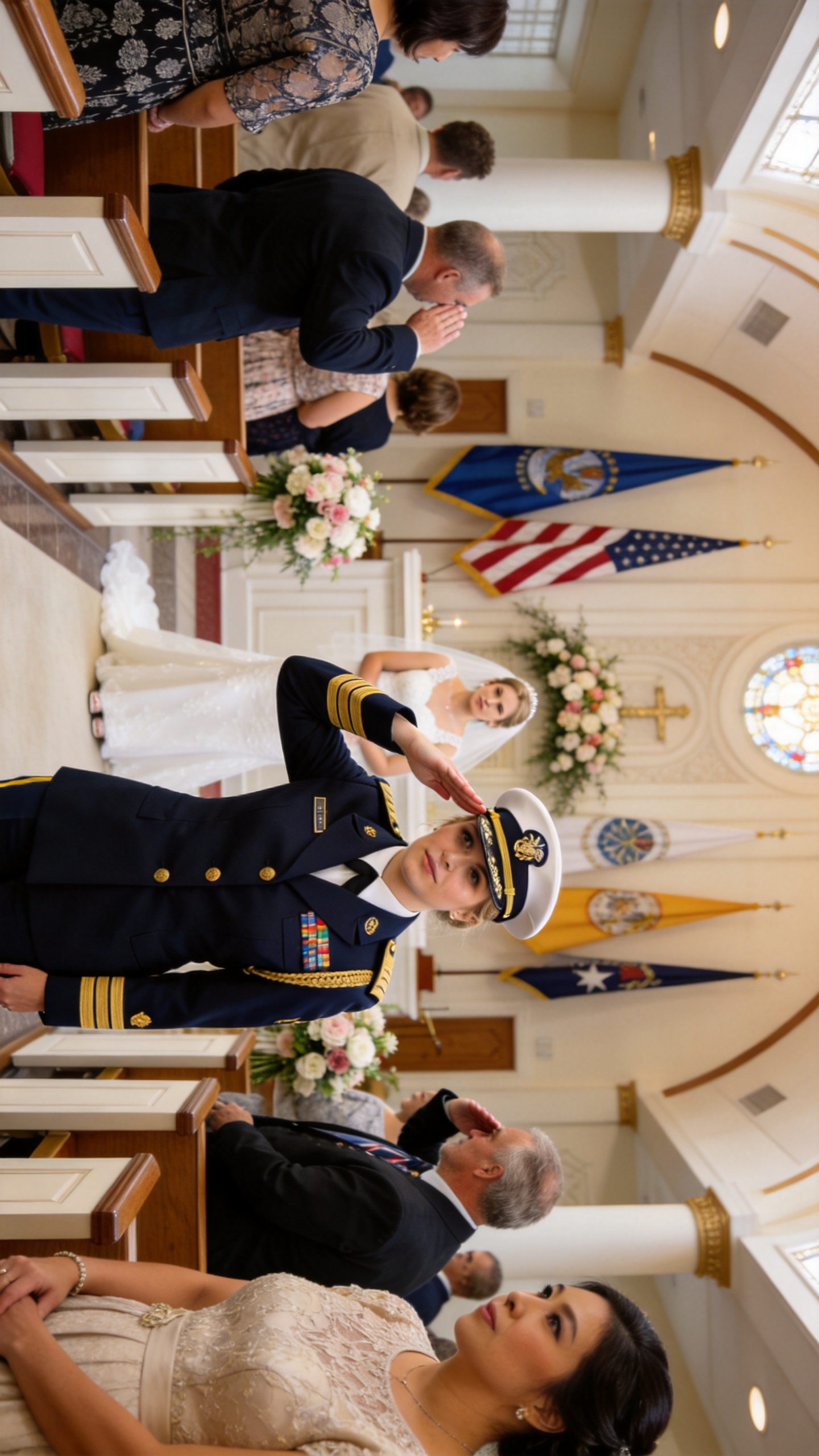
I kept my uniform.
I kept the glass from the wedding, too. Not because I wanted a souvenir of pain, but because I wanted proof that one calm sound could end a lifetime of pretending.
Years later, people still asked whether walking back into that ballroom had been worth it.
The answer was yes.
Not because my mother was exposed.
Not because Grant finally learned that a paper trail can outlive arrogance.
Not because Brielle's perfect wedding became the night everyone learned what perfection had cost.
It was worth it because when the spotlight found me, I did not shrink.
I stood in front of two hundred people who had been invited to laugh at me, raised my glass, and gave them my last polite smile.
Then the truth walked in wearing a navy suit, carrying my father's promise in a folder.
And for the first time in my life, my family had to look up.