My Parents Reported My Car Stolen After I Refused To Hand My Sister $15,000
My parents' house was not the safe family home Chloe imagined. It was trapped under creditors, refinancing agreements, and debts that could not survive much longer.
Chloe's supposed emergency was not really Chloe's emergency.
The fifteen thousand dollars was a patch my father needed to keep one part of the scheme from collapsing before the rest of us noticed.
When I refused at dinner, he panicked.
He tried one more application in my name. Then he called the police about my car, hoping fear would do what guilt had failed to do.
That was the part I could not move past.
Forgery was terrible. The debt was terrible. But he had also put me on the shoulder of a highway with officers who had been told I was dangerous.
He did not only steal from me.
He tried to make me look like the criminal before I could expose his crime.
Sitting across from him in that bank conference room, I finally saw the role I had been assigned.
I was not the responsible daughter.
I was not the sister who should understand.
I was the clean name he could spend when his own had run out.
When the evidence cornered him, his voice became gentle in that old practiced way.
"If you keep pushing this, your mother and Chloe will lose everything," he said. "Chloe has children. Think about what you are doing to them."
There was still no apology.
He was asking me to save him from consequences by accepting damage he had created.
For most of my life, that tactic had worked. If I said no, I was cruel. If I protected myself, I was selfish. If I asked questions, I was tearing the family apart.
This time, the words landed differently.
"You broke this family when you signed my name," I said. "I am done paying to keep your lies standing."
The Case
I cooperated with the fraud investigation from that day forward.
I gave detectives the recorded call, the credit alerts, copies of every document, the details of the dinner, and my account of the police stop.
Charges followed.
The case dragged through more than a year of motions, interviews, and ugly letters from my father's attorney.
His defense tried to make me sound unstable and vindictive. The paperwork kept refusing to cooperate with that story.
My real signature and the forged one were visibly different. The accounts connected back to my parents' house. The phone recording showed my father using the police stop as leverage for the same amount that appeared on the new loan application.
Eventually, he took a plea deal on fraud and forgery counts.
The house did not survive the fallout.
My parents ended up in a rental, and the image Chloe had of our father as a generous provider collapsed with the property.
She learned that much of the comfort she had accepted as proof of favoritism had been funded with borrowed money, some of it attached to me.
The hardest truth was not about my father.
It was about my mother.
She had known for years that he was using my identity. She may not have held the pen, but she sat beside him at dinner and tried to shame me into feeding the scheme.
She knew he reported my car stolen.
She let it happen.
After that, I stopped answering her calls.
Chloe's Call
About a year after the plea deal, Chloe reached out.
For the first time in my adult life, the conversation did not begin with a crisis I was expected to solve.
She said she had spent months going through bank statements, bills, and old transfers. Piece by piece, she had learned how much of her life had been padded by money our father never truly had.
"I thought Dad loved me more," she said quietly. "I did not ask where any of it came from. Some of it came from you."
That admission did not turn us into close sisters overnight.
Too much had happened. Too many years had trained us into opposite roles.
But Chloe changed in the only way that mattered to me then.
She began handling her own life without making my savings the backup plan.
No more emergency demands. No more tears passed through my parents as invoices. No more assumption that my refusal was cruelty.
She did not ask me for money again.
It was not a speech, but it was proof.
Ryan and I still got married that autumn. We used the savings my parents had tried to seize and kept the ceremony small.
My parents were absent.
The day was not polished or grand. It was emotional, a little messy, and completely ours.
Ryan never treated the traffic stop as a heroic story about himself. He had recognized me, lowered the danger, and then stepped away from the investigation so the case could stand without questions about him.
Months later, he told me he had known something was wrong the instant he saw my license plate.
"Your family had been moving toward something like that for years," he said. "I just never thought their next move would involve police lights."
He was right.
The fraud had not appeared from nowhere. It was the same family pattern expanded until it finally became criminal.
They took what they wanted, called it love, and called my boundaries betrayal.
My Real Signature
Near the end of the paperwork, Ms. Cole asked me to come in one final time.
She said cases like mine often collapsed because victims could not bear to keep going against a parent.
"A lot of people choose the debt over seeing their father in court," she told me. "You did not. What changed?"
I thought of the traffic stop before I thought of the loans.
I remembered the highway air coming through the open window, the keys on the pavement, the command to show my hands, and the sick realization that someone had described me as a threat.
"Maybe the loans alone would not have been enough," I said.
It embarrassed me, but it was honest.
I had been trained to excuse them. I might have tried to minimize the forged documents, or call the debt a misunderstanding, or find some way to absorb the injury quietly.
"But they sent armed officers after me," I said. "They did not just take my credit. They tried to hand me the blame."
That was the line they crossed that I could finally see.
My credit report is clean now. The false accounts are gone. Repairing it took time, affidavits, frozen files, letters, and more patience than I thought I had.
For four years, my name had been used as a spare key to my father's collapsing life.
Now my name is mine again.
I kept only one physical thing from the investigation.
Not the folder of loans.
Not the call recording.
Not the police report.
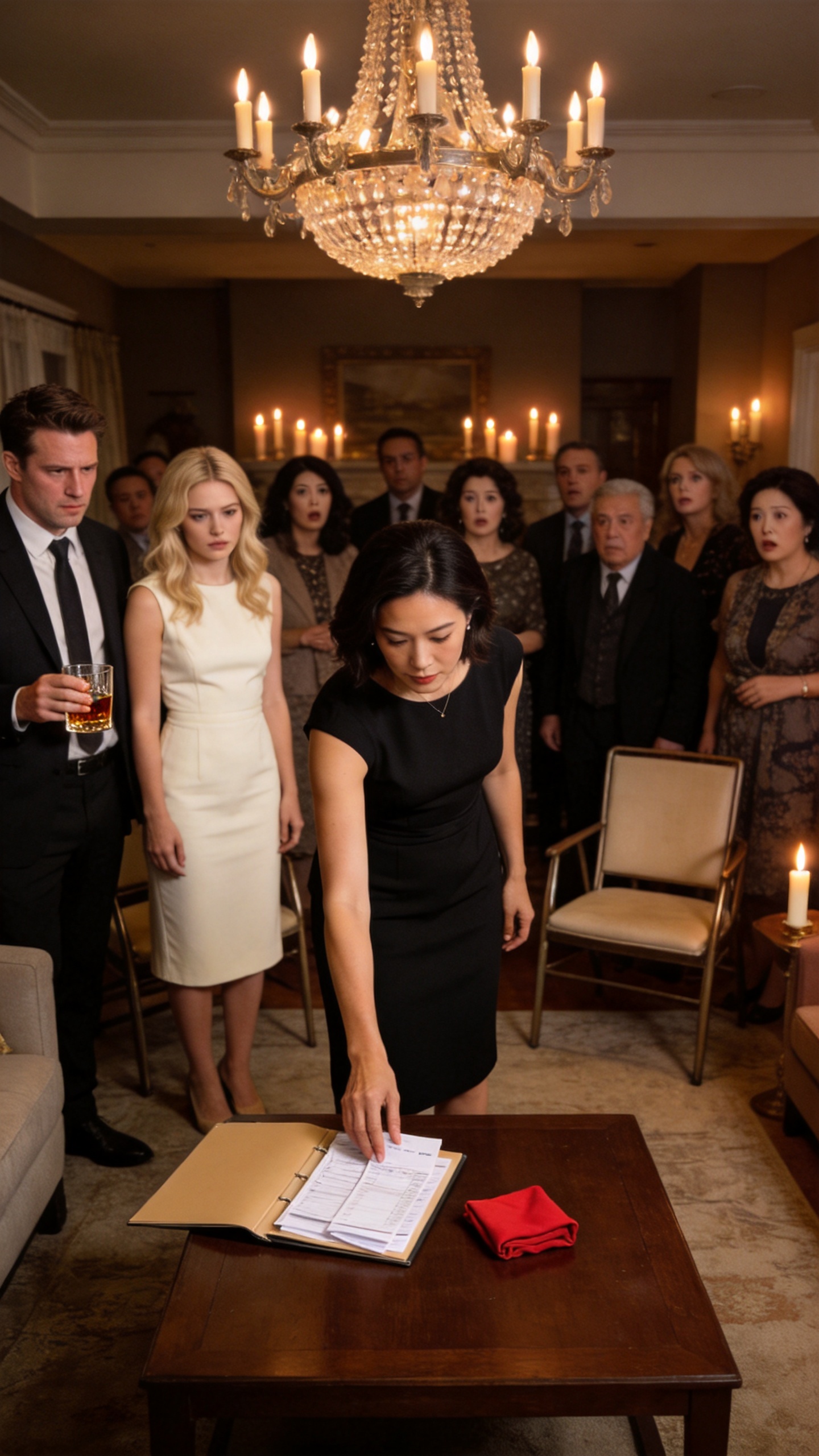
I kept the blank page Ms. Cole gave me in the conference room, the one where I wrote my real signature while my parents watched.
For most of my life, my family behaved as if my name was something they could borrow, bend, or spend.
They put it on debt.
They forged it on legal papers.
They demanded that it pay for Chloe's emergencies.
Then they attached it to a police report and tried to make it mean dangerous.
In that conference room, my signature sat beside the fake one and told the truth without raising its voice.
One line of ink did what years of explaining had never done.
It separated me from the story they had written over me.
My name had never belonged to them.
They only believed I would never fight to take it back.