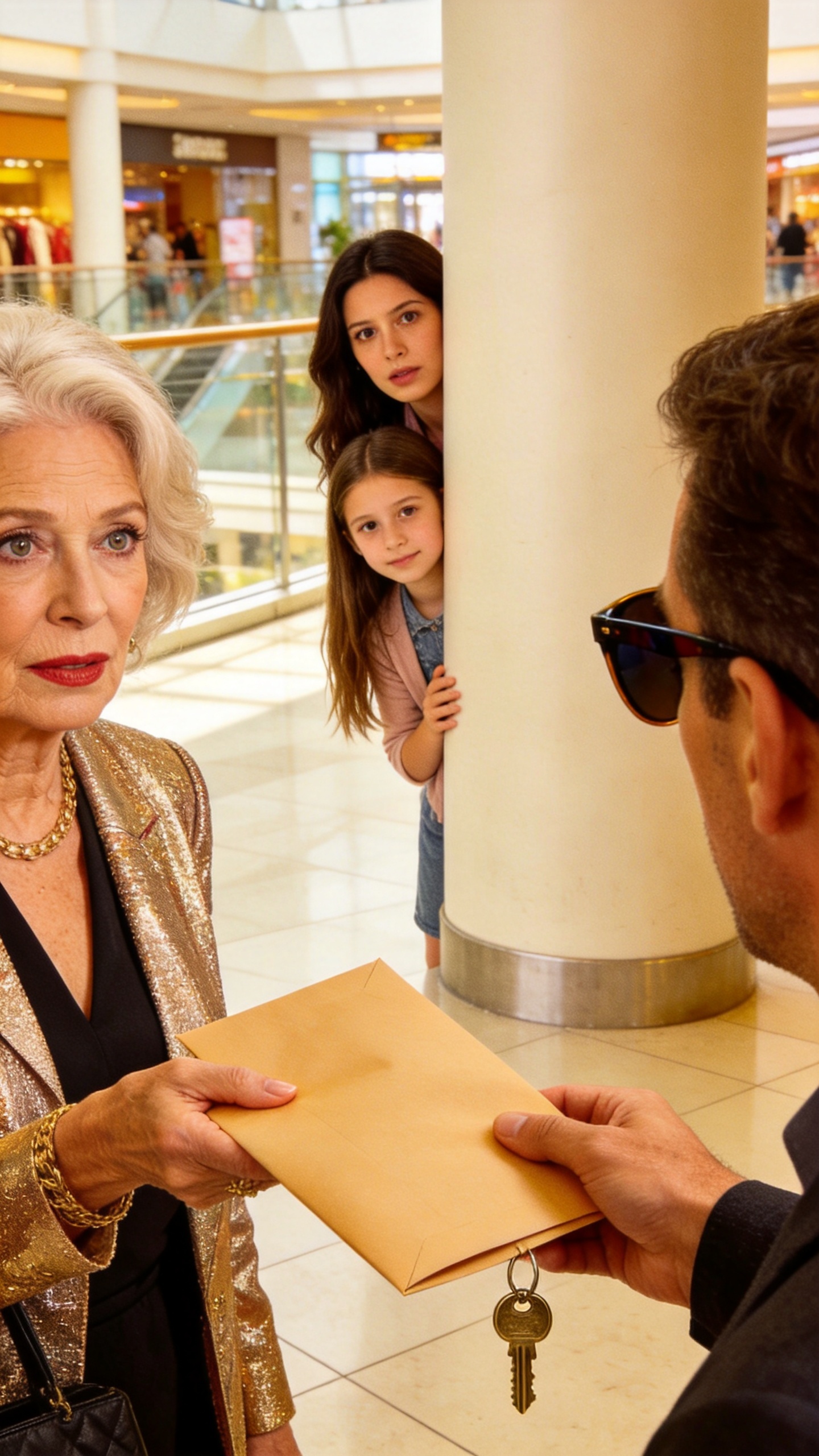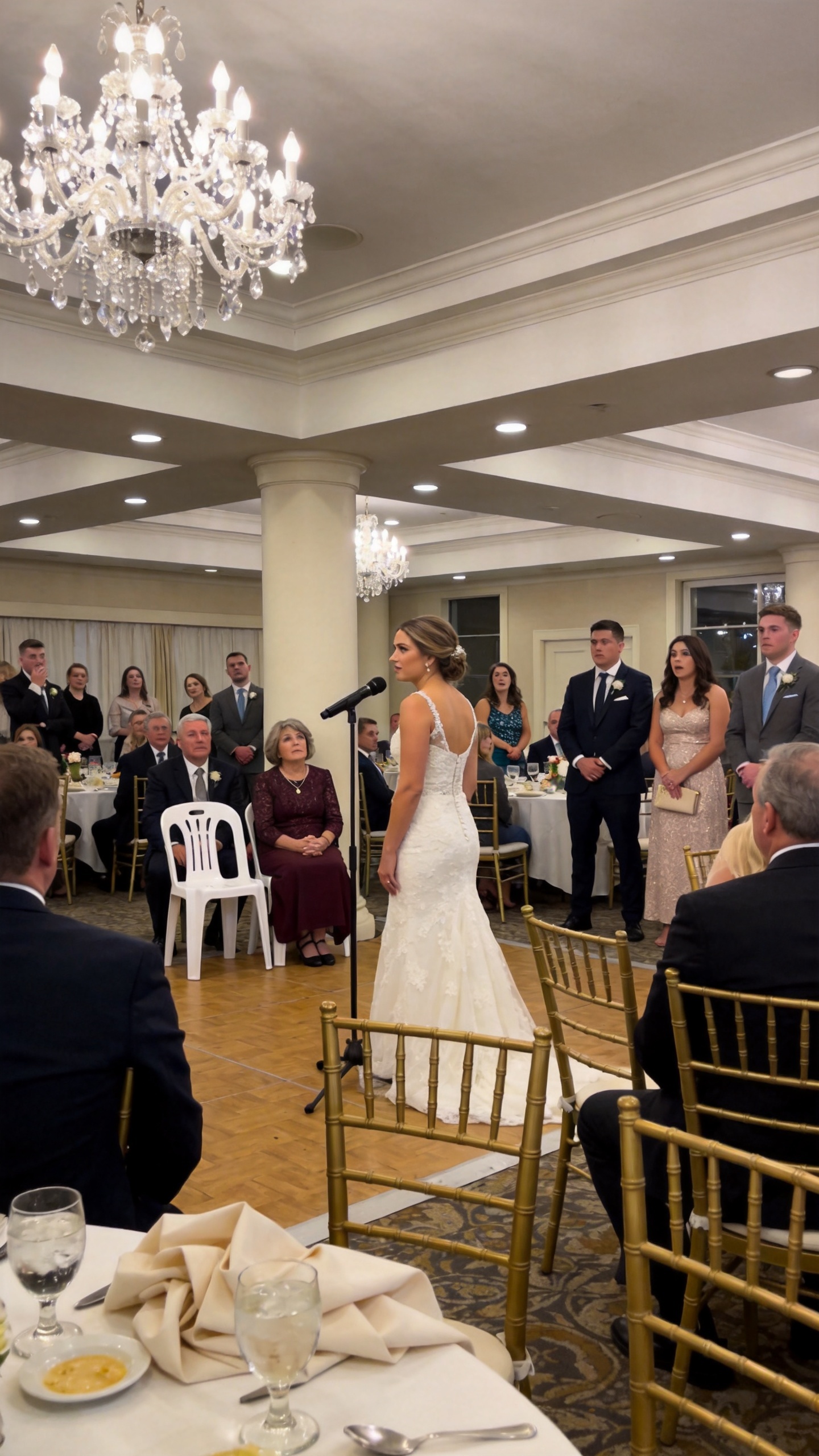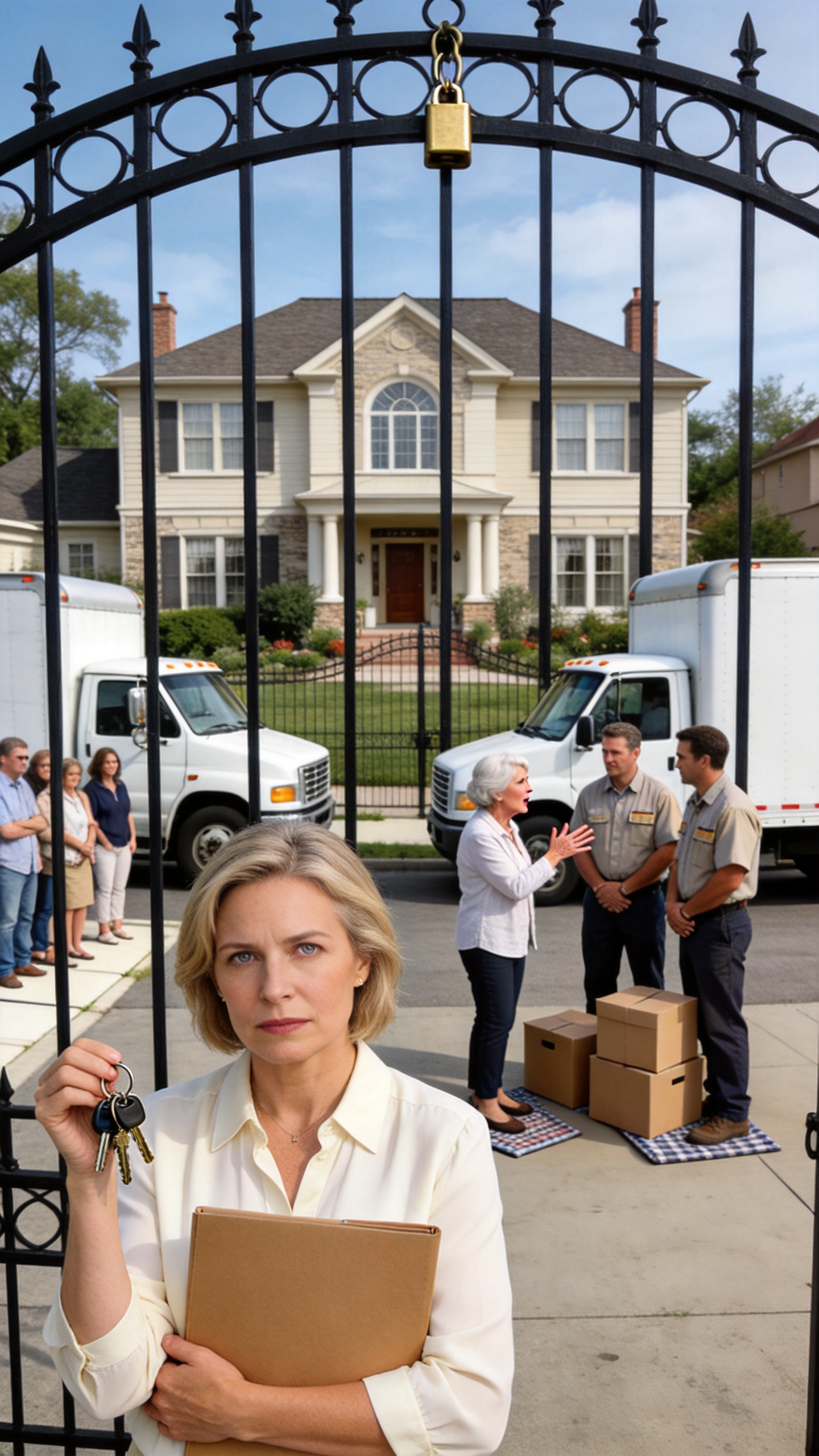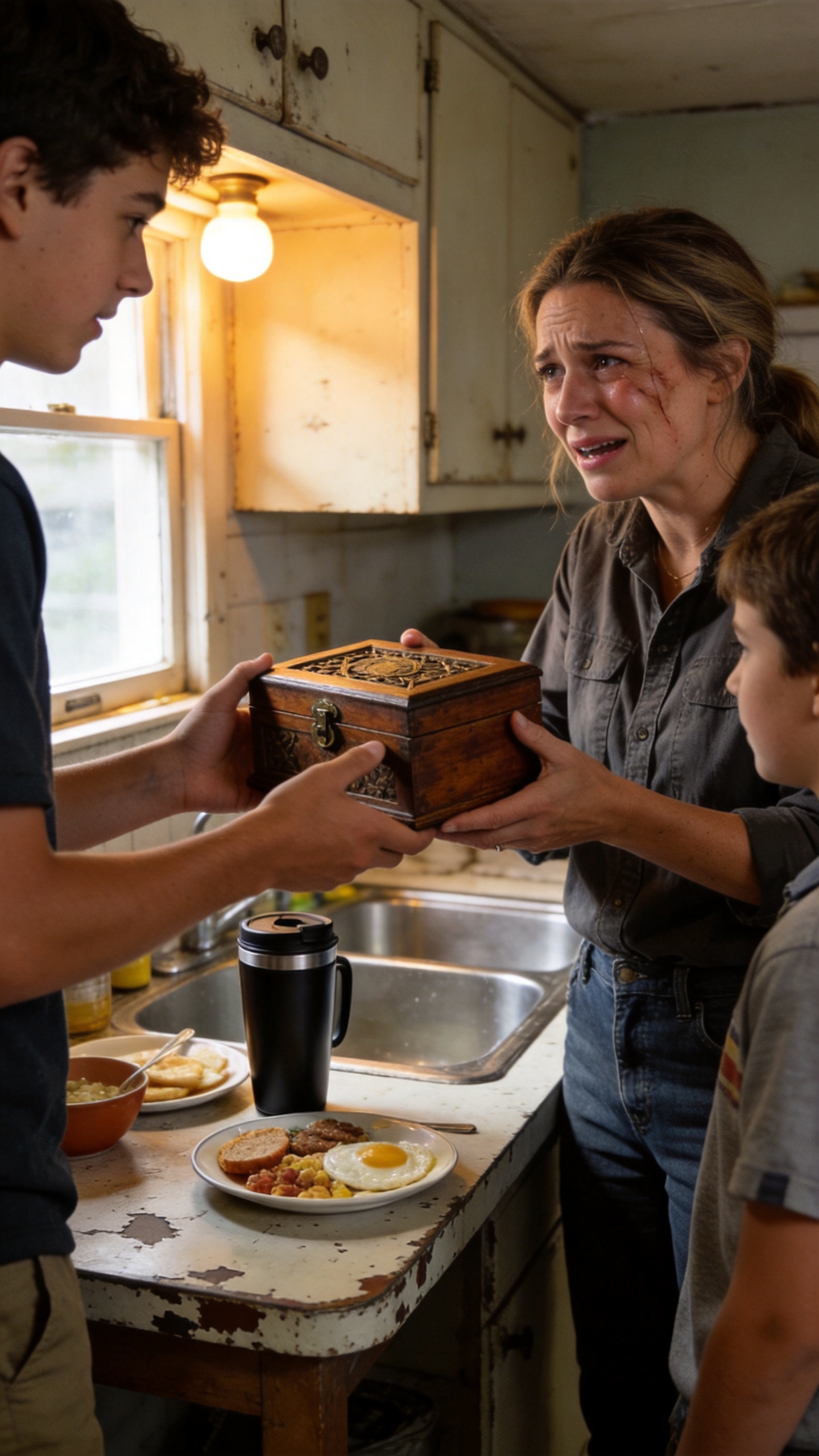
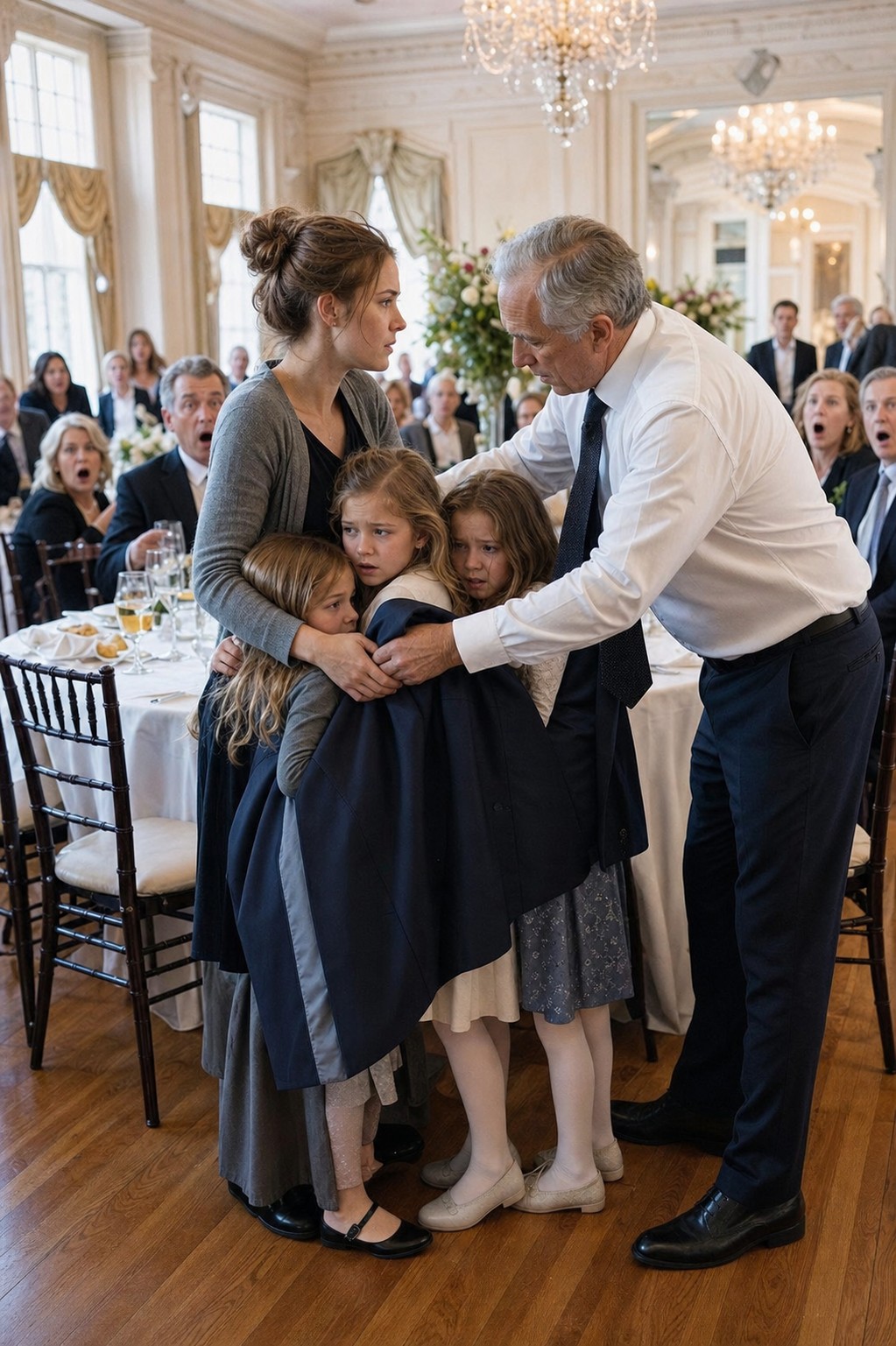
My mother-in-law made me sleep with my three daughters next to the laundry and screamed: "No son, you're good for nothing." After she slapped me in front of 40 charity donors the next morning, a billionaire took off his jacket, covered my girls, and said, "They're coming home with me."
A Humiliating Moment at the Charity Luncheon
"Be grateful I didn't send them to an orphanage. Three daughters are useless when it comes to carrying on a family name."
My mother-in-law spat those words right before slapping me across the face in front of forty well-known guests.
I was in the large dining room of the Whitmore estate in Greenwich, Connecticut, trying to balance a silver tray full of coffee cups.
The porcelain rattled, one cup crashed onto the marble floor and broke, and the charity luncheon hosted by the Whitmore Foundation fell silent.
Everyone was shocked, except for the man sitting at the far end of the table.
My name is Emily Carter.
I'm thirty-two.
For the last six years, I've lived in my late husband's family mansion, working like an unpaid servant.
When my husband, Michael Whitmore, died in a car accident on Interstate 84, his mother, Margaret Whitmore, said he left huge debts.
According to her, I owed the family everything.
She took the money from Michael's life insurance.
She even kept the jewelry my own mother left me.
In return, she let my daughters and me sleep in a tiny storage room next to the laundry machines.
My daughters are Olivia, eight, Grace, six, and little Lily, who just turned four.
Margaret never calls them by their names.
She calls them "the three disappointments."
She says I failed Michael because I didn't give him a son.
The irony was hard to miss.
That morning, I'd been up since 4:30 a.m.
I made breakfast for the caterers, shined the crystal glasses, vacuumed two floors, arranged the flowers, and set the tables for the wealthy donors who came to support the Whitmore Foundation's annual campaign for abused women.
They clapped during the speeches about compassion while the woman running the foundation treated me like her property.
Among the guests was Richard Bennett, a billionaire who founded one of the country's biggest private hospital networks.
The newspapers say he's smart, distant, and emotionally cold.
He lost his mother as a kid, never married, and rarely goes to social events.
The foundation relies a lot on his donations.
When Margaret hit me, Richard calmly put his glass on the table.
"Is that what you call discipline?" he asked.
Margaret smiled like nothing out of the ordinary had happened.
"Emily is family," she said smoothly.
"She just needs firm boundaries. She's always been manipulative."
"I'm only family when someone needs the house cleaned," I said quietly.
"Otherwise, I'm treated like an unpaid employee."
Margaret raised her hand again.
This time, Richard stepped between us.
Every head in the room turned.
Margaret stared at him in disbelief.
"You'd ruin years of charitable work because of one bitter servant?" she said.
Richard looked at the bruises showing under my sleeves and then met her eyes.
"I'm not ruining your charity. I'm refusing to fund your hypocrisy."
She then ordered the security guards to get me out right away.
A New Hope Dashed
Margaret had locked my three daughters in one of the guest bedrooms.
She always said children ruin elegant events.
Before I could rush towards the staircase, Richard spoke up again.
"You and your daughters are leaving with me," he said.
I warned him, "You have no idea what you're involving yourself in."
"I know exactly what I'm seeing," Richard replied.
He climbed the stairs on his own.
A few minutes later, he came back carrying Lily.
Olivia held his hand, and Grace clung to my side.
Outside, heavy rain pelted the circular driveway.
Richard took off his tailored suit jacket, wrapped it around all three girls, and led us to his SUV without looking back.
"Those are my son's granddaughters!"
Margaret shouted.
He simply opened the car door and said quietly, "For the first time in years, I almost believed someone."
His home overlooking the hills outside Greenwich was eerily quiet.
The girls stared at the soft beds that were now theirs.
Lily wouldn't let go of Richard's jacket.
She wrapped herself in it and whispered.
After the girls finally fell asleep, I cried.
I thought the nightmare was over.
I couldn't have been more wrong.
That same night, Margaret called the police.
She accused me of stealing three million dollars from the Whitmore Foundation.
Then she made an even more terrifying claim.
She petitioned the court for immediate custody of my daughters, saying I was homeless, unstable, and using them to seduce one of Connecticut's richest men.
I had no idea the real battle was just starting.
At 7 a.m. the next morning, two police cruisers and a local news van were parked outside Richard's estate.
My daughters had hardly slept all night.
For the first time in years, they had clean beds, warm blankets, and bedrooms with garden views instead of industrial washing machines.
Lily was still holding Richard's suit jacket when the doorbell rang.
"We've received a complaint alleging grand theft, embezzlement, and unlawful removal of three minors," the officer said.
"The complaint states you have no permanent residence, no employment, and no financial means to support them."
Richard interrupted before I could answer.
"My attorneys are already on their way. Everything that happens today will be documented."
Within 45 minutes, his legal team filled the library.
The police didn't arrest me right away, but a family court judge ordered an emergency investigation into my daughters' custody while detectives looked into the financial allegations.
By noon, every local news station was showing footage of Margaret wiping away tears outside the Whitmore Foundation.
"I welcomed my daughter-in-law into my home after my son's tragic death," she told reporters.
"She repaid our kindness by stealing millions and manipulating Mr. Bennett. My only concern is protecting my granddaughters."
Others called me an abusive mother.
By evening, my eight-year-old daughter accidentally saw one of the videos online.
She climbed into my lap with scared eyes.
"Are we going back to the laundry room?" she asked.
I hugged all three girls tightly.
That afternoon, a court-appointed social worker interviewed the girls separately.
A physician photographed every bruise on my body.
Each injury was dated and documented.
Late that evening, someone knocked softly at the back entrance.
Richard's security guard let in an elderly woman carrying a paper bag from a neighborhood bakery.
She had been the Whitmore family's housekeeper for over 25 years before retiring.
Without a word, she took out a small flash drive hidden under a loaf of bread.
"The house has security cameras," she whispered.
"Margaret ordered everything erased yesterday."
Unveiling the Truth and Facing the Consequences
The elderly housekeeper looked around nervously before continuing.
"I copied the recordings first," she whispered.
Richard immediately loaded the files, and we watched in stunned silence.
Video after video showed Margaret screaming at me.
She ordered me to scrub floors while I was holding a feverish child.
Another recording showed her taking sealed envelopes that Michael had left for our three daughters before his death.
There was also footage of her forcing me to sign blank sheets of paper.
But perhaps most disturbing of all, one camera captured her accountant entering the Whitmore Foundation offices after midnight, carrying boxes of financial records.
The next morning, Margaret's attorneys dismissed every recording as fabricated.
Then, they produced something none of us expected.
Twelve wire transfers totaling three million dollars were presented.
Every payment had been deposited into an account under my name.
I stared at the documents in disbelief.
"I've never opened that account," I said firmly.
The bank records included a copy of my driver's license, and the signature looked almost identical to mine.
Someone had used personal documents collected years earlier during my marriage.
A forensic handwriting examination was ordered immediately.
Until then, suspicion remained.
The scandal quickly spread through Connecticut's business community.
Three major corporate donors threatened to withdraw millions from Richard's hospital foundation if he continued defending me.
One of his longtime business partners confronted him inside his office.
"You've spent decades building your reputation," the man argued.
"You're risking everything for a woman you've known for three days."
Richard stood firm.
"If protecting an abused mother costs me my reputation, then my reputation was never worth having."
As the situation intensified, I couldn't help but think back to that night when my mother-in-law forced me to sleep with my three daughters next to the laundry.
She had shouted, "Without a son, you're worth nothing."
And the morning after she slapped me in front of 40 charity donors, a billionaire took off his jacket, covered my girls, and said, "They're coming home with me."
Now, here I was, in the middle of a legal battle, with my name being dragged through the mud because of someone's malicious actions.
The weight of the accusations was heavy, but I held onto the hope that the truth would eventually prevail.
The days passed, and the wait for the forensic examination results felt like an eternity.
Every day, I worried about what would happen to my daughters and me.
Would the truth be enough to clear my name?
Or would I continue to be seen as a criminal in the eyes of the public?
The stress was taking a toll on me, but I knew I had to be strong for my three precious daughters.
They were my world, and I would do everything in my power to protect them and give them a better life.
A Desperate Marriage and a Breakthrough
It seemed they were more concerned with appearances than principles.
That evening, David explained the tough situation we were in.
"Margaret's lawyers will claim you don't have a stable home. They'll try to take the girls away while the criminal investigation goes on," he said.
He paused for a moment before continuing.
For a second, I thought I'd misheard him.
"If we're legally married, your daughters will instantly have a permanent place to live, health insurance, financial protection, and extra legal safeguards during this case," he added.
"My past will ruin your future," I told him.
"My future doesn't mean much if I don't do what's right. My name isn't more important than three little girls finally sleeping peacefully after years," he replied.
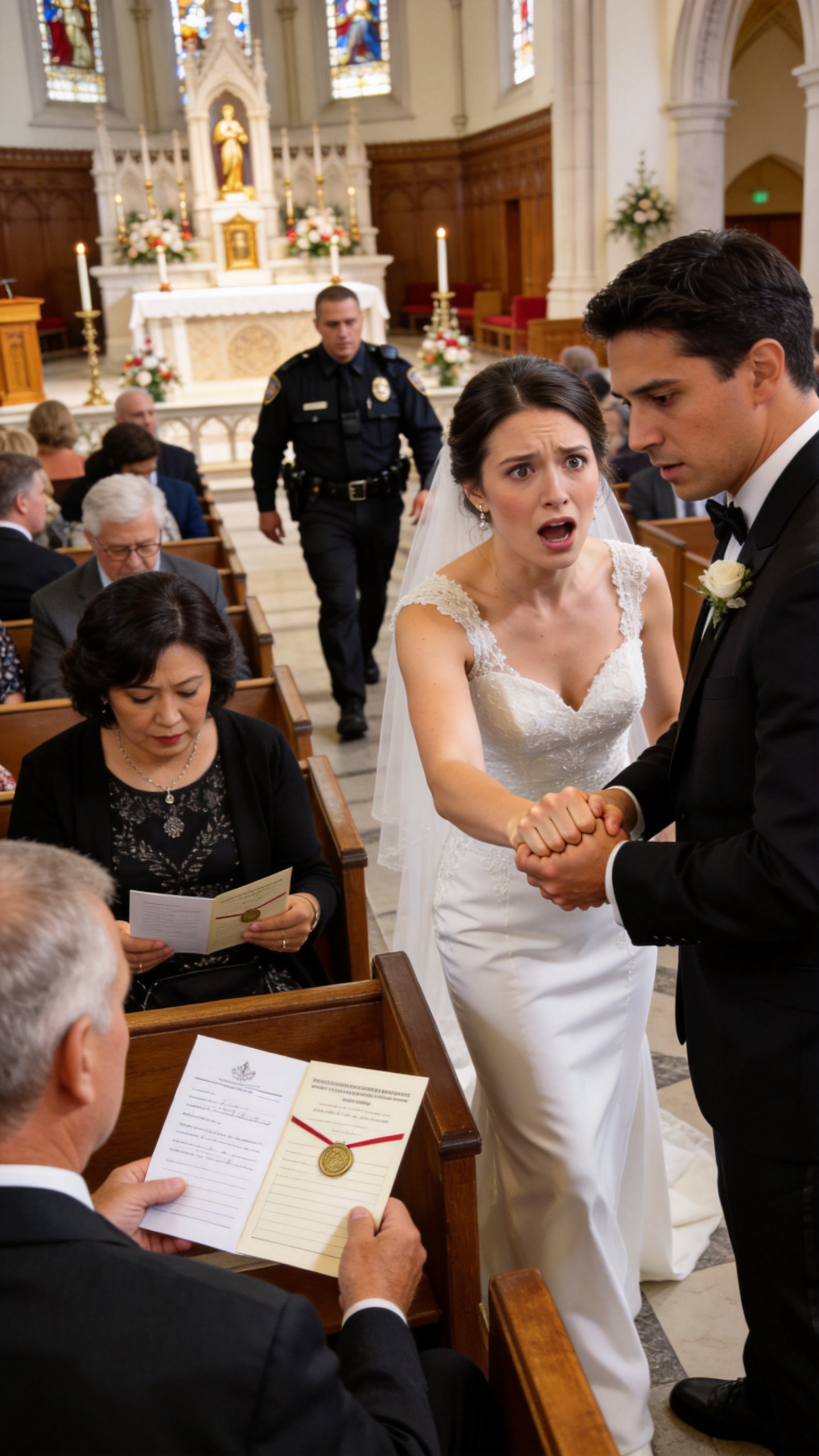
The next afternoon, the wedding took place in his home library.
Only a judge, David's lawyers, and Lily were there as witnesses.
I signed the marriage certificate with shaking hands.
David just nodded politely after signing his own.
We were just two people trying to create enough legal protection to keep my three daughters together.
We'd hardly finished when David's phone rang.
The handwriting expert-the forensic examiner who could prove my signature was forged-had been in a serious car accident.
And the certified copy of his report was gone.
Someone had gotten to him before justice could be served.
Then David unlocked the expert's phone, which the investigators had just found.
There was one last voicemail recorded just minutes before the crash.