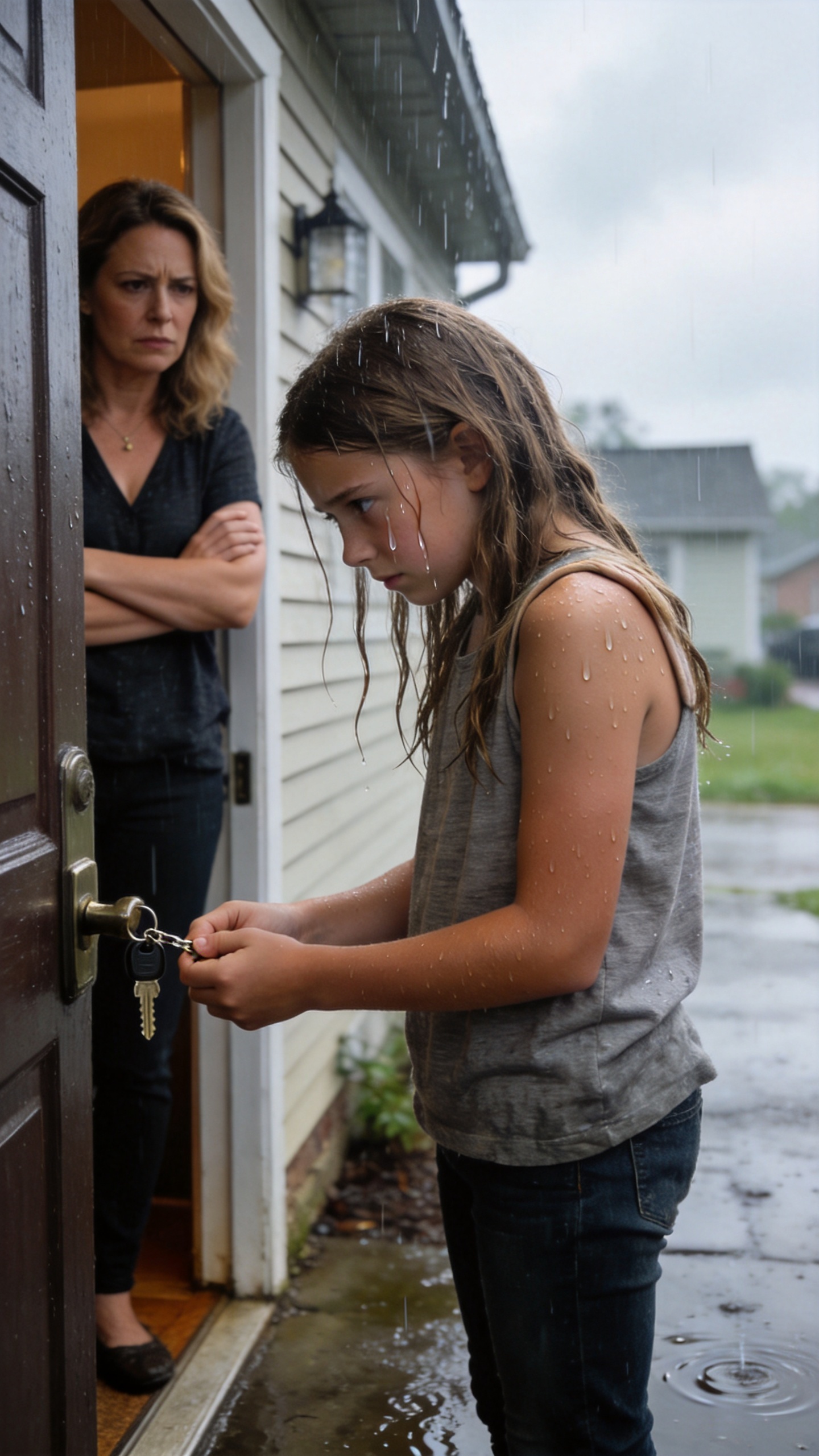
My son shouted in my face, “Pay the rent or disappear!” in front of twenty-two people at Christmas dinner, while my daughter-in-law mocked, “Let’s see how you survive!”

My son yelled directly into my face, “Pay the rent or disappear! ” before twenty-two relatives at Christmas dinner, while my daughter-in-law sneered, “Let’s see how you survive!
” So I packed my belongings, moved into the house I had secretly purchased, and stopped every payment, favor, and dollar they had depended on me to provide.
My son, Daniel Whitaker, struck the Christmas table so violently that the crystal glasses rattled. “Pay the rent or disappear!” Silence swallowed the room.
Twenty-two people surrounded my dining table—my sisters and their husbands, Daniel’s cousins, my daughter-in-law Melissa, three uninterested teenagers, and my two grandsons frozen with mashed potatoes on their forks. The turkey had been carved. Candles glowed.
Snow brushed softly against the windows of the home where I had lived for thirty-one years.
My home. Daniel stood at the head of the table as though it belonged to him. I stared up at him, my napkin carefully folded across my lap and my hands still, although my chest felt painfully constricted.
“Daniel,” I said quietly, “sit down.” “No,” he snapped. “You sit there acting like some wounded queen, but this is real life. Melissa and I can’t keep floating you.” Several guests shifted uneasily.
Floating me. The phrase nearly made me laugh. For six years, I had paid the mortgage on Daniel and Melissa’s townhouse after his construction business failed.
I covered daycare, vehicle insurance, school supplies, dental treatment, soccer uniforms, and their “temporary” credit card debt, which mysteriously increased each December.
I had also allowed them to assume they would eventually inherit the family house because that was easier than admitting I had reconsidered. Melissa leaned back with a glossy red smile.
“Let’s see how you survive,” she said. “You don’t even understand online banking without Daniel.” My grandson Ethan murmured, “Mom…” Melissa paid no attention.
Daniel pointed toward the hallway. “You have until New Year’s. Start paying your share, or find somewhere else to be dramatic.”
My sister Linda started to speak, but I lifted one finger. Not to silence her, but to prevent her from wasting her breath. I rose. The chair scraped across the wooden floor.
At seventy-two, I was expected to appear weak. I was supposed to shake, cry, plead, and defend myself. Instead, I walked toward the coat closet, removed my wool coat, and slipped my hand into its pocket.
There was a small brass key inside. It did not belong to this house. It opened the new one.
A one-story brick property in Lancaster, Pennsylvania, which I had quietly purchased three months earlier using my late husband’s life insurance and the savings Daniel assumed were gone.
“I won’t wait until New Year’s,” I said. Daniel stared. “What?” “I’ll leave tonight.” Melissa laughed. “With what? Your pension check?” “With my name on every account you’ve been living from.”
The laughter stopped. I packed two suitcases, my medication, my jewelry case, and a framed photograph of my husband, Robert. No one offered to help. No one tried to stop me.
At nine-thirty, I drove through the falling snow toward my new home. Before midnight, every password had been changed. By morning, I had ended every automatic payment, every favor, and every dollar they had ever received from me.
The Room Changed
At 7:14 the next morning, Daniel called seventeen times.
I watched his name repeatedly illuminate my phone as I sat at the small kitchen table in my new house, drinking coffee from a blue mug Robert had purchased in Maine two decades earlier. The air carried the light scent of fresh paint and pine cleaner.
Outside, a snowplow moved along the peaceful street.
There was no yelling. No doors slamming. No Melissa criticizing the groceries I bought as “cheap old-lady food” while eating them anyway. I answered the eighteenth call. “Mom, what did you do?” Daniel demanded.
“Good morning to you too.” “Don’t play games. The mortgage payment bounced.” “No,” I said. “My payment stopped. Your mortgage is your responsibility now.”
He drew in a sharp breath. I imagined him pacing barefoot through the townhouse kitchen, furious, while Melissa stood close by feeding him instructions. “You’re being vindictive.” “I’m being accurate.”
“You can’t just cut us off.” “I can. I did.” He remained silent briefly. Then his voice softened into the injured tone he used whenever anger failed to get what he wanted. “It was Christmas. People say things.”
“Yes,” I replied. “And sometimes people finally hear them.” Melissa seized the phone. “Evelyn, this is ridiculous. We have children.”
“I know. That’s why I paid their school fees last semester and their medical bills in October. You’re welcome.” “You’re really going to punish your grandkids?” “No. I’m going to stop funding their parents.”
She scoffed. “You won’t last two weeks alone.” I surveyed my comfortable kitchen—the organized folders on the counter, the locksmith’s invoice, my new bank card, the attorney’s envelope, and the security system instructions.
I had endured loneliness before. I had buried my husband, overcome breast cancer, spent forty years working in payroll, and guided Daniel through asthma attacks, university tuition, and the year he declared that rules were “emotional control.”
“I think I’ll manage,” I said. Then I disconnected the call. By midday, the second wave arrived. My nephew Kyle texted: Aunt Ev, Daniel says there’s been a misunderstanding.
Linda called in tears, not because she blamed me, but because she had witnessed Daniel’s expression when he understood my warning had been real.
“You should have seen him,” she said. “He kept checking accounts like money would magically appear.” “It won’t.” “Are you safe?” “Yes.” “Do they know where you are?” “No.” She paused.
“Good.” That afternoon, I visited my attorney.
His office stood on a narrow snow-covered street between a bakery and a tax service. Mr. Howard Greene, who had managed Robert’s estate, welcomed me without surprise. The revised documents were already prepared.
“Are you certain?” he asked. “More than certain.” He pushed the documents toward me.
I removed Daniel as my medical power of attorney and as beneficiary of two accounts. I rewrote my will. The family home would be sold rather than inherited.
Part of the money would create educational trusts for Ethan and Noah that their parents could not access. The remainder would support my retirement and eventually establish a trade-school scholarship in Robert’s name.
My hand remained steady as I signed the last page. Mr. Greene peered over his glasses. “Mrs. Whitaker, do you expect your son to contest this?” “I expect him to do many foolish things.”
“Then we’ll document everything.” I reached into my handbag and set my phone on his desk. It held a recording of Christmas dinner. Daniel’s voice echoed through the office. “Pay the rent or disappear!”
Melissa followed. “Let’s see how you survive!” Mr. Greene listened impassively. When the audio ended, he said, “That will help.” For the first time that day, I smiled.
That evening, I ate soup alone in my new living room without turning on the television. The silence around me no longer seemed hollow. It felt pure. At 8:03 p.m., Daniel sent one message.
You’re destroying this family. I replied: No, Daniel. I stopped paying for the version where you destroy me. Then I blocked him until morning and slept more peacefully than I had in years.
The Room Changed
Daniel did not begin with an apology. He began with threats.
On December 27, he went to the old house and discovered that the locks had been replaced. He contacted the locksmith and falsely claimed to own the property. The locksmith called me.
Daniel then contacted the police and reported that his elderly mother was “confused” and “manipulated by relatives. ”
I learned this when Officer Grant of the Lancaster Police Department appeared on my new porch at 4:20 that afternoon, melting snow clinging to his boots. “Mrs. Whitaker,” he said, “your son requested a welfare check.”
I welcomed him inside. He surveyed the orderly living room: books alphabetized by author, Robert’s picture above the fireplace, fresh food in the kitchen, and documents arranged in neat folders.
“Are you here voluntarily?” he asked. “Yes.” “Do you feel threatened?”
For a moment, I considered lying to protect our family’s privacy. The familiar instinct returned immediately: protect Daniel, soften his actions, excuse his behavior.
Then I remembered twenty-two relatives watching him disgrace me at my own Christmas table. “I feel harassed,” I said. Officer Grant nodded. “Has he made threats?” I handed him the messages.
You better fix this. You have no idea what you’ve started. I’ll make sure everyone knows what kind of mother you are. He examined each one carefully.
“You can tell him not to contact you,” he said. “If he continues, document it. Given your age, financial pressure can fall under elder abuse concerns, especially if there’s coercion.”
The phrase struck me more deeply than I expected. Elder abuse.
I had never placed Daniel in that category. Somewhere inside my memory, he remained the little boy who cried after scraping his knee in the driveway. The child who slept with a plastic dinosaur tucked beneath his pillow.
The son Robert taught to fish at Lake Wallenpaupack.
Yet he was also the adult man who towered over me on Christmas and demanded rent for a house that legally belonged to me. After the officer departed, I called Mr. Greene.
“Good,” he said after hearing what happened. “Let him create the record himself.” And Daniel did. On December 28, Melissa published a Facebook post.
Some people care more about money than grandchildren. Praying for a cold heart to soften.
Before breakfast ended, relatives began sending screenshots. Some expressed concern. Others judged me. A cousin in Ohio wrote, Family is family, Evelyn. I responded only once, directly beneath Melissa’s post.
For six years, I paid your mortgage, car insurance, daycare expenses, medical bills, school fees, and credit card debt. On Christmas night, in front of twenty-two witnesses, Daniel told me to “pay the rent or disappear” from a home I own. I disappeared.
The payments disappeared with me. I wish the children stability and peace.
I included no insults, emotional icons, or dramatic language. Then I disabled the notifications. The post traveled farther than Melissa anticipated.
By midday, her own aunt had commented, Wait, you weren’t paying your own mortgage? Daniel removed the post. Screenshots, however, remained. Two days afterward, Ethan and Noah called from Ethan’s phone.
Ethan was fifteen and understood far more than adults assumed. Noah, at eleven, still attempted to maintain peace by sounding cheerful. “Grandma?” Ethan said. “Hi, sweetheart.” “Are you okay?”
“I am.” “Dad said you abandoned us.” My throat tightened, but I kept my voice composed. Children deserve honesty without bitterness. “I left because I was treated badly. I did not leave because of you or Noah.”
Noah’s quieter voice came through the speaker. “Are we still allowed to see you?” “Always, as long as it’s safe and your parents allow it.” Ethan fell silent before saying, “Mom and Dad are fighting a lot.”