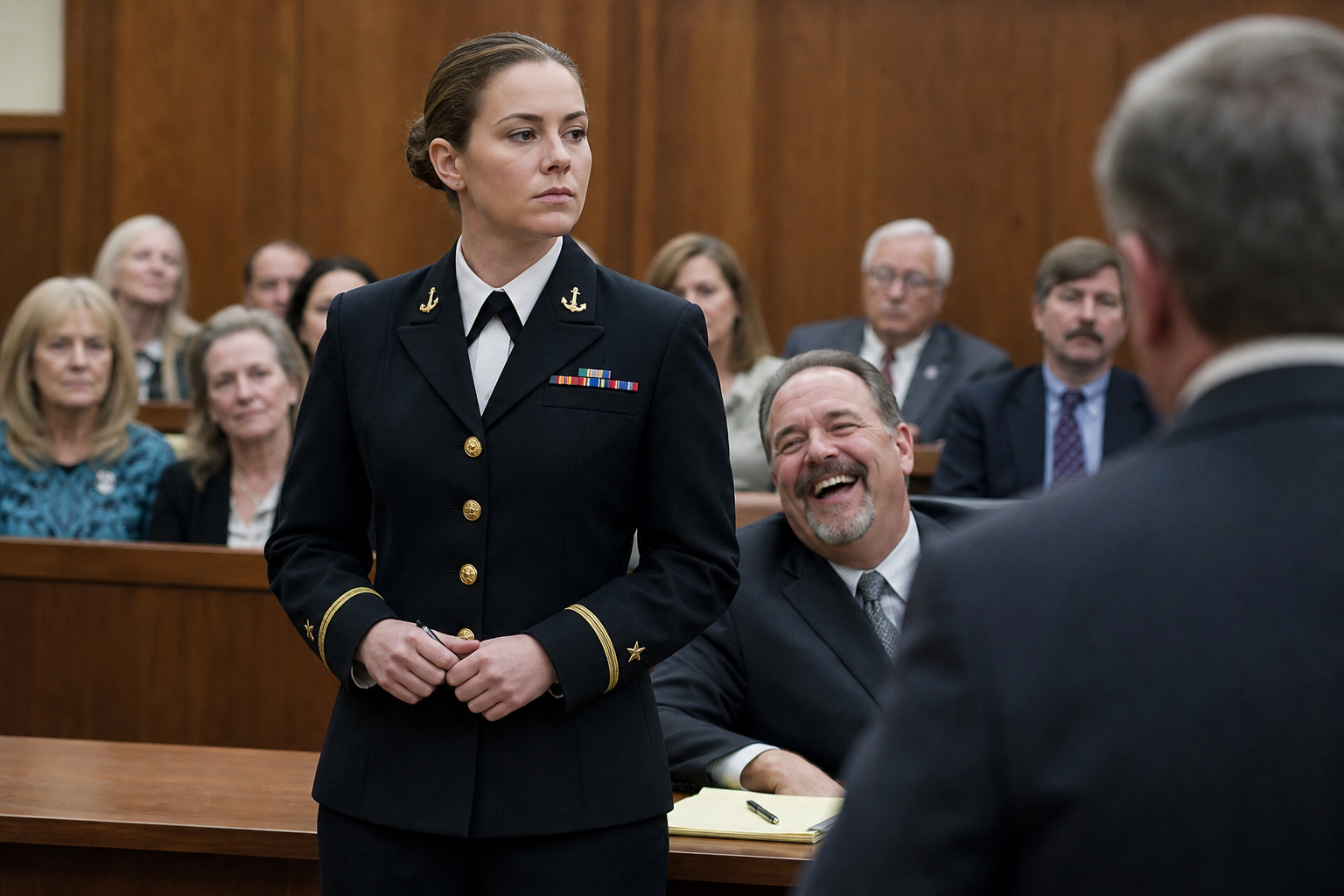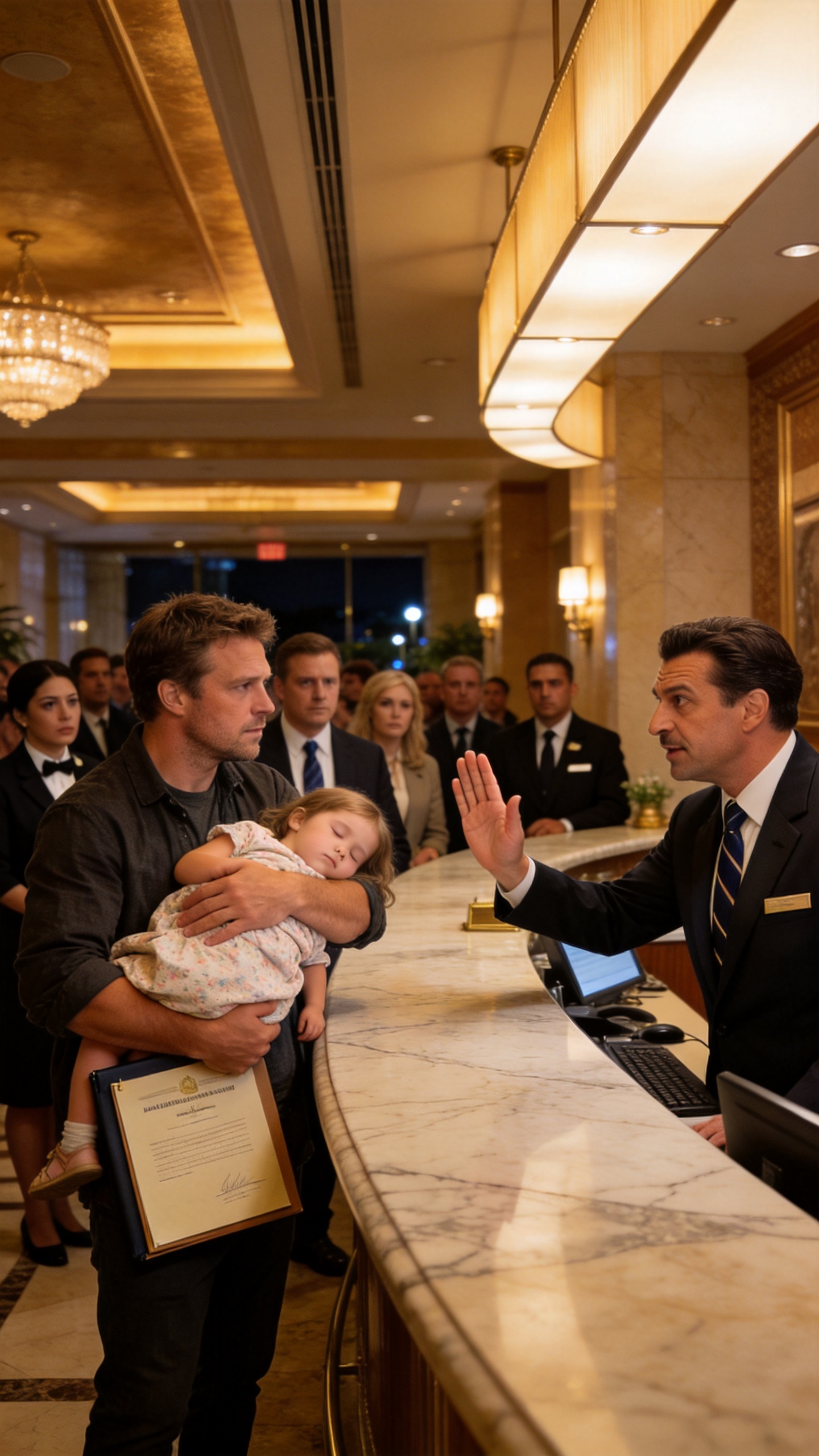
My Mother-In-Law Hid My Wedding Dress And Left Me A Maid's Uniform With A Note That Said Know Your Place, So I Wore It In Front Of 200 Guests
The ballroom screens lit up. Instead of our engagement photos, they displayed a clear timeline of transfers, partially redacted account numbers, and signed authorizations. At the bottom appeared a message from the independent board committee: EMERGENCY VOTE COMPLETED—JULIAN MERCER TERMINATED FOR CAUSE.
Evan spun toward his father, who sat motionless near the aisle.
His father looked away.
"He cooperated," I said. "In exchange for not being named in the civil complaint."
Celeste shoved past the chairs. "Turn this off!"
My father raised one hand. Security shut the doors.
I kept walking until I stood in front of Evan.
He hissed, "You'll destroy your own reputation."
I smiled. "No. I'm protecting it."
Then I removed the pearl button from my bracelet and placed it on the altar.
The speakers played Celeste's voice from twenty minutes earlier: "Sign the postnuptial documents, transfer your voting shares, and focus on being my wife."
A second recording followed—Evan, three weeks earlier, promising his mother that once the shares were transferred, he would divorce me and claim the transfer had been voluntary.
Gasps sliced through the room.
Evan stared at me as if he were seeing me for the first time.
"For three months," I said. "You targeted the wrong woman."
The ballroom doors opened again, and this time there was no music.
Two financial-crimes investigators entered with uniformed officers, carrying warrants prosecutors had secured that morning.
An investigator approached Evan. "Evan Mercer, we have a warrant for your arrest on charges including wire fraud, conspiracy, identity theft, and obstruction."
Evan backed into the altar.
The Aisle Turned Against Them
"This is her wedding-day tantrum!"
"No," I said. "This is an audit."
Celeste lunged toward my pocket, perhaps thinking the original evidence was still there. My father stepped between us. An officer caught her wrist before she could touch me.
"You ungrateful little maid," she spat.
I looked down at the uniform.
"My grandmother taught me that honest work has dignity. You taught me that expensive clothes cannot hide a thief."
Evan's lawyer rushed forward, whispering urgently, but Evan shoved him aside and pointed at me. "We're still getting married. You can't humiliate me and walk out."
I removed the engagement ring.
"We were never getting married."
I placed it beside the recorder.
"The officiant is not licensed," I said. "He is an investigator from our insurance carrier. The marriage certificate was never filed. Every document you signed during the rehearsal dinner, however, was real."
The night before, believing I was desperate to save the relationship, he had signed acknowledgments confirming that he controlled the shell companies. He had also signed a temporary standstill agreement stopping him from moving or destroying assets. Celeste had signed as witness.
My father opened the final document.
"As majority shareholder," he announced, "I accept the board's decision to terminate Evan and authorize civil recovery against all Mercer-controlled entities."
The officers led Celeste away. Evan followed, shouting that I had trapped him.
I answered, "I gave you three chances to tell the truth."
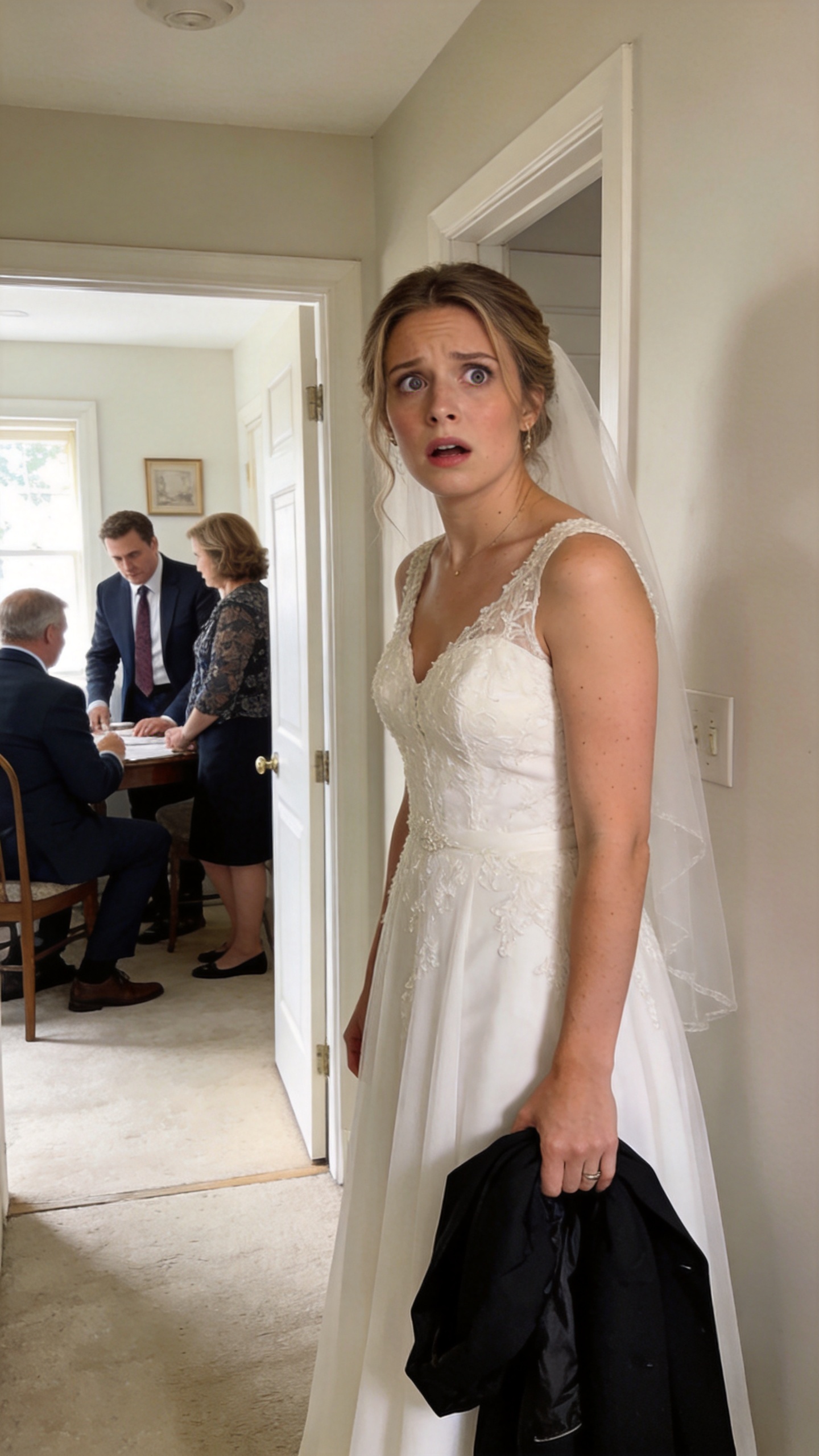
Outside, reporters crowded the hotel steps. I did not speak to them. I went upstairs, found my wedding dress locked inside Celeste's suite, and changed alone. Then my father and I returned to the ballroom, where the flowers still stood and dinner had already been paid for.
We turned the reception into a fundraiser for hotel workers' scholarships.
Six months later, Evan pleaded guilty after the server records and recordings destroyed his defense. He received eight years in federal prison and was ordered to pay restitution. Celeste received four years for conspiracy and obstruction. Their mansion, cars, and investment accounts were sold to repay Whitmore Group.
I became chief legal officer and created the Ruth Whitmore Fund, named after my grandmother. Its first scholarship went to a housekeeper's daughter studying finance.
On the anniversary of the wedding that never happened, my father and I stood in the lobby of our newest hotel. A framed photograph showed me walking down the aisle in gray, head high, his hand around mine.
Below it was my grandmother's brooch.
People once said I had been humiliated in front of two hundred guests.
That was the day I stopped hiding my power—and made the people who mistook kindness for weakness learn their place.