I Drove Three Hours To Surprise My Husband, But The Guard Said, "His Wife Is Upstairs." Then I Saw Another Woman Wearing My Military Pendant
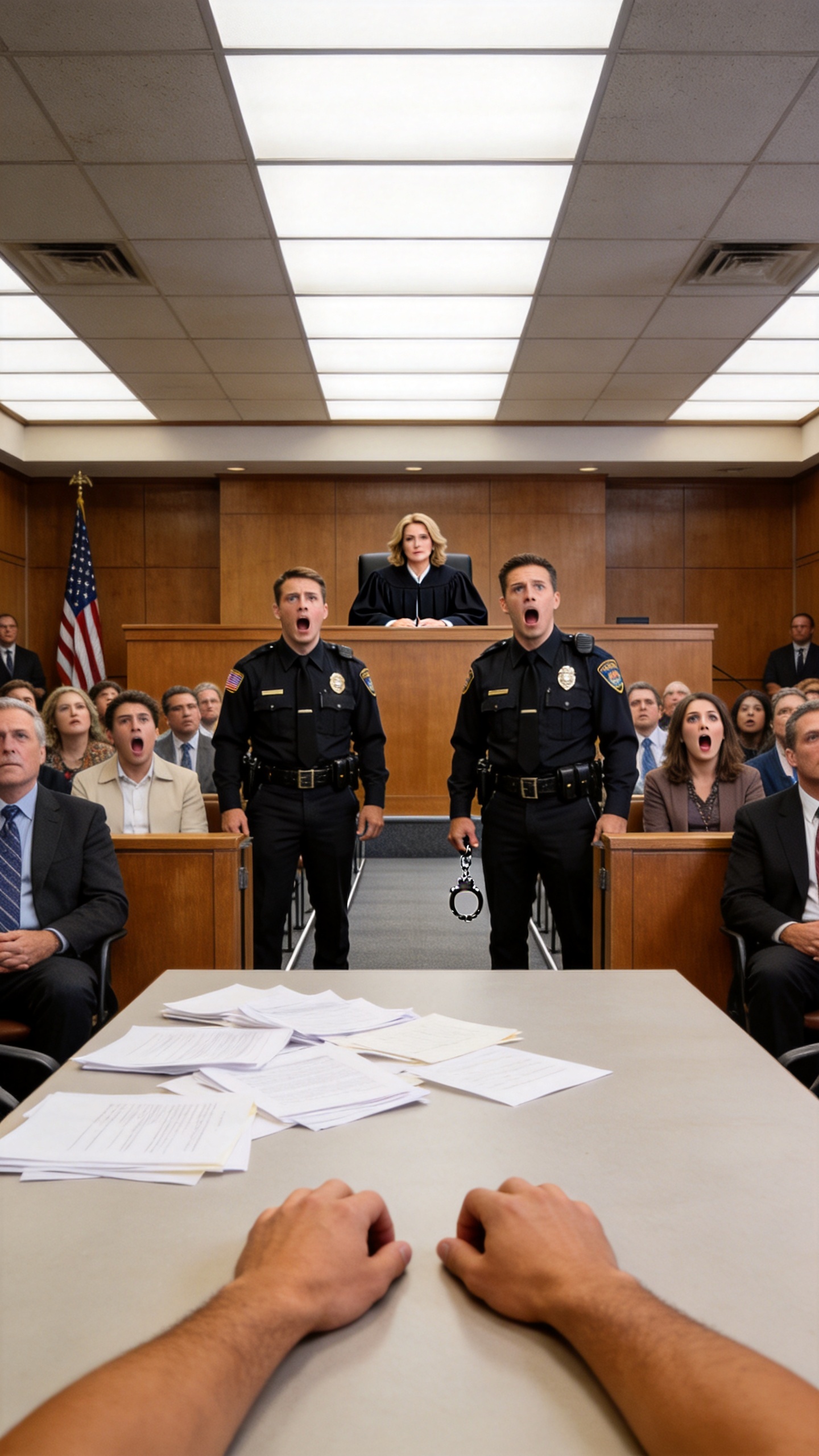
Whispers burst across the room.
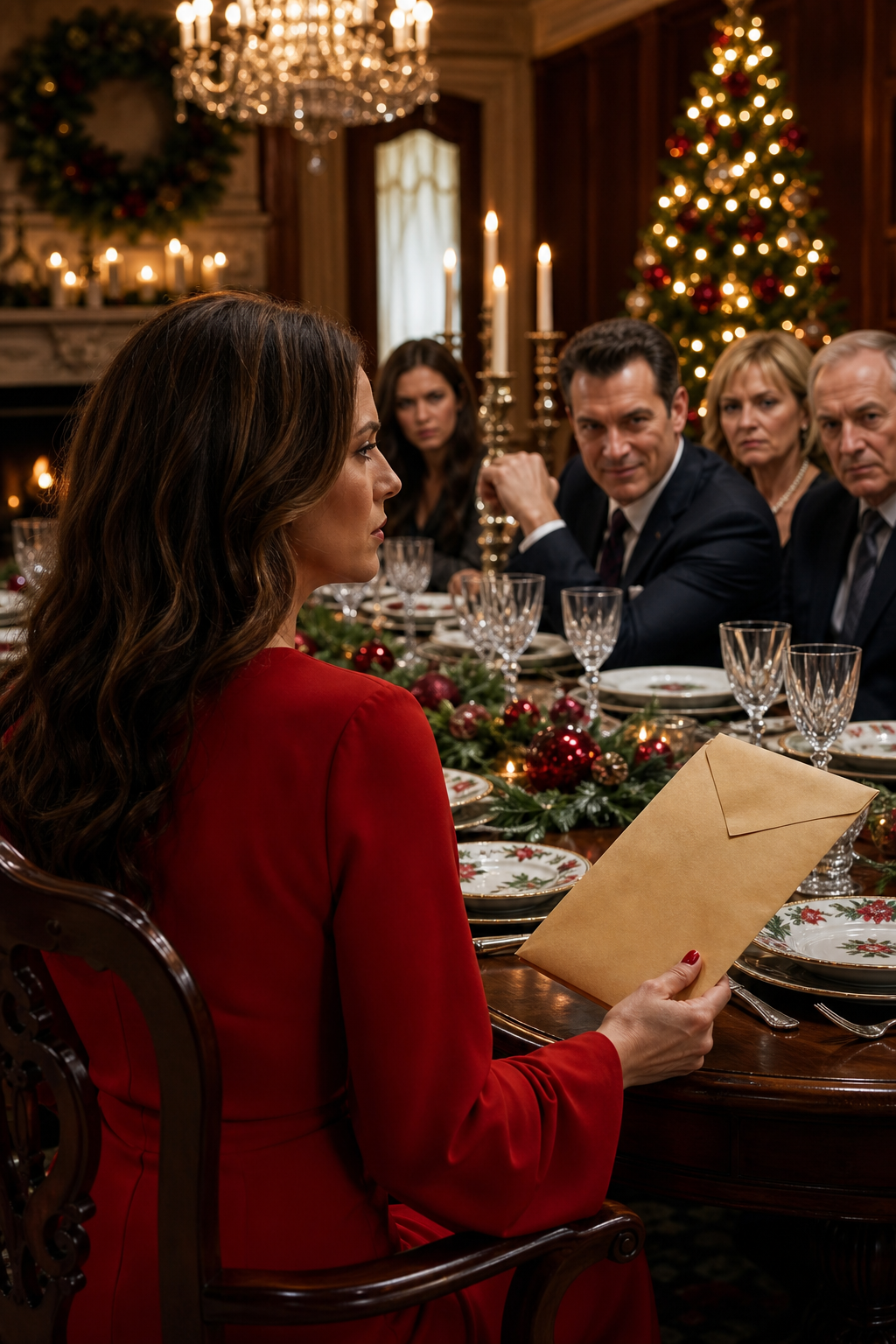
A board member named Preston Hale approached carefully.
“What is going on,” she said clearly, “is a matter that concerns this company, its board, its investors, and possibly its auditors.”
Dana handed copies of the preliminary report to board members and corporate counsel. Harold stood at her side, ready to walk them through every page.
Marlene stayed near the back of the ballroom, watching the exits as if old instincts had never left her.
For twenty minutes, Dana spoke.
Entities linked to Celeste Hart.
Every fact landed harder than anger ever could.
After the first ten minutes, Celeste tried to leave.
Marlene stepped smoothly into her way.
That was the moment I understood something final about them.
Their love had existed only as long as it remained profitable.
A reporter near the rear of the room asked, “Colonel Whitlock, are you saying your husband presented another woman as his wife while you were deployed?”
“I am saying,” I replied, “that while I served my country, my husband gave my name, my home, my family role, and possibly company resources to another woman.”
The words stayed suspended beneath the chandeliers.
The board chair closed the folder with a quiet but final sound.
“Richard,” he said, “we need to convene an emergency session immediately.”
For the first time that night, I saw hatred in his eyes.
His empire had not fallen because I shouted.
It fell because, for once, the truth had been allowed into the room.
The morning after the gala, my face appeared on the local news.
Not the face I would have chosen. The camera had caught me in the middle of speaking, eyes steady, mouth firm, my uniform shining beneath the ballroom lights. The headline under the clip read:
DEPLOYED ARMY COLONEL CONFRONTS CEO HUSBAND AT ANNIVERSARY GALA.
By noon, national outlets were running it.
By dinner, strangers on the internet had turned my marriage into an argument.
Some people called me brave. Some called me bitter. Some said public humiliation was cruel. Some said Richard deserved worse.
Some dissected my uniform, my age, Celeste’s dress, Caroline’s expression, Richard’s posture, and the pendant at Celeste’s throat.
I stopped reading after ten minutes.
Public attention is a strange kind of punishment. Even when people are defending you, they are still putting their hands on your wound.
“The documents will speak,” she said. “Let people exhaust themselves.”
The board acted fast. Richard was suspended while the investigation proceeded. Celeste was removed from all company roles. Outside auditors were hired. Corporate counsel began reviewing years of payments.
Within two weeks, the company had frozen several vendor relationships. Within three weeks, two board members resigned. Within four, Celeste’s nonprofit had deleted half of its website.
Richard called me seventy-three times.
She blocked him after he left a voicemail saying, “Your mother is destroying everything I built.”
That was the final evidence that Richard had rewritten our entire life inside his own mind.
I moved into a furnished cottage outside Hendersonville, near Old Hickory Lake. It had a screened porch, creaking floors, and a view of water that turned pink at sunset.
It was not the home I had dreamed of, but it was quiet, and quiet had become precious.
Marlene stayed with me for a week. Caroline brought my grandsons every Saturday. The boys did not understand why Grandma Ellie cried when they ran into her arms, and I was thankful for that.
Children should not have to understand betrayal too young.
One afternoon, my grandson Caleb found one of my medals in a drawer.
The years that could never be returned.
Thirty-Two Years Of Service Had Taught Me To Wait
“No,” I said. “I just kept going when things were hard.”
He considered that with great seriousness.
The investigation dragged on for months.
The results were worse than anyone expected.
Richard had not acted entirely alone, but he had directed enough questionable transfers and hidden enough relationships that defending his position became impossible. The board negotiated his departure. His ownership was reduced.
His voting power was stripped. Certain assets were recovered. Civil claims followed. The company survived, but Richard did not survive inside it.
She sold the Mercedes, cleared out the condo, and left Tennessee.
Marlene thought that was hilarious.
“She loved him right up until the money got complicated,” she said.
But some part of me still wondered what Richard had said to Celeste late at night. Had he promised her forever? Had he called me cold? Had he told her I had abandoned him?
Had she believed him, or had belief never mattered as much as access?
The divorce took almost a year.
People imagine divorce after betrayal as one dramatic courtroom scene where justice arrives in one satisfying sentence.
Arguments over things you no longer even want but refuse to let someone steal.
It is seeing your wedding date typed into legal documents as though love were a company being dissolved.
The hardest part was the house.
Not because he loved it. Because keeping it would let him pretend the story had not changed.
It would allow him to walk through rooms where I had chosen the paint, planted the garden, hung Caroline’s school photographs, and somehow make the walls agree with his version of history.
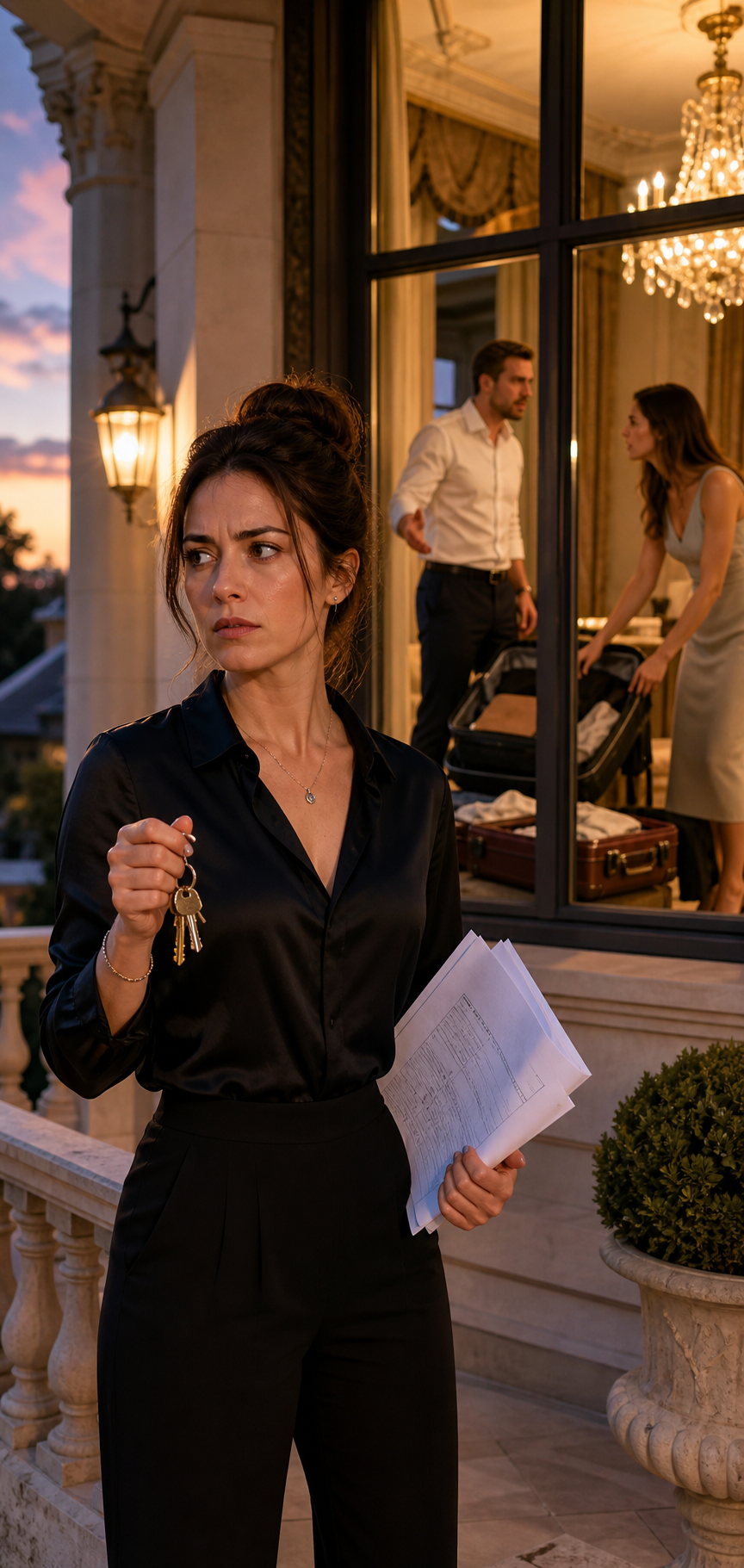
On the final day, I went there alone.
The house was empty. Without furniture, every room echoed. Sunlight entered through bare windows. The dining room chandelier had been removed. The fireplace looked smaller than I remembered.
In the bedroom, I stood where my dresser had once been.
For years, my jewelry box had rested there.
For the first time, I allowed myself to feel the full force of rage.
It surged so powerfully that I had to grip the doorframe.
Then, almost as quickly, it passed.
Because she had not taken my life.
She had only worn pieces of it.
Before leaving, I went to the backyard and dug up a small rosebush near the fence. It was one I had planted the spring before my first long deployment after Caroline’s wedding.
The roots resisted me, stubborn and tangled.
Later, I planted it outside the cottage.
By winter, the legal settlement was complete.
I received enough to be secure. Richard received enough to survive, but not enough to pretend consequences had forgotten him. Caroline chose limited contact with him.
Paige apologized over and over until I finally told her forgiveness did not mean she had to keep bleeding forever.
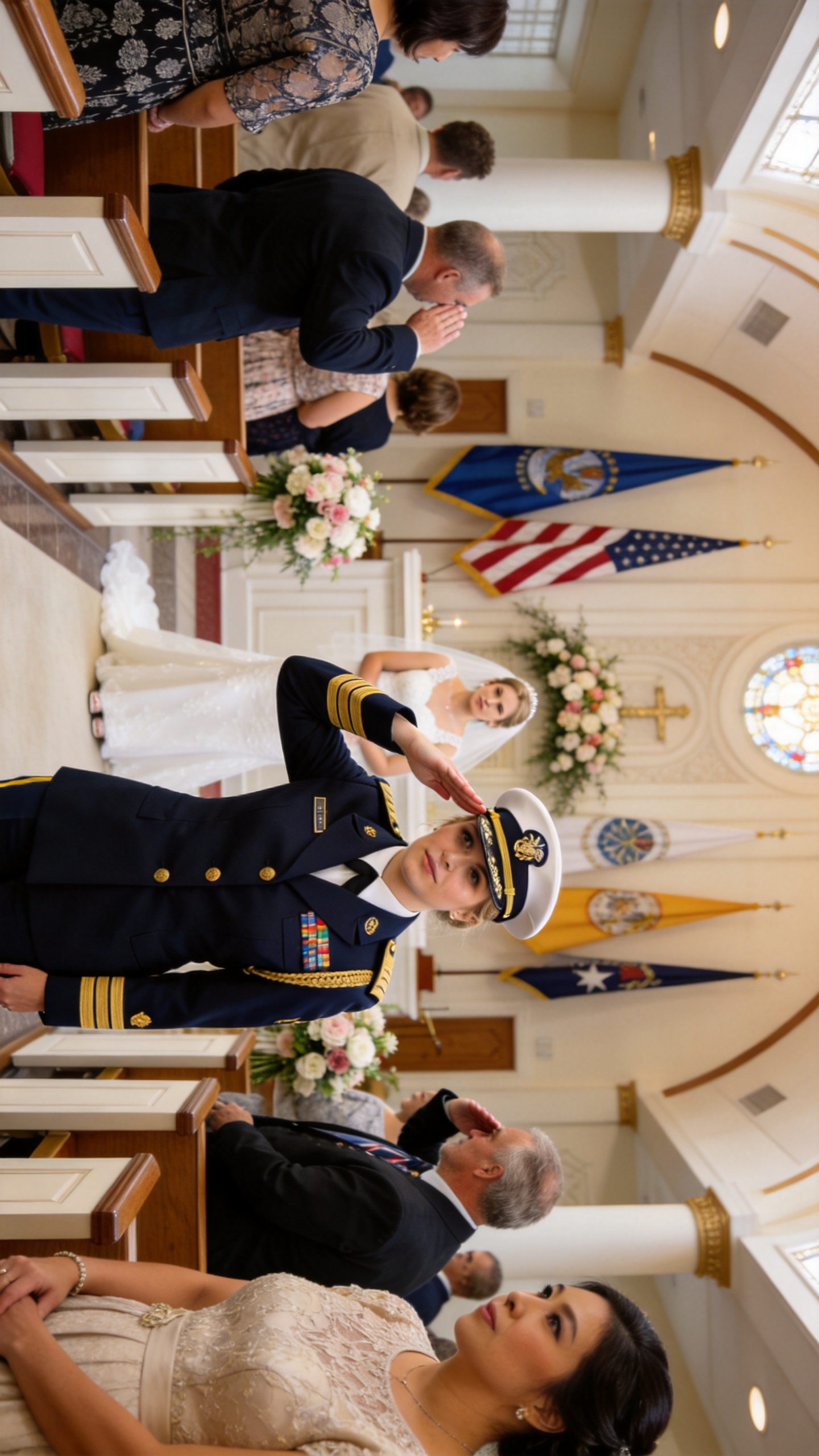
As for me, I retired from the Army on a cold, bright morning in March.
When I stood at the podium, Caroline sat in the front row. Marlene was beside her. Dana sat near the aisle. My grandsons squirmed in their little suits.
For most of my life, I believed service meant leaving.
That morning, I understood that service could also mean staying.
Staying open enough to love the people who remained.
After the ceremony, a young captain came up to me.
“Ma’am,” she said, “how did you survive everything?”
I looked across the room at Caroline, laughing through tears.
“I stopped asking why someone tried to erase me,” I said. “And started remembering I was still here.”
Richard asked to see me eighteen months after the gala.
By then, his name had disappeared from the company website. Whitlock Freight & Supply had become Cumberland National Logistics after merging with a larger firm. The board described it as a “strategic repositioning.
” Everyone else understood it as scrubbing away the scent of scandal.
He sent the request through Dana first.
The old Richard would have pressured, charmed, trapped me, called relatives, sent emotional messages. This Richard went through my attorney, as though he had finally learned that boundaries were not decorative.
Dana said, “You don’t owe him anything.”
We met at a quiet restaurant outside Gallatin, the kind of place where coffee arrives in heavy white mugs and no one pays much attention to older people sitting silently across from one another.
I noticed that right away. During our marriage, he had always been five minutes late and charming enough to make everyone forgive him for it.
Now he sat alone in a corner booth, hands folded, shoulders slightly bent.
Not physically. Richard was still tall, still handsome in that polished way that once pulled donors and executives toward him. But something around him had changed. The shine was gone.
He waited until I slid into the booth before sitting again. A waitress brought coffee. Neither of us touched it.
For a long moment, we only looked at each other.
Thirty-one years of marriage had once made silence feel natural between us.
Now it felt like a corridor neither of us knew how to cross.
At last, he said, “Thank you for coming.”
He drew a breath. “I’m not here to ask for anything.”
Pain moved across his face. “I deserved that.”
I had expected excuses. Self-pity. Some carefully polished speech about loneliness and bad choices. Instead, Richard seemed exhausted in a way no performance could copy.
“I’ve been in therapy,” he said.
“At first, I went because my attorney said it would look good.”
He gave a humorless laugh. “Then I kept going because I realized I didn’t know how to tell the truth without losing the person I was telling it to.”
The waitress refilled cups at the next table. Someone laughed near the entrance.
Richard looked at me. “I lied about you because I was ashamed of myself.”
My fingers tightened around my napkin.
He went on. “Every room we walked into, people asked about you. Your rank. Your deployments. Your awards. Your service. They admired you, and I told myself I admired you too.”
That answer hurt because it sounded true.
“Then I started resenting you,” he said. “Not because you did anything wrong. Because your life had meaning without me. Mine felt important only when people were watching.”
“Celeste became personal about four years before you found out. Public about three. Living in the house almost two.”
The facts no longer had the power to shock me, but hearing them from his mouth still cut something open.
“I told myself you’d explain later. That once you retired, everyone would understand. But really, I wanted her disappointment pointed at you instead of me.”
A pickup rolled past. Across the street, an American flag snapped in the cold wind outside a hardware store.
“You made our daughter believe I abandoned her.”
“No,” I said, turning back to him. “You don’t know. You cannot know what it felt like to hold her while she cried for the years you stole from us.”
For the first time, I watched tears fall.
Not pretty tears. Not useful tears. Old, ugly tears.
People often believe an apology is a bridge. Sometimes it is only a marker beside the road, proof that someone finally noticed the wreckage.
He told me Celeste had contacted him once after leaving Tennessee. She wanted money. He refused. She threatened to go public. He told her to do it. She never did.
He took a long time before answering.
“I loved how she made me feel.”
That was probably the most honest thing he had ever said about her.
Before we left, Richard asked, “Do you think you’ll ever forgive me?”
The Life He Built With My Name Collapsed In Public
A year earlier, I would have said no just to watch it hurt him.
Hope flickered across his face.
“Forgiveness does not mean reunion.”
“And it does not erase consequences.”
Outside, the air was cold. We stood beside our cars like acquaintances after an uncomfortable business lunch.
Richard said, “You look peaceful.”
Then I got into my car and drove away.
Not quickly. Not dramatically. No swelling music. No last look in the mirror.
Just a woman leaving a man who had confused her absence with weakness.
That spring, my rosebush bloomed beside the cottage.
First came small red blossoms. Then dozens.
Caroline brought the boys over to help me build a bird feeder. Marlene came with her dogs and complained about my coffee. Paige visited for lunch and cried less than she usually did.
Little by little, my life filled with ordinary things.
Volunteer work helping veterans adjust to civilian life.
I learned that peace is not dramatic. It does not kick open doors or announce itself beneath chandeliers.
It comes quietly, disguised as a morning when you wake up and realize pain is not the first thing you feel.
Two years after the gala, Cumberland National invited me to speak at its annual veterans hiring event.
The event was held in the same ballroom where I had exposed Richard.
When I walked inside, the chandeliers looked exactly the same.
I stood at the podium in a navy suit instead of a uniform and spoke about duty, transition, integrity, and the cost of forgetting that people are never disposable.
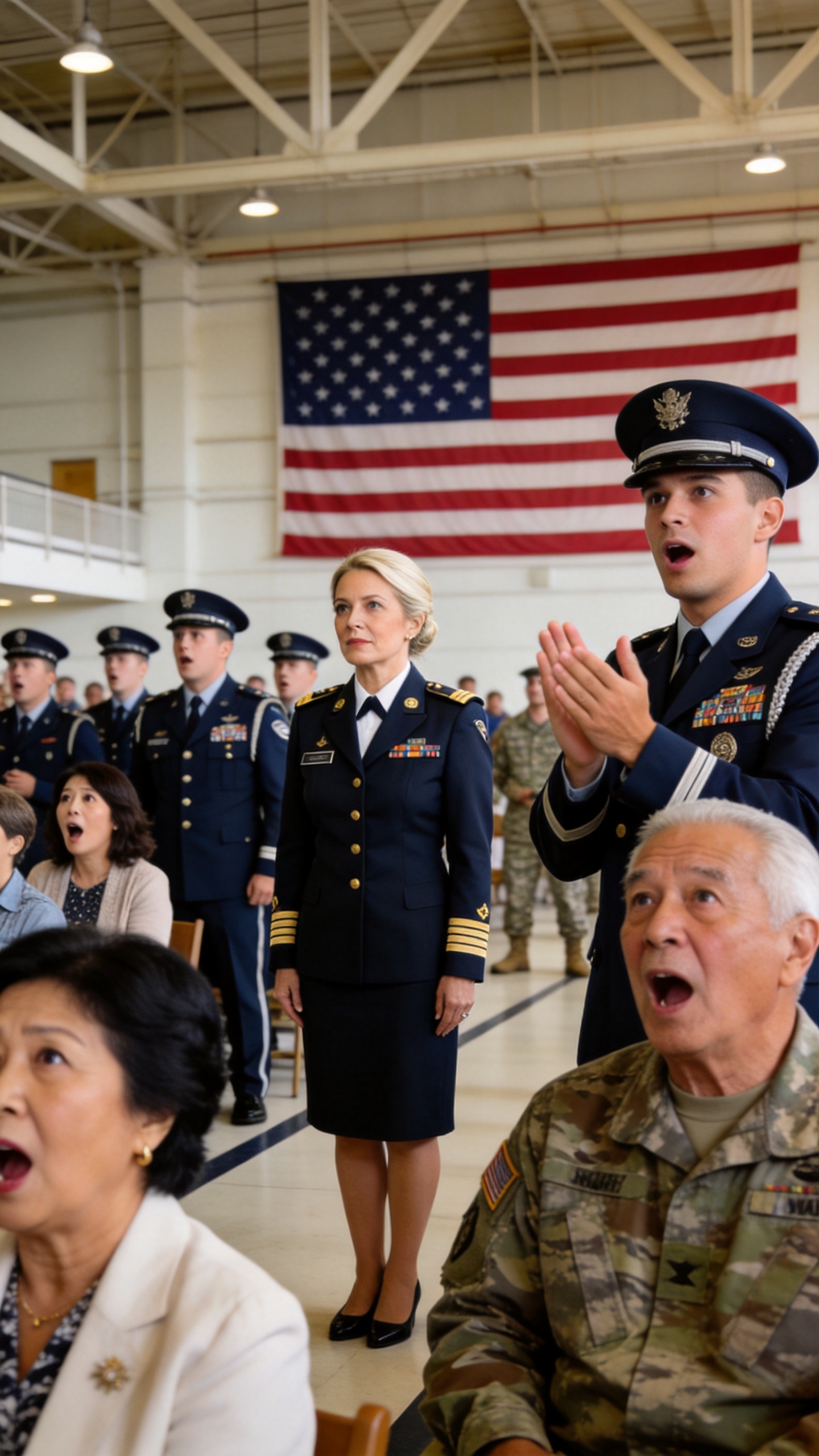
At the end, the audience rose to its feet.
Not because I had been betrayed.
Afterward, Caroline hugged me and whispered, “You got your name back.”
I looked around the room where I had once been treated like a ghost.
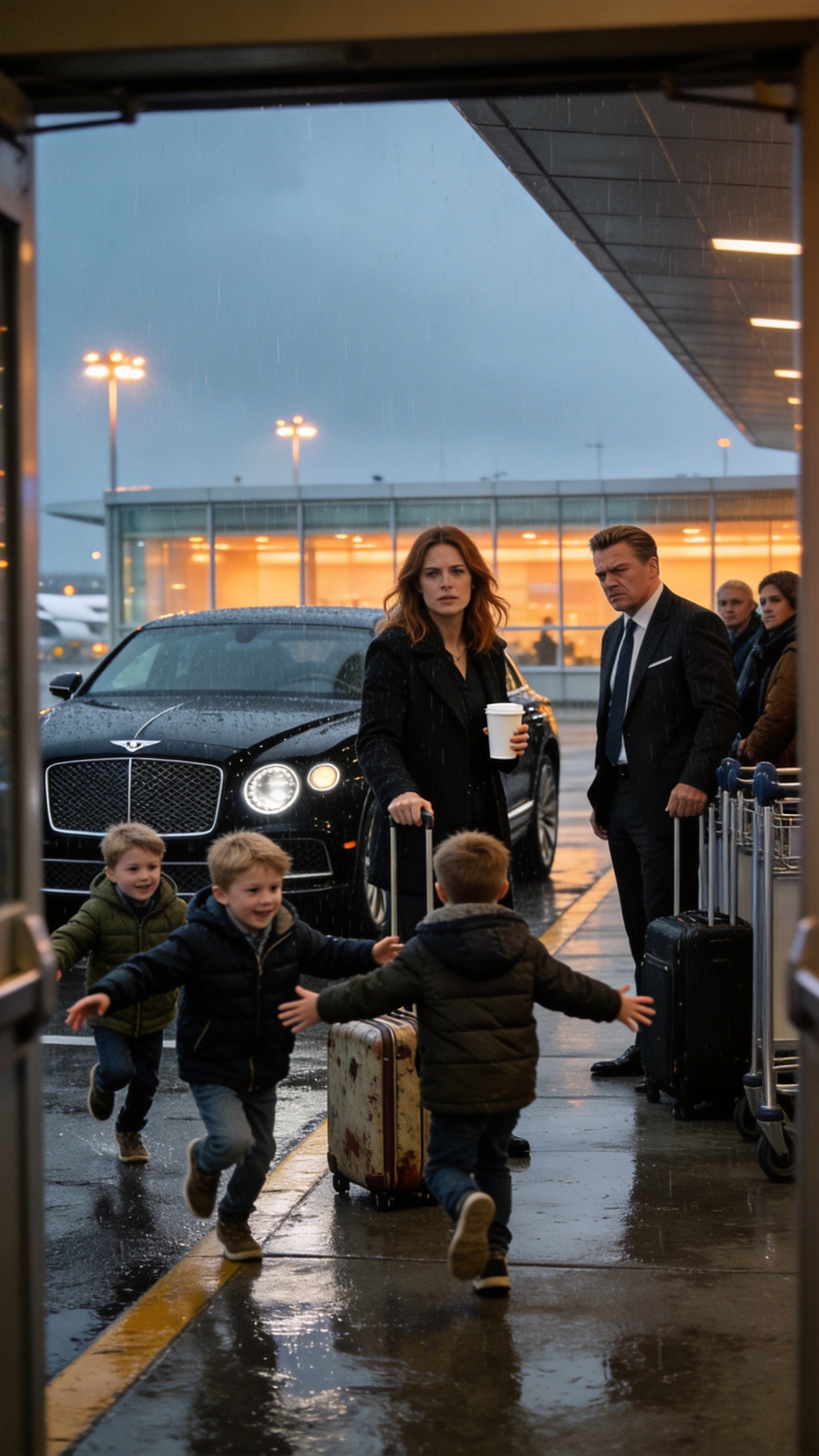
Five years after the guard told me I was not my husband’s wife, I drove past the old company building on a rainy Thursday afternoon.
Nashville traffic forced me off the interstate, and suddenly there it was: four stories of steel and glass, the flag still standing near the entrance, the lobby still glowing behind polished doors.
For a moment, I saw myself on that first day.
In uniform. Hopeful. Carrying a small bag. Nervous like a young bride instead of a decorated colonel with thirty-two years of service behind her.
I saw Celeste step out of the elevator.
I saw the life I thought I had break apart without making a sound.
Then the light changed, and I kept driving.
That is often how healing works.
But it no longer owns the road.
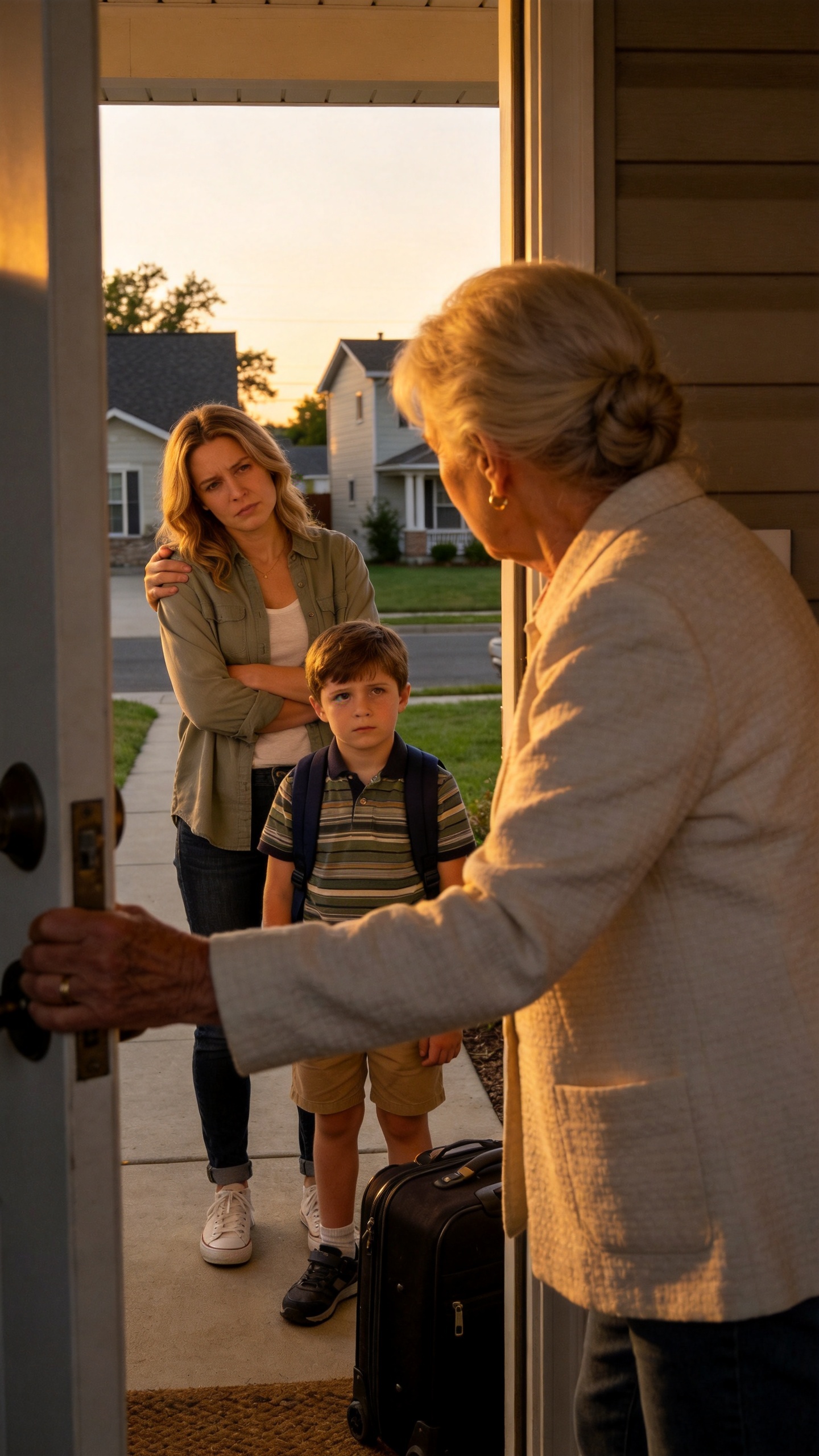
Caroline opened the door with flour on her cheek.
“You were absolutely going to.”
Inside, the house smelled of chocolate cake and chaos. Balloons floated along the ceiling. Children raced through the hallway. Mason shouted that someone had put a dinosaur in the punch bowl.
For years, I had measured family by the moments I missed.
Halfway through the party, Caroline pulled me aside.
My chest did not tighten the way it once would have.
“He’s moving to Arizona. Said he wanted me to know.”
She looked toward the living room, where Caleb was laughing with frosting on his chin.
“I feel okay,” she said. “A little sad. Mostly okay.”
Over the years, Richard and Caroline had built a careful, limited relationship. Birthday phone calls. Lunch twice a year. No secrets. No rewriting the past.
Richard had learned that fatherhood after betrayal was not restored through speeches. It had to be rebuilt through small, humble actions, with no promise of success.
As for Richard and me, we exchanged holiday cards.
But the cards were simple. No nostalgia. No fake warmth. Only proof that two people could share a past without trying to live inside it.
Later that evening, after cake and presents, Caleb climbed onto the porch swing beside me.
“Mom says you used to be scared of nothing.”
I laughed. “Your mom exaggerates.”
“Were you scared when you were in the Army?”
He leaned against me. “Were you scared when Grandpa lied?”
The question was so quiet I nearly missed it.
Caroline must have given him some version of the truth. Not all of it. Enough.
I looked out at the rain falling beyond the porch.
Then he nodded, as if I had handed him something useful.
When I drove home that night, the rain had stopped. The road shone beneath the streetlights.
At the cottage, my rosebush stood near the porch, larger now, wild in places, still blooming stubbornly every spring.
Inside, I made tea and opened the drawer where I kept Richard’s handwritten apology.
Because it reminds me that accountability can happen, but it usually comes after the damage is already done.
The letter had grown soft along the folds. In it, Richard wrote that he had spent years confusing admiration with love, control with partnership, and image with truth.
He wrote that watching me rebuild without him had taught him the difference between losing a wife and destroying a marriage.
At the end, he wrote one sentence I never forgot:
You came home early, Eleanor, but the truth was already waiting.
I folded the letter and placed it back in the drawer.
Then I sat on the porch with my tea.
The lake was dark. Crickets sang. Somewhere across the water, a dog barked once and went silent.
People often ask what happened to Celeste.
People ask whether Richard got what he deserved.
People ask whether exposing him in that ballroom felt good.
The true victory was not the investigation, the settlement, the headlines, or Richard losing control of the company. The true victory was seeing Caroline laugh freely again.
It was helping veterans write resumes on Wednesday mornings. It was teaching my grandsons how to plant tomatoes. It was waking in a quiet house and feeling whole.
For a long time, I believed betrayal had erased me.
But no one can erase a woman who finally chooses to stand at the center of her own life.
Richard had handed my title to another woman.
My family had believed his version of me.
His employees had called a stranger Mrs. Whitlock.
And a guard had laughed at my truth.
But truth did not need his permission.
So if you have ever stood outside the life you built and watched someone else wear your name, remember this: your worth does not shrink because someone failed to honor it.
Your story is not finished because someone tried to rewrite it. And the people who mistake your silence for weakness are often the most shocked when you finally speak.
I drove three hours to surprise my husband.
Instead, I found another woman living as his wife.
But what Richard never understood was that I had survived war rooms, hard roads, lonely airports, folded flags, and thirty-two years of service.