After the Doctors Told Me I Had Five Days to Live, My Young Wife Leaned Over and Whispered: 'When You're Gone, Your Million Will Belong to Me and My Lover.' | A Story of Betrayal
That night, Lucas sat beside Chloe's hospital bed and told his sister she was finally going to receive the surgery she needed. Chloe burst into tears and pressed her face against his shoulder. For the first time in years, their mother spoke about the future without crying.
Six days later, however, Lucas was walking home after a graveyard shift when a black SUV stopped beside the curb. Two masked men jumped out, dragged him into an alley, and assaulted him, leaving him badly injured on the cold pavement.
Before running back toward the vehicle, one of the men leaned over Lucas.
"Sign the estate renunciation papers tomorrow. Or next time, we visit your little sister's hospital room."
Lucas dragged himself toward the street and called 911. As sirens sounded in the distance, his hand brushed against a cellphone lying on the pavement. One of the attackers had dropped it during the struggle. The screen was still illuminated.
A message from an unsaved number had just appeared: "Make sure he gets the point tonight. If he still refuses to sign the waiver, you know what to do with the kid at the hospital."
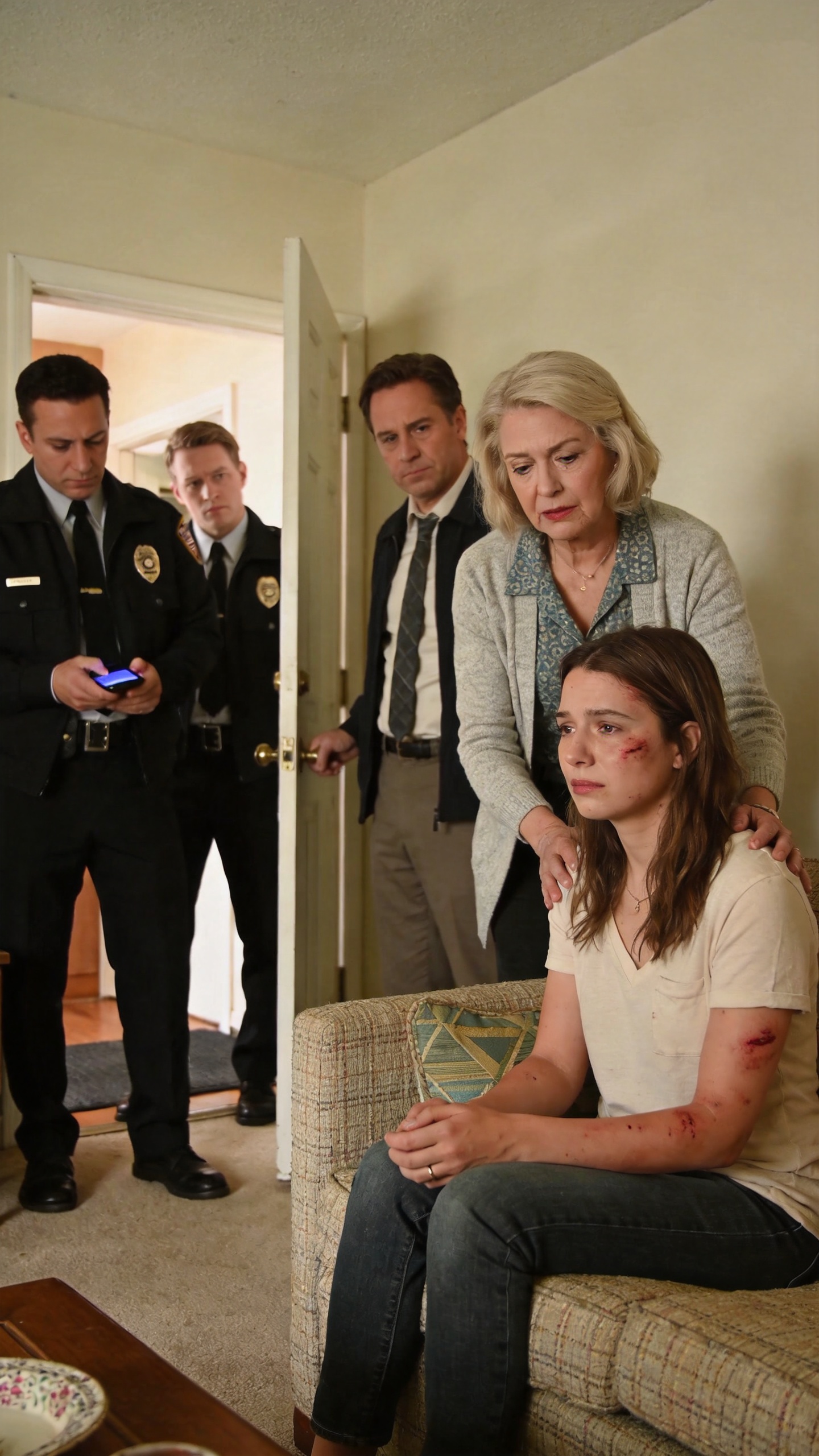
Lucas woke in the trauma unit with his torso tightly bandaged. Detective Sarah Miller of the Chicago Police Department sat beside his bed, holding the recovered phone inside a clear evidence bag.
"The phone belonged to a low-level enforcer," Detective Miller explained. "The device gave us location records, payment transfers, and encrypted message threads. Every trail leads directly to Raymond Rojas."
Lucas winced as he tried to sit up. "Detective, they threatened my sister."
"We already have two plainclothes officers outside Chloe's room. Nobody gets near her. Now tell me everything from the beginning."
Lucas explained Jonathan's accusation, the audio recording, and the rewritten estate plan. Detective Miller then revealed that the county coroner's toxicology results had arrived. Jonathan's heart tissue contained lethal accumulated concentrations of digoxin. This had not been a sudden medical mistake. The poisoning had occurred systematically over an extended period.
By noon, search warrants were executed at Victoria's Naperville residence, Raymond's luxury apartment, and the private gym Raymond owned. Inside Victoria's master bathroom, investigators recovered six empty digoxin prescription bottles, forged prescription materials, and a handwritten journal recording dates, amounts, and Jonathan's pulse rates.
Forensic specialists examining her laptop also recovered searches concerning heart toxicity, difficult-to-trace poisons, and inheritance law.
Victoria was arrested that afternoon while receiving a facial at an upscale Gold Coast spa.
"This is an outrageous mistake!" she screamed as officers restrained her.
"You're under arrest for first-degree murder, conspiracy to commit murder, and solicitation of aggravated assault," Detective Miller told her as the handcuffs closed.
Raymond was captured at his gym. He attempted to escape through a rear emergency exit, but two state troopers were waiting in the alley. Inside his office locker, investigators discovered ,000 in cash and a folder containing personal information about Lucas, his mother, and Chloe's medical schedule.
The legal proceedings lasted five exhausting months. Victoria's expensive defense team tried to suppress Jonathan's recording. They argued that Jonathan had been confused by medication and that Lucas manipulated a dying man for money. But forensic audio analysis confirmed that the recording was authentic and unedited.
The physician who witnessed Jonathan sign the documents testified under oath that Jonathan had been lucid, articulate, and completely certain about what he wanted. The notary's video showed Jonathan clearly identifying his assets, explaining his motives, and signing the documents without coercion.
Sarah Vance, the company CFO, also produced financial records demonstrating that Victoria had transferred ,000 from a shared account into a shell company linked to Raymond before Jonathan died.
During the trial, the courtroom gallery filled with hospital employees, reporters, and families of children with congenital heart conditions who had followed the case. Victoria appeared each morning in carefully tailored clothing, refusing to look toward Lucas.
Then the prosecutor played Jonathan's recording for the jury.
"You're finally going to die, Jonathan."
Victoria's cold voice echoed through the silent courtroom.
When Lucas took the stand, Victoria's defense attorney tried to portray him as an opportunist.
"Mr. Bennett, didn't Mr. Mercer offer you an enormous amount of money to accuse his wife? You benefited directly from his death, didn't you?"
Lucas took a slow breath and met the attorney's eyes.
"I would have benefited far more if Jonathan Mercer had lived. If he were alive today, he could have testified in this courtroom, taken back his company, and watched my sister leave the hospital after surgery. Money does not replace a human life."
The defense attorney attempted to interrupt. The judge allowed Lucas to continue.
"Mr. Mercer didn't ask me to lie. He asked me not to let his murder reward the people responsible for it. I would have gladly gone back to scrubbing hospital floors for the rest of my life if it meant Jonathan didn't have to die listening to his wife mock him while he lay helpless."
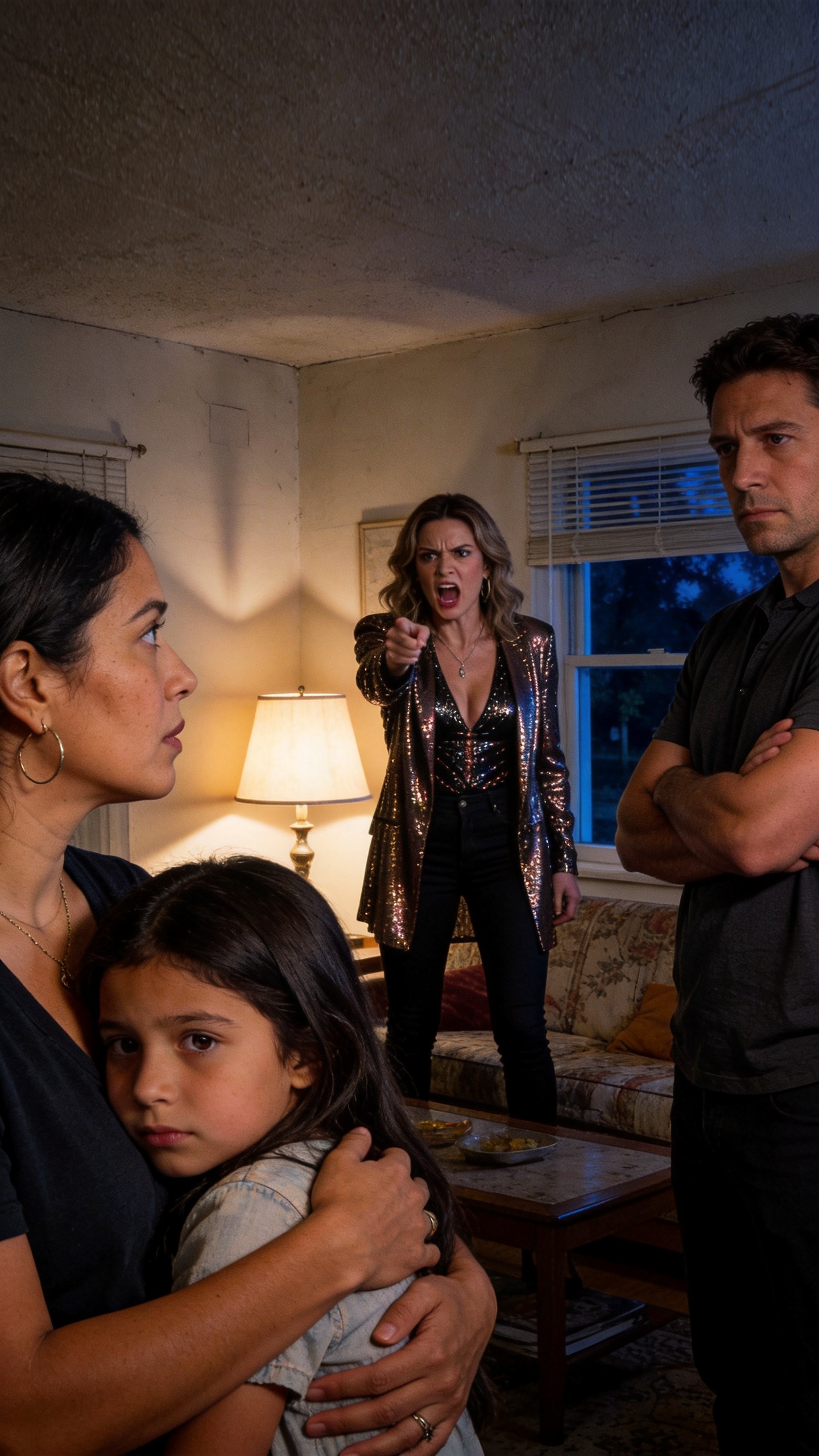
Victoria suddenly jumped from her chair. "You opportunistic little thief! That money was MINE!"
The judge slammed the gavel and ordered her restrained. But the outburst spoke for itself. Victoria did not say she loved Jonathan. She did not say she was innocent. Her first instinct was to claim the fortune.
The prosecution had presented seventeen witnesses over six weeks. The defense had presented three. The jury had seen the prescription bottles. The journal. The text messages. The photographs of Lucas's injuries. The recording of Victoria's voice, cold and mocking, counting down the days until her husband died.
The foreman stood and read the verdict without looking at Victoria. She collapsed against the defense table. Her lawyer tried to steady her. She pushed him away.
During those four weeks, Lucas returned to work at the hospital. He did not want to. But he needed to see the hallways where Jonathan had spent his final days. He needed to remember why he was doing this. Mrs. Vance, the CFO, called him every evening to update him on the foundation plans. She told him the paperwork was moving forward. The first scholarship applications were already arriving. Lucas listened and nodded and tried to believe that the weight in his chest would eventually lift.
The judge set the sentencing date for four weeks later. Victoria was remanded without bail. As the bailiff led her out, she looked at Lucas one last time.
"You will never be him," she said.
"I know," Lucas replied. "I am not trying to be." The jury deliberated for less than two hours. Victoria Mercer was found guilty of first-degree murder for financial gain, criminal conspiracy, and solicitation of felony assault. She received life in prison without the possibility of parole.
Raymond Rojas was convicted of murder conspiracy, attempted kidnapping, and extortion and received thirty-two years in state prison.
As Victoria was led from the courtroom in restraints, she turned toward Lucas. "You took everything from me!"
Lucas looked at her with quiet pity. "No, Victoria. You lost everything the moment you decided a man's life was worth less than a house on the beach."
Six months later, Lucas officially assumed stewardship of Jonathan's assets. The first major payment he authorized went to St. Jude Medical Center for Chloe's complex reconstructive heart surgery. The procedure was scheduled to last six hours. Complications stretched it to nearly nine.
Lucas paced the hospital corridors until he felt he had memorized every tile on the floor.
Finally, the chief pediatric surgeon walked through the doors, removed his surgical cap, and smiled.
"It was complicated, but she pulled through. We repaired the defect. Her heart is beating strongly on its own."
Lucas covered his face and cried.
Jonathan's remaining fortune was enormous. But Lucas never forgot his final instruction: "Use what remains to do something good."
Lucas sold the Naperville estate and one of the Chicago condos. With part of the proceeds, he purchased a modest, comfortable home for his mother near the hospital. He kept Jonathan's Milwaukee furniture plant but established a profit-sharing program and guaranteed full health benefits for every employee.
Using the investment portfolio, Lucas created the Jonathan Mercer Pediatric Heart Foundation, an endowment dedicated to fully funding life-saving cardiac procedures for children whose families could not afford treatment.
During its first year, the foundation paid for twelve pediatric heart surgeries. Lucas visited every family in the hospital. He listened to mothers who had sold furniture and fathers working three jobs just to keep their children alive. In each story, he recognized the exhaustion his own family had endured.
By its fifth year, more than three hundred children had received life-saving procedures. Donations began arriving from regional business leaders, doctors, and ordinary people who had learned Jonathan's story. Workers at the Milwaukee factory organized an annual fundraising drive and mounted a brass plaque at the entrance: "In memory of Jonathan Mercer, who in his final hours decided that his legacy would save hundreds of lives."
Lucas also located Jonathan's estranged son, Daniel. Daniel lived in Seattle and had not spoken to his father for more than fifteen years. Lucas wrote him a letter explaining what had happened and offered to return Jonathan's journals, family photographs, and personal belongings.
Daniel flew to Chicago the following month. Standing inside the foundation headquarters, Daniel looked at a portrait of Jonathan hanging on the wall.
"I spent fifteen years being angry at him," Daniel said softly. "I thought he cared more about building his business empire than being a father."
"Maybe he did for a long time," Lucas replied. "But at the very end, he tried to do something different."
Daniel refused to challenge the trust. He asked only for his father's pocket watch and a wooden box containing letters Jonathan had written to him over the years but never sent. After reading them, Daniel joined the foundation's advisory board.
Five years after Jonathan's death, the foundation had helped save more than five hundred children. The main hallway of the foundation's headquarters was covered with framed photographs. Children riding bicycles. Teenagers holding high-school diplomas. Infants sleeping peacefully in their mothers' arms.
One afternoon, Chloe — now nineteen and thriving — walked into Lucas's office carrying an official letter.
"I got accepted into pre-med," she announced, her eyes shining. "I'm going to be a pediatric cardiologist."
Lucas stood and pulled his sister into a tight embrace.
"Mr. Mercer would be incredibly proud of you."
That evening, Lucas sat alone in his office while rain tapped softly against the windows, reminding him of the night he had first sat beside Jonathan's hospital bed. A small framed photograph of Jonathan rested on his desk.
"We did it, Jonathan," Lucas said quietly into the empty room. "Your life's work didn't buy a house on the beach. It bought time, surgeries, birthdays, and futures."
Jonathan Mercer had spent much of his life chasing wealth and, somewhere along the way, had lost his family. But in his final act, he chose a different path. He placed everything he had built into the hands of a stranger who understood the real value of a human life.
Jonathan's fortune could not save his own heart. In the end, however, it saved hundreds of others.
And that became the only inheritance that truly mattered.