I Donated My Kidney to My Husband After 22 Years of Marriage. Three Days Later, I Overheard Him on the Phone With His Mistress, Saying: 'I Finally Got What I Needed From Her.' | A Story of Betrayal and Sacrifice
"My illness was not caused by you."
"But you could have bought yourself more time!"
"I chose how I wanted to spend the time I had left."
Victor raised his head. "And did you also choose to burn our house to the ground?"
The answer left him speechless. "Yes."
"That was our home for twenty-two years!"
"It was a house deeded solely in my name. Our life ended the moment I heard you tell your mistress I was nothing more than a piece of furniture."
Victor went completely still. "You… heard that call?"
"Every word. The address. The garden. The garage. Your promise that you would give my house to Rita."
"I was on heavy pain medication! I was disoriented —"
"You were conscious enough to explain that I lived only to take care of you because I was incapable of doing anything else."
Victor had nothing to say.
"I taught elementary school for thirty-four years. I helped hundreds of children learn how to read. I cared for my parents as they were dying. I managed our home, handled our bills, and nursed you through end-stage renal failure. And you reduced my entire existence to a servant who brings you water."
"Forgive me. Sarah, please."
"That apology is very late."
"I did not want another woman sleeping in my bed, using my mother's china, and treating my death like a convenient doorway into a better life. I made a dangerous and destructive decision. I am not proud of it. But I could not allow the home I built to become a trophy for your mistress."
"And the insurance money?"
"The claim was paid after the investigation was completed. I gave it away."
"For years, I volunteered at a shelter for young people aging out of foster care. They turn eighteen and are pushed out without family, savings, or a security deposit for an apartment. Now the endowment can fund housing and education for years."
"Did you leave anything for me?"
The question escaped before he could stop it. There was no rage in her expression.
"Yes," she whispered. "I left you a kidney."
Victor's eyes closed as a strangled sound escaped his throat.
"Rita left you?"
"She said she was not a nurse."
Sarah gave a small, tired laugh. "At least she was honest with you from the start."
"I was going to leave you."
"I know. Bank transfers. Hotel reservations. A retainer payment to a divorce attorney. You were never very careful with financial trails."
"You knew for six months? And you stayed? You still took me to dialysis three times a week?"
"You were dying of kidney failure, Victor."
"That makes no sense."
"To you, maybe it does not."
"I planned to leave quietly once your transplant was successful. I had already found a small one-bedroom apartment near the botanical gardens. I wanted to spend whatever time I had left walking through the park, reading, and visiting Lucinda without checking the clock."
"Then why did you change your mind?"
"Because hearing you talk about me as though I were an object broke something inside me that could not be repaired."
Victor stared at the floor. "I don't even know who you are anymore."
Sarah looked directly at him. "That is the tragic truth, Victor. You never bothered to find out."
Heavy, ragged sobs shook his entire body. "Sarah… I am so sorry. For Rita. For the house. For saying those things about you. For all those years I treated what you did for me as if it meant nothing."
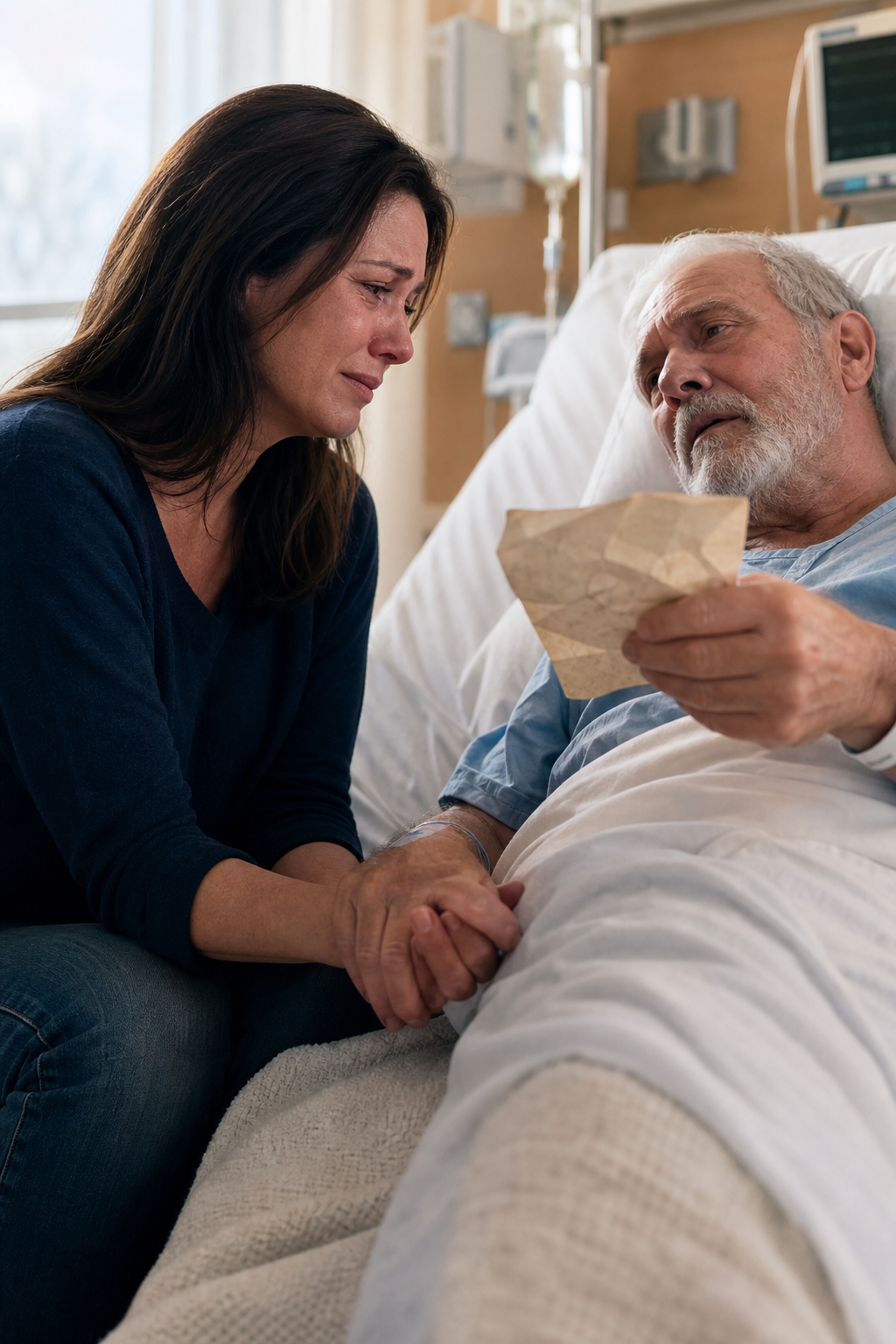
Sarah slowly extended her frail hand. Victor grabbed it with both of his.
"I forgive you," she said quietly.
"Let me fix this. Tell me what to do."
"You cannot repair a twenty-two-year marriage in a single afternoon. Take your anti-rejection medication on time. Eight in the morning. Eight at night. Not 8:10. Your life depends on small, boring, repetitive routines."
"Like me," he whispered. "According to me."
"Like me," Sarah said softly. "According to you."
Victor reached into his coat pocket. He had carried the gold band with him. He placed it gently on Sarah's blanket. "To remind you that something small and seemingly light can carry immense weight."
Dr. Herrera walked into the room to check Sarah's oxygen levels. Seeing how exhausted she had become, he quietly signaled that Victor should give her time to rest.
"What do you do when you're afraid?" Victor asked.
"I think about my former students. The ones who struggled for months to read, and then suddenly one day everything clicked. That moment always felt like a miracle."
At 3:48 PM, Sarah's breathing slowed noticeably. She opened her eyes one last time. "Eight o'clock sharp," she whispered.
Then she closed her eyes.
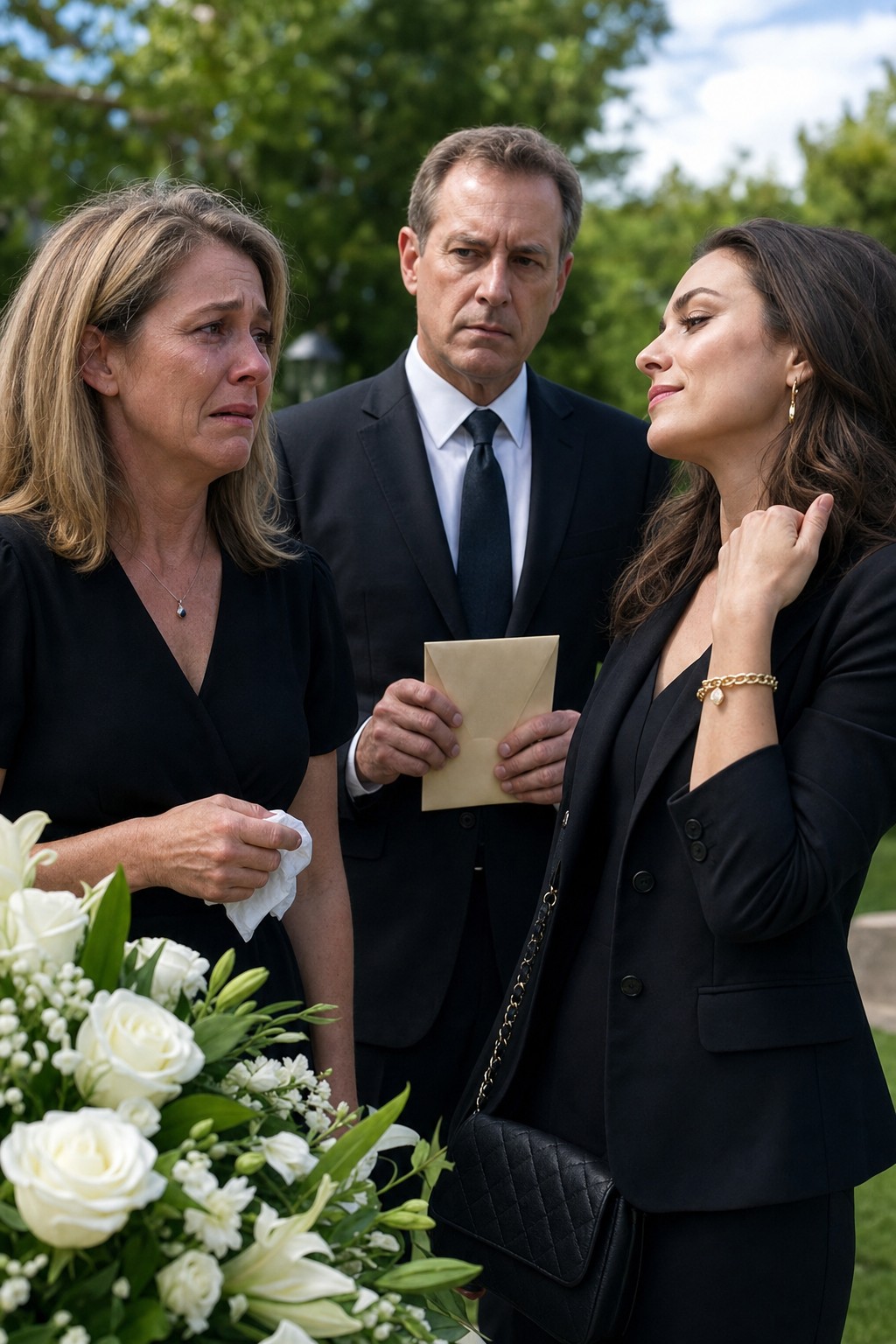
The memorial service took place one week later. Four young adults Victor had never met arrived together. One of them, an eighteen-year-old young man carrying a backpack, approached him quietly.
"Mrs. Vance paid for my first semester of community college."
After the service, Lucinda handed him a small, plain envelope. Inside was one sheet of paper written in Sarah's neat handwriting. The regional transplant center's phone number. Her nephrologist's name. And one sentence underlined twice: "Do not skip your medical checkups out of pride."
Victor stared at the page for a long time. Even in her final days, Sarah had organized the details of his survival.
Months later, Victor visited the botanical gardens Sarah had mentioned. He walked through the paths she had planned to walk. He sat on a bench near the koi pond. He watched the fish circle beneath the surface.
A woman sat down on the opposite end of the bench. She was reading a book. She looked up and smiled. Victor smiled back. He did not say anything. He simply sat there, letting the afternoon sun warm his face.
For the first time in months, he did not check his phone at 8:10 AM. He had already taken his medication at exactly 8:00.
Sarah's sister Lucinda also came to see Victor one afternoon. She did not stay long. She placed a small box on his kitchen table. Inside were Sarah's reading glasses, her favorite bookmark, and a photograph of the two of them taken twenty years earlier at their anniversary dinner.
"She wanted you to have these," Lucinda said. "She told me two days before she died. She said you would need something to remember her by that was not a scar."
Victor picked up the photograph. He had forgotten that night. He had forgotten the restaurant. He had forgotten the way Sarah laughed when he spilled wine on his shirt.
"She also said to tell you that the wedding ring was never meant to be a burden. It was meant to be a reminder that someone once believed in you completely."
Victor's real estate business continued after the divorce, but he scaled back dramatically. He worked shorter hours. He learned to ask for administrative help without treating employees as though they were there to serve him personally.
Teresa, the neighbor, visited him once. She brought a casserole. She sat in his kitchen and told him about the day Sarah left. "She stood on the sidewalk and looked at the burning house. She said she lost everything three days earlier in a hospital room. I did not understand what she meant at the time. Now I do."
Victor nodded. He did not defend himself.
The director of the South Boston shelter wrote him a letter. She thanked him for Sarah's generosity. She enclosed a photograph of the new housing wing that Sarah's endowment had made possible. The plaque at the entrance read: "In memory of Sarah Miller — who gave everything she had and asked for nothing in return."
Victor read the letter three times. Then he placed it inside the same envelope that held Sarah's final note.
Every Sunday evening, Victor organized his immunosuppressive medication into a weekly pillbox. At 7:58 every morning, an alarm sounded. He would pour a glass of water. At exactly 8:00 AM, he took the required dose.
Inside the noon compartment of the pill organizer, he kept Sarah's wedding ring.
Not because he believed it could bring her back. But because he had finally learned the truth he had spent twenty-two years refusing to understand.
Sarah had never been a piece of furniture. She had been the foundation holding up his home, his health, his stability, and ultimately his life.
Only after she was gone did Victor understand the devastating cost of confusing love with servitude.
And every morning at precisely 8:00 AM, he drank the glass of water to the last drop.
Deep inside his body, Sarah's kidney continued its quiet, vital work. Asking for nothing in return.
Just as she had done for far too many years.