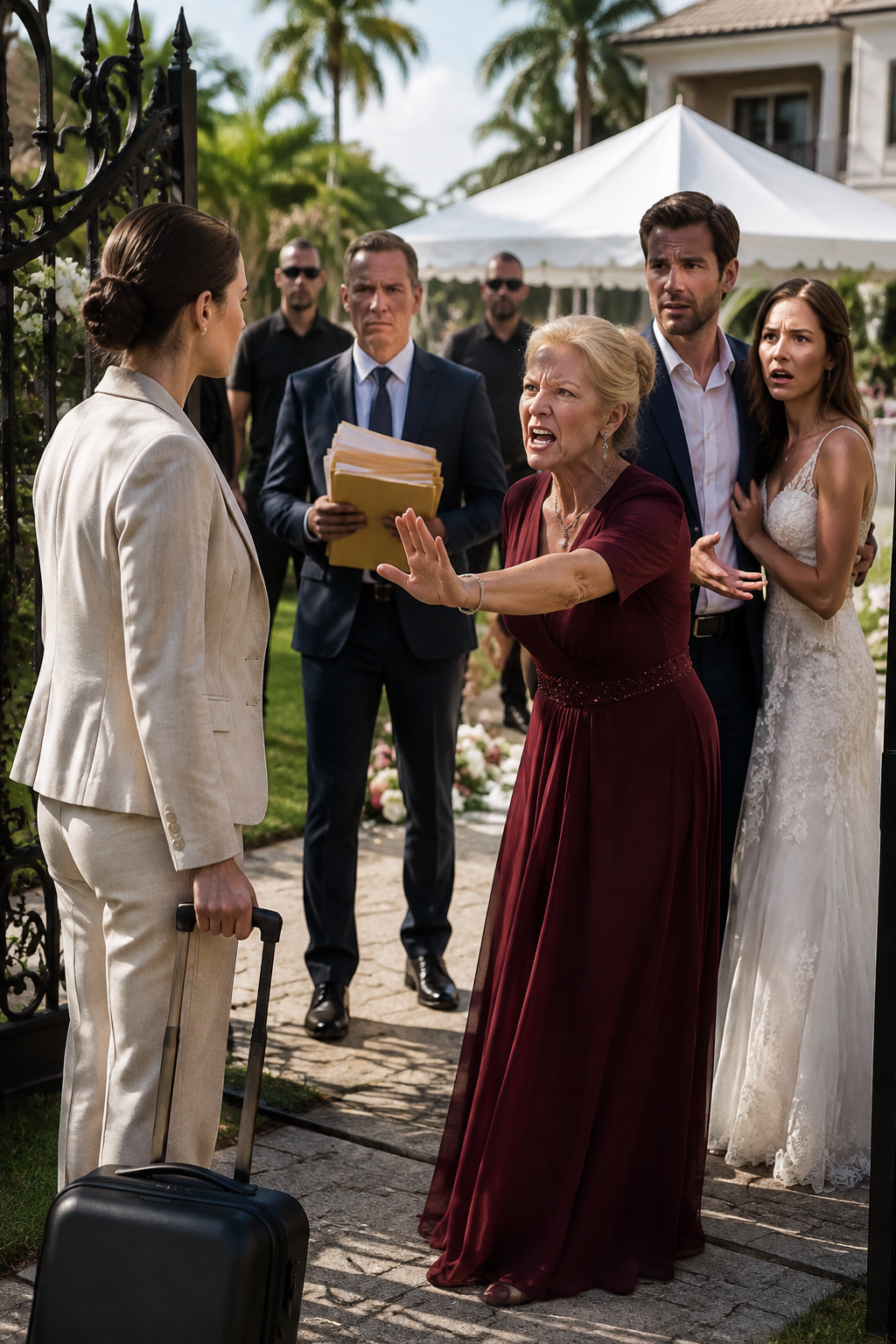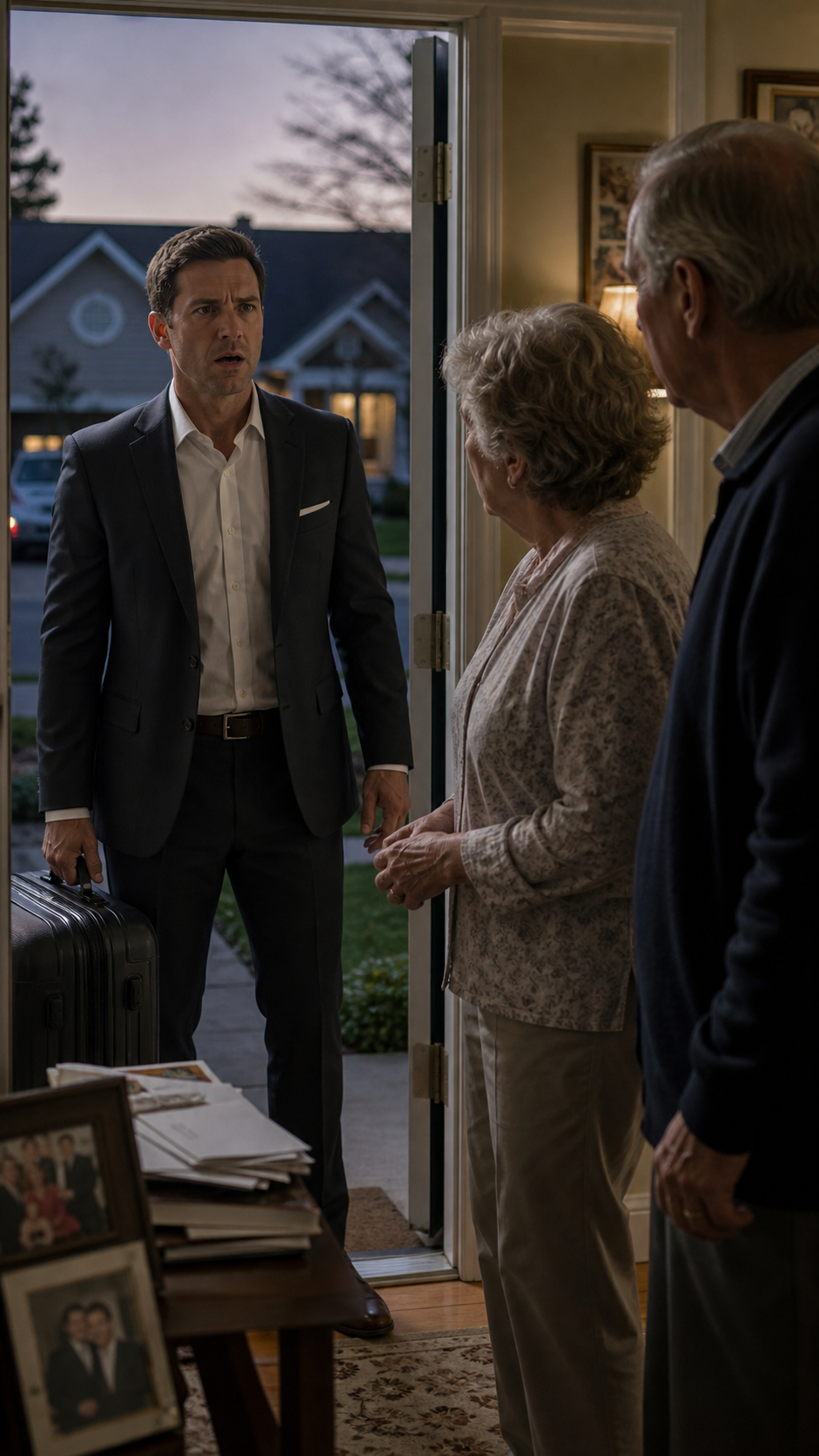
Right after my husband divorced me, he called my mom and said, “Come get your good - for - nothing daughter. I’m done with her.”
“Ms. Hill, Jake Stone is here,” he said.
I almost told them to send him away, but then I decided otherwise. “Bring him to the study,” I said.
Ten minutes later, Jake walked in. I hardly recognized him.
He looked a mess. His shirt was all wrinkled, and his hair was in disarray.
He had dark circles under his eyes. He looked around the room.
There were tall bookshelves, original paintings, and a grand piano by the window. “You grew up in this kind of environment?” he asked.
“Yes,” I said. “And you never told me.” “You never asked about my background,” I replied.
“That's not fair,” he said. I almost smiled.
“Fair?”
Jake sat down in a chair. “I know about the financial review,” he said.
“Then you understand why we're having this talk,” I responded. He rubbed his face.
“Mia was in charge of those transfers,” he claimed. “Your name is on them,” I pointed out.
“She said they were legal,” he said. “Did she also say that buying a condo with her was a business expense?” His hands stopped moving.
We both fell silent for a while.
Finally, he looked up at me. “It wasn't what you're thinking,” he said.
“Jake, don't insult me again,” I warned him. He stood up.
“We were having problems,” he said. “We had problems because you treated me like an employee,” I retorted.
“You stopped having faith in me,” he said. “I spent six years supporting you,” I replied.
“You always acted like you knew best,” he said. “Sometimes, I did,” I said.
His face hardened. There was the Jake I knew—proud, defensive, and unable to accept that someone else might be more competent.
He walked over to the window. “Do you know what it was like being married to you?” he asked.
I stared at him. He continued, “You never seemed to need anything.
I'd buy you things, and you didn't seem to care. I'd take you to nice places, and you weren't impressed.” “I was grateful,” I said.
“No. You were too self - sufficient.
I thought you didn't appreciate what I did,” he said.
That's when I finally understood him. Jake didn't want a wife; he wanted an admirer.
My independence bothered him because he craved admiration more than a real partner. “You assumed I was poor,” I said.
“I thought you were from an ordinary family,” he said. “And that made you feel powerful,” I said.
He turned around. “That's not what I meant,” he said.
“It's what you were implying,” I replied.
He took a step closer. “Lily, help me save the company,” he pleaded.
There it was. Not a request to get back together.
Not an apology. Just a plea for rescue.
“What do you want me to do?” I asked. “Ask Horizon to reinstate the contracts,” he said.
“No,” I said. “Just for a short period,” he begged.
“No,” I repeated. “I can pay back everything,” he said.
“If that's true, your lawyers can prove it,” I replied.
His jaw tightened. “You could fix this with just one call,” he said. “Maybe,” I said. His eyes widened. “Then why won't you?” he asked. “Because my family's company isn't here to cover up your mistakes,” I said.
He stared at me. Then his expression changed. “You're enjoying this,” he accused. “No,” I said. I stood up. “That's the fundamental difference between us,” I said. The security guards escorted him out.
Two months later, Stone Construction filed for bankruptcy. The investigation into the missing money continued.
Through his lawyers, Jake admitted approving payments to Clark Consulting without proper documentation. Mia said Jake had told her to make every transfer.
Their lawyers blamed each other for months.
The San Francisco condo was sold. Some of the company cars were also sold. Stone Construction shrank significantly. It managed to survive as a small local contractor after Jake relinquished control to a restructuring manager.
I didn't cause his company to fail. I didn't have to.
Reality did it for me. My life also underwent a change.
My grandfather founded Hill Enterprises forty - one years ago. Horizon Development was one of its subsidiaries.
I had always avoided getting involved in the family business. I wanted to achieve success on my own.
After the divorce, Mom asked me a question. “What are you still trying to prove?” I had no answer.
Three months later, I took a job as Horizon's director of financial strategy. Some of the employees were doubtful.
They thought I got the job because of my last name. So, I worked hard.
I examined underperforming projects. I renegotiated vendor contracts.
I redesigned financial controls. I established new rules for consulting agreements.
In a year, the division increased its profits and had fewer issues with contractors. I gradually earned the trust of my colleagues.
That was more valuable than getting it easily.
Almost eighteen months after the divorce, I saw Jake again. Horizon was hosting an industry conference in Chicago. After a panel discussion, I went to the hotel lobby. I saw him near the elevators. He looked better. Older, but more composed.
“Lily,” he said. “Jake,” I replied. He looked at my conference badge. “Vice President of Strategy,” he read. “I got promoted,” I said. “I heard,” he said. For a moment, the silence between us felt comfortable.
“How's the company?” I inquired. “Smaller,” he said. He gave a faint smile. “Much smaller.” “But it's still operating,” I said. “Barely,” he replied.
We stood there as executives, architects, engineers, and contractors walked around us. Jake looked down.
“I was mean to you,” he said. I didn't say a word.
“That night,” he went on. “Calling your mom and saying those awful things.” “Yes,” I said.
“I thought making you feel inferior would make me feel superior,” he said.
That surprised me more than a simple apology. “And did it?” I asked.
“For about thirty seconds,” he said. I almost chuckled.
Then he looked towards the doors. “I lost Mia.
The house. Most of the company.
And a lot of friends,” he said. “You didn't lose all that because of me,” I said.
“I realize that now,” he replied.
A group of people approached. Jake stepped aside.
Before leaving, he said, “Your mom intimidated me.” This time, I laughed out loud. “She has that effect on people,” I said.
He smiled and walked away. I watched him enter the elevator.
I felt no urge to follow him, punish him, or change the past.
That evening, I called my mom. “You won't believe who I saw.” “Jake?” she said.
I paused. “How did you know?” “You only talk like that about him,” she said.
I sat by the hotel window, looking out at Chicago. “He apologized,” I said.
“Did he?” she asked. “In his own way,” I replied.
“How do you feel?” she asked. I thought for a moment.
“Free,” I said.
Mom was silent for a moment. Then she said, “Good.” Before hanging up, I remembered the night she went to Jake's house.
“I have a question,” I said. “What?” she asked.
“How did you get there in fifty - eight seconds?” She laughed. “We were having dinner at the restaurant around the corner.” “We?” I asked.
“Olivia, Tom, your uncle, two board members, and me,” she said.
I stared at the phone. “You came with seven cars,” I said.
“I never said everyone was necessary,” she said. “Mom,” I said.
“What? Jake asked for transportation for my daughter.
I thought we should make a statement,” she said. I laughed harder than I had in years.
The convoy became a story that my family still tells. But the cars and the money weren't the crucial part.
What truly mattered was that on the night Jake deemed me worthless, I stopped seeing myself through his eyes. He told my mom to take her good - for - nothing daughter away.
She showed up. And she reminded both of us who I really was.