My Daughter Exploded When I Refused to Give Her the Money From My Farm Sale. My Eldest Son Chose Her Side and Crossed a Line He Could Not Uncross. Twenty Minutes Later, They Learned the Farm Had Already Answered Them.
The Door Opens
The front door opened before either of them could move.
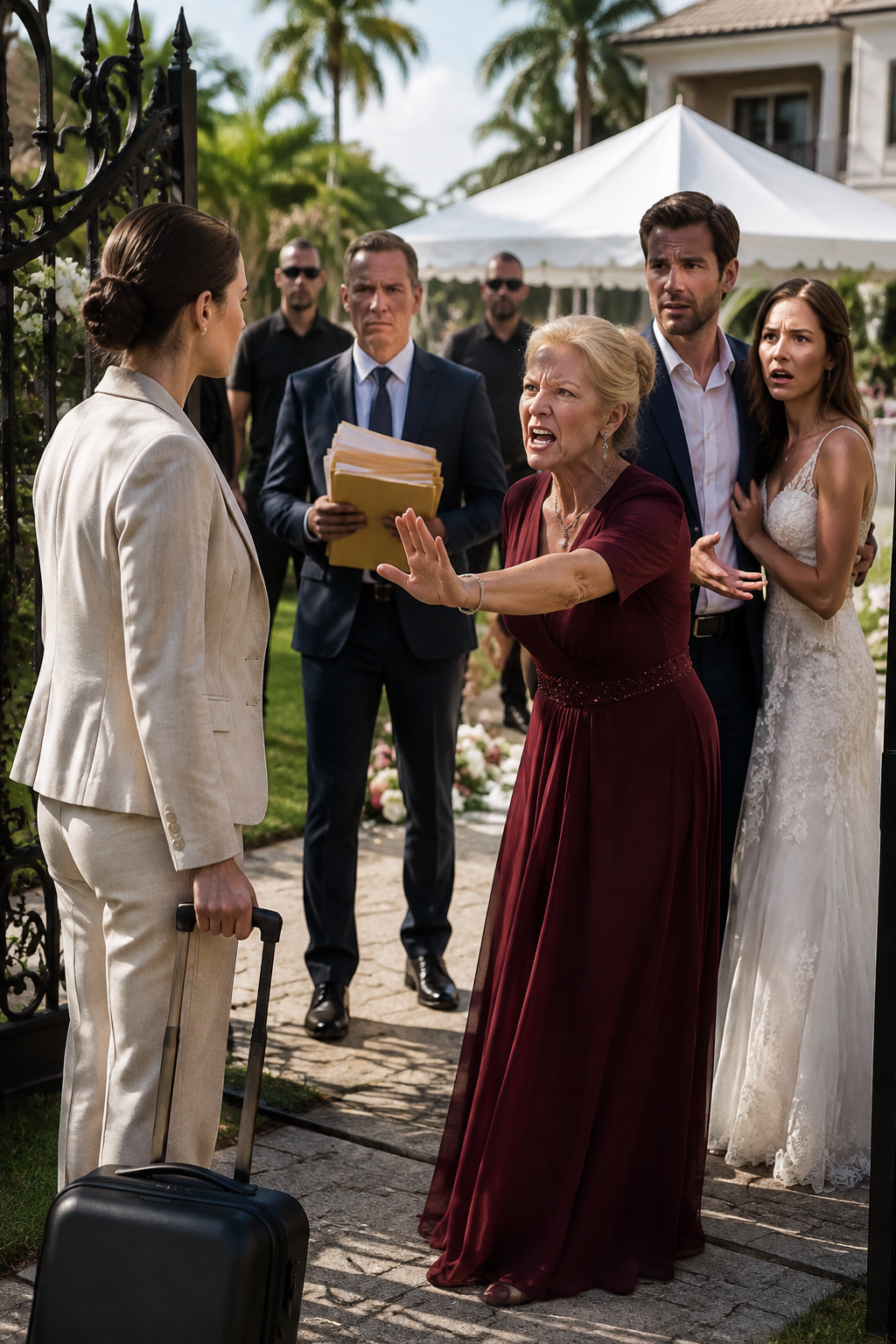
Sheriff's deputies entered first. Paramedics followed them. Behind them came my attorney, Caleb Foster, carrying his leather briefcase, and a woman in a dark blazer with an official folder tucked under one arm.
Evan raised both hands.
"This is a family disagreement," he said quickly.
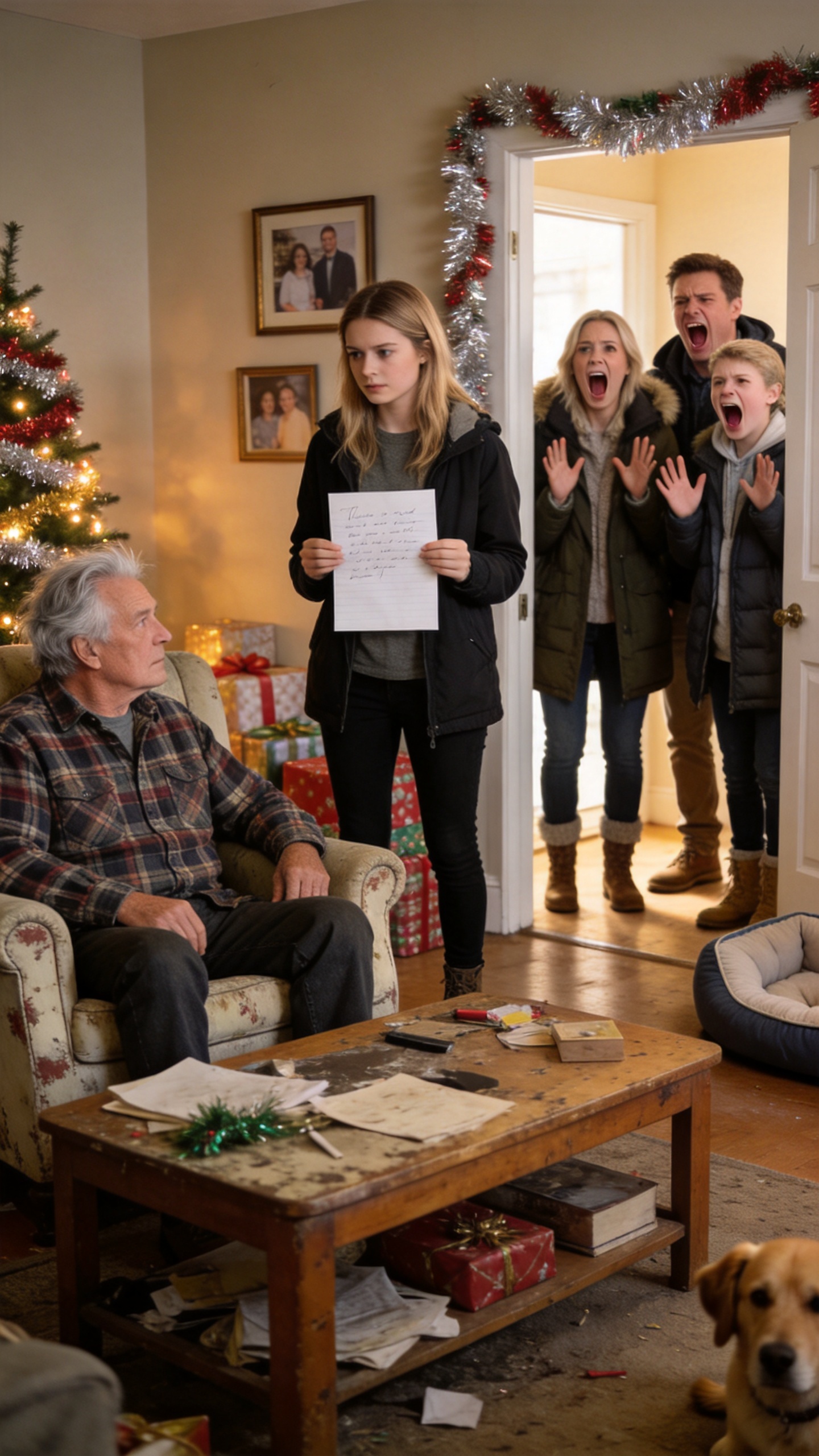
Natalie pointed at me. "She is confused. She has been acting strange for months."
Caleb did not even look surprised. He glanced toward the camera above the pantry.
"The recording has already been secured," he said.
The woman in the blazer introduced herself as Special Agent Mara Kline from the Financial Crimes Division.
She informed Natalie and Evan that they were under investigation for attempted exploitation of an older adult, document forgery, coercion, conspiracy, and attempted bank fraud.
Natalie stared at her.
"Investigated over what money?"
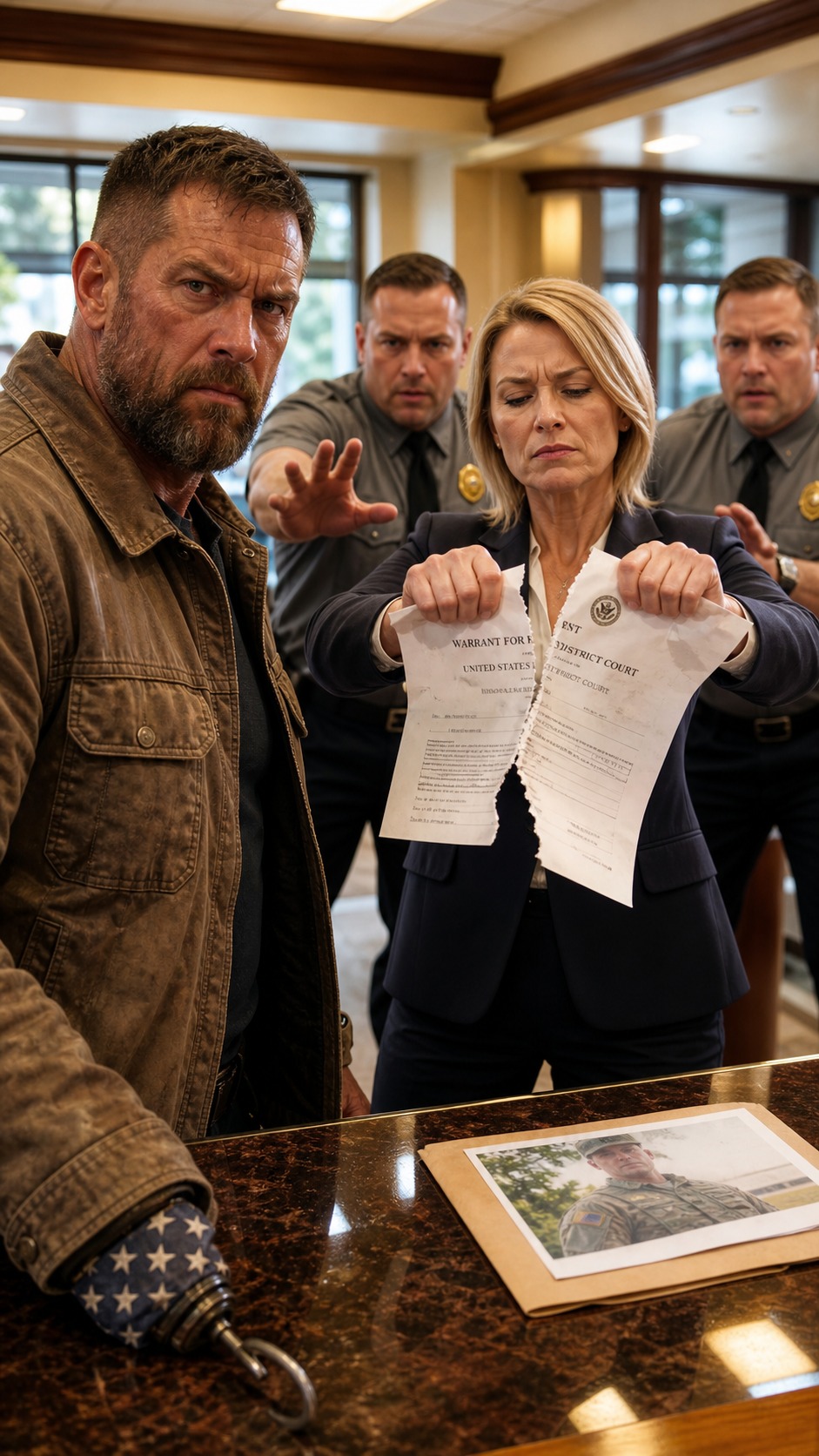
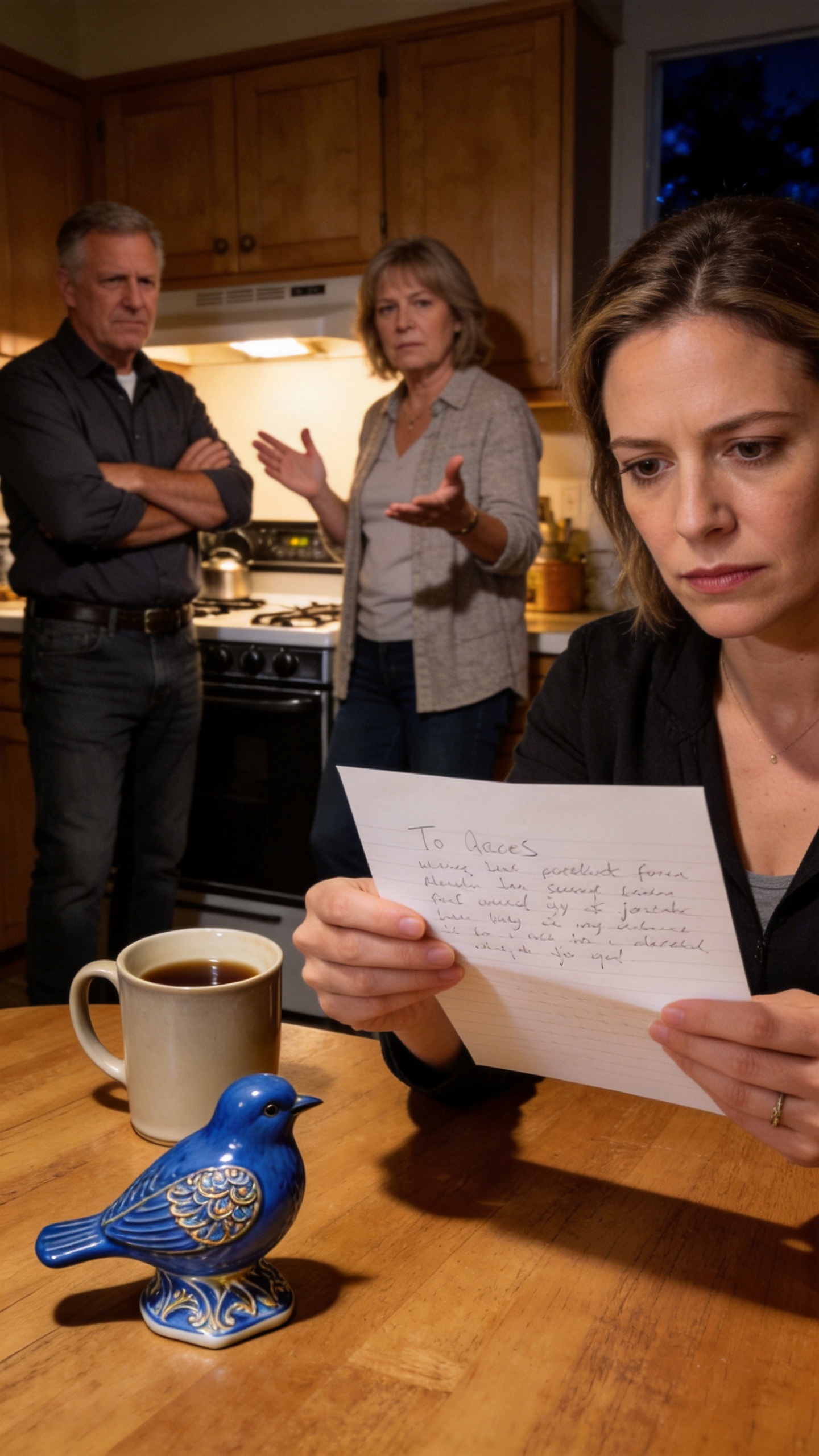
Caleb picked up the torn halves of his letter from the floor.
"The proceeds from the farm were never placed into an ordinary personal account," he said. "Three days before the sale closed, Mrs. Whitaker transferred them into an irrevocable charitable trust."
Evan looked at me as if I had changed the rules of the world.
"You were never trying to take my personal savings," I said. "You were trying to force access to funds belonging to the state's largest agricultural scholarship program."
No one laughed then.
Natalie recovered first because she always did when money was involved.
"The bank statement has her name on it."
"As trustee," Caleb said. "She manages the account. She does not personally own the principal. She could not hand you three million dollars even if she wanted to."
Evan's mouth opened, then closed.
Mara opened her folder.
Investigators had already recovered messages between my children. In them, Evan and Natalie discussed the forged power of attorney, pressure tactics, and a plan to move the money through three shell companies once they gained control.
Natalie turned on her brother.
"You said those messages were protected."
"They were supposed to be," Evan muttered.
Caleb almost smiled.
"You sent them while connected to your mother's guest Wi-Fi. The router records were preserved with the security archive."
Evan lurched toward the table, but two deputies stopped him before he reached the papers.
He shouted that I was destroying his life. Natalie cried about her children, her bills, and the investors who would ruin her.
Neither of them asked if I was hurt.
As the paramedics helped me outside, Evan called after me.
"Mom, tell them to stop."
I looked at the son I had once held through thunderstorms.
"You had twenty minutes," I said. "You used them badly."
The Last Signature
At the hospital, doctors treated bruised ribs, a mild head injury, and a deep ache in my shoulder where Evan had gripped me.
Caleb stayed until evening. When the nurse finally left us alone, he placed one more document in front of me.
This one was real.
I signed it with a steady hand.
It removed Evan and Natalie from every remaining personal trust, insurance policy, and inheritance arrangement connected to me.
Together, they had once been set to receive nearly nine hundred thousand dollars.
That money would now support a family safety shelter created in my late husband's name.
The case moved quickly because the evidence left little room for pretending.
The cameras showed Evan pushing me. They showed Natalie demanding financial information. They showed the false power of attorney spread across my dining table and the torn attorney letter lying near her shoe.
Evan's creditors later discovered he had submitted false information on several loan applications. His company collapsed within weeks. He admitted responsibility for elder exploitation, attempted fraud, and forgery, and he received a six-year sentence.
Natalie tried to claim Evan had pressured her.
Her messages proved she had designed the shell companies herself.
She received four years, lost her professional license, and was ordered to pay restitution and legal costs.
People asked whether I felt satisfied.
I did not.
Satisfaction is too small a word for the grief of learning exactly what your children will do when they think you are alone.
But I did feel free.
What the Farm Paid For
Six months later, I stood on the hill where the north pasture used to stretch under the morning sun.
Caleb stood beside me with the first scholarship certificate from the trust.
The recipient was Isabel, a nineteen-year-old daughter of migrant farmworkers who had been accepted into veterinary school but could not afford the tuition.
When I handed her the certificate, her hands shook.
"You are really paying for all of it?" she asked.
"No," I said. "The farm is."
She hugged me carefully, mindful of the ribs that had healed long before the rest of me did.
Evan wrote from prison and demanded forgiveness. Natalie wrote after sentencing and asked whether I could send money for her children.
I answered neither letter.
Instead, I bought a small cottage overlooking the valley. I filled it with books, planted herbs by the back steps, and learned how peaceful a quiet room could feel when nobody was waiting to take something from me.
On the first anniversary of that day, I planted an apple tree outside my kitchen window.
Its roots reached deep into the earth.
For the first time in years, so did mine.