I Disguised Myself As A Housekeeper To Test My Son's Fiancee. After She Dumped Dirty Water Over Me, I Turned On The Recorder And Called Him Downstairs
Tomas explained how she had ordered him to polish the same railing three times because she wanted to see whether he would complain.
A young housemaid named Priya admitted Vanessa had threatened to have her fired for leaving fingerprints on a mirror Vanessa had touched herself.
Daniel listened without interrupting.
I watched my son lose a dream in real time.
The Wedding Was Not The Only Thing She Wanted
Vanessa changed tactics when she realized tears were not working.
"They are all protecting her," she said, pointing at me. "Of course they will say whatever she wants."
Daniel's voice was low. "Why would they risk their jobs to invent the same story?"
"Because your mother pays them."
"And what do you think I am marrying you for?" he asked.
That question shook her. Not because it was harsh, but because it was honest.
Vanessa looked toward me. "You have poisoned him."
I reached into the drawer beneath the marble table and removed the envelope I had prepared but hoped not to use.
"There is something else Daniel should see."
Inside were printed screenshots sent to me by Vanessa's former assistant, a woman who had left her job after Vanessa blamed her for a missing vendor payment. I had verified every message through the wedding planner before bringing them home.
Vanessa had asked whether Daniel's trust became "easier to access" after marriage.
She had complained that the prenuptial agreement was "an insult."
She had written that once she was Mrs. Harrow, people would stop treating her like "a pretty guest" and start treating her like "the future of the money."
Daniel read the pages twice.
His mouth tightened, but he did not raise his voice.
"Is this real?" he asked.
Vanessa's anger cracked into panic. "It was venting. Everyone vents. You cannot end a marriage over private messages."
"There is no marriage to end."
She stepped back as if he had slapped her.
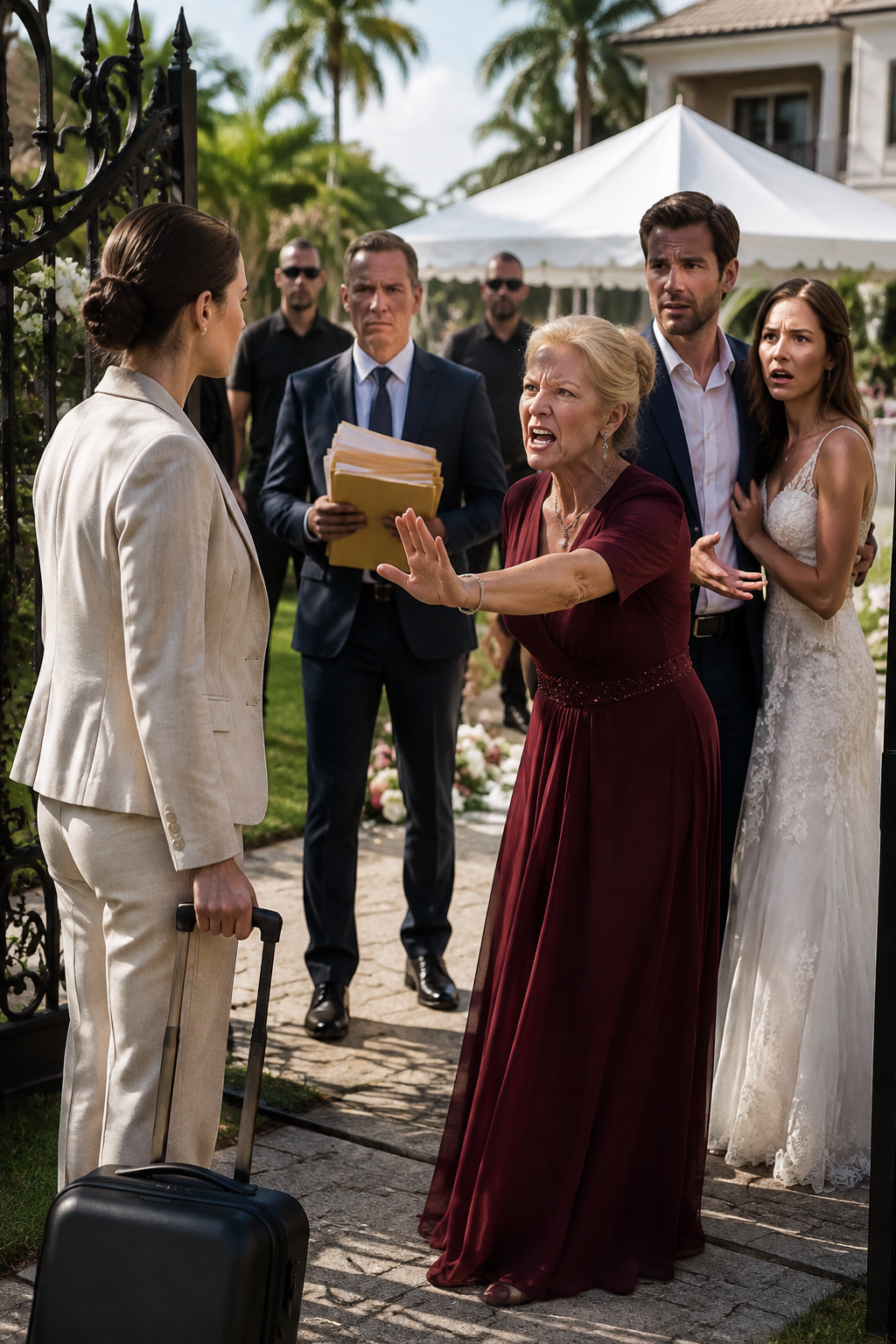
"Daniel, think carefully. The invitations are out. The ballroom is booked. Everyone will ask questions."
"Then I will answer them."
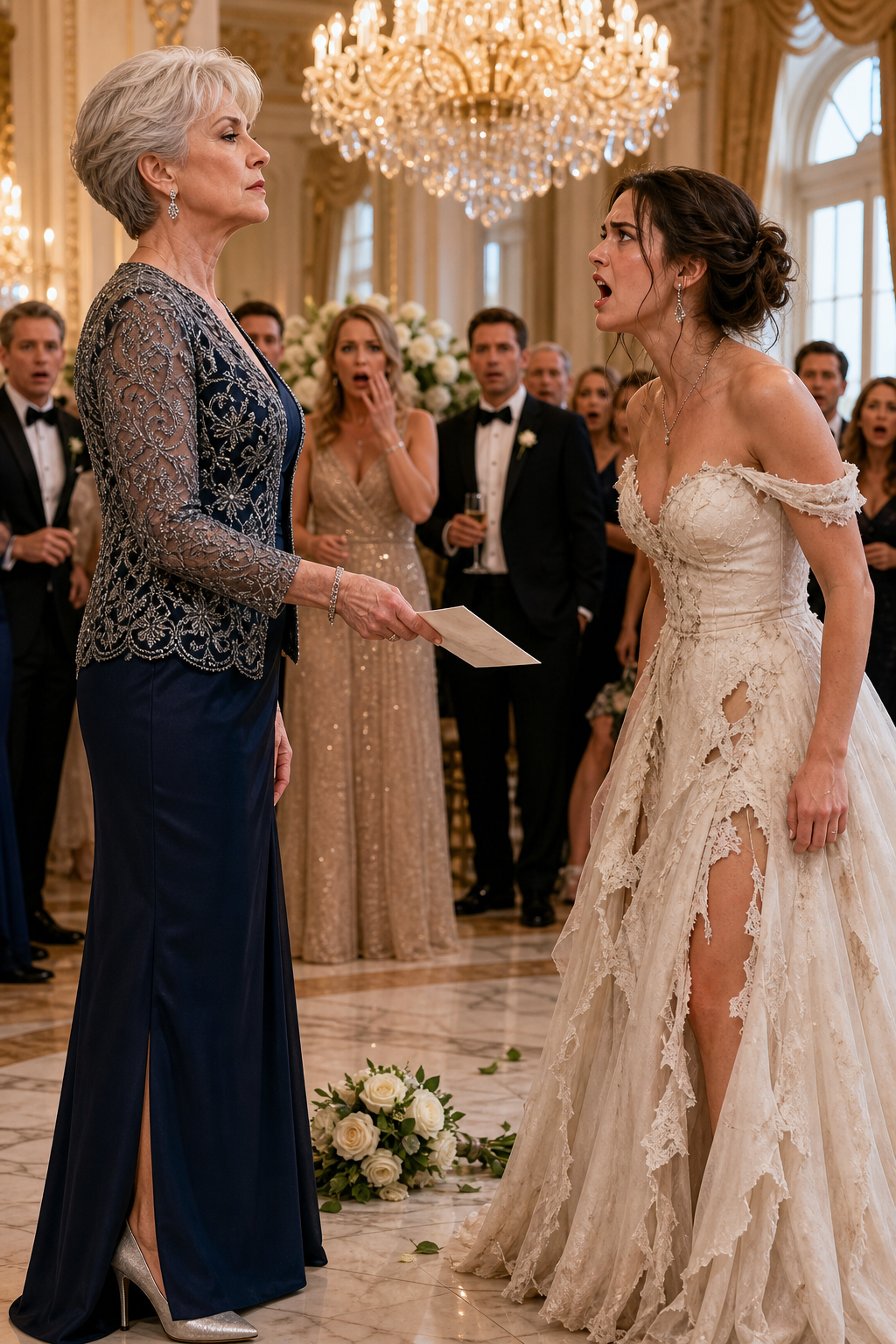
For the first time, Vanessa looked less like a bride and more like a person calculating exits.
"You will embarrass me publicly?"
Daniel glanced at me, at the staff, at the gray puddle still spreading near the staircase.
"No," he said. "You embarrassed yourself privately. I am only refusing to cover it for you."
He Ended It Without Becoming Cruel
Daniel took off the engagement ring before dinner that evening.
Vanessa refused to accept it at first. She cried, accused him of being controlled, promised therapy, threatened scandal, then promised silence if he would give her "one dignified chance" to walk down the aisle and sort things out afterward.
That last request told Daniel everything.
He called the wedding planner in front of her and canceled the ceremony.
His voice shook once, on the word canceled, but he kept going.
He called the hotel next. Then the florist. Then his best friend, who was supposed to stand beside him at the altar.
By nightfall, the announcement was simple and firm: the wedding would not take place due to conduct Daniel could not accept, and there would be no further comment.
Vanessa tried to make her own announcement first.
She posted that I had humiliated her with a "psychological ambush" and that Daniel had been pressured by his mother to abandon her.
She deleted it within an hour.
Not because I threatened her. Because several vendors, two former assistants, and one bridesmaid quietly refused to support the lie. The social cover she had counted on dissolved the moment people realized she had treated them the same way she treated my staff.
The prenuptial agreement became irrelevant. The joint accounts Daniel had nearly opened were never created. The apartment lease he had planned to add her to stayed in his name alone.
Access closed, one door at a time.
Two days later, Vanessa sent me one message.
You destroyed my life.
I replied once.
No. I gave you a room with no audience, and you chose who to be.
Then I blocked her.
The Apology That Mattered
The hardest part was not watching Vanessa leave.
It was watching Daniel face the people he had doubted.
The morning after the canceled wedding, he asked the staff to meet in the kitchen. Not the formal sitting room, not the polished dining room, but the kitchen where they actually worked, ate, laughed, and carried the weight of our family life.
He stood there with both hands around a mug he had not touched.
"I am sorry," he said. "You told the truth, and I made excuses because the truth hurt me. That was wrong."
Marisol's eyes filled with tears.
Tomas looked down at his shoes.
Priya nodded once, very small.
Daniel promised that no guest, relative, or future partner would ever have power over their jobs without a formal complaint process and proof. He asked me to put the policy in writing. I did.
He also apologized to me, but I told him something I should have told him sooner.
"A kind heart is not the same as a blind one," I said. "Kindness without boundaries becomes permission for cruel people."
He sat beside me at the kitchen table, no longer the groom from the invitations, just my son.
"I thought loving someone meant defending them," he said.
"Sometimes," I told him. "But real love can survive the truth. What cannot survive the truth was never love."
Weeks later, the house felt lighter.
Daniel still grieved. Of course he did. A canceled wedding leaves empty spaces everywhere: in closets, calendars, conversations, dreams.
But he no longer confused embarrassment with tragedy.
The staff returned to their ordinary rhythms. Marisol started singing again when she arranged flowers. Tomas sat whenever his back hurt. Priya stopped flinching when expensive guests walked through the foyer.
As for the uniform, I kept it.
Not because I enjoyed the memory of dirty water running down my face, but because it reminded me of something wealth can make people forget.
The measure of a person is never how they treat the powerful.
It is how they behave when they believe the person in front of them has no power at all.