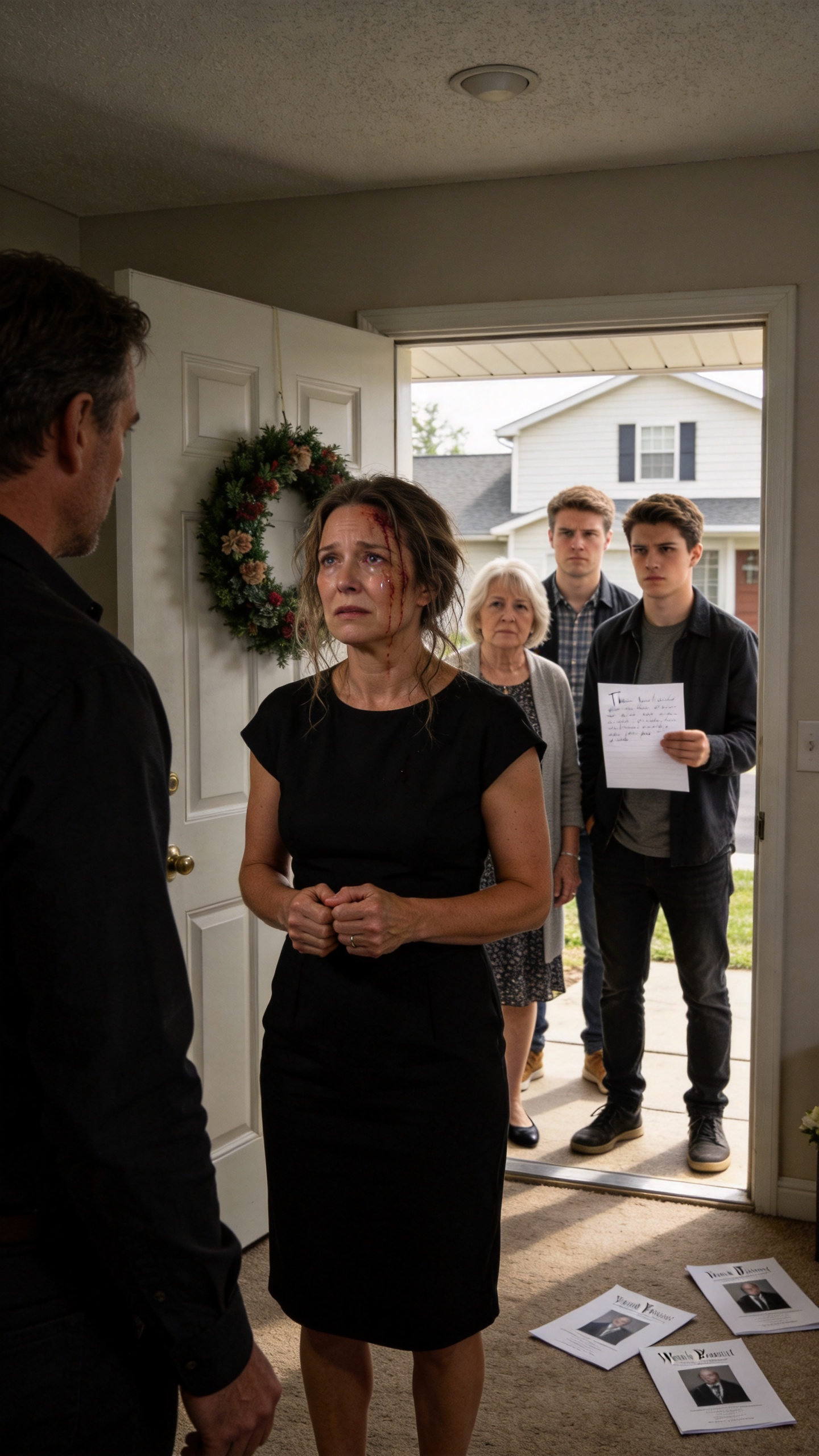
"If You Won't Move Into Assisted Living, Pack Your Bags And Leave My House," My Son Said, Certain I Had Nowhere Else To Go. I Didn't Argue. I Calmly Folded My Clothes, Closed My Suitcase, And Waited.
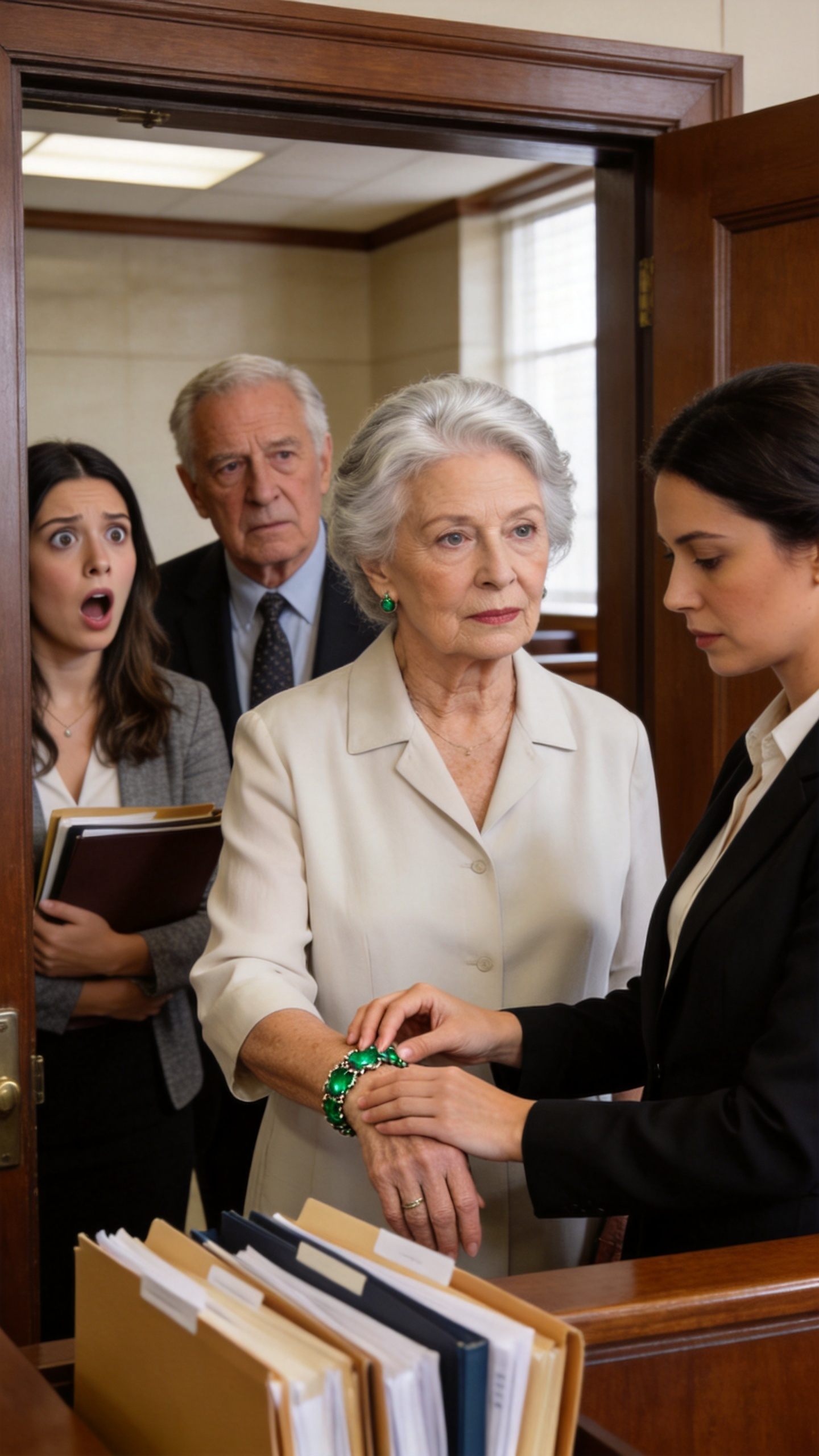
Victor attended as former chairman and remaining investor. Priya sat beside me. The company attorney and an independent accountant joined us.
Miles entered first, pale and tired. Brooke followed in a gray suit, polished enough for a charity lunch until she saw the binders.
"What is this?" Miles asked.
"A formal review," Priya said.
"I want to speak to my mother privately."
"No," I said.
He turned to me.
"You asked me to leave privately," I told him. "We will discuss the consequences with everyone who needs to hear them."
His mouth opened, then closed. I had spent years lowering my voice to keep peace in his house. Hearing my own calm refusal in that room felt like discovering a key I had carried without knowing it.
Victor did not speak for me. That mattered. He sat close enough for strength and far enough away for everyone to understand that the decision was mine.
Brooke kept tapping one manicured nail against her phone. Priya looked at the sound once, and Brooke put the phone face down.
Priya began with the trust records: my forty-percent ownership, the missing distributions, the altered authorizations, and the false classification of my condo money.
Miles kept shaking his head. "That is not what happened."
"What happened?" the company attorney asked.
"Dad wanted the company protected."
"Your father protected the company through a trust benefiting your mother."
Miles looked at me. "I was going to restore everything once the expansion became profitable."
"You told me I owned nothing," I said.
"I never said that."
"You told me the company supported me. The company was using my money."
Brooke leaned forward. "Miles made difficult choices to preserve jobs."
The accountant opened another binder. "Personal expenses were charged through the management entity."
Brooke's voice sharpened. "That happens in family companies."
"Not without disclosure to a forty-percent owner," the accountant said.
The third binder held the consignment records, consulting invoices, and the apartment lease.
Brooke stopped speaking.
Miles stared at the lease. "What is that?"
Priya kept the page between them. "An apartment funded through an account receiving company payments."
Brooke said, "It was for work."
"With Colin Voss?" Miles asked.
Her eyes shifted away.
I placed the jewelry records on the table. "Did I force you to sell my grandmother's pin?"
Brooke looked around for an exit. "It was sitting in a box. You never wore it."
"It was not yours."
"I intended to replace it."
"With what?"
She had no answer.
Miles turned to her then, truly turned, as if he were seeing the person beside him without the story he had built around her.
"You told me Mom was giving things away," he said.
Brooke's mouth tightened.
"You told me she insisted the bracelet was missing because she forgot where she put it."
"I was trying to keep peace," Brooke said.
The phrase sounded familiar enough to make me almost laugh.
Peace had become the family name for silence after harm.
Priya slid over the consignment form. Brooke's signature sat under the description of the bracelet. The dealer had copied her license. The payout matched a deposit two days later.
"Is this also peace?" I asked.
Brooke looked at me with a flash of hatred so clean it finally freed me from wondering whether I had imagined the contempt.
"You had everything," she said.
I looked around the boardroom. "I had a laundry-room bedroom and missing statements."
"You had Miles's loyalty."
That was when Miles pushed his chair back.
"No," he said. "She had my responsibility, and I abandoned it."
It was the first sentence that cost him something in front of Brooke.
The room stayed quiet long enough for the heating system to click on. I could hear paper settle in the binders. I could hear Miles breathing as if he had run up stairs.
For months, Brooke had made my memory the suspect. Now the records remembered for me. Dates remembered. Receipts remembered. The consignment dealer's signature log remembered the identification she had shown.
I did not need to shout. The evidence had a voice of its own.
What He Signed
The accountant showed that more than three hundred thousand dollars had left the company through unsupported marketing invoices.
Miles covered his face with both hands.
For one moment, I saw the boy who cried when his model airplane wing would not fit. I wanted to comfort him.
I stayed seated.
When he lowered his hands, his voice broke.
"Mom, I'm sorry."
The apology felt smaller than the damage.
"For which part?"
He swallowed. "For using your shares. For taking control of the trust. For moving you into that room. For staying silent when Brooke disrespected you."
He looked at the table.
"For telling you to leave."
"Why did you do it?"
"Because every year the company needed more. The expansion was failing. The house cost more than we expected. Brooke kept saying you would never use the money anyway."
"And you believed her."
"I wanted to."
"Why?"
"Because believing her made my life easier."
That was the first honest answer we could use.
I asked him whether he had ever imagined where I would sleep after he told me to pack. He looked at the table again.
"I thought you would choose the facility," he said.
"That was not a choice. That was a corridor with one door locked behind me."
He flinched because he knew it was true.
"Did you think I was afraid of being alone?"
"Yes."
"I was afraid of becoming invisible in front of people who called that love."
No one in the room interrupted. Even Brooke looked down.
I placed a proposed agreement in front of him.
It restored my voting rights, repaid missing distributions with interest, corrected the four-hundred-thousand-dollar investment, ordered an independent audit, removed Brooke and Colin from company access, and required professional oversight.
Miles would step down from sole control during restructuring. I would not promise to withdraw every legal claim until compliance came first.
He read it slowly.
"You're taking the company from me."
"No. I am taking back what belonged to me."
"If I sign, the board could remove me."
"If you refuse, the court may do more than the board."
He closed his eyes.
"What about the children?"
"They need a father who understands that loving them does not mean controlling what belongs to them."
Miles signed that afternoon.
Home, Rebuilt
The restructuring lasted months.
The audit confirmed the missing distributions, improper payments, and false investment records. Assets were sold to restore the money. The Westmere house was refinanced without secretly leaning on my trust.
Brooke and Miles separated. Their divorce remained private. The children stayed mainly with Miles under a structured plan and firm financial boundaries.
Brooke faced civil repayment obligations for the jewelry and company funds. My grandmother's sapphire pin had already been sold overseas, so a jeweler recreated it from old photographs.
Ava asked once why her mother no longer came to my condominium. I told her adults sometimes make choices that require distance while they repair what can be repaired.
"Did she hurt you?" Ava asked.
"Yes," I said, because children can feel the outline of a lie even when adults think they are protecting them.
"Do I have to stop loving her?"
"No. Love is not a courtroom. But love should not make you pretend harm did not happen."
The replacement was beautiful.
It was not my grandmother's.
Some losses can be compensated without being undone.
The first time I opened the new jewelry box, I cried harder than I expected. Not because the stone was wrong, but because a stolen object carries every hand that touched it without permission.
Victor sat beside me and said nothing clever. He simply placed a cup of tea near my elbow and waited until I was ready to close the lid.
That became the shape of many repairs. No grand speeches. No pressure to be grateful for what should never have been taken. Just room for the truth to remain true while life continued around it.
Miles began counseling. At first he treated each appointment like punishment. Then he started calling without asking for money, signatures, or forgiveness.
One night, he said, "I thought Dad's company proved I mattered."
"You mattered before the company," I told him.
"I know that now. I wanted to become responsible quickly."
"So you skipped the part where you practiced responsibility."
He gave a sad laugh. "Yes."
Reed Home Group survived, but smaller. The failed expansion closed. Independent directors joined the board. Miles remained in operations under an experienced chief executive.
For the first time, he held authority he had to earn.
He also had to report to me. At first, the quarterly meetings made him stiff and ashamed. He brought folders aligned so perfectly that I could see the boy still trying to earn praise by looking prepared.
I did not punish him by being cruel. I asked questions. I required answers. I signed nothing until I understood it. Each meeting taught both of us a new language, one where love did not excuse vagueness.
When he made a mistake, he corrected it on paper. When he disagreed, he explained instead of pressuring. Those were small disciplines, but small disciplines had once been where the harm began.
I bought a condominium with a sewing room full of light.
My first new client was the daughter of a bride whose dress I had made twenty-seven years earlier. She brought the preserved gown in a careful box.
"I don't want it exactly the same," she said. "But I want my mother to recognize it."
I touched the lace.
"That is my favorite kind of work."
Preserving value without imprisoning the future inside the past.
Victor visited often. He called before coming. He never opened a cabinet without asking. He never treated help as a debt.
One year after I left Miles's house, Victor and I went to a concert by the lake. He held my hand as we walked home. We were old enough to understand that trust is built in ordinary moments.
Coffee. Museums. Quiet dinners. Evenings when Samuel's name could be spoken without discomfort.
Love after grief did not replace the love before it. It made the life around it larger.
Every Saturday, Ava and Ben came over. We baked chocolate cake. Ben still overfilled the measuring cup. Ava started sewing a blue skirt patterned with tiny stars.
Miles dropped them off and picked them up after dinner.
At first, he waited in the hallway.
Then one Saturday, I invited him in for coffee.
The last kitchen island between us had held an assisted-living brochure. This one held flour, butter, and a bowl of frosting.
He placed an envelope on the counter.
Inside was the note I had left when I moved into his house three years earlier.
Thank you for making room for me. I hope living together gives us back some of the time grief took away.
My own handwriting looked painfully hopeful.
I remembered writing it on the edge of my packed boxes while Miles carried lamps inside and Brooke measured curtains for the suite. I had believed the house would hold three generations of ordinary noise.
I had imagined breakfast with the children before school, quiet evenings with Miles after his workday, and the comfort of being useful without being used.
The note held all that innocence in twelve lines.
"You did make room for me," I said. "Then you let someone else decide I no longer deserved it."
"I know."
"Why show me this?"
"To remind myself that you entered that house trusting me."
He folded the note carefully.
"I don't expect you to trust me the same way."
"Good."
A faint smile crossed his face.
"But I see the work you are doing," I said.
"That is enough for now."
And it was.
Forgiveness did not arrive in one scene. It arrived through monitored accounts, repaid money, counseling appointments, school pickups, and phone calls made when nobody needed rescuing.
It arrived when Miles stopped defending himself long enough to hear what he had done.
It arrived when I stopped mistaking forgiveness for permission to repeat the past.
The Suitcase Closing
Two years after the kitchen ultimatum, Miles brought the children to my home for Christmas Eve.
Victor was there, along with Priya, old friends from my sewing years, and former clients whose daughters now felt like family.
No one sat in a lesser seat.
After dinner, Miles stood by the window with coffee.
"I drove past that assisted-living place last week," he said.
"I'm sure it is a fine community."
"That wasn't the problem, was it?"
"No."
"The problem was that I tried to make the decision for you because your presence became inconvenient."
"Yes."
He looked at Ava and Ben decorating cookies with Victor.
"I'm sorry, Mom."
This time, I did not ask him to define every word. He had spent two years answering with actions.
"I know."
He reached into his coat and handed me a small wrapped box. Inside was not jewelry. It was a brass key with a blue ribbon tied through the ring.
"It's for my house," he said. "Not because I expect you to use it. Because I wanted you to know the door is open only if you choose to open it."
I held the key for a long moment.
"That is better," I said.
Choice changes the weight of a thing. A key can be an invitation. It can also be a chain. This one was finally light enough to place in my pocket.
Later, Victor and I stood on the terrace while snow settled over the trees. Inside, the sewing-room lamp glowed. Samuel's photograph rested on a shelf beside a picture of Victor and me at the lakefront concert.
Two histories.
Neither erased the other.
For years, I believed being a good mother meant giving until nothing remained that might inconvenience the people I loved.
I gave Miles money, time, work, silence, and excuses.
Each sacrifice became ordinary so quickly that he stopped seeing the person making it.
The morning he ordered me to leave, he thought he was removing an unwanted guest.
Instead, he returned me to myself.
I was the woman who built a career one careful stitch at a time. The woman Samuel trusted with forty percent of a company. The grandmother whose hands still knew how to guide fabric toward a future.
They expected me to vanish quietly.
I did leave quietly.
But silence does not always mean surrender.
Sometimes it is the moment a woman stops explaining her value to people determined not to see it.
Sometimes it is the sound of a suitcase closing, a car door opening, and an old life finally releasing its grip.
Miles called the house his. Brooke called my room wasted space.
They forgot that home was never only walls.
Home was dignity. Choice. Respect.
It was the freedom to sit at your own table without earning permission to remain.
They used my trust and my money. They tried to reduce my life to a storage room and an application.
But they could not take the part of me that had spent forty years turning unfinished fabric into something strong enough to carry a woman into her future.
I had done that for thousands of brides.
At sixty-eight, I finally did it for myself.