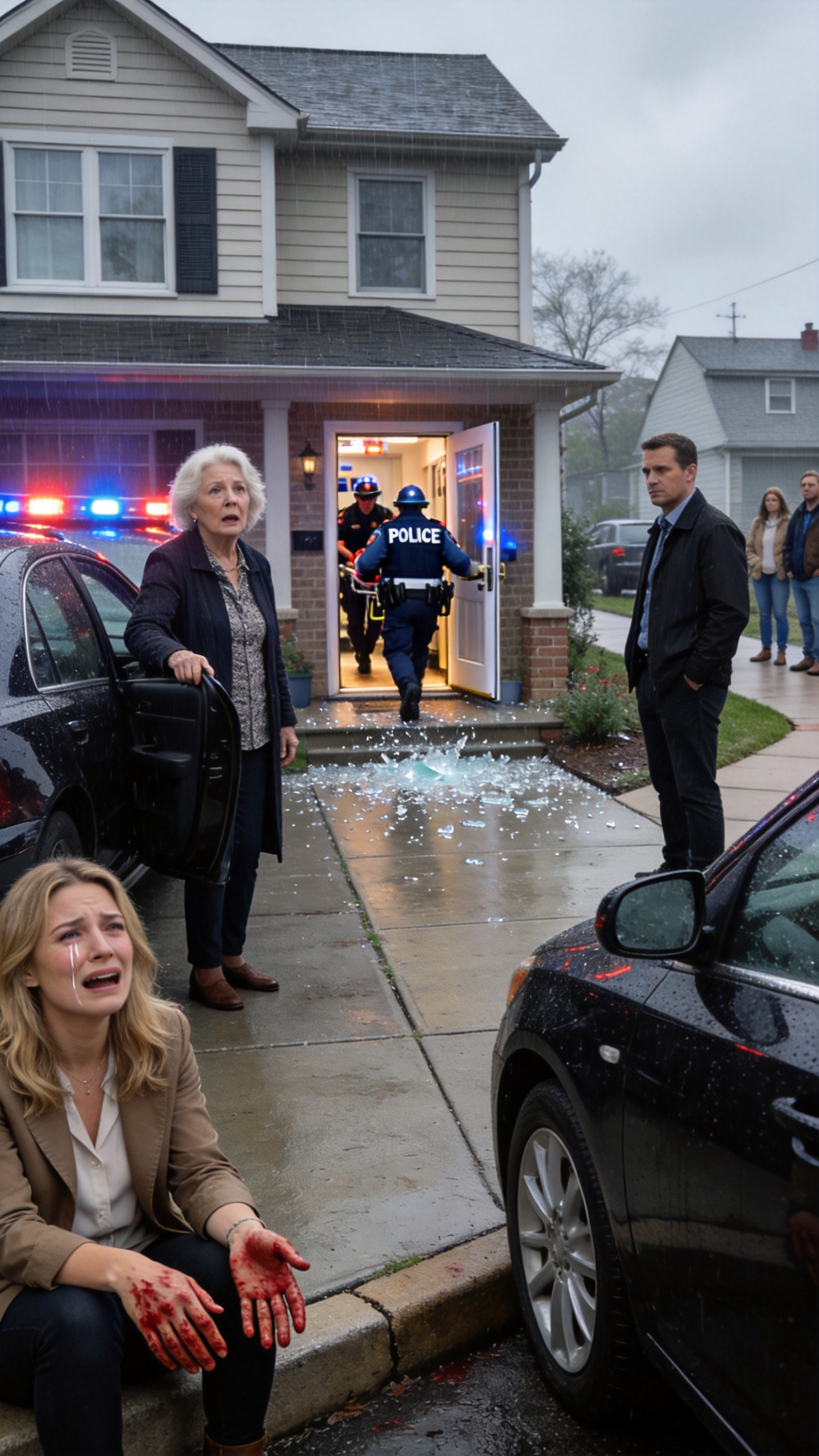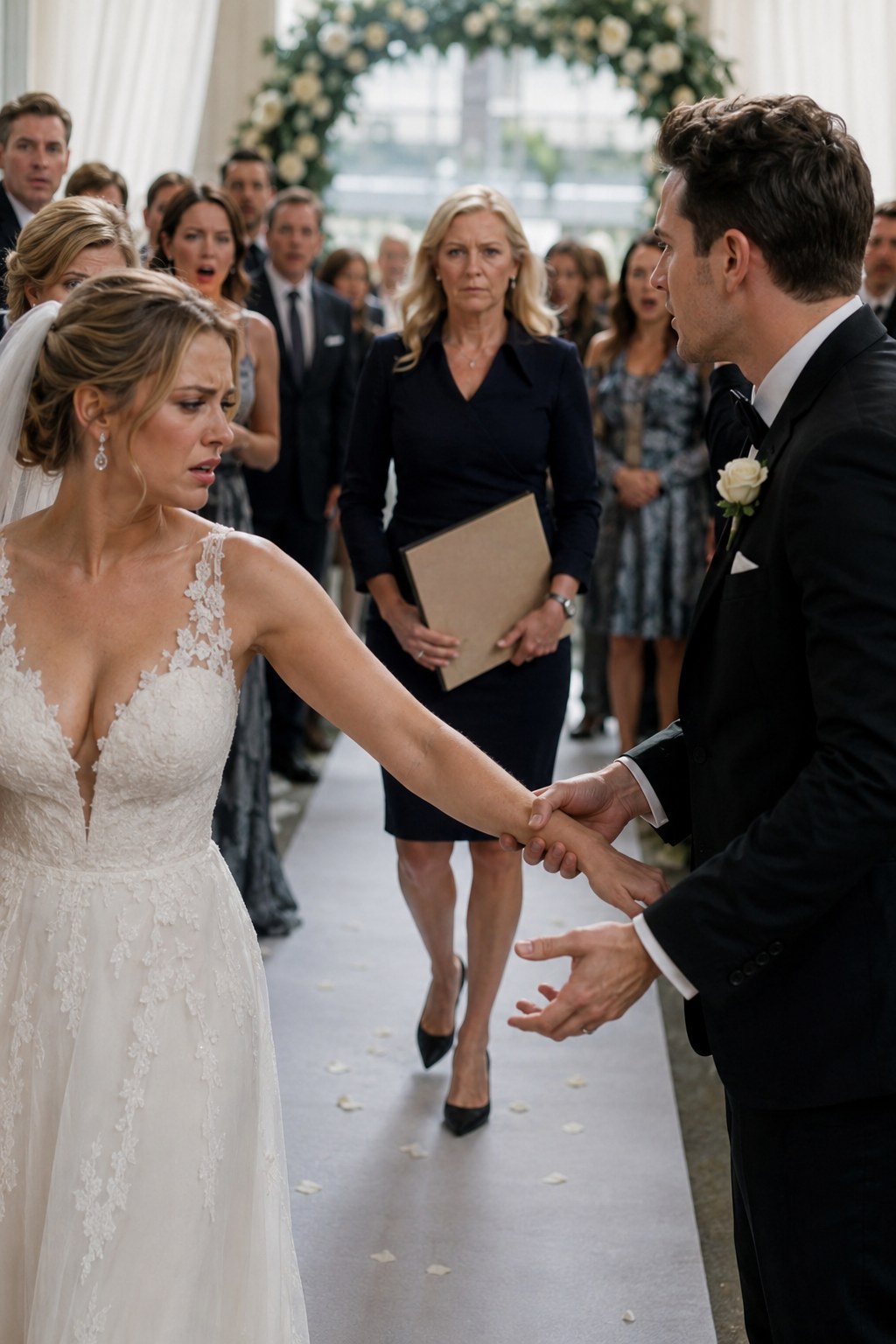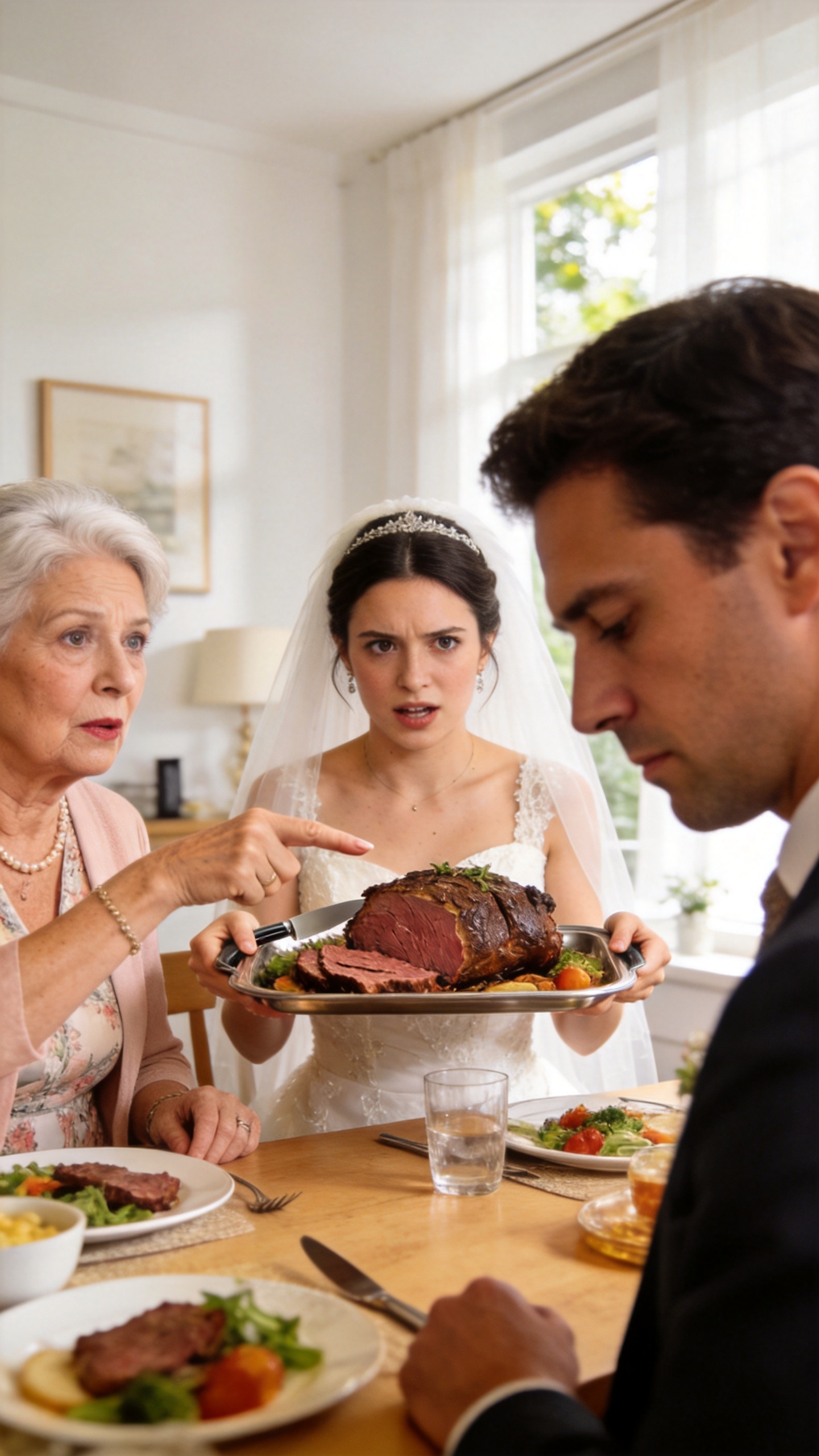
My doorbell camera alerted me at 30,000 feet. I opened the footage and saw my mother-in-law dragging my daughter across the driveway by her hair while my wife filmed and smiled. Her three sisters were pouring something on her. I rerouted the flight, called my old unit, and 3 hours 41 minutes later...
Our marriage had been falling apart for months, but I thought it was just between the adults.
I didn't realize how much it was hurting my daughter.
At 11:30 that night, a social worker named Amanda showed up with emergency custody papers.
I read every word carefully before signing.
"Emily won't be allowed to contact Lily until a judge looks at this," Amanda said, looking at Lily sleeping on the couch.
"Because of the video and the police report, we're filing an emergency order tomorrow."
I nodded.
"That's what needs to happen," I said firmly.
Lily shifted in my arms.
She was half-asleep and worn out from the night, but her fingers still held my sleeve tight.
"Is Mommy coming back?"
Lily asked, her voice full of fear.
I looked at her bruised wrists and stroked her hair.
"Not unless a judge says it's safe, Lily," I promised.
"You're safe now, and no one will ever hurt you again."
Lily sniffled and pressed her face into my jacket.
"She said no one would believe me. She called me a liar," Lily whispered.
Detective Moore stepped forward.
"Everyone believed you tonight, Lily," she said.
"Mrs. Thompson believed you, the police believed you, the doctors believed you, and I'll always believe you."
Lily's eyes filled with tears, but the fear was gone.
She closed her eyes, laid her head on my chest, and fell asleep.
By midnight, Emily was taken to the police station.
Her sisters were in separate police cars behind her.
Betty was the last one, yelling at the cops until the car door slammed shut.
At first, the charges seemed too mild compared to what I saw on my phone.
They were charged with child endangerment, assault, restraint, and harassment.
Emily's sister, Lisa, faced an extra charge for trying to delete the video on her phone when the cops came in.
But after experts checked the phones, the evidence got stronger.
The liquid from the red can wasn't gasoline.
It was a mix of vinegar and soapy water, meant to scare Lily.
The Aftermath Unfolds
Legally, the fact that the liquid wasn't gasoline meant they couldn't be charged with attempted murder.
But to my nine-year-old daughter, it made no difference.
That nightmare was all too real.
In the days that followed, my wife, Emily, tried to take control of the public story.
Her lawyer made a public statement saying it was just a family discipline thing that went wrong.
Then, absurdly, they claimed I'd used military tech to change the security footage to make her family look bad.
Their third lie was that Emily was forced to record the incident because her mom scared her.
This last lie was busted after 48 hours.
Detective Davies found a deleted family group chat in Emily's cloud.
The scary texts started two weeks before the incident.
Betty: "The child needs a serious lesson. She has to know her dad can't always protect her from us."
Nicole: "Make it look dramatic on camera. He checks the security feeds, so he'll see it."
Lisa: "Emily should record it all. It'll show she's standing up to her husband."
Emily: "I'm so sick of always coming second to a child."
This text from Emily became the main evidence for the prosecution.
The thread did more than prove cruelty.
It proved planning.
It showed that Betty had chosen the driveway because the camera faced it.
It showed that Nicole had suggested posting the clip in a private group to embarrass me.
It showed Lisa discussing which bottle would look most frightening on video.
And it showed Megan sending laughing emojis after Emily wrote that Lily needed to learn who really ran the house.
My attorney underlined every message in red.
The prosecutor did not have to raise her voice.
The words were already loud enough.
I couldn't bear to read it again.
Instead, three days later, my family attorney, Beverly Bennett, read the whole transcript in court, destroying their remaining defenses.
The county family court was harsh and unforgiving as the hearing started.
I sat in my military uniform at the petitioner's table, hands folded over my legal files.
Beverly submitted the text transcripts as official records.
Across the aisle, Emily sat in a plain navy dress, trying to look like a heartbroken mom.
Her mom, Betty, wasn't there as her criminal defense team said it would hurt her upcoming trial.
Her sisters named in the filings were too scared to show up.
Judge George, known for letting people expose their lies, presided over the case.
Emily's attorney tried to downplay the charges, saying it was just a family dispute.
But Judge George was firm, saying dragging a child across the driveway while others filmed and mocked was no simple household matter.
Emily fake-cried, but I felt nothing.
The judge took a recess to check the unedited video.
When she came back, her decision was fast and final.
I was given temporary sole custody of my daughter.
Emily was forbidden from any contact with her.
Her mom and sisters had to stay 500 yards away from us.
My daughter was put in counseling, and Emily had to hand over her keys and clear out her stuff under police watch.
As the decision was announced, Emily panicked and begged me not to take our daughter away.
I looked at her calmly and said, "I'm just keeping our daughter safe from you."
Our legal win was huge, but the consequences for Emily's family went beyond the courtroom.
The video of Emily smiling while our daughter was tormented spread online in 48 hours.
We didn't share it; the police kept it locked.
They'd shared it with their friends, thinking it was okay.
The public was quick to react.
In a week, their lives fell apart.
Emily lost her job at an educational firm, Nicole was fired from her fitness studio, Lisa's fiance broke off their engagement, and Megan deleted her online profiles, but the screenshots still circulated.
The Aftermath and Rebuilding
Even the local community group Betty was part of removed her from her leadership role.
The neighbors who used to be friendly with the family stopped answering their calls.
They wanted nothing to do with the scandal.
Their social standing was completely destroyed.
People kept telling me that should feel satisfying.
It did not.
Public disgrace did not teach Lily to sleep through the night.
It did not stop her from freezing whenever a phone camera pointed in her direction.
It did not erase the way she checked the driveway from the upstairs window before breakfast.
The real work began after the headlines moved on.
I changed my schedule around therapy appointments.
I learned which songs calmed her in the car.
I learned not to say "be brave" when what she needed was permission to be scared.
Justice had arrived in police reports and court orders.
Healing arrived in smaller, quieter pieces.
One late night, as I sat in my living-room going over legal updates, I realized something.
Seeing their lives fall apart gave us legal justice, but it didn't heal my daughter's emotional wounds.
Healing was slow and delicate.
It took constant effort.
It meant leaving the hallway lights on because my daughter was afraid of the dark.
It meant speaking up before entering a room so I didn't startle her.
It meant listening to her ask if I'd leave on another long deployment every time I put on my military boots.
I knew that having a secure home didn't matter if I wasn't there for her every day to give her stability.
The next Monday morning, I went to my commanding general's office at the base.
I asked for sixty days of emergency personal leave.
Then I asked for a permanent transfer to a local administrative post.
Finally, I turned in paperwork to resign from the active command track and give up future promotions.
My commanding general looked at the paperwork on his desk and shook his head sadly.
"You've served this country for twenty years, Sam. You're walking away from a great career," he said quietly.
I looked at a picture on his desk and thought of the one on my night-stand at home.
It showed my daughter smiling with missing front teeth in my military cap.
"I know what I'm leaving behind, General," I answered calmly, standing straight.
"But my daughter needs me now. She's my priority."
After Emily cleared out her stuff under police watch, our house on Oak Ridge Lane changed.
I didn't just change the door locks.
I made the whole house feel safe again.
I replaced the perimeter security with a simple system linked to an indoor monitor.
I did it so my daughter could see who was at the door when the bell rang and feel in control.
I painted her bedroom walls a warm yellow, getting rid of the dark paint Emily had picked years ago.
I went through every room, taking out photos and things related to Emily, her mom, and her sisters.
One rainy afternoon, my daughter stood in the hallway holding a framed wedding picture of Emily and me from a closet.
"Daddy," she asked softly, sounding unsure.
"What should we do with this picture?"
I knelt down to look her in the eye and gently took the frame.
"What do you want to do with it, honey?"
I asked, letting her decide.
She stared at the photo for a long time, thinking hard.
"Let's put it in a box," she said quietly.
"We don't have to destroy it, but I don't want to see it in our hallway anymore."
"That sounds good," I said, putting the frame in a storage box.
The legal process dragged on for eight months.
Emily's lawyer tried to separate her actions from Betty's assault.
He said in court that Emily never physically hurt my daughter.
He claimed filming was wrong but not the same as physical violence.
He said she just froze because of her mom's pressure.
The prosecutor didn't argue much.
She dimmed the courtroom lights and played the video with clear audio for the jury.
Then she showed the group chat messages on a big monitor.
Emily: "I'm so sick of always coming second to a child."
The prosecutor called my daughter's child psychologist to the stand.
The psychologist explained the emotional damage caused by a parent's cruelty, so my daughter didn't have to testify.
Emily's defense fell apart with the evidence.
She took a plea deal for felony child endangerment before the trial ended.
Betty, though, refused all plea offers.
Her arrogance made her demand a full jury trial.
She took the stand to defend herself, looking bitter at the jury.
She swore I'd turned my daughter against her family.
She said kids need harsh discipline to respect authority.
She even said my military career made me an unfit father, telling the prosecutor modern courts are too soft on disobedient kids.
The jury deliberated for less than two hours.
They found her guilty on all the charges.
At the final sentencing hearing two weeks later, I was allowed to read a personal statement.
I looked at Betty sitting stiffly at the defense table, then at Emily with her eyes on the floor.
"My daughter was eight when this happened," I said clearly in the quiet courtroom.
"She trusted the adults in her family to keep her safe. You betrayed that trust and made her suffer. You tried to make her feel alone and that no one would help her."
A New Chapter of Safety and Healing
Emily covered her face with her hands.
Her shoulders shook silently as she cried.
Betty still stared at me with open hostility.
I put my hands on the podium's edges and went on.
"Your plan failed," I said firmly.
"Instead of feeling alone, my daughter learned that when she asks for help, those who care will do everything to keep her safe."
I looked at the judge.
"Your Honor, I'm not here for revenge," I finished.
"The law has done its job. I just ask that you make sure my daughter never has to worry about these people coming near our home again."
The judge gave strict sentences based on each person's role in the crime.
Betty got a long prison term because of her physical part in the attack.
Emily got more probation, had to go to counseling, lost some parental rights, and got a permanent order to stay away from Lily.
The three sisters got probation, community service, and orders to stay away from our family.
The legal process ended their influence on our lives.
A year later, summer came back to Connecticut.
Lily turned ten.
She didn't want a big arcade party or a noisy class gathering.
She asked for chocolate pancakes for dinner, a simple white-frosted birthday cake, and a small group of close friends.
Mrs. Thompson, Jackson, Detective Davies, and my lawyer, Beverly Bennett, all sat around our dining room table.
We were an odd group, but to Lily, it was a real family.
For her gift, I gave her a black telescope for stargazing.
After dessert, Lily carried the tripod to the patio.
She pointed the telescope at the bright moon in the clear sky.
"Daddy," Lily said softly, adjusting the focus.
"Do you think mean people can ever be good?"
I stood beside her in the quiet evening.
I looked down at her gently.
"Some people can change, Lily," I thought.
"But just because they're sorry doesn't mean they can be in your life. Forgiveness is for you, so you don't carry anger. But you need boundaries to stay safe."
Lily adjusted the lens one last time.
Then she stepped back to look at the sky.
"That makes sense," she said quietly.
We stood in silence for a long time.
The neighborhood was quiet.
The driveway had been cleaned months ago, with no signs of the past.
The yellow light by the front door was warm.
The green light on the security sensor blinked near the roof.
Lily turned from the telescope.
She looked up at me with clear blue eyes, free of worry.
"I was scared that night," she said quietly.
"I thought you were too far away."
I knelt down so we were eye-to-eye.
"I won't always be with you, Lily," I said gently, putting my hand on her shoulder.
"But you'll never face danger alone. Look at who's here tonight. Mrs. Thompson, Jackson, Detective Davies, Beverly, your teachers, and me. You have a whole group of people who care and will always help."
Lily nodded slowly, smiling quietly.
Then she hugged me tight.
"I'm glad you came home, Daddy," she whispered.
I closed my eyes and held her close.
I felt peaceful on the patio.
The hours on that military flight had been tough.
The delay in reaching her had bothered me for a long time.
But as I held my daughter, hearing her breathing, I knew the real outcome.
I couldn't stop her first scare that night.
I'd always regret that.
But I got back in time to make her home safe.
And she'd never face that kind of threat alone again.
Inside the house, on a wooden shelf in the hallway, between Lily's school certificates and new family photos, was the small orange stuffed cat Mrs. Thompson brought that night.
Lily kept it on her shelf.
And no one ever said to take it away.