Grandma Told My Six-Year-Old, "Wait Right Here," Then Left Her in a Parking Lot
"What?" Claire took a shaky breath.
"When we went into the mall, I asked where Lily was. Mom said you and Daniel had picked her up early because she was acting spoiled. I thought it was weird, but she said it so sure-of-herself." Daniel was nearby.
I told him what Claire said.
Helen hadn't just left Lily alone.
She'd lied to cover up a child's absence.
He'd also talked to his ten-year-old son, Ethan.
The Rule I Made
Ethan said Helen had told him, "Lily is learning a lesson," when he asked why she wasn't joining them in the toy store.
He thought she was with another adult, Daniel said.
He feels terrible.
He's ten, I said.
This is not on him.
I know, Daniel said.
But I want you to know we're not backing Mom on this.
That night, Daniel answered one of Helen's calls.
He recorded the conversation with her awareness.
His voice was calm when he said, "Mom, I'm recording this conversation." Helen scoffed.
"Of course Emma taught you that." No, Daniel said.
"You taught me that." A brief silence followed.
"What is that supposed to mean?" she demanded.
"It means I know how you change stories." Her voice rose.
"How dare you?" Daniel closed his eyes but didn't back down.
"Tell me why you left Lily in the parking lot." "I didn't leave her," Helen snapped.
"I told her to wait. She's six. She's old enough to follow directions." "For five hours?" "She was not there for five hours. We have the parking timestamp. We have the restaurant receipt. Security is reviewing footage." Silence.
That pause revealed more than a confession ever could.
Then Helen said quietly, "You would involve strangers against your own mother?" Daniel replied, "You made my daughter unsafe. You made this happen." Helen's tone shifted.
The anger disappeared, replaced by something much colder.
"You're making a mistake, Daniel. When your wife leaves you, don't come crawling back to me." He ended the call.
For several moments, he remained seated without speaking.
Then he said, "I used to think she said things like that because she was upset. I waited." He stared at the dark screen.
"Now I think she says them because they work." The police report didn't lead to an immediate dramatic arrest.
Real life rarely unfolds so neatly.
An officer visited our home, collected statements, and spoke gently with Lily for only a few minutes because we didn't want to overwhelm her.
The security footage confirmed the timeline.
Helen arrived with four children.
Left Lily near the pillar.
Walked into the mall with the other three.
Passed through the area once several hours later without approaching Lily.
Continued to the restaurant.
The officer told us the report would be formally submitted for review.
He also advised us to keep Helen away from Lily and preserve every attempt at contact.
Claire told Helen about the footage.
That was when Helen changed her strategy.
The next morning, she sent a lengthy message to the entire family group.
"I've been cruelly misrepresented. Lily was never in danger. She was within sight, and I was teaching her not to throw tantrums."
"Emma has always hated me and has been waiting for a reason to destroy this family. Daniel is being manipulated. I hope everyone remembers who held this family together before judging me." For once, Daniel replied where everyone could see.
"Mom, Lily was alone in a public parking lot for approximately five hours. Security footage confirms it. You told Claire that Lily had gone home with us. You told Ethan that Lily was learning a lesson. You didn't call us."
"You didn't check on her. You didn't feed her or take her to the bathroom. This is not a misunderstanding. Do not contact us again unless it is through a lawyer or a therapist approved by us." No one answered for eight minutes.
Then Mark wrote: "I believe Daniel and Emma." Claire followed: "I do too." Helen left the group.
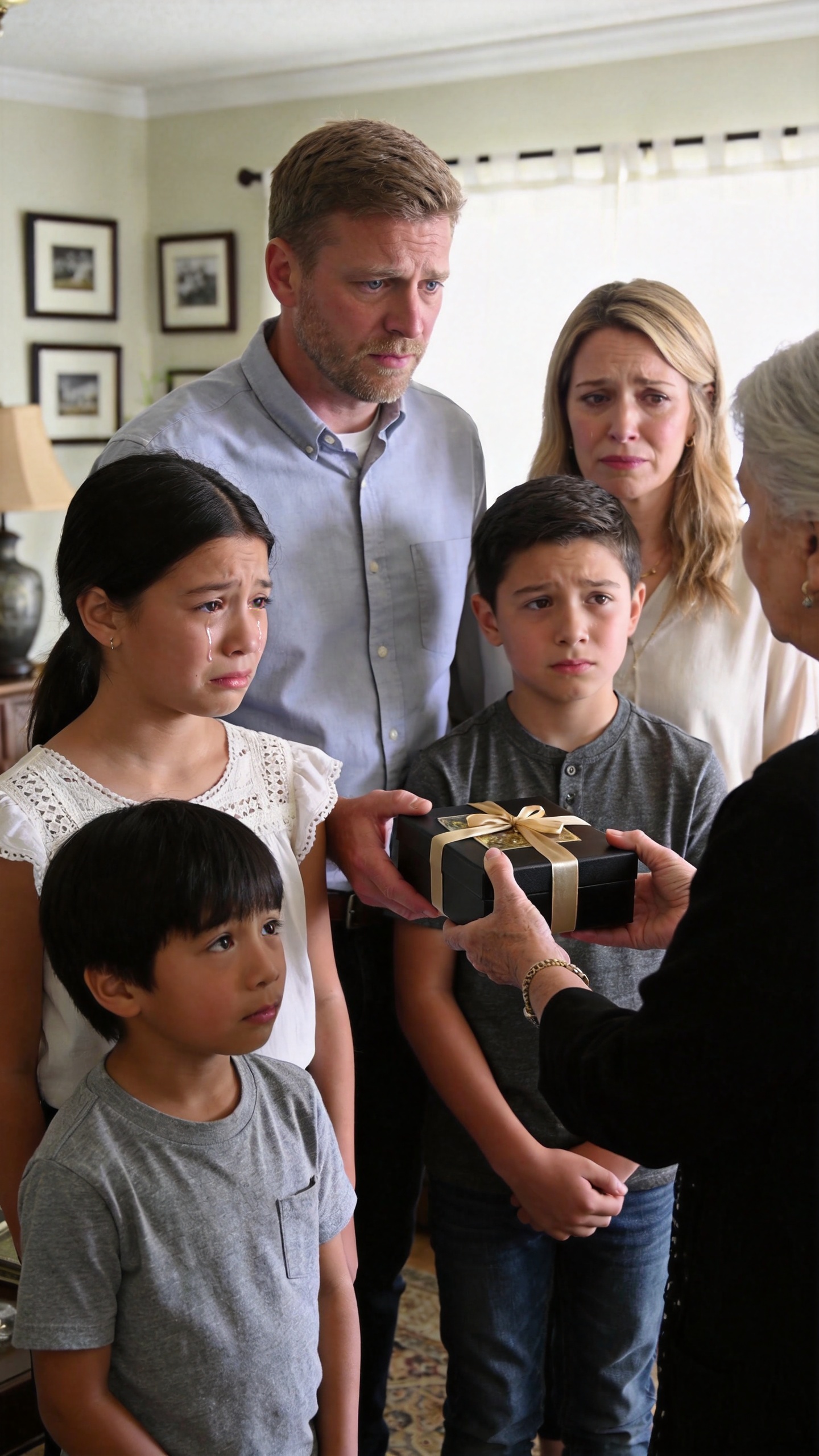
Two weeks later, she mailed Lily a present.
Inside was a porcelain doll and a card reading, "Grandma forgives you."
Learning to Move Again
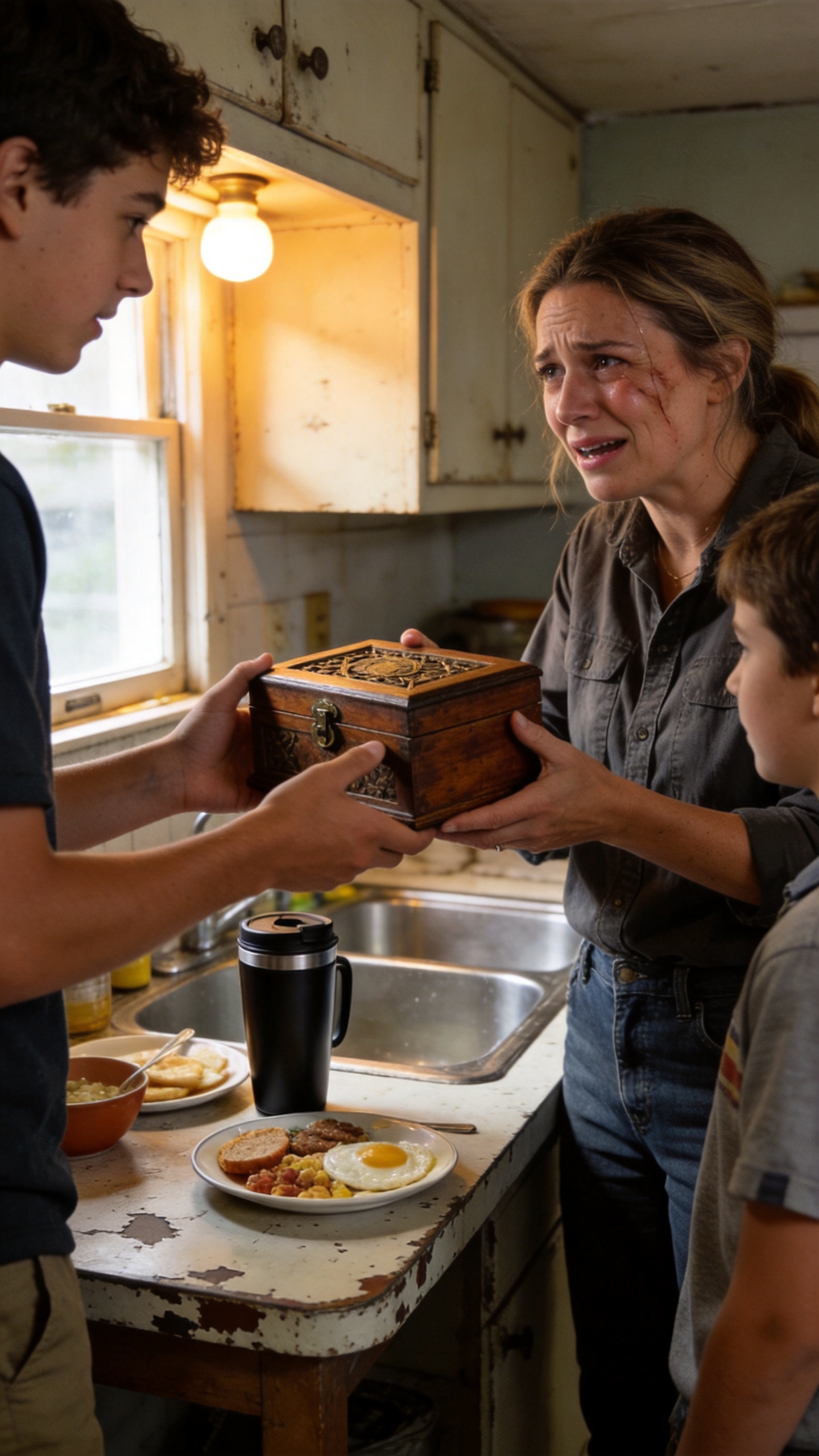
Before Mia could catch a glimpse, Daniel opened the package.
He stood in the kitchen, clutching the card.
For the first time since we found Mia in the parking lot, he broke down in tears.
There was no loud outburst or dramatic breakdown.
He just covered his mouth with one hand as his shoulders shook.
The small pink envelope lay on the counter, like evidence of something rotten.
I took the card and read it.
There was no "I'm sorry," no "I hurt you," and no "I was wrong." Patricia had twisted everything and put the blame on our six-year-old daughter.
Daniel angrily threw away the doll.
Then he took a photo of the card, saved the envelope, and blocked Patricia's number.
Mia started therapy the next week.
At first, she wouldn't talk about the parking lot.
Instead, she drew pictures: a yellow square, a gray wall, and a tiny stick figure next to a black car.
On every page, in one corner, she wrote the same name.
Helen Monroe, the therapist, warned us that recovery wouldn't be straightforward.
Mia had obeyed because she trusted the adult, the mother-in-law.
That kind of betrayal is so painful for a child.
Our goal wasn't to teach her to disobey.
We wanted to teach her that safety comes before obedience.
So, we practiced with her.
We told Mia that if she ever felt scared, lost, sick, or abandoned, she could move.
She could look for a safe adult, call for help, say no, and break a rule if following it put her in danger.
At first, she whispered the sentences.
Gradually, her voice got louder.
By the end of the month, she could firmly say, "I can move if I'm not safe." Daniel changed too.
He began going to therapy on his own.
He stopped downplaying painful childhood experiences just because they'd happened years ago.
Slowly, like splinters being pulled out, stories from his past came out: Patricia locking him outside for talking back, leaving him at church after he cried during a service, and shaming him when he got sick in public.
One evening, after putting Mia to bed, we sat on the porch.
The warm air carried the smell of rain and freshly cut grass.
"I thought it was normal," he said.
"I know," I replied.
He turned to me.
"I don't want normal if that's what normal was." Three months after the parking lot incident, Patricia showed up at our house.
It was a Sunday afternoon.
Mia was in the living room, building a fort with blankets.
Daniel was making grilled cheese when I heard a car door slam and then a loud knock.
The moment I saw Patricia through the glass, I felt a chill.
She looked perfect, as always.
She wore a cream blouse, pearl earrings, and bright lipstick.
She brought no gift and no apology.
Just herself, thinking that should be enough.
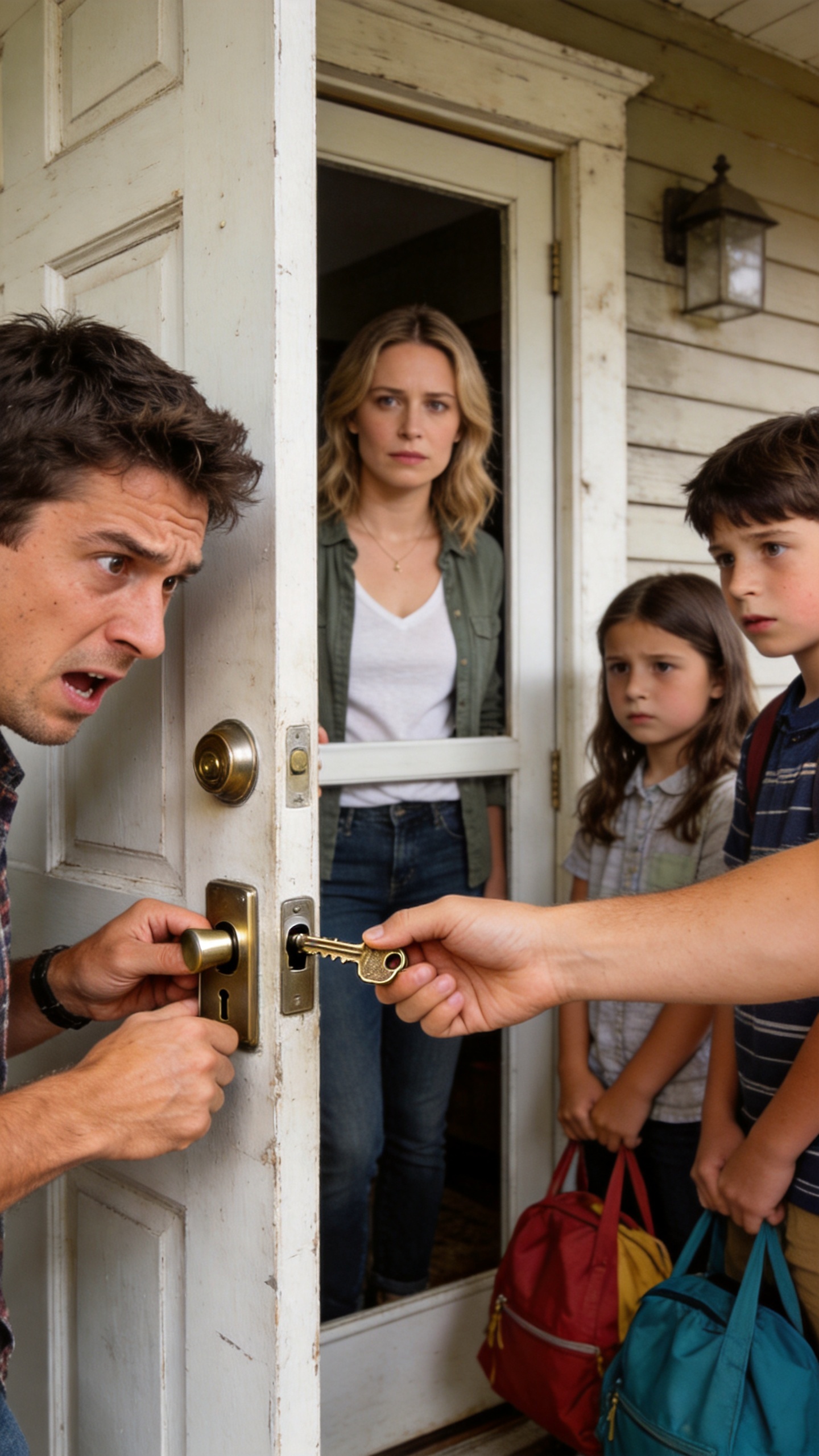
Daniel walked to the front door but kept it locked.
"Leave," he said through the glass.
Patricia put on a fake sorrowful smile, like she was in a documentary about unfairly rejected moms.
"I came to see my granddaughter," she said.
"No. You have a police report," Daniel shot back.
Her smile wavered.
"Daniel, you are my son," she said softly.
He nodded once.
"And Mia is my daughter." For a second, panic crossed Patricia's face.
I think she'd expected rage.
Rage was something she could handle.
She could turn anger into disrespect, disrespect into victimhood, and use that for control.
But Daniel wasn't angry.
Patricia leaned towards the glass.
"You will regret cutting me out." Daniel replied, "Maybe. But I'd regret letting you hurt her again more." From the living room, Mia called, "Daddy?" Patricia heard her.
A Safer Kind of Family
Patricia's gaze shifted towards the sound of Mia's voice, filled with a hungry fury.
I stepped right between her and the hallway.
"Leave now, or I'm calling the police," I said firmly.
Patricia stared at me for a long, long moment.
Then she finally spoke, "You were never this cruel before you married her." I answered, "No. I was never this honest." I shut the inner door.
Patricia stood outside for another minute before she finally walked away.
Mia asked who had been at the door.
I knelt beside the blanket fort and told her, "Someone who is not allowed to come in." Mia studied my face.
"Because they're not safe?" she asked.
"Yes," I said.
"Because they're not safe." She thought about my answer, then handed me a stuffed rabbit.
"This one can come in," she said.
Six months later, our family celebrated Thanksgiving at Claire's home.
Patricia wasn't invited.
It was our first holiday without her, and we all thought it'd feel strange.
It did, but not how we expected.
There was no hidden tension in every sentence.
No one inspected the food for flaws.
No one scolded the kids for laughing too loud.
No one pretended to be thankful while waiting for Patricia to say who'd let her down.
The kids ran around the backyard wearing paper turkey hats.
Mia stayed by my side at first, but then Ethan asked if she wanted to help make a pile of leaves.
She looked up at me.
I said, "Your choice." Those two words still meant so much to her.
I watched her through the window.
"She's getting better," I said.
Claire leaned against me.
"So are you." Across the room, Mark set the plates while Claire poured cider.
Their chat was normal, warm, and a bit messy.
Later, Mia climbed onto my lap with a slice of pumpkin pie.
Whipped cream was on the tip of her nose.
"Daddy," she said, "I know what to do if someone tells me to wait somewhere unsafe." I gently pushed her hair away from her face.
"What do you do?" "I move," she said.
"I call you or Mommy." "That's right." "Even if a grown-up gets mad?" "Especially then," I said.
Mia nodded seriously and went back to eating her pie.
I looked around the room and realized that the silence from that day at the restaurant hadn't really gone away.
It had just changed.
First, it was the silence of shock.
Then it was the silence of relatives not wanting to protect Patricia anymore.
Finally, it was peace.
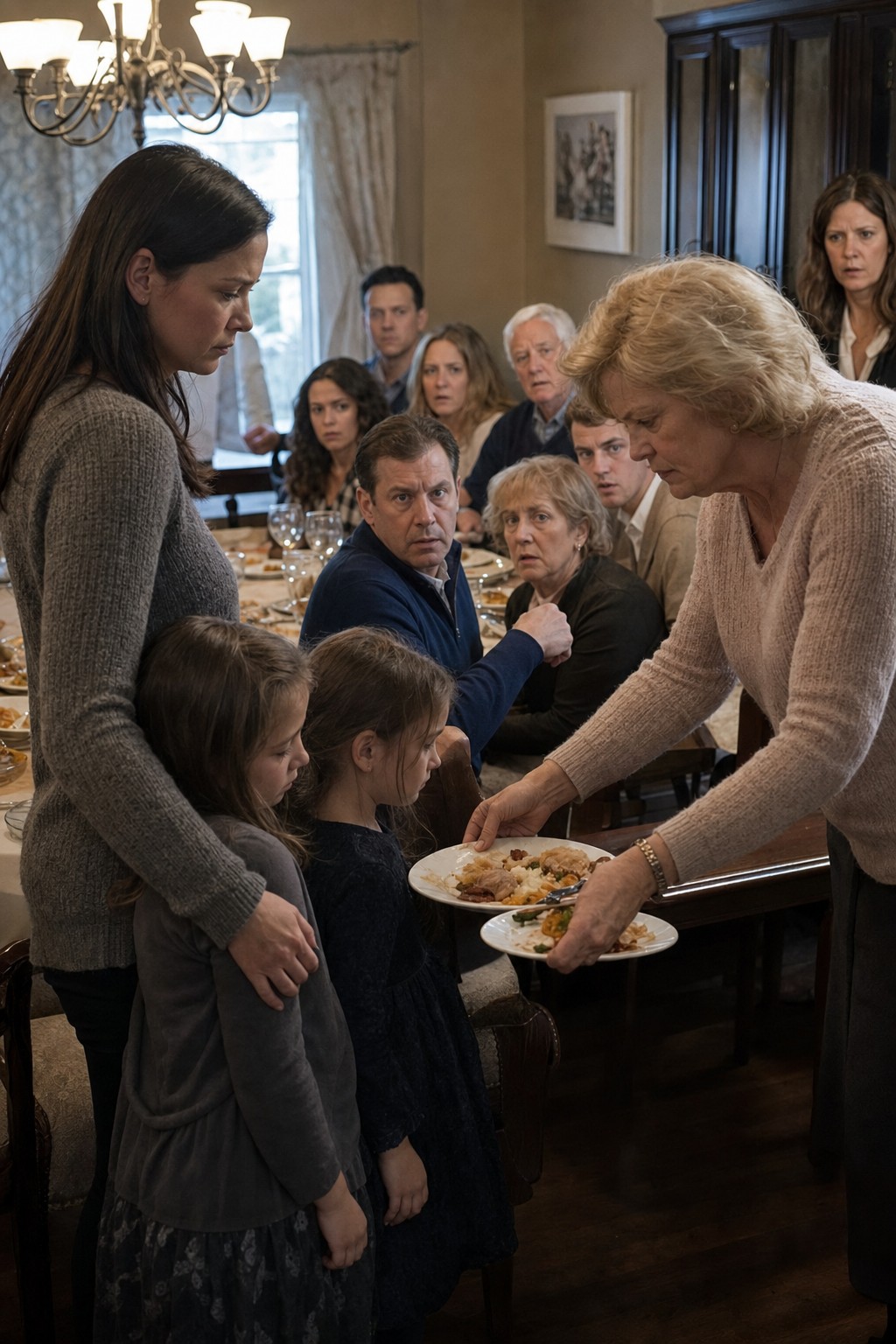
Our family had gone quiet that day because the truth had come in and taken a seat at the table.
No one could send it outside.
No one could tell it to wait by a pillar.
No one could leave it behind and pretend someone else had taken care of it.
For years, Patricia had taught us that obedience was more important than safety, looks were more important than honesty, and family loyalty meant covering for the one who caused the harm.
But she made a big mistake.
She thought Mia would stay by that pillar forever.
She thought I would too.
She was wrong about both of us.