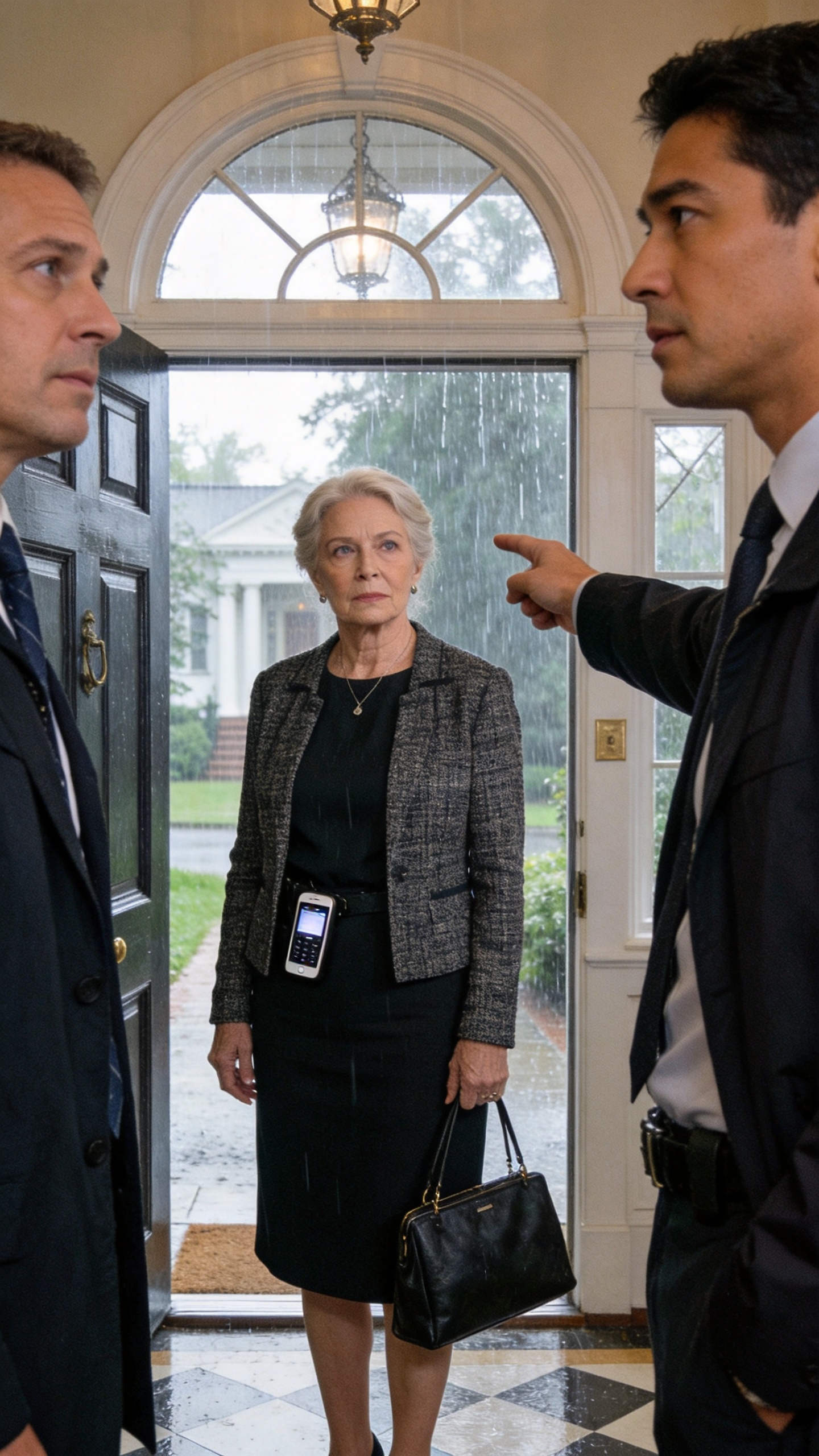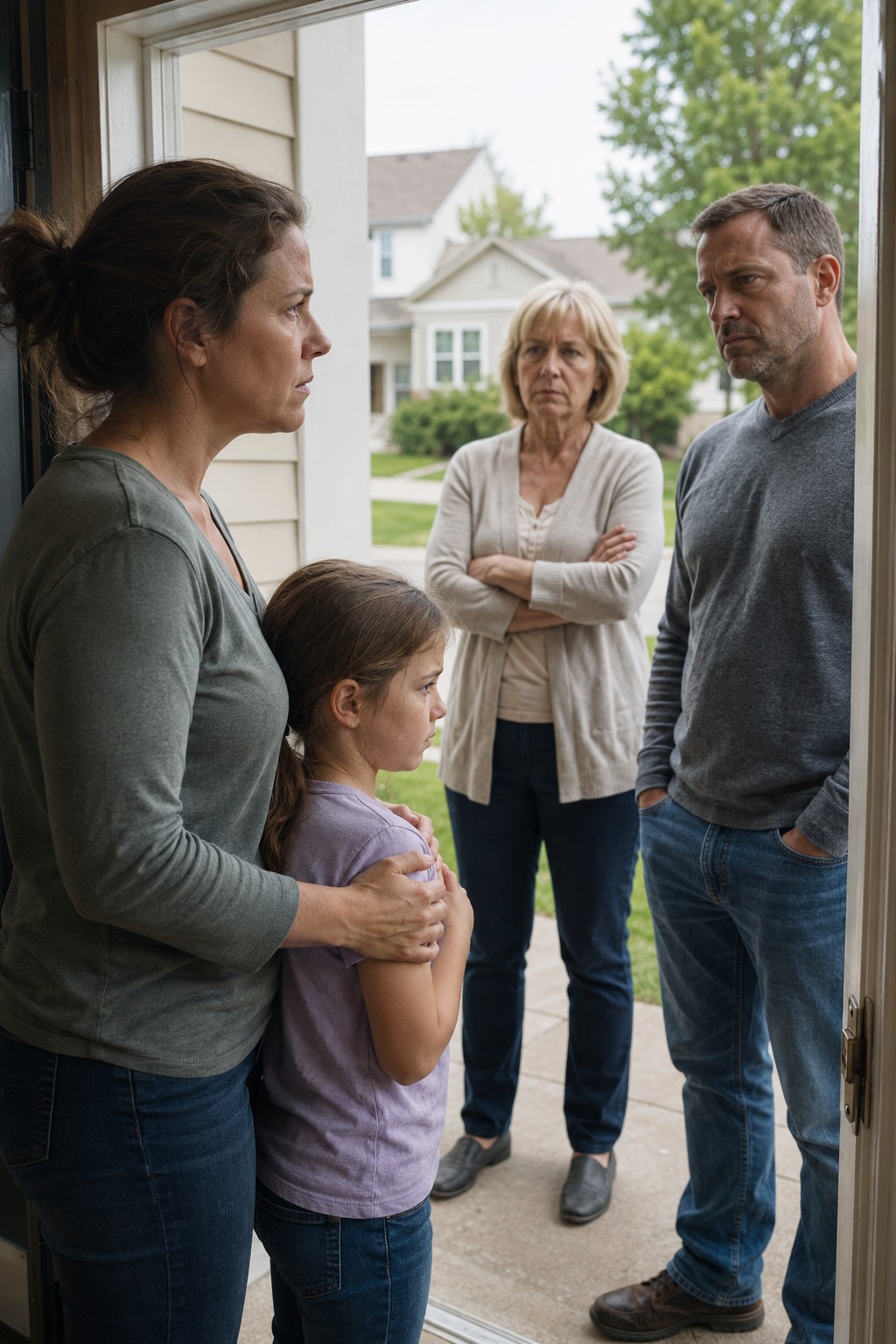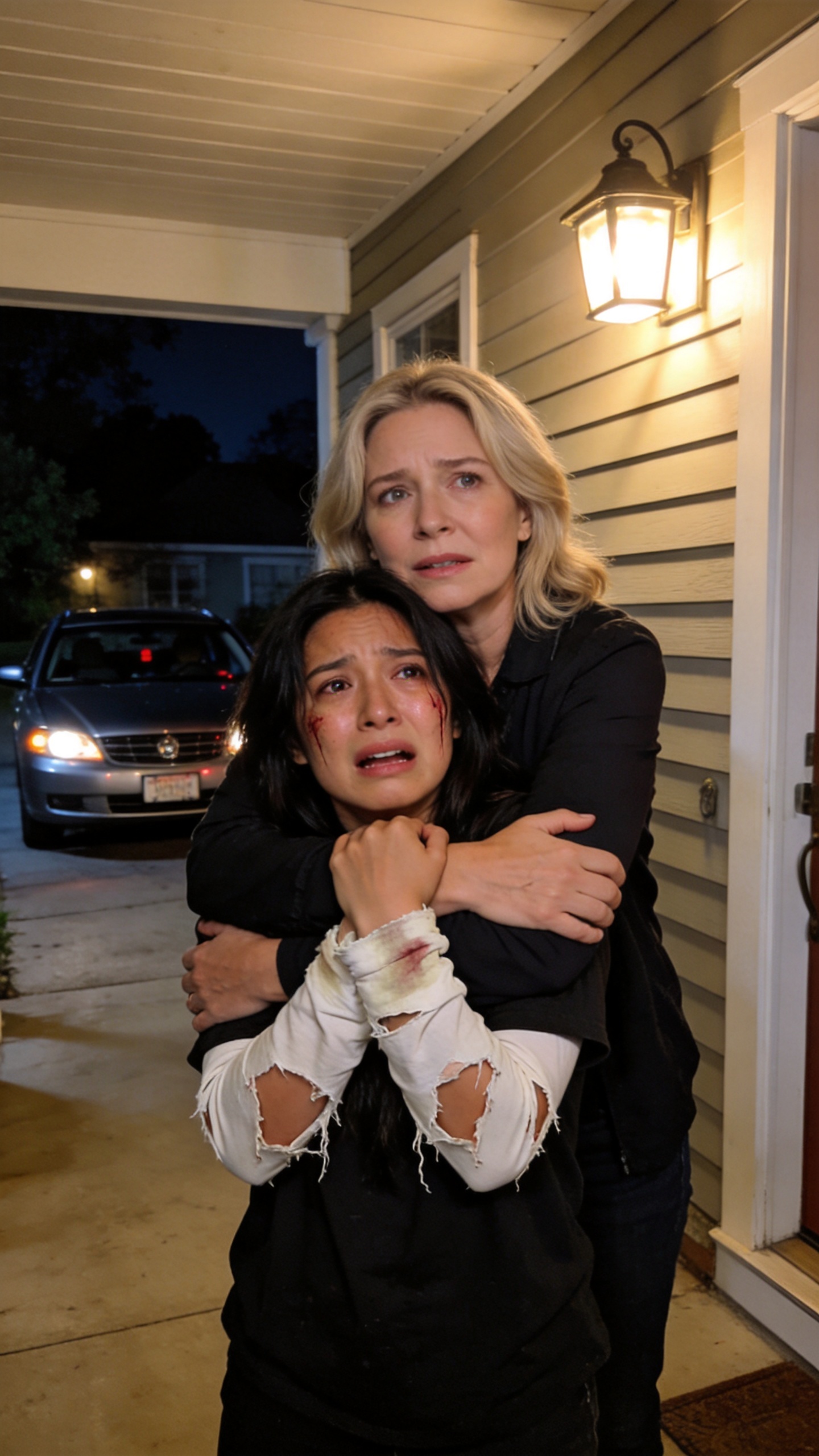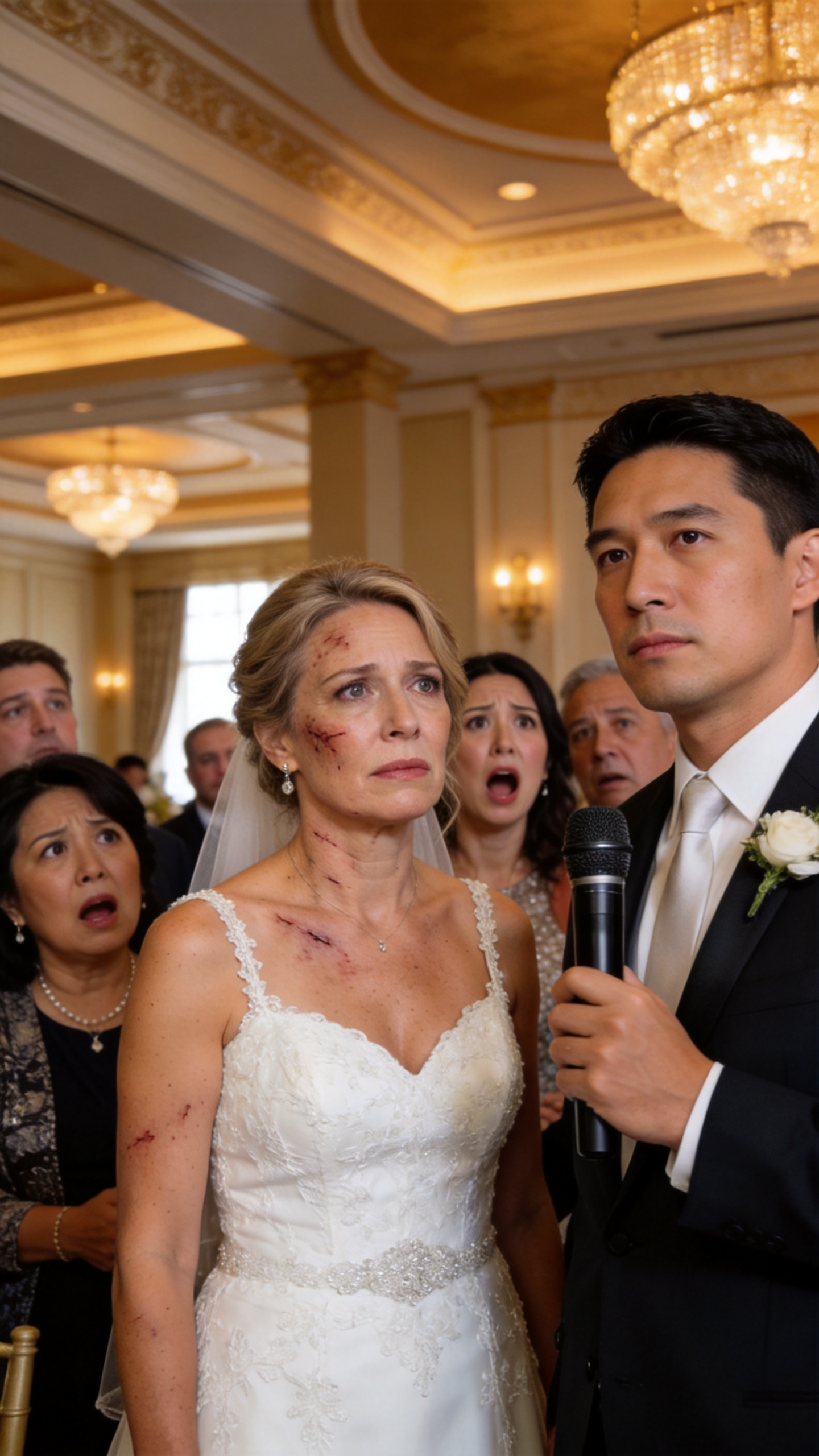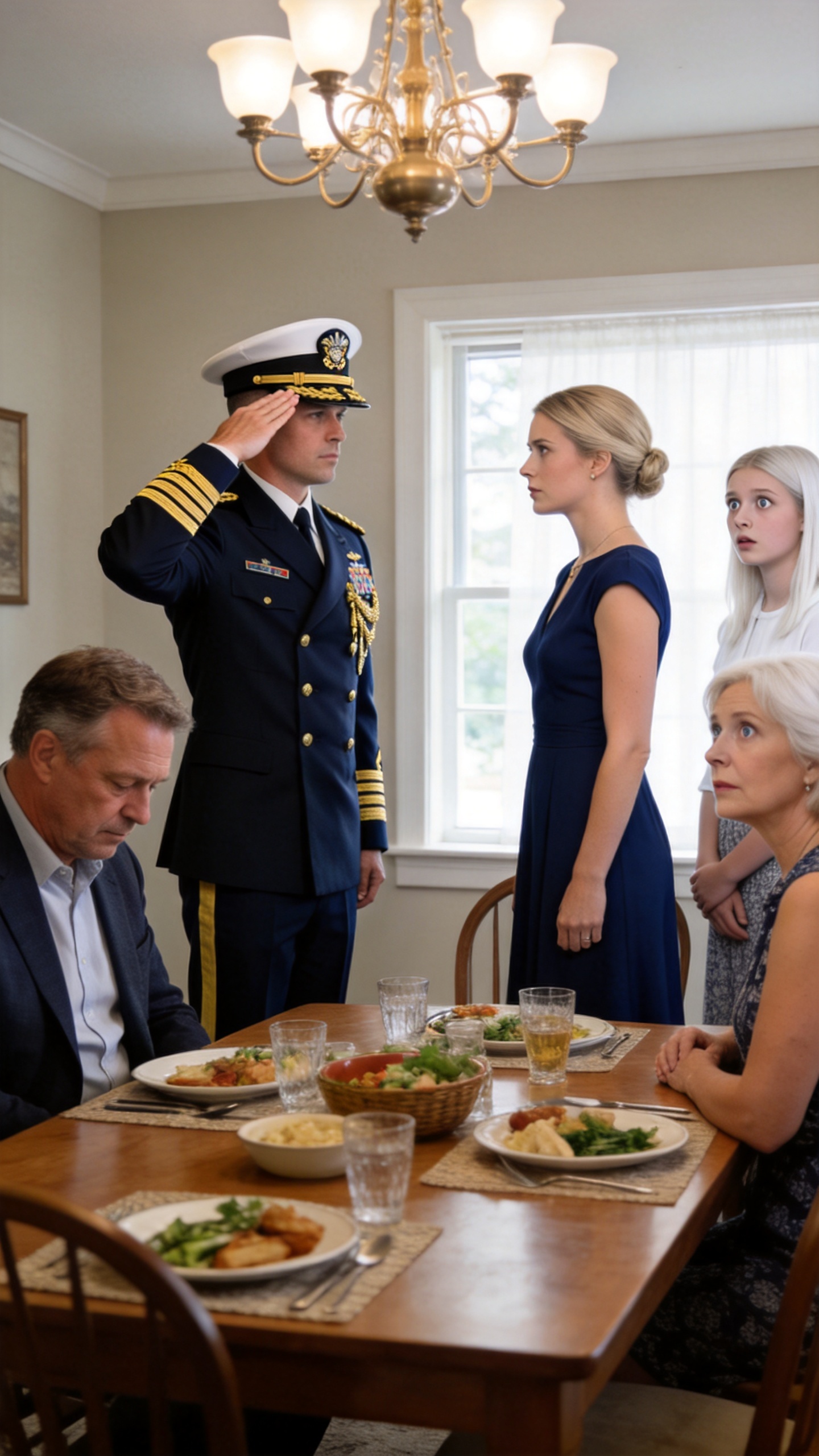
My mom leaned close and whispered, “there is not enough room for any of you.” then she stepped back inside and left my little boy standing on the porch, holding his backpack with both hands.
Melissa's behind on things.
Credit cards, car payments.
Some online spending mess she keeps saying is temporary.
Eleanor, a lot of the money you sent for the mortgage wasn’t going to the mortgage.
The room subtly shifted.
Nothing dramatic occurred.
Laura turned a page in the kids’ room.
A car drove by outside.
The small digital clock on Eleanor's nightstand changed from 8:43 to 8:44.
“Dad leaves paperwork everywhere when he's mad,” Mark said.
“There are notices, transfers, notes from Mom.
The roof repair last month?
That was Melissa's car down payment.
The water heater before that?
Credit card minimums.
They were behind on the mortgage because they were using your money to cover her.
Eleanor sat down on the edge of the bed.
For years, her parents had not only taken from her.
They'd taken from her wife, her kids, their postponed vacations, their delayed repairs, and the college savings she'd built up while sending more money to people who treated her kids like unimportant guests.
They'd taken her trust and used it to cushion Melissa.
“Don’t put yourself in a bad position.
── 960 in + 751 out = 1711 tokens ── [exit:0 | 49222ms]
Eleanor Hayes let out a tired laugh.
“I think I was born into one.
” Three days later, Mark showed up at her house.
He had two duffel bags, his laptop backpack, and a manila folder tucked under his arm.
He looked utterly worn-out.
It wasn't the kind of tired you get after a single rough night, but the deep-seated exhaustion that comes from living under someone else's rules for too long.
Diane opened the door and cheerfully said, “You're just in time for pizza.
” It was as if having a brother show up with all his belongings was a normal occurrence in their home.
Mark lingered in the entryway.
Then, a little girl named Lily ran past Eleanor and asked, “Uncle Mark, do you want cheese or pepperoni?
That night, after the kids were asleep, Mark opened the manila folder at the kitchen island.
Inside were printed emails, bank statements, hand-written notes from Eleanor's mother, a past-due mortgage notice, and receipts.
They told a story her parents would never have shared willingly.
The dates matched up.
Eleanor's money transfers had arrived, payments were made to a woman named Grace, but the mortgage remained unpaid.
New requests came to her under different names.
When Eleanor's mother had spoken with panic in her voice, each request had seemed reasonable.
But on paper, they looked like a charade.
Diane sat beside her, covering her mouth with one hand.
She didn't say a word.
Mark went through every page, pointing out amounts, dates, and small pencil-drawn arrows.
He was tense and precise, like someone who'd been ignored for years but now had proof.
When he finished, the only sound in the kitchen was the hum of the refrigerator.
Eleanor looked at the last page.
It was a copy of a text from her mother to Grace.
“Don't worry about Eleanor.
She always gives in.
” Something about that hurt more than the money.
Her mother had built a financial scheme around Eleanor's inability to say no.
What Their Cruelty Cost Them
She put the page back in the folder and closed it.
Mark watched her closely.
“What are you going to do?
” Eleanor thought about her son's hand in hers on the porch, the card her daughter had made, Diane waiting in the car, the canceled transfer, and her father's shocked reaction when she mentioned the mortgage.
“I'm going to let the truth be their problem.
The following Monday, Eleanor got a call from her parents.
Her mother's voice was strained, with a false sweetness and urgency.
She said Grace had been “treated unfairly” at work and needed family support.
She mentioned the mortgage was due on Thursday.
She said her father's blood pressure was acting up.
But she didn't say she was sorry.
“I'm not sending money,” Eleanor said.
“Eleanor, this is serious,” her mother replied.
“Then you need to talk to the lender,” Eleanor told her.
Her mother gasped as if Eleanor had said something terrible.
“You don't talk to us like this.
” Then she started to cry, or at least make the sounds of crying.
Eleanor looked through the glass door at the backyard.
Her kids were kicking a soccer ball, and Mark was sitting on the deck steps with his laptop open, trying not to smile when her daughter missed the ball and laughed at herself.
“Mom,” Eleanor said, “you made room for Grace's kids at the table.
You made room for her bills in your budget.
You had room for every excuse to use me.
But you had no room for my kids.
I'm not explaining that part anymore.
── 962 in + 752 out = 1714 tokens ── [exit:0 | 22322ms]
Eleanor's mother's voice grew icy.
“Diane has changed you.
A week later, Eleanor's father had a health scare.
Her mother called at 10:30 p.
Some gut-feelings stay with you, even when you finally recognize them.
Eleanor grabbed her keys before fully grasping what her mother was saying.
Diane stepped into the hallway, her robe cinched at the waist, her eyes full of worry.
“Dad's not well.
She says it could be serious.
” Eleanor repeated the question into the phone.
Her mother paused.
“I thought you could drive him.
“Call for help right now,” Eleanor told her mother.
“I'll meet you at Memorial.
The hospital lobby was well-lit, cold, and packed with people dealing with everyday emergencies under the fluorescent lights.
A little kid slept on a grandmother's shoulder.
A man in a suit paced by the vending machines.
Eleanor's mother sat holding a tissue.
She looked smaller than normal, but no less tough.
When she saw Eleanor, she stood up right away.
Eleanor almost snapped back, almost got into the old argument.
Instead, she sat three chairs away and waited.
An hour later, the doctor came out and said her father was stable.
It wasn't the worst-case scenario.
Stress and high blood pressure had caused a big scare, but they'd watch him overnight, and he'd probably be sent home with instructions.
Relief hit Eleanor before resentment could take over.
He was still her father.
That was the hard part.
Setting boundaries didn't wipe out the past.
They just stopped the past from dictating every decision.
While Eleanor helped with paperwork because her mother had forgotten the insurance card, her mother touched her elbow.
They were in the hospital hallway, under a TV mounted too high on the wall, next to a vending machine stocked with pretzels and orange soda.
Her father was behind double doors with a hospital bracelet.
A doctor had just rambled on about stress.
And her mother had found the bill in the emergency room.
Her mother's face turned angry so fast, there was barely a hint of hurt.
“You'd really let us lose everything?
“I'm not the reason you're behind,” Eleanor said.
She paid only what was needed for the hospital visit.
She couldn't stand watching the clerk as her mother rummaged through her purse and made a big show of her panic.
She paid, knowing it would be the last time she'd fix a crisis just because her mother threw it at her.
On the drive home, Diane stayed on the phone on speaker until Eleanor pulled into their driveway.
The porch light was on.
Two mugs were on the front steps, steam rising into the night.
The notice reached Eleanor's parents' house two weeks later.
Her mother texted her a photo of it with four words.
Eleanor forwarded it to her attorney, a smart move Diane had suggested after Mark came to stay with them.
Then she saved it in the folder with all the other stuff.
Evidence didn't have to be flaunted.
Sometimes it just needed to exist, a clean record against any future lies.
Her attorney sent her parents a formal letter saying any money requests should be in writing and no more informal help would be given.
The words were polite.
That made it impossible to call it an emotional reaction.
“I raised you better than this,” Mark said.
Eleanor was in the office parking lot, the late sun glinting off the windshields around her.
For years, that sentence would have knocked her down.
This time, she leaned against her car and looked up at the sky.
“You raised me to pay for bills I didn't rack up.
” Then he said, “Your sister needs help.
── 960 in + 782 out = 1742 tokens ── [exit:0 | 21134ms]
Eleanor had nothing to say.
The truth was plain and couldn't be twisted.
The final showdown didn't take place in a fancy hall.
It was a Saturday morning at her front door.
Swim towels were drying on the deck railing, and Diane's sneakers were still damp from swim lessons.
Mark was making sandwiches in the kitchen.
Eleanor's husband, Kevin, sat at the table, showing their son, Tyler, how to build a basic webpage with a blue header and a picture of their dog.
The house was messy in a way Eleanor's mother detested.
There were crayons on the counter, a school flyer under a magnet, and a half-folded blanket on the couch.
Eleanor's mother's hair, usually perfect, was combed but not quite right.
She wore beige slacks, a light cardigan, and a look of someone who'd practiced different personas on the drive but didn't like any.
In her hand was a folder.
Eleanor stepped onto the porch and mostly closed the door behind her.
Her mother's eyes darted to the gap, trying to peek inside.
“Is Kevin here?
” Her mouth tightened.
“You've turned him against us too.
The Calls That Came Too Late
” Eleanor almost smiled.
It wasn't funny, but the accusation was so old it was tired.
Laura had changed her, and she'd influenced Kevin.
The kids had made dinners complicated.
Everyone was blamed except those making the choices.
For a moment, the only sound on the street was a lawn mower around the corner.
A small American flag on the neighbor's porch fluttered in the breeze.
Her mother looked past her again.
This time, Eleanor knew what she saw through the sidelight: her son laughing at the kitchen table, her daughter running across the hall, Kevin sitting in a chair he'd earned on his own, and Laura setting plates on the island.
In their house, hungry people were fed.
Her mother's eyes got wet, but Eleanor had learned not to trust every tear.
“We're going to lose the house,” she said.
“She left for Colorado,” her mother continued, her voice getting weaker.
“Said she couldn't handle the pressure.
She took what she could and left.
The old Eleanor would have moved closer.
She would have heard the despair in those words and rushed to help.
She would have confused being needed with being loved.
Her mother opened the folder with shaky hands.
Inside were notices, statements, numbers like a list of consequences.
She pushed them at Eleanor as if papers could make her responsible again.
It hurt, but it didn't control her.
“I can give you information about a senior living community on Oakwood,” Eleanor said.
“It's clean and safe.
I'll pay for three months directly while you figure things out.
” Her mother's face changed.
First shock, then offense, then something close to fear.
Eleanor looked at the folder in her hands, then back at her.
For not letting you use my kids' future to save Melissa?
” She hadn't meant to say Melissa's name then.
But once it was out, the porch seemed to go still.
Her mother's eyes sharpened.
“You don't understand what your sister has been through.
” “No,” Eleanor said.
“I understand exactly what I was supposed to cover.
Kevin held the manila folder he'd brought to the kitchen weeks ago.
Just firmly, with both hands, as if it had real heft.
── 945 in + 724 out = 1669 tokens ── [exit:0 | 22881ms]
Eleanor stood there, waiting for Mark's answer.
He was beside her, not behind, and for the very first time, she felt what it might've been like if they'd been true brothers earlier.
Diane's lips moved, but no words came out.
Laura showed up in the doorway.
One hand rested gently on the frame, and Diane peeked out from behind her hip.
Tyler stood just inside the hall.
Everyone was silent.
It felt like the whole house was behind Eleanor, not watching, but as evidence.
Diane looked at the folder in Mark's hands.
It was a bright morning.
There were swim towels on the railing and chalk dust on the driveway.
Her family was safe inside a home where every chair had an owner.
Diane finally realized the old way was done.
“Mom,” Eleanor said, “you taught me family helps when needed.
You just never said my family mattered too.
” Diane was speechless.
Three months later, Eleanor's parents moved to the Oakwood facility.
She paid exactly what she'd promised, right to the office.
No going through Diane, no cash, no way it could be changed.
After that, her parents managed with benefits, a smaller budget, and assistance programs Diane once scorned.
Her father's health was fragile but stable enough for him to gripe about the food.
At first, Diane called every few weeks, always with a new problem that seemed like a test.
Eleanor let most calls go to voicemail.
Melissa stayed away longer than anyone thought.
Mark heard from a cousin that she'd found work out west and still blamed Eleanor for “breaking the family.
” Eleanor wished her no ill, but she didn't wish for her rescue either.
Mark got an apartment downtown, then a better job, and a girlfriend.
She brought a homemade pie to Sunday dinner and asked Diane about her art like it really mattered.
He comes over most weeks now.
Tyler thinks Mark is the smartest because he can write code and fix Wi-Fi.
Diane calls him the fun uncle because he lets her put stickers on his laptop case.
Their table isn't fancy.
The chairs don't match.
Two are from Laura's parents, one from a yard sale.
There are scratches, marker stains, and a little dent from when Tyler used a spoon as a drumstick.
It meant more to Eleanor than she could say.
Sometimes, while loading the dishwasher after Sunday dinner, Eleanor thinks about Diane's dining room with the nice plates and missing chairs.
She thinks about the cheesecake Tyler took back to the car.
She thinks about Diane's card on the fridge, the purple backward G fading from the sunlight.
It wasn't about remembering the pain.
It was about remembering the moment she chose who she was responsible for.
Her parents didn't lose her on the porch.
That had happened slowly over the years, with each request, every time they treated her love like a loan and her kids like an afterthought.
The porch was just where she stopped pretending things could go on as before.
She didn't want revenge; that would mean she wanted them to suffer.
── 911 in + 639 out = 1550 tokens ── [exit:0 | 20162ms]
Eleanor Hayes hoped her son and daughter would grow up in a home where love was freely given, not something they had to earn by being useful.
She also wished her brother Mark could sit at a table without constantly being compared to others.
And she wanted her husband to stop feeling diminished when he returned from certain places.
Most of all, she wanted to be able to say no and truly believe in it.
Every Sunday, before dinner, Diane still made place cards.
She'd use a marker to carefully write each person's name.
Then she'd decorate the corners with little hearts or stars.
Setting them around the table was like a small, special ceremony.
Eleanor's card usually had a lopsided smiley face.
Her son's had a soccer ball, and her daughter's had flowers.
A few weeks ago, Diane accidentally made an extra place card.
She held it up and asked, “Who should this be for?
” A familiar pain stirred in Eleanor, but it was different now.
It was more like an old scar under warm water than a fresh wound.
Eleanor took the blank card from Diane and put it in the drawer.
“That one,” she said, “is for anyone who comes here with love.
” Diane nodded as if it was the most obvious thing in the world.
── 461 in + 265 out = 726 tokens ── [exit:0 | 9357ms]