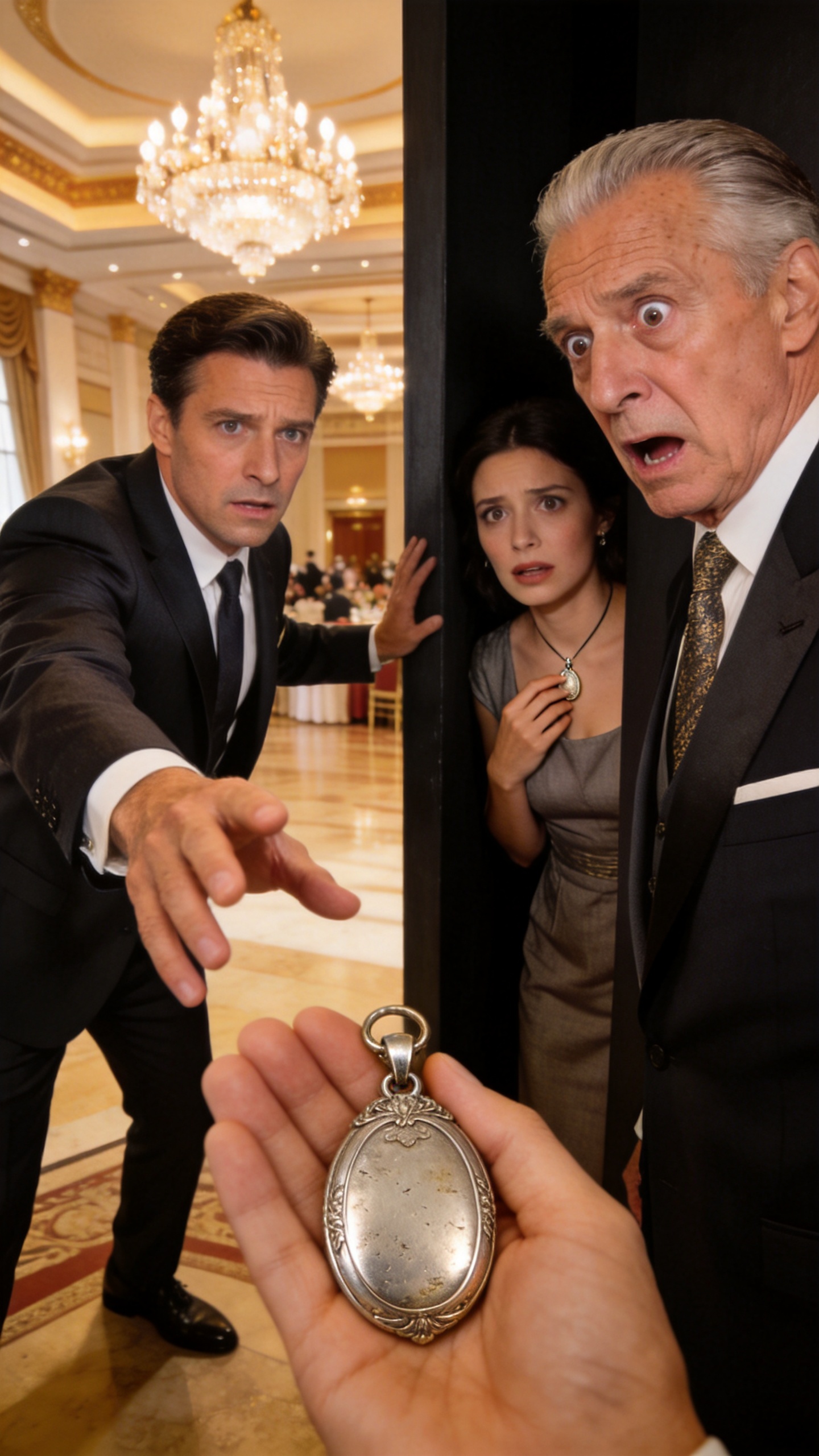
At my daughter’s wedding, the one I quietly paid for, her fiancé introduced me to his elegant parents with a smile that made the whole table uncomfortable. “this is her mother,” he said. “the one we have to keep happy until tonight is over.”
Some were extra careful around Eleanor Hayes, walking on eggshells.
Others were overly nice, which made her even more uneasy.
Fern started leaving printed reports on Eleanor's desk without a word.
Once, she added a wrapped peppermint and simply said, “For patience.
Eleanor called Mark, an attorney she'd trusted for years.
She wanted to know where the professional line was.
“The personal stuff is personal,” Mark said.
“The workplace has to stay clean.
If Hartley messes up at work, document it.
Don't make up some punishment and call it management.
“Yes,” Mark added.
“That's what worries me.
You know how to make a perfect file.
Throughout her career, Eleanor had created super-detailed files.
Files that made senior executives face their own dishonesty.
Files that turned vague suspicions into real threats.
Files that saved companies when hubris almost took them down.
Eleanor hired Marcus Chen, a private research consultant who only dealt with public records, financial disclosures, and legally-obtained info.
“I need background on Wesley Howard and his parents,” she told him.
No gray areas.
If it's not clean, I don't want it.
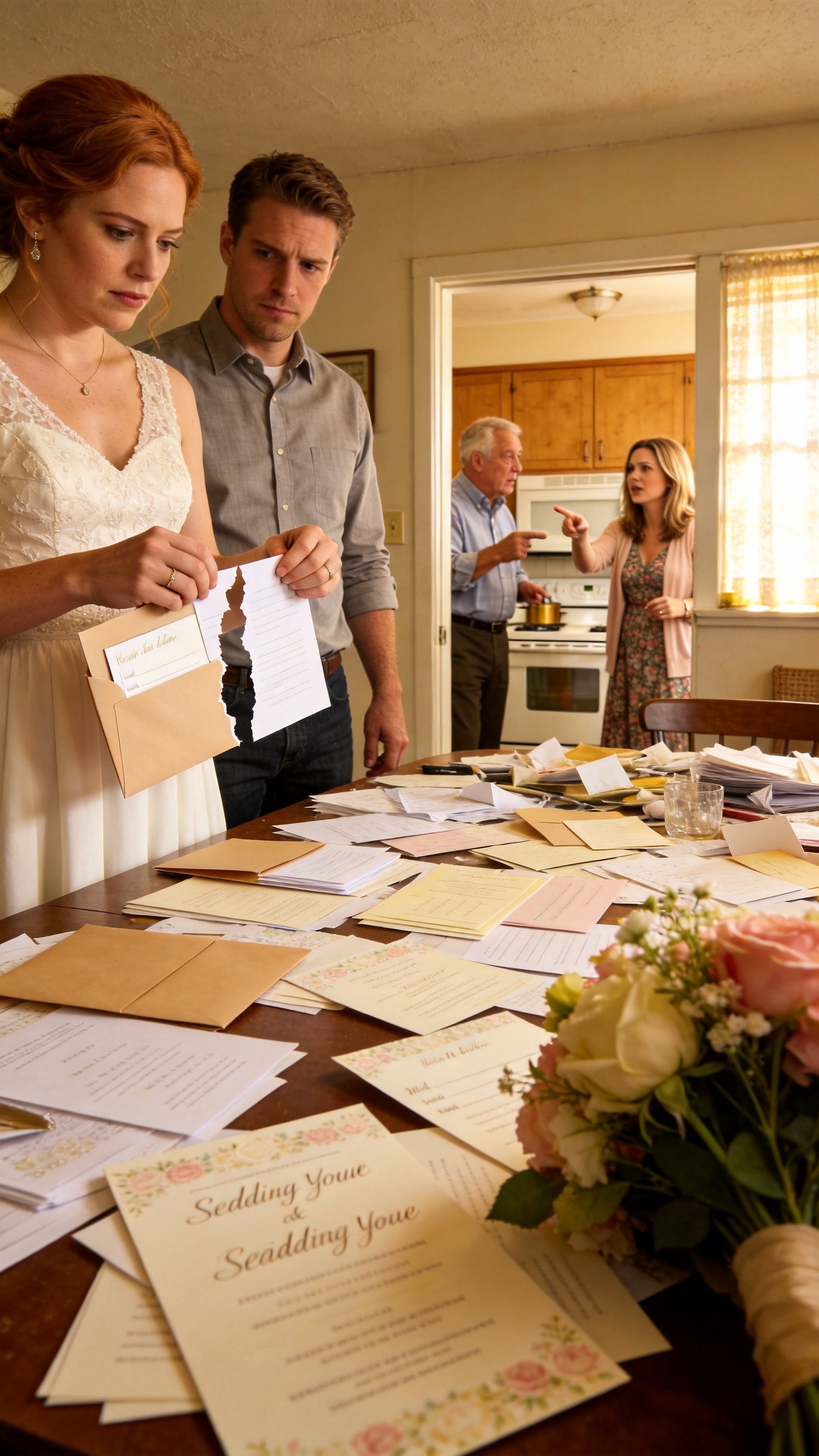
By Thursday afternoon, Eleanor's dining room table looked like a controlled chaos.
Folders, court filings from financial fights, business registrations, property records, printed posts, and screenshots from Wesley's old social media accounts covered the table.
Diane arrived with coffee and an iPad.
She was excited to show how old posts could still be found.
“People show off their wealth online,” she said.
“Then forget the background gives them away.
She showed Eleanor photos of Wesley in Atlantic City gaming lounges over the past eighteen months.
This wasn't just a bachelor weekend or a rare night out.
It was a habit.
VIP wristbands, late-night tables, and captions about “getting it back.
” Friends posted the images after Wesley stopped uploading his own.
Wesley's startup had quietly failed months ago.
He'd had no steady income since January.
He had debt on multiple online betting platforms and had borrowed money under tough terms.
Hartley's credit cards were almost maxed out.
Vida's claims of inherited wealth disappeared with a simple records search.
She'd reinvented herself, hiding her past, and spent years pretending to fit into the fancy places she struggled to enter.
Their situation didn't excuse their actions, but it explained the desperation under the silk, jewelry, and perfume.
Then Mark found a document that made Eleanor sit down hard.
It was from a property financing file nine years ago, related to a loan-terms disagreement.
An early pre-qualification form had Eleanor's daughter's name as a co-signer.
Eleanor stared at her daughter's signature until it was hard to read.
Mark clasped his hands on the table.
“It means her financial link to the Howard family started long before the wedding.
She might not have understood the long-term effects, but she signed.
Eleanor's daughter had been tied to the Howards long before she even knew they existed.
That evening, Eleanor took an old family album from the shelf.
She found a photo from her wife's memorial service.
Her daughter, fifteen at the time, stood beside her in a black dress, hands folded and face full of grief.
Eleanor had promised her dying wife to protect their children.
She'd kept her daughter safe from obvious dangers.
But she'd failed to protect her from the need to be loved so much that she mistook being used for love.
For the first time since the reception, Eleanor cried.
It wasn't about Wesley, Hartley, or the money.
── 998 in + 787 out = 1785 tokens ── [exit:0 | 35816ms]
Eleanor Hayes sat alone, tears streaming down her face.
She cried for the years she'd wrongly thought paying bills was the same as helping her daughter.
What Their Cruelty Cost Them
So many times, she'd pulled out her wallet, not knowing any other way to connect with her.
Mark, a tired-looking man, submitted his report on Friday afternoon.
His eyes were red, his tie was loose, and his face was pale with exhaustion.
Eleanor sat across from him as she went through the first twelve pages.
Mark's suggestions seemed more suited for a food-service business.
She marked each error in blue ink.
"Have you ever worked in manufacturing crisis management?
"Not a whole lot, but the principles are alike," Mark replied.
Eleanor pointed out, "This part mentions rules that don't apply.
This suggestion would put the client at needless risk.
And this schedule completely ignores the vendor's duties.
You haven't written a crisis plan; you've just put on a show of one.
Mark's jaw tightened.
"I worked on this all week," he said.
Eleanor retorted, "I pay for good judgment, not for you to be exhausted.
When Mark looked up, Eleanor saw two versions of him in the office: the man who'd smirked at the wedding and the one holding a report full of corrections he couldn't explain.
"Revise it," she said firmly.
"By Monday morning, nine o'clock.
Mark gathered the report with both hands.
After he left and the door closed, Eleanor realized something unpleasant.
She could expose all his mistakes, every late submission, and every over-stated qualification.
She could use his professional flaws against him, but it wouldn't undo what had happened at the wedding.
The phone rang twice before Eleanor answered.
"Daddy," her daughter Diane said.
Hearing that childhood name almost broke her self-control.
"We got back from Aruba last night," Diane added.
"I tried calling.
You didn't pick up," Eleanor replied, looking at the folders on her desk: financial statements, Wesley's messages, and an old paper with Diane's signature.
On Sunday at two, their car pulled into the driveway.
Eleanor had spent the morning arranging documents on the coffee table.
She tried not to make it seem like a prosecution, but her instincts pushed her that way.
She hoped the facts could be a bridge since emotions had failed them.
Wesley walked in first, trying to look calm.
He wore an open-collared linen shirt, and his wet hair showed he'd showered before leaving.
Diane sat on the edge of the couch, clutching her purse tightly.
Her wedding ring sparkled as her fingers moved.
"Floyd," Wesley started, "about the wedding.
The old-man comment was just champagne talk, wedding humor.
You know how people...
" "You said you came to apologize, so do it," Eleanor interrupted.
Wesley leaned forward.
"I'm sorry you were offended.
" "That's not an apology.
Try again," Eleanor said firmly.
Wesley pressed his lips together.
"I'm sorry for what I said at the wedding.
For making a bad joke," he said, glancing at Diane.
Eleanor pushed the first folder across the table.
"Let's talk about your finances," she said.
All the ease left Wesley's body.
"Because my retirement money has been used like family money by people who haven't been honest with me," Eleanor said as she opened the folder.
"Your startup closed in February.
You've had no steady income since January.
You have online gambling debt, private loans, and a habit of taking expensive trips you can't afford.
The grandfather clock in the hallway ticked two slow seconds.
Diane's reply was barely audible across the room.
"Some of it.
── 958 in + 791 out = 1749 tokens ── [exit:0 | 24218ms]
Eleanor Hayes placed several printed messages on the table.
They were from Mark, asking how much money she had.
There were also instructions for Diane to make the hotel deadline seem urgent.
Mark claimed Eleanor was “sitting on retirement funds” and would agree if Diane cried convincingly enough.
Diane lifted the first page with shaky fingers.
“He gave you a script,” Eleanor said.
Diane read it in silence, then dropped it like the paper was on fire.
Mark stood up suddenly.
“You’re distorting this,” he said.
For once, he remembered that being old didn't mean being weak.
“I'm just reading it,” Eleanor replied.
“There's a difference.
Mark glanced at the papers, then at the doorway.
“Fine,” he said, his smooth demeanor starting to crack.
“I knew you'd help.
That's what parents do.
You had the money.
We needed it.
Why is everyone acting like this is a huge crime?
Eleanor faced Diane.
“Did you know he coached you?
” Tears streamed down Diane's cheeks.
“I knew he was stressed,” she said.
“I knew he wanted me to ask you.
“Did you know he needed the money for more than the wedding?
” The question hung in the living-room, moving slowly.
It settled among the folders, under the framed wedding photo on the mantel, and beside every check Eleanor had signed with hope.
Eleanor sat down before the room could spin.
“You knew for six months that the man you were marrying had serious financial problems, and you let me think I was paying for flowers and ballroom lights.
” Diane pressed her hand to her mouth.
Eleanor lost her patience.
“I can afford a lot of things,” she said.
“But that doesn't mean you can use me.
Mark let out a bitter laugh.
“You act like we drained your life.
You still have your house, your pension, your little job.
Eleanor turned back to Diane.
“At your wedding, he publicly disrespected me, his parents laughed, and you said nothing.
Today, he says my savings don't matter because I still have something left.
I need you to see what you're defending.
Diane cried harder, but her tears couldn't answer.
“Not forever, not in a big way, but right now, get out of my house before I say something I'll regret.
They left without a word.
When they were gone, Eleanor poured a glass of bourbon but didn't touch it.
It sat on the kitchen island, amber in the light, as she called Hosea.
“I think I made a mistake,” she told him.
“I showed them everything.
Diane knew, Hosea.
Maybe not all of it, but enough.
She still chose him.
Hosea was quiet for a moment.
“I'm sorry, Mom.
On Monday, Hartley asked for a week off due to a family emergency.
Eleanor refused the informal request and told him to follow the official leave procedure.
His revised report was late and still didn't meet standards.
Soon after, HR got a complaint from the Howard family's lawyer, accusing Eleanor of making inappropriate demands on Hartley because of a personal feud.
Eleanor went into the HR conference room with three inches of organized records: similar assignments given to others, time-stamped comments, performance records, and departmental expectations.
The Calls That Came Too Late
Cornelius sat beside her, his expression unreadable.
Emily Santos, the HR director, opened the binder and looked over her glasses.
Hayes,” she said, “this is the most complete documentation file I've seen in years.
“Unofficially,” she added, “this situation is causing tension.
” That's when Eleanor realized the company wasn't on Hartley's side.
── 1010 in + 788 out = 1798 tokens ── [exit:0 | 30745ms]
By late July, Eleanor Hayes's former colleague, Mark, resigned.
The agreement made it seem like a voluntary decision.
He took a less-important job at a company outside the city.
Diane, who had been uploading pictures of fancy restaurants, stopped.
Wesley, a friend, got into trouble with a private creditor demanding repayment.
He started financial counseling and joined a support program for gambling problems.
Eleanor, through Cornelius, helped set up a documented repayment schedule to keep things legal and civil.
She said she did it for Inez, but a part of her wanted to prove she could solve the problem she'd spotted first.
At the start of August, Quantum Crisis Solutions gave Eleanor a better retirement offer.
It had full benefits, severance pay, and a non-disparagement agreement written in soft language.
Cornelius read it and let out a breath.
“They're buying peace,” he said.
And you brought family drama into a professional office.
On her last day at work, Fern cried as she helped Eleanor pack.
Decades-worth of photos, awards, chess pieces, and desk trinkets went into two cardboard boxes.
It bothered Eleanor more than she expected.
She thought her whole career would need a moving truck, but it fit into cardboard.
“Some people think you went too far,” Fern said softly.
Eleanor sealed the second box.
“Some people didn't pay for a wedding and get mocked under chandeliers,” she replied.
Fern nodded slowly.
“Most of us think you were right,” she said.
But being right didn't mean being happy.
Eleanor carried the boxes to her car without looking back.
In mid-August, Inez came to visit.
Eleanor saw her car in the driveway and opened the door before she reached it.
Inez stood on the porch in jeans and a simple white blouse.
She looked thinner than at the wedding reception.
Her hair was tied back casually.
“It's still your home,” Eleanor said.
Inez came in and sat on the couch where Wesley had sat weeks ago.
For a while, they were silent.
The normal sounds of the house filled the air: the fridge, the AC, and a lawn mower down the street.
“I'm staying with Rachel from work,” Inez said.
“I'm not living with him right now.
” “I don't know if I love him,” she added, “or if I love being chosen by someone who needed me.
” It was the first honest thing she'd said in months.
Eleanor sat across from her.
“That's worth finding out,” she said.
Inez wiped a tear.
“Are you still angry?
“Anger fades,” Eleanor said.
“Disappointment lasts longer.
Inez apologized without making excuses.
She didn't mention wedding stress or marriage troubles.
She just sat in the living room, letting her apology be imperfect.
“But not by acting like it didn't matter,” Eleanor added.
“And not until you understand why it happened.
” Eleanor slowly sat next to Inez, giving her space to pull away.
Instead, Inez leaned on her.
It was the first time Eleanor had held her daughter since before the wedding.
For a long time, it was enough.
As August neared its end, the evenings got cooler.
Eleanor sat on her Chestnut Hill porch with Eileen, a chessboard between them as cicadas chirped in the trees.
Eileen moved her rook and asked if winning felt good.
── 994 in + 720 out = 1714 tokens ── [exit:0 | 25165ms]
“Feels like tidying up after a big storm,” Eleanor Hayes said.
“It’s a must, but it wears you out.
And no one gives you a pat on the back just for the roof still being up.
Diane examined the broken pieces.
“You won, Eleanor.
“I got apology emails from folks who didn’t really mean it.
Mark lost a job he never should’ve had.
Wesley went to counseling ’cause he had no other choice.
My daughter’s crashing at a friend’s place.
And I lost my last job,” Eleanor said.
Diane stared at the board.
“Didn’t see that coming.
“The best moves are usually hidden till the very end,” Eleanor replied.
“At our age, if we think about it long enough, everything turns into a metaphor,” Diane mused.
After Diane went home, Eleanor stayed outside with a glass of bourbon that she’d barely sipped.
Her phone buzzed.
For the first time that day, she smiled.
You still owe an apology to the guy you dumped nachos on when you were twelve.
He was a Mets fan.
Over the neighborhood, the evening sky changed from orange to rose and then to the deep blue of her late wife’s favorite scarf.
Somewhere in Philadelphia, Mark was learning to get by without the status he’d built over the years.
Vida was finding out the price of pretending borrowed prestige was hers.
Wesley was sitting with people who were ready to talk straight about debt, impulse, and shame.
Inez was figuring out who she could be without letting her husband’s wants decide everything.
And Eleanor sat on her porch.
She felt older than she really was and lonelier than she wanted to admit, but she wasn’t silent anymore.
An apology email had been sent to all 150 wedding guests.
It said she’d paid for the whole shindig.
It said the things said about her were out of line.
It didn’t fix the humiliation, get her money back, or undo the moment when Inez stayed quiet under the chandeliers.
But it put the truth on record.
After being humiliated, having the truth in writing can be the first solid ground.
For most of her life, Eleanor had thought silence was dignity.
Sometimes it is.
There’s dignity in not arguing with fools, not making a big deal out of every insult, and walking away from people who just want an audience.
But it can also let thoughtless people keep going.
It can make your heart bear what your mouth is too tired to face.
That’s the silence she’d chosen at dinner, when they first asked for money, and when her daughter looked down.
Everything after that was her try to fix that initial silence.
Maybe she didn’t go far enough.
Life rarely has a clear ending.
It gives you receipts, awkward phone calls, half-hearted apologies, empty offices, daughters crying on the couch, sons booking flights, neighbors moving chess pieces, and old folks sitting alone, wondering why self-respect always seems so costly.
This time, the message was from Inez.
Thank you for today.
I love you, Dad.
I’m trying.
Eleanor read it a few times before replying.
Love you too.
Take your time.
Tell the truth, especially to yourself.
Then she put the phone down and watched the last of the daylight fade from the street.
At 68, she finally understood that possibility might be as close as real life gets to a happy ending.
── 918 in + 731 out = 1649 tokens ── [exit:0 | 35067ms]