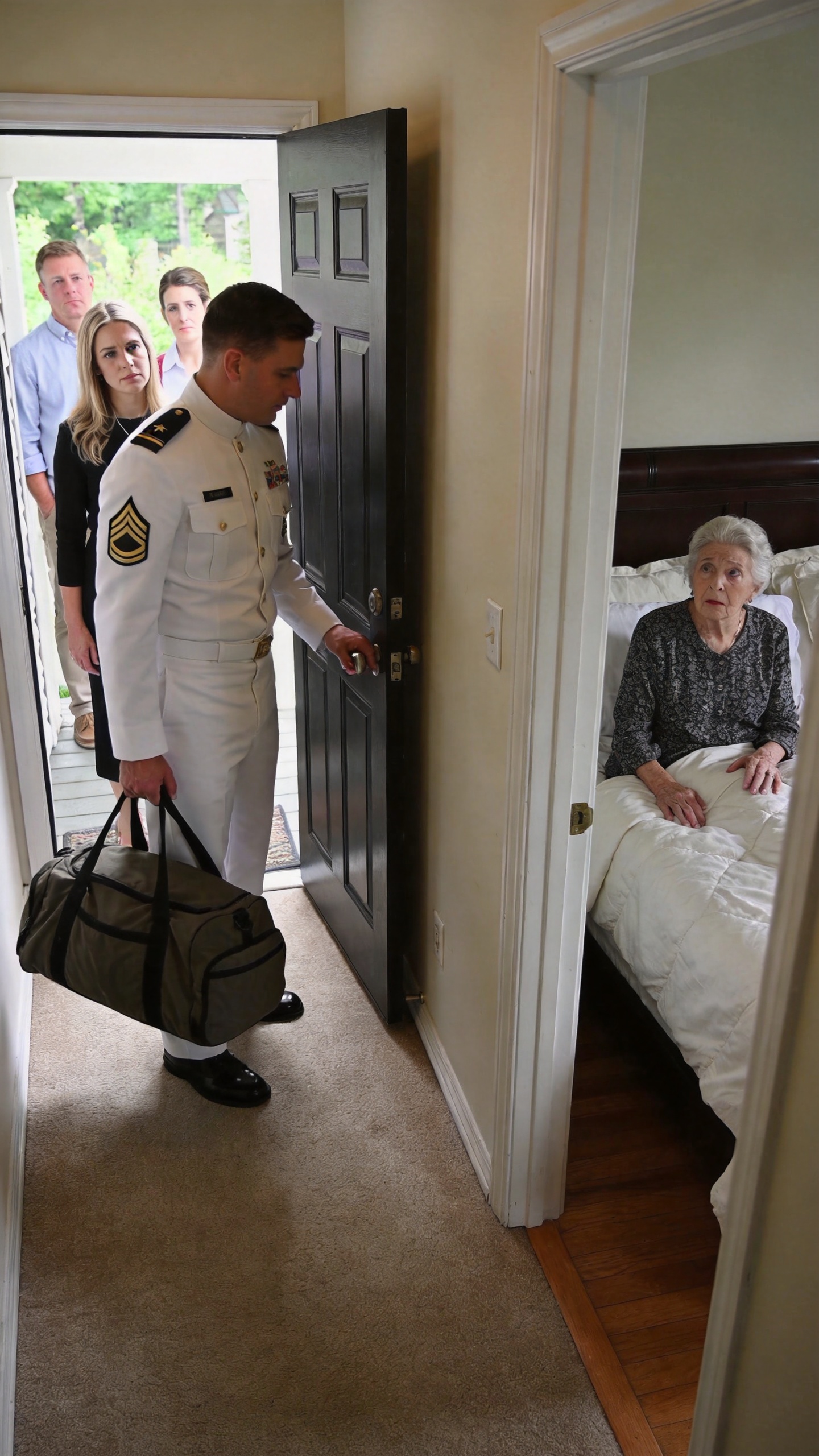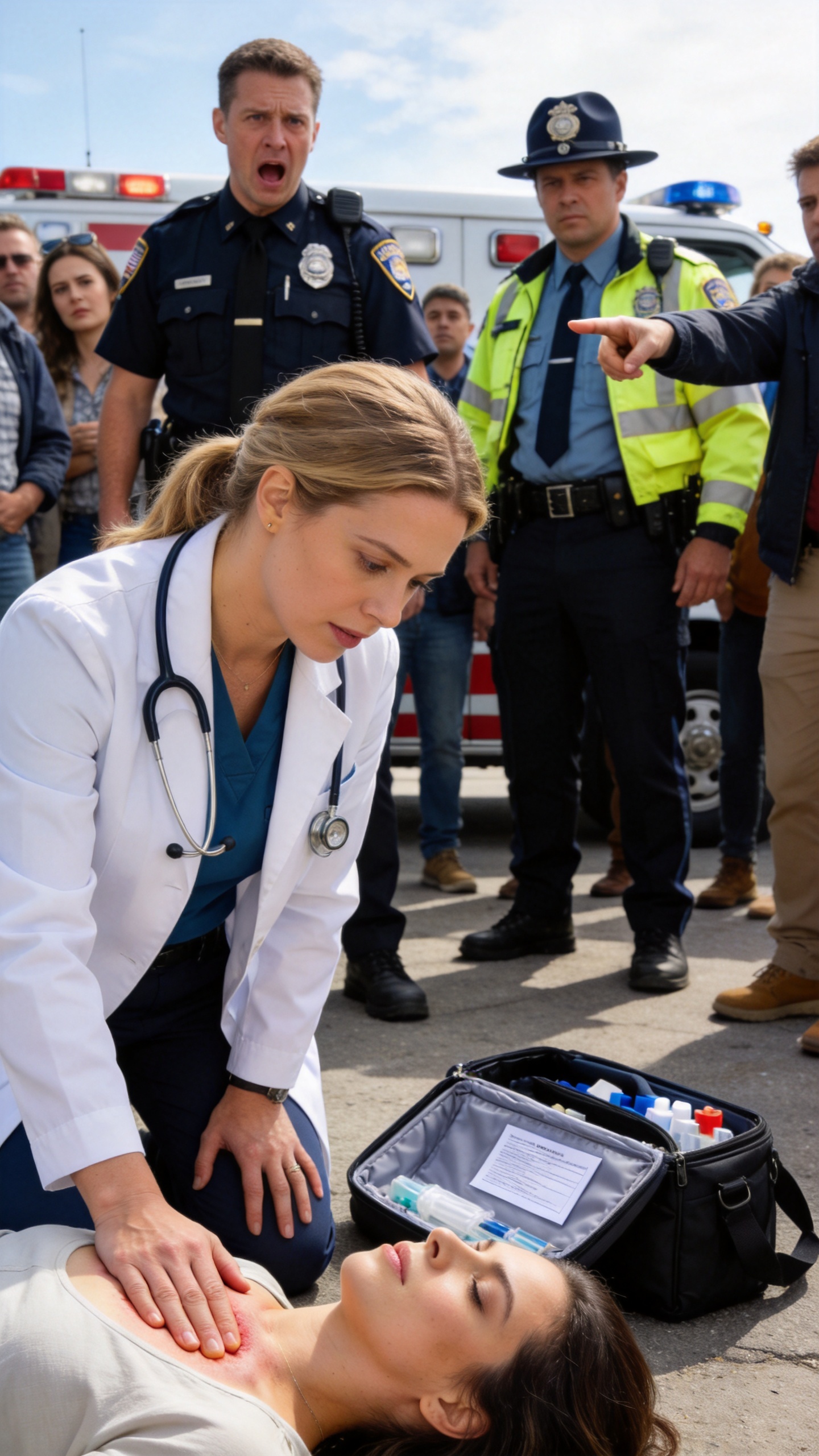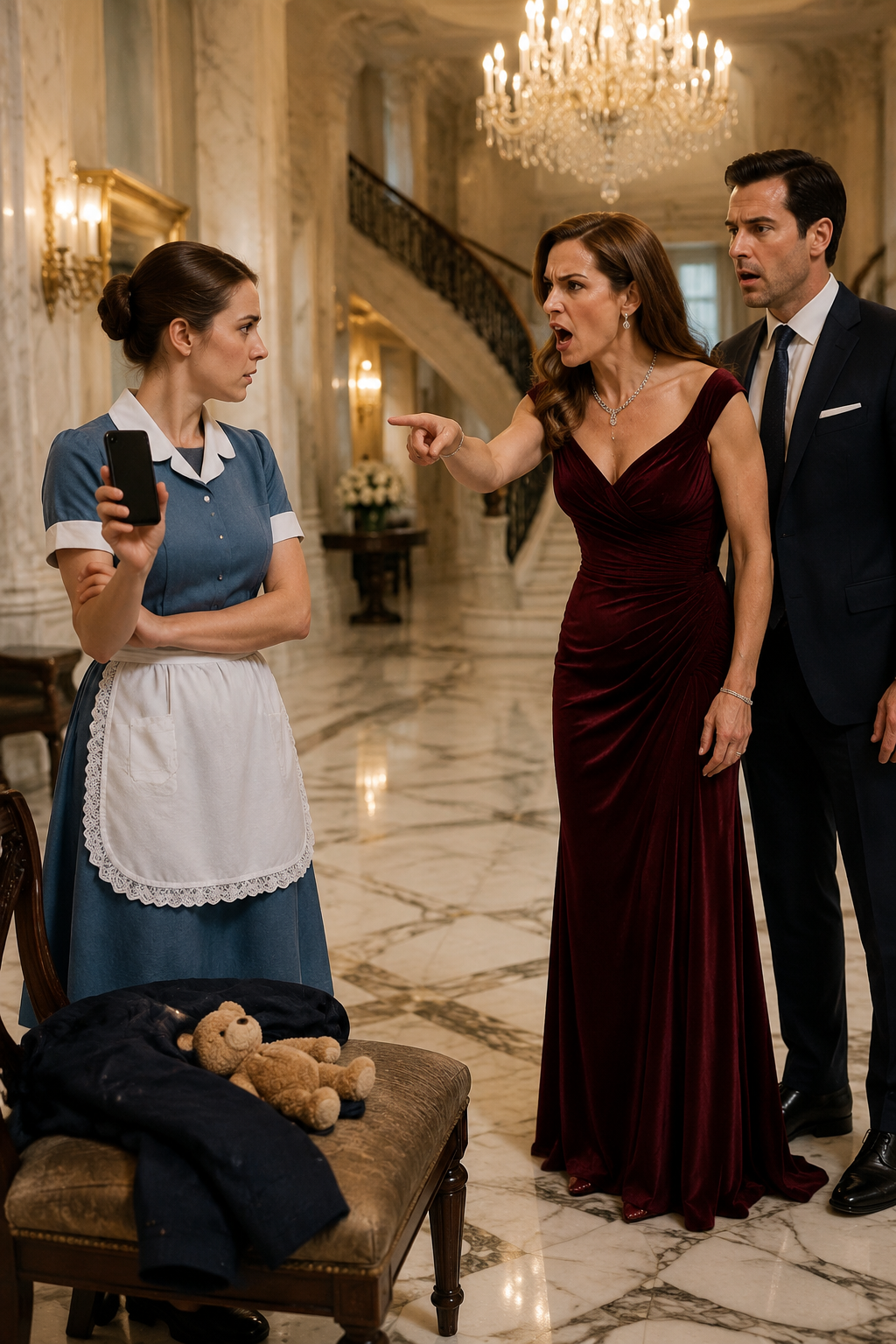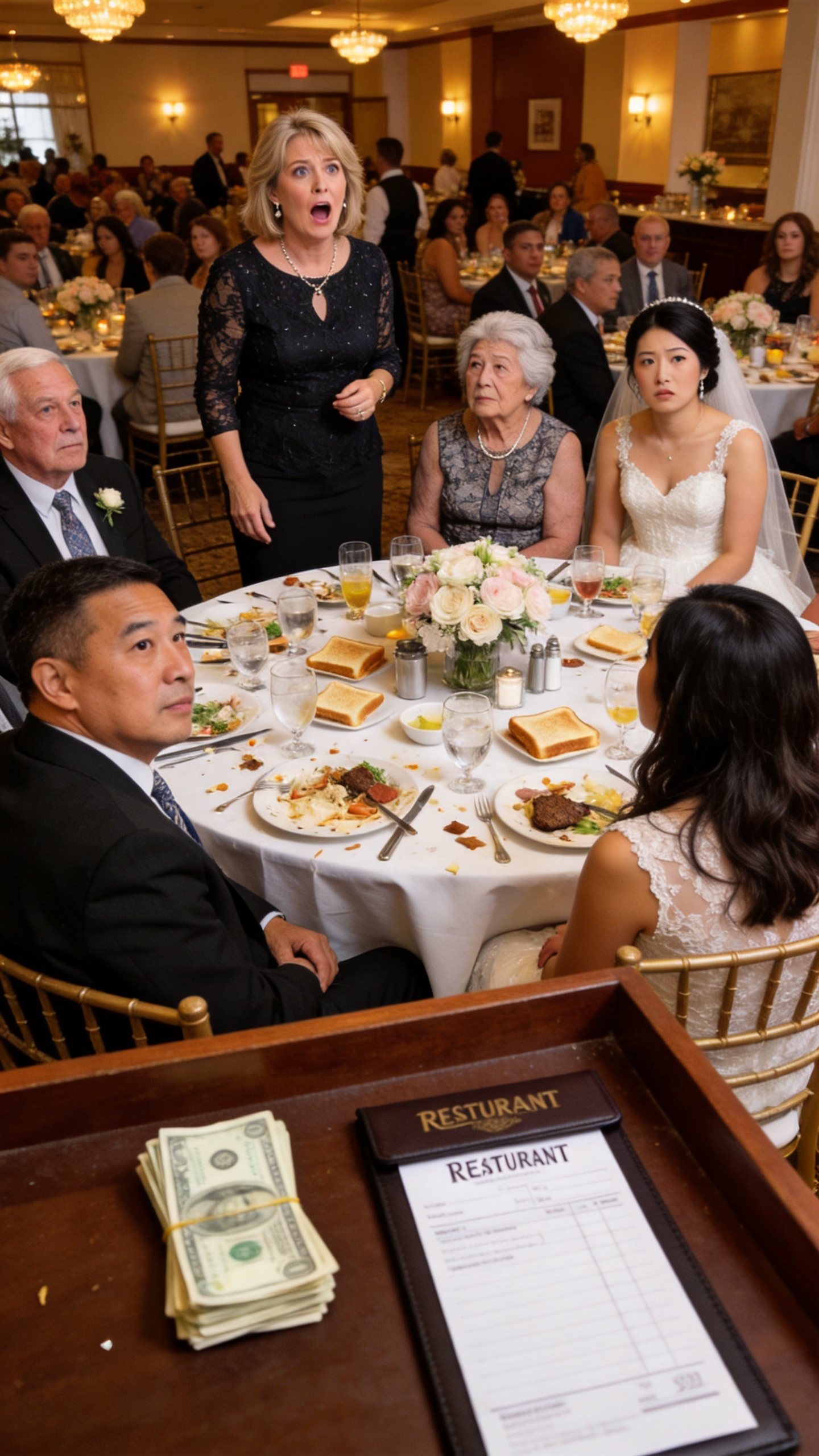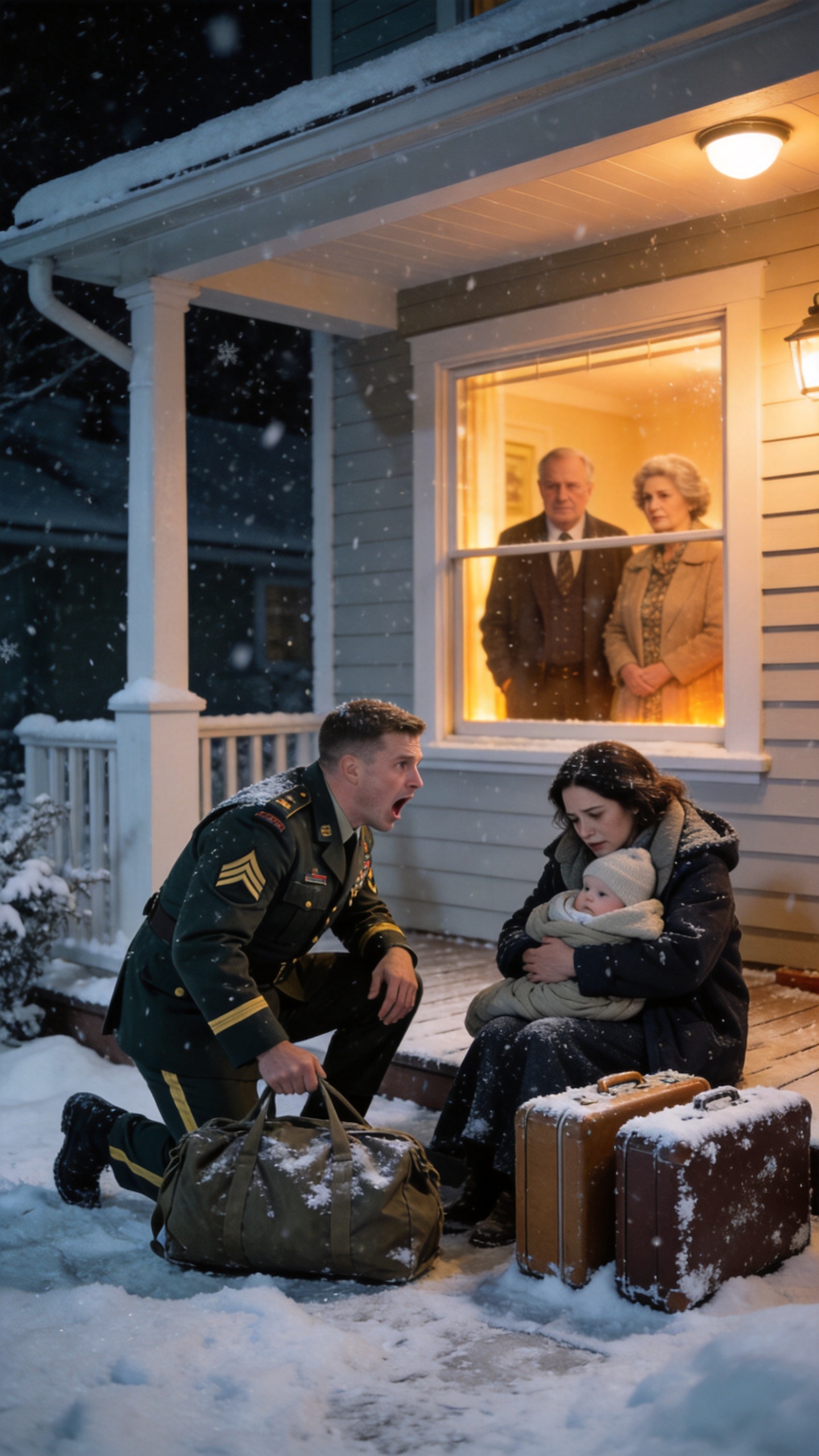
I was burned all over my body after saving my little sister from a house fire when she was ten. Years later, I came to her wedding in a wheelchair, and she whispered, “Go sit in the back. You’re ruining my perfect wedding.”
(adsbygoogle=window.adsbygoogle||[]).push({}) I suffered burns across nearly my entire body after rescuing my younger sister from a house fire when she was ten.
Years later, I attended her wedding in a wheelchair, and she leaned close to whisper, “Go sit in the back. You’re ruining my perfect wedding.” Then the groom’s mother rose and spoke five words that silenced everyone.
The church in Charleston, South Carolina, carried the scent of white roses, polished timber, and costly perfume.
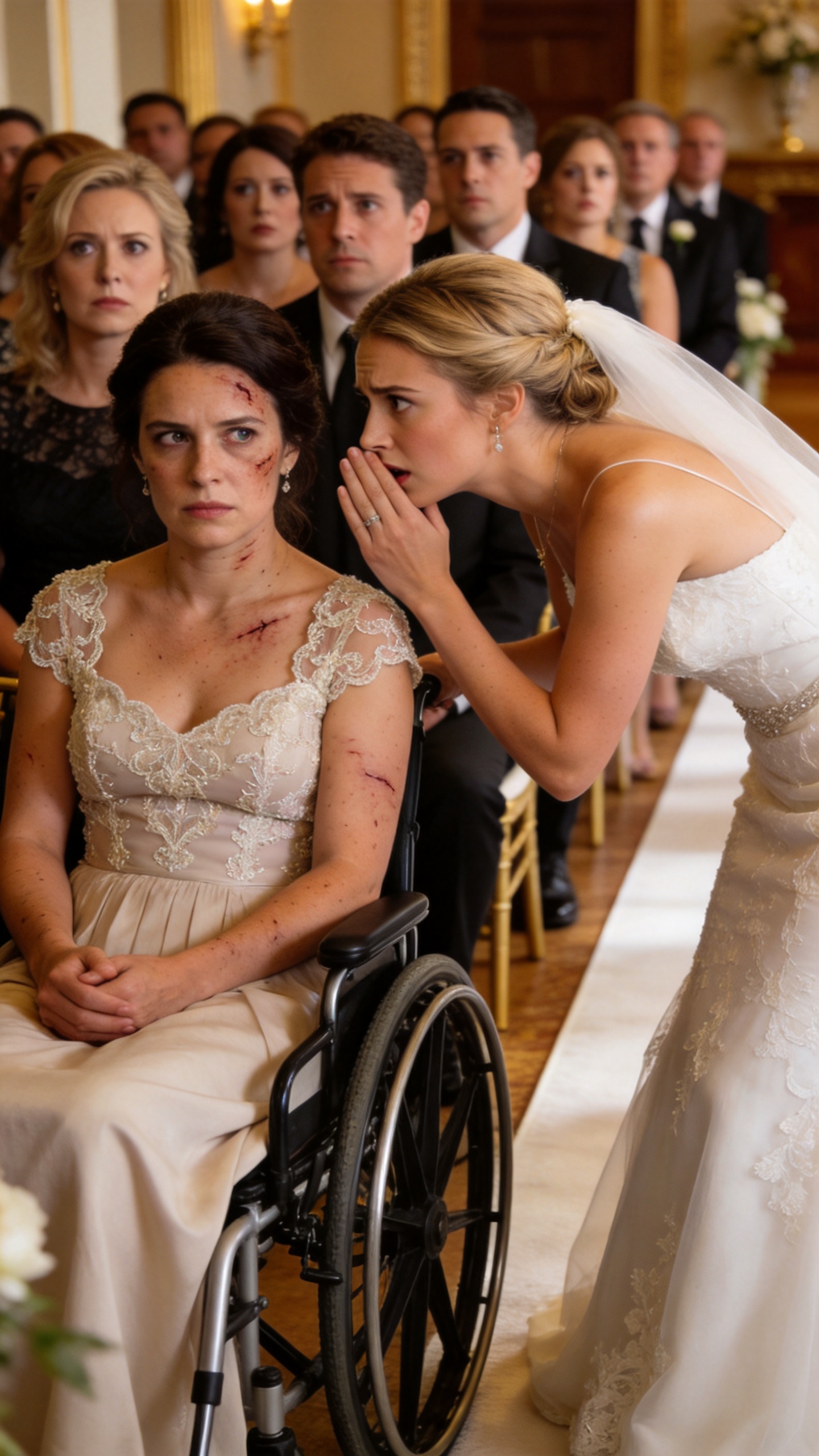
I sat at the edge of the second pew, positioning my wheelchair carefully so it would not obstruct the aisle. Thin ivory gloves covered my hands as they rested in my lap.
Beneath the lace sleeves of my navy dress, burn scars curled along my arms like melted ribbon. They stretched across my neck, back, legs, and half my face.
Most people tried not to stare. Not everyone succeeded. My sister, Emily Whitmore, waited at the altar in a fitted pearl-white gown, radiant beneath the colored light from the stained-glass windows.
At twenty-two, she looked beautiful and flawless from every camera angle. The ten-year-old girl I had once carried through smoke and falling beams was now a bride.
I was twenty-nine. The fire remained painfully clear in my memory: Emily screaming from an upstairs bedroom, our parents trapped outside by panic, firefighters still several minutes away. I went back into the house.
I found her beneath a fallen curtain, coughing and terrified, holding tightly to a stuffed rabbit. I wrapped my body around hers and crawled through the flames.
Emily escaped with only a small scar near one shoulder. I escaped as someone strangers whispered about. Before the ceremony, Emily walked down the aisle smiling toward the photographer.
When she reached me, the smile remained in place, but her eyes turned cold. She leaned close as if she meant to kiss my cheek.
“Go sit in the back,” she whispered.
I stared at her. “You’re ruining the atmosphere and the perfect image of my wedding.” My throat tightened. “You’re being too much.” Behind Emily, our mother, Linda, suddenly found the flower arrangements fascinating.
Our father, Mark, kept his gaze forward and his jaw clenched.
Neither of them spoke. Not one word. I looked at the sister I had saved. The sister who could still breathe because my lungs had filled with smoke first. I wanted to ask when my presence had become shameful.
I wanted to know whether perfect photographs mattered more than the body that had carried her out of the fire.
Instead, I remained silent. I placed my hands against the wheels of my chair. At that moment, Margaret Callahan, the groom’s mother, rose from the first row. She was tall, with silver hair and a deep green silk dress.
She carried herself like a woman whose silence alone could unsettle a room.
The organist stopped in the middle of a note. Emily turned toward her in surprise. Daniel, the groom, looked confused. Margaret glanced at my sister, then my parents, and finally me. Her expression remained firm.
Then she spoke five words that halted the ceremony. “She saved your life, Emily.”
The church became completely silent.
The Room Changed
Emily’s expression shifted so suddenly that even the photographer lowered his camera. For one brief moment, she looked ten years old again—frightened, exposed, and caught doing something she knew was wrong.
Then the bride’s composure returned. Her chin rose, and her smile reappeared, though thinner than before.
Margaret Callahan stepped into the aisle. “I heard what you said to her,” she continued. A whisper moved through the congregation like air slipping beneath a closed door.
Daniel looked at Emily. “What is she talking about?” Emily produced one sharp laugh. “Nothing. Your mother misunderstood.”
“No,” Margaret replied. “I did not.” My mother finally lifted her gaze. Her eyes met mine for less than a second before moving away. That hurt more than Emily’s words.
My father held the pew so tightly his knuckles turned white, but he still said nothing. Margaret addressed the guests.
“Twenty years ago, I was an emergency room nurse at St. Anne’s,” she said. “I was working the night Claire Whitmore was brought in after the Laurel Street fire.” Hearing my name from her sounded strange.
Stronger than I felt. “She was seventeen,” Margaret said. “Burned over most of her body. Barely conscious. And every time she opened her eyes, she asked one question.”
Daniel’s expression changed. “What question?” Margaret turned toward Emily. “She asked, ‘Is my sister alive?’” No one moved. Heat gathered behind my eyes, but I refused to cry. Not there.
Not while everyone in the church looked at me as though they had only now realized I was not furniture, not a flaw in the setting, not something to be hidden in the final row.
Emily parted her lips, but no sound came. Margaret continued steadily. “I have never forgotten that girl. I never knew what happened to her after surgery. When Daniel showed me the guest list and I saw the name Claire Whitmore, I wondered.
When I saw her today, I knew.” Daniel stepped backward from the altar.
“Emily,” he said quietly, “did you tell Claire to move? ” Emily’s eyes flashed. “This is my wedding. ” “That is not an answer. ” “She was sitting too close to the aisle,” Emily snapped. “People were staring. ” “At Claire?
” Daniel asked. “At us,” Emily answered. “At everything.
At her chair. At her scars. This day is supposed to be beautiful.”
The words struck harder now that everyone could hear them. I lowered my face toward the floor. Then Daniel spoke, and the gentleness had left his voice. “Beauty is not what I thought you meant.” Emily reached toward him. “Daniel, please.
You’re letting them turn this into something ugly.”
Margaret moved between them. “No, dear,” she said. “You did that yourself.” The minister nervously cleared his throat. The bridesmaids remained frozen.
From somewhere near the back, a guest whispered, “Oh my God.” I touched the wheels again, not because I intended to leave, but because I needed something solid beneath my hands.
For years, my relatives had mistaken my silence for consent. That day, someone had finally heard the words I was expected to keep secret.
The Room Changed
I did not answer immediately. I think that surprised them. Perhaps they expected rage, tears, or a dramatic explanation that would make the scene simpler to understand. But genuine pain does not always become a speech.
Sometimes it settles inside the chest like a room with no key.
Daniel turned toward me. “Claire,” he said, “is it true?” His voice was careful rather than cruel. He was not asking whether I had rescued Emily. Everyone understood that now. He wanted to know whether she had truly said those things.
The entire church waited. My sister met my eyes.
For the first time that day, the perfect bride had disappeared from her face. Only fear remained. Not fear for me. Fear of being exposed. I could have protected her again. That was the role my family had trained me to perform.
Protect Emily from guilt. Protect my mother from shame.
Protect my father from choosing sides. Protect everyone from a truth that made dinners uncomfortable, holidays tense, and family photographs imperfect. But I had grown tired. “Yes,” I said.
My voice was quiet, yet the microphone near the minister caught it. The single word traveled through the speakers and filled the sanctuary.
Emily’s shoulders sank. My mother covered her mouth. My father shut his eyes. Daniel stared at Emily as though she were a stranger. “Why?” he asked.
Her reply came too quickly. “I was stressed.” “No,” Daniel said. “I had pressure on me all morning. The planner was late, the flowers were wrong, and the photographer kept saying the front rows needed to look balanced.”
“Emily.” “What do you want me to say?” she cried. “That I wanted one day where people looked at me instead of her?” The silence afterward was heavier. More truthful. I had always known some version of that sentence lived inside her.
Perhaps not those exact words, but something close.
I had felt it when she cropped me from birthday posts, introduced me only as “my older sister,” and avoided brightly lit restaurants because people stared too long. At twelve, Emily had been grateful. At thirteen, guilty.
At fifteen, resentful. By eighteen, she had begun behaving as though my scars were something I had done to her.
Daniel’s face lost its color. “Instead of her?” he repeated. Tears filled Emily’s eyes. “You don’t understand what it was like growing up. Everything was about Claire. Her surgeries. Her pain. Her appointments. Her recovery.
Her special needs. Her trauma. I was the little girl from the fire, but she became the hero. I became the reason everyone whispered.”
I looked at my mother. Linda Whitmore was silently crying, mascara gathering beneath her lashes. My father still had not spoken. Margaret remained beside me like a wall.
Daniel dragged a hand across his mouth. “Did you ever tell me that?” “I tried,” Emily said. “No. You told me Claire was private. You told me she preferred not to be in pictures. You told me she didn’t like attention.”
Emily’s mouth trembled. Daniel went on. “You told me she might not come today because crowds were difficult for her.” A breath escaped me that almost sounded like laughter. Crowds were not what I found difficult.
It was difficult when people pretended not to see me. It was difficult when relatives publicly abandoned me and acted as if nothing had happened.
It was difficult to sit in a room where everyone remembered the fire but no one wanted to know what followed. Daniel looked at me again. “Claire, did you want to sit in the back?” “No,” I answered. The second truth came more easily.
My father finally stood. “Enough,” he said. Every face turned toward him.
For one foolish moment, I thought he would defend me. Even after all those years, hope still had small and irrational roots.
But his attention stayed on Margaret and Daniel. “This is a private family matter,” he said. “It should not be handled like a courtroom.” Something inside me became cold.
Margaret raised her eyebrows. “A private family matter? Your daughter was publicly humiliated at your other daughter’s wedding.” “She has always been sensitive,” my father said. The word struck me like a slap. Sensitive.
That was what they called me when I cried after children pointed at my face.
Sensitive when I asked Emily to stop joking about my “Halloween hands.” Sensitive when I stopped joining family beach trips because my mother said wearing long sleeves in summer made others uncomfortable.
Sensitive when my father said, “You know how your sister is. Don’t make it bigger.”
I pressed the brakes on my wheelchair. The quiet click gave me courage. “I was not sensitive when I went into that house,” I said. My father stared at me in surprise.
“I was not sensitive when my skin was burning. I was not sensitive during the grafts, or the infections, or the months when nurses had to turn me because I couldn’t move myself.
I was not sensitive when Emily screamed every night after the fire and I let her sleep in my hospital bed because she was afraid of smoke.”
Emily covered her face with both hands. I did not stop. “But I became sensitive when I asked this family to treat me like a person instead of a reminder.” No one interrupted. Not even my father.
I turned toward Emily. “I never asked you to worship me. I never asked you to spend your life thanking me. I never wanted your wedding to be about me.”
My voice trembled, but it held. “I came because you are my sister. I bought this dress because Mom said navy matched your colors. I wore gloves because you once told me my hands made people uncomfortable in photos.
I sat where the usher placed me. I smiled when your friends stared. I stayed quiet when you whispered to me.”