At My 18th Birthday Party, I Quietly Moved My $3 Million Inheritance Into A Trust, Just In Case My Family Ever Tried To Touch It
I forwarded the texts to Helen.
Her reply came quickly.
Do not engage. Document everything.
So I did.
That became my new education before college had even begun. How to document. How to keep records. How to separate emotion from evidence. How to read a bank statement. How to understand a contract. How to recognize when someone calls control "concern."
Three weeks after my birthday, Helen invited me to her office.
"There are things you should know," she said.
I sat across from her at the same polished table where I had signed the trust papers. This time, I did not feel like a child pretending to understand adult business. I felt like someone who had survived the first blow and was waiting for the next.
Helen opened a folder.
"Your grandfather began reviewing family financial activity approximately fourteen months before he died," she said. "He became concerned after your father asked him to co-sign a loan. Robert refused."
"My father never told me that."
"No," Helen said. "I imagine he did not."
She turned a page toward me. Account summaries, loan documents, and printed emails sat in neat stacks.
"Your father's real estate company has been overleveraged for years. Several projects failed quietly. He used new loans to cover old losses. Your mother's charity events were also not as clean as they appeared. Large vendor payments were routed through companies connected to her friends."
I felt cold. "Were they stealing?"
"I can't make that allegation casually," Helen said. "But your grandfather suspected misuse of funds. He also believed your parents expected to gain access to your inheritance once you turned eighteen."
"They couldn't just take it."
"No. But they could pressure you. Guilt you. Ask you to invest. Ask you to loan. Ask you to sign. Ask you to prove loyalty."
I thought of my father's speech. Family loyalty. The words felt filthy now.
"Why didn't Grandpa tell me?"
"Because you were seventeen," Helen said gently. "And because he was ill. He wanted your last months with him to belong to you, not become a financial briefing."
I looked down at the papers. My hands were trembling, but not from fear this time.
"What happens now?"
"That depends partly on them."
They made their choice within a month.
My parents filed a petition challenging the trust.
Their argument was offensively simple: I had been unduly influenced by Helen Ward, emotionally unstable after my grandfather's death, and unable to understand the legal consequences of what I had signed on my birthday.
My mother signed an affidavit claiming I had "always been impulsive" and "easily manipulated by older authority figures." My father claimed he had only wanted to "guide" my inheritance responsibly.
Preston submitted a statement saying I had "bragged" about hiding money from the family.
When Helen showed me the filings, I read every word in silence.
Then I asked, "Can we fight it?"
Helen's smile was small but sharp. "We can do more than fight it."
The hearing took place in Cook County probate court on a gray October morning. I wore a navy dress and my grandmother's pearl earrings, the pair she had left me in a separate letter my mother never knew existed.
My parents sat across the aisle. My mother dabbed at her eyes with a tissue before the judge entered. My father stared straight ahead. Preston looked bored until he noticed the court reporter typing every word.
Their lawyer argued that the trust had been created under suspicious circumstances. He said I had signed it on the same day as my birthday party, under emotional stress, with an attorney who had a personal relationship with my deceased grandfather.
My Grandfather's Plan Opened The Door
Then Helen stood.
She did not raise her voice. She didn't need to
She presented the timeline. My grandfather's will. The inheritance transfer. My signed trust documents. A recorded video from three months before his death, in which my grandfather sat in his study, thinner than I remembered but fully himself.
In the video, he looked directly into the camera.
"My granddaughter Mara is to receive her inheritance without interference from her parents, Daniel and Claire Whitmore. I have reason to believe they may attempt to gain access to her funds through emotional pressure, family obligation, or legal intimidation. My instructions to counsel are clear: protect Mara's assets and her independence."
My mother stopped crying.
My father turned red.
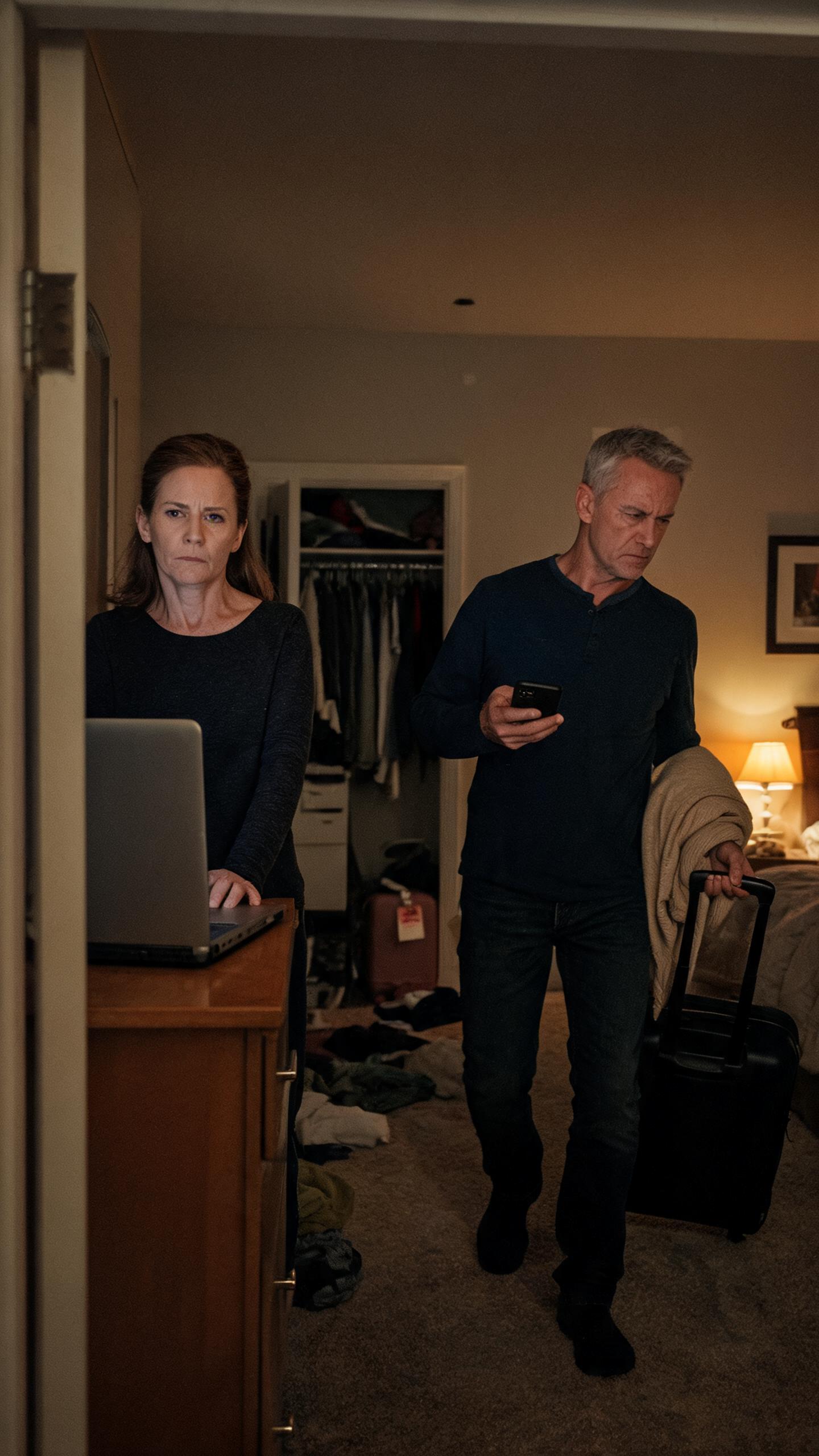
Helen then submitted copies of my father's text messages, including the ones saying I was destroying the family over money. She submitted evidence that he had attempted to call the trust administrator twelve times in two days. She submitted the hotel corridor timeline, confirmed by a sworn statement from a hotel employee who had overheard my father saying, "She moved it. All of it."
The judge leaned back and looked at my parents.Family
By the end of the hearing, the petition had been denied.
But Helen was not finished.
The attempted challenge opened doors my parents had wanted kept shut. Once they claimed concern over my finances, Helen requested discovery related to their alleged "family liquidity" plans. Their own filings had made their intentions relevant.
What emerged over the next four months destroyed the version of the Whitmore family that had existed in society pages and charity photographs.
My father's company was drowning. He had promised investors returns from developments that were delayed, underfunded, or already pledged to other lenders. My mother's charity board discovered vendor irregularities and quietly removed her as chair.
Preston's restaurant investment had not been a promising opportunity. It was debt with lighting and a bar menu.
And my inheritance was the number they kept returning to.
Three million dollars would not have made them rich forever. It would have bought time. It would have paid angry lenders, covered bad checks, saved appearances through winter, and kept everyone smiling at holiday parties.
Without it, the performance collapsed.
My father called me once after the petition failed.
I answered because Helen was sitting beside me and recording the call with proper notice.
"This call is being recorded," I said.
Then my father laughed once, bitterly. "You've become very sophisticated."
"I've become careful."
"You think you won."
"No," I said. "I think Grandpa protected me."
His voice hardened. "You have no idea what you've cost us."
I looked around Helen's office, at the shelves of law books, at the rain streaking the window, at my own reflection in the glass. I looked older than I had at my birthday party. Not exactly happier. Not yet. But clearer.
"You cost yourselves," I said.
He hung up.
After that, the fallout arrived in pieces.
The house went on the market in January. My mother moved into a condo owned by one of her sisters. My father rented an apartment near his office, though rumors said the office itself might not survive the year. Preston's girlfriend, Lena, disappeared from his social media the week after the restaurant closed.
I started college in the spring instead of the fall. I chose Northwestern because it was close enough to my apartment and far enough from the girl I used to be. I studied economics first because I wanted to understand every word people had once used to confuse me.
Later, I added public policy because numbers explained systems, but policy explained who became trapped inside them.
I did not become fearless. That would be a lie.
There were nights I stood in my kitchen holding my phone, tempted to call my mother just to hear her voice. There were mornings when I missed the illusion of family so badly it felt physical. I missed birthday breakfasts, even though I now knew they had been staged.
I missed Christmas photographs, even though everyone in them had been posing.
But missing something does not mean it was safe to return to it.
Helen became more than my lawyer. She became the person who taught me how to ask questions without apologizing first. She taught me that signatures matter, that silence can be strategy, and that people who benefit from your confusion will often call your clarity cruel.
On my nineteenth birthday, I did not have a ballroom party.
I had dinner at a small Italian restaurant with Helen, my roommate Allison, and Marcus Reed, a graduate student who helped tutor me through statistics and later became one of my closest friends. There were no speeches about family loyalty.
No photographers. No champagne tower.
Just pasta, laughter, and a chocolate cake Allison carried in crookedly while singing too loudly.
After dinner, Helen handed me a small envelope.
"Your grandfather asked me to give you this one year after the trust was activated," she said.
I opened it carefully.
Inside was another note.
One year free.
Now make it two.
I laughed and cried at the same time.
Years later, people would still ask whether I regretted moving the money into a trust. They usually asked gently, as though they expected a complicated answer. As though maybe losing my parents balanced the scale against saving the money.
But I never saw it that way.
The trust did not cost me my family. It revealed what my family had already decided I was worth.
That was the hardest truth and also the cleanest one.
By twenty-five, I had graduated, begun working for a nonprofit that helped young adults understand financial abuse, and bought a modest condo with funds properly distributed from the trust. I kept my grandfather's note framed near my desk.
One afternoon, after a workshop, a seventeen-year-old girl stayed behind. Her eyes were glossy, and she clutched a folder to her chest.
"My aunt says I'm being dramatic," she whispered. "But my stepdad keeps asking about the settlement money from my accident."
I saw myself in the way she held the folder like a shield.
I did not tell her what to do. I did not promise her everything would be fine. I gave her the name of a legal aid clinic, explained which questions to ask, and told her to keep copies of every document somewhere safe.
Before she left, she asked, "Does protecting yourself always make people angry?"
I thought about my father in the breakfast room. My mother's cold eyes. Preston's accusation. Helen at the front door. My grandfather's careful handwriting.
"Not always," I said. "Only the people who were counting on you not to."
That night, I went home, unlocked my condo, and placed my keys in the blue ceramic bowl beside the door. The city lights glowed beyond the windows. My life was quiet, ordinary, and mine.
At eighteen, I thought I had moved money.
What I had really moved was the boundary between the future they planned to take from me and the future I was finally allowed to build.