Police Came After Midnight Asking For My Fifteen-Year-Old Daughter, But She Had Been Asleep The Whole Time
The First Sign Was Too Small To Ignore
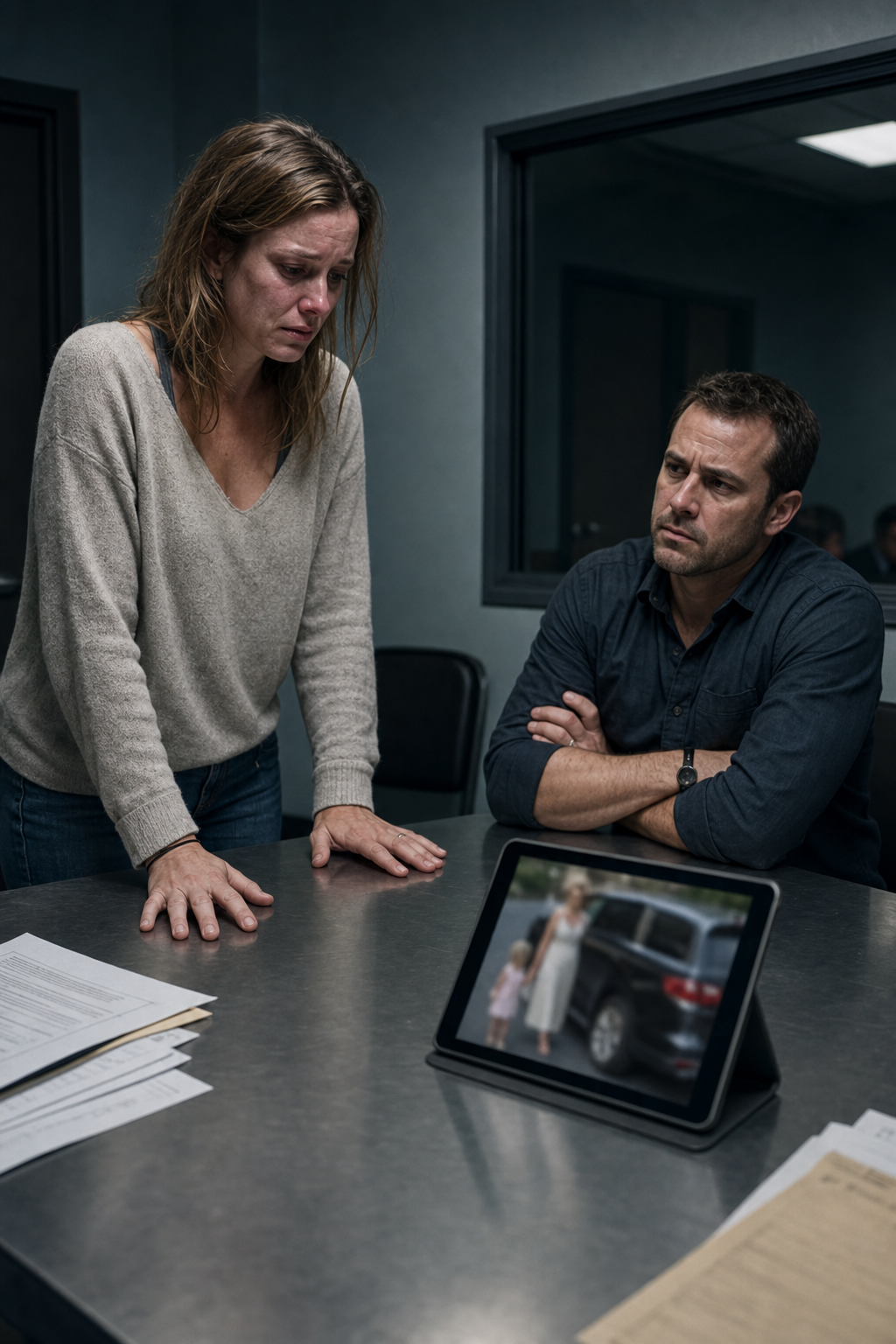
The conference room at the station was far too small for that much guilt.
Detective Owens sat at the head of the table. Assistant DA Whitman sat beside him with a folder so thin it almost looked harmless.
Ari Kaplan sat on our side.
Silent.
Expensive.
A legal sword in a navy suit.
Lily sat next to me with both hands folded in her lap. She had asked three times during the drive if she had to speak.
"No," Ari told her every time. "You only answer if I say it is safe."
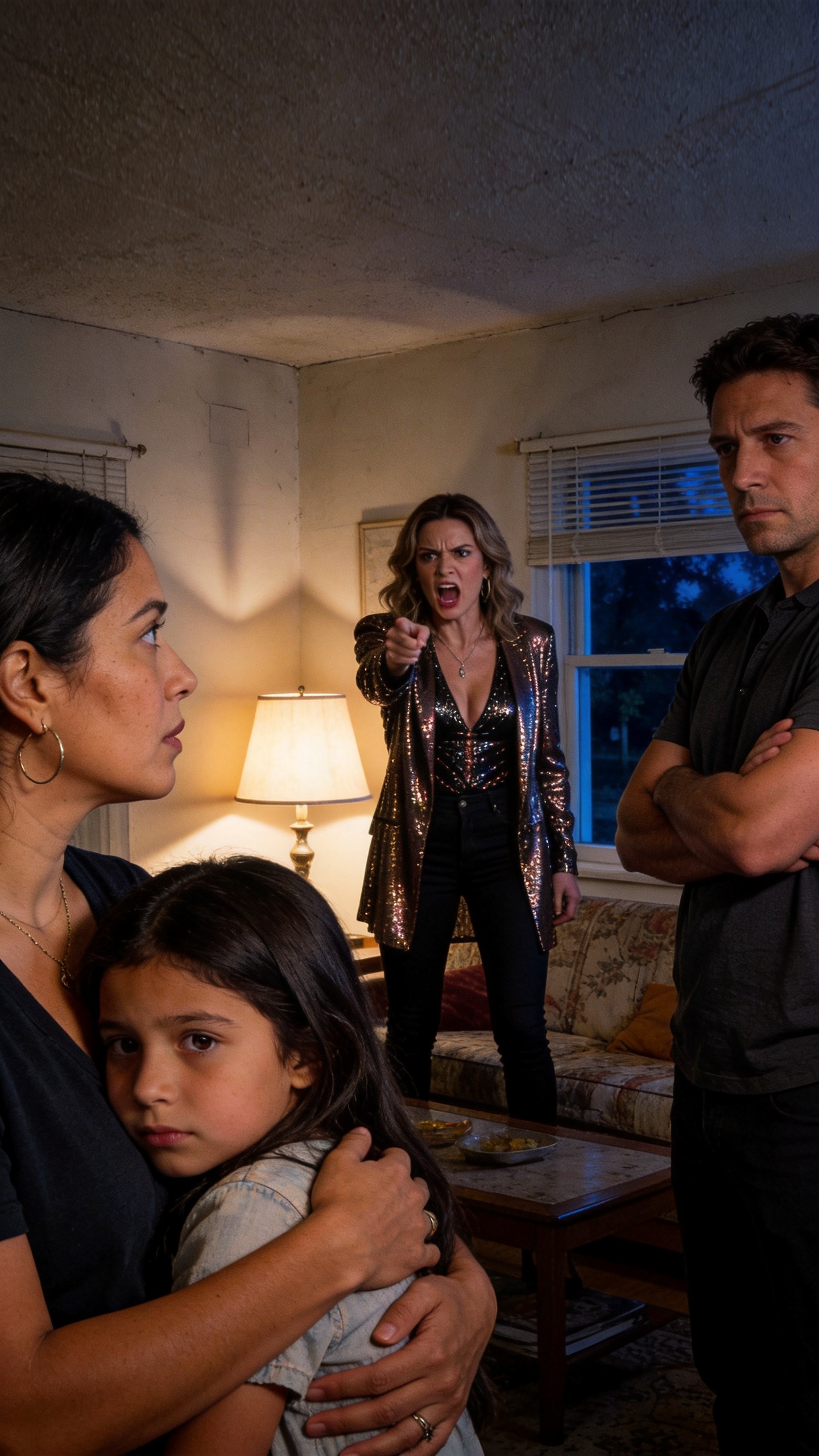
Across from us sat my parents and Jenna.
My mother had dressed as though she were going to church. My father kept clearing his throat. Jenna wore sunglasses on top of her head indoors, which felt like exactly the kind of choice that had brought us here.
Detective Owens opened the folder.
"We have reviewed new evidence," he said. "The goal today is to clarify the accurate sequence of events."
My mother's eyes flicked toward me.
Not worried about Lily.
Not sorry.
Annoyed that I had escalated.
Whitman slid the first still across the table.
Jenna in front of my house.
Then another.
Jenna walking toward the Civic.
Jenna behind the wheel.
Alone.
No Lily.
No confusion.
No darkness.
No mistaken identity.
Just Jenna and the car she had no right to drive.
Lily's hand tightened around mine once.
Then loosened.
Owens continued.
"Lily Collins's phone data also shows consistent activity from her home during the crash window. Messages, streaming data, timestamps. Everything supports that she was inside her residence at the time."
The room went quiet.
Not the peaceful kind.
The kind where everyone hears the story collapse and waits to see who will scream first.
Whitman looked at my parents.
"You both stated in signed reports that you saw Lily behind the wheel. Would you like to amend that statement?"
My mother blinked rapidly.
"It was dark."
My father nodded too quickly.
"We assumed."
"You assumed?" Whitman asked.
My mother swallowed.
"We were trying to help."
No one asked the obvious question.
Help who?
The answer sat beside them, mascara smudged, face pale, suddenly far less certain.
Whitman turned to Jenna.
"Your statement said you watched Lily drive the car, panic after the collision, and flee the scene. Do you stand by that?"
Jenna stared down at the table.
"I got scared."
No one spoke.
"I wasn't thinking," she whispered. "I said Lily did it."
Lily went completely still.
I could feel every muscle in her body trying to understand how an adult she had trusted could say something like that.
Whitman closed the folder.
"Given the evidence, Lily Collins is cleared of all allegations connected to this incident. She will not be charged."
Lily exhaled.
It was not a normal breath.
It was the sound of a weight leaving a body too young to have carried it.
Then Whitman looked back at Jenna and my parents.
"This office is reviewing possible charges related to false statements and obstruction. Fabricating a story involving a minor is serious."
My mother made a small sound.
Offended.
As if consequences were bad manners.
Jenna started crying.
My mother reached for her hand.
That was when something inside me settled.
Of course.
Even now.
Even while sitting across from the child they had tried to sacrifice, my mother's first instinct was to comfort Jenna.
Whitman turned to me.
"Ms. Collins, would you like to say anything?"
I did not stand.
I did not raise my voice.
I did not give them a performance.
I simply looked at my parents.
"For years," I said, "I was told to understand. To be patient. To be the bigger person whenever Jenna made a mistake."
My mother stiffened.
The Evidence Changed The Room
I continued.
"You asked me to swallow a lot of things so Jenna would not feel bad. But this time, you did not ask me to swallow it."
I looked at Lily.
"You asked my daughter to."
Jenna cried harder.
"You were willing to bury a fifteen-year-old under a police report to protect a grown woman who stole a car and crashed it into your tree."
My father stared at the folder as though if he looked long enough, another ending might appear.
"You signed your names," I said quietly. "You did not call me. You did not ask. You did not check. You chose the story that made your lives easier."
Then I turned back to Whitman.
"Thank you for clearing Lily."
That was all.
No shouting.
No dramatic exit.
Just fluorescent lights, paper, and the sound of a family structure collapsing under its own weight.
Outside, Lily walked beside me with her shoulders lower than they had been in three days.
"You okay?" I asked.
"Yeah," she said. "Just tired."
"Me too."
We went home.
The legal part did not end immediately. It never does.
People think truth fixes everything in one clean moment.
In real life, there are follow-up calls, documents, insurance disputes, attorney invoices, and several emails that begin with per our previous conversation, which is lawyer language for I am about to ruin your afternoon.
Jenna eventually received a misdemeanor conviction connected to the false report and unauthorized use of the vehicle.
My parents received their own consequences for knowingly giving inaccurate statements about a minor. Not prison. Not some movie-style punishment. But a record, fines, legal fees, and the kind of humiliation that enters rooms before people do.
Insurance denied the claim on the Civic.
Unauthorized driver.
Conflicting statements.
Zero coverage.
Ari filed a civil claim.
They settled quickly.