My In-Laws Sent My Six-Year-Old Daughter A Cute Brown Teddy Bear For Her Birthday. She Smiled, Froze, And Asked, "Mommy, What Is It?"
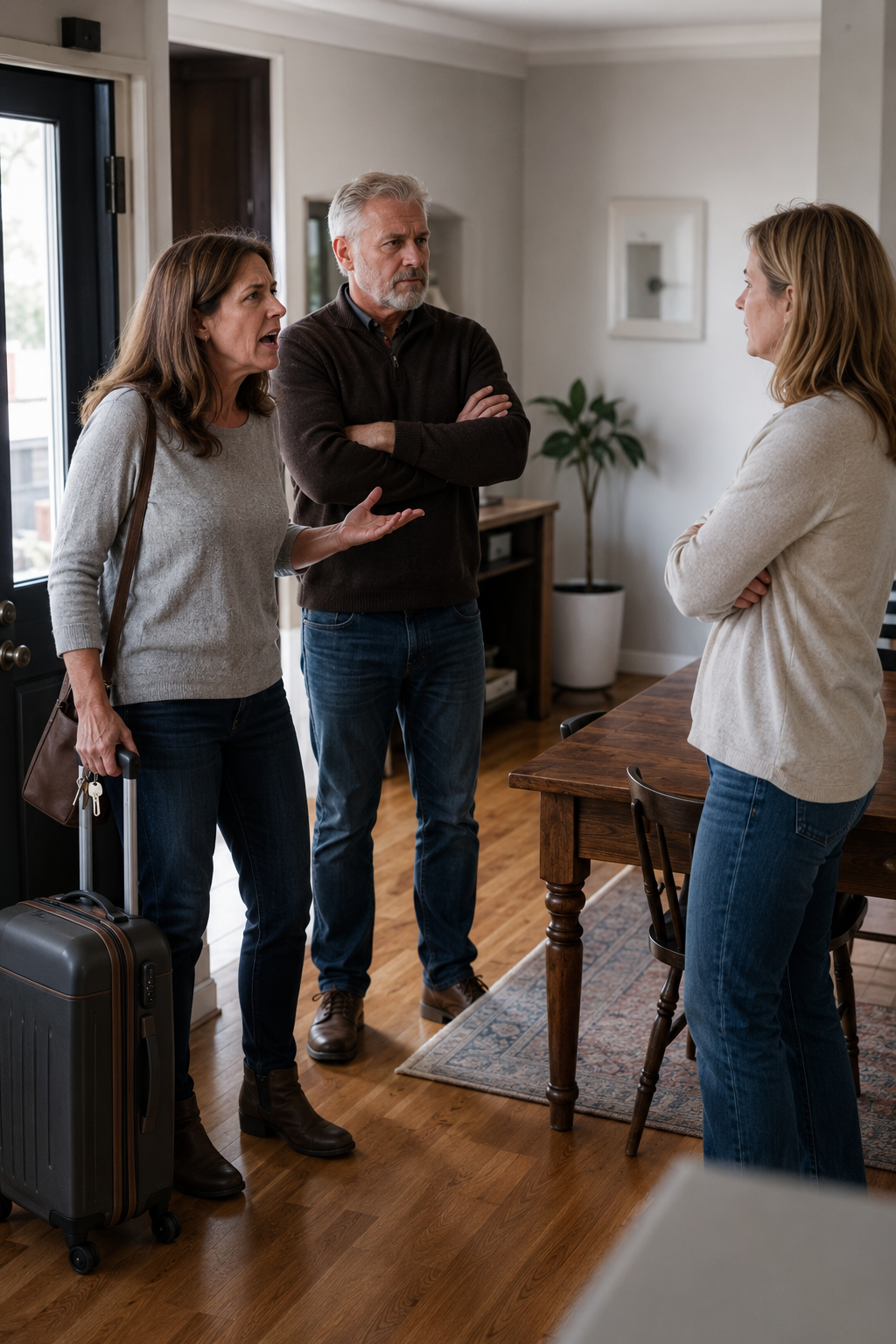
She shook. She told Detective Hollis she was "a concerned grandmother." She said she was afraid for Lily. She said I had a temper, though she could not give one example that did not involve me telling her no.
She said Daniel was being controlled. She said the bear was only meant to "protect" Lily.
Detective Hollis asked, "Protect her from what?" Margaret answered, "From being taken away from us." That was the sentence that followed me home.
Not "from danger." Not "from abuse." From being taken away from us.
As if Lily were a family heirloom. As if my daughter's life was a room Margaret believed she had been shut out of. After the charges were filed, Daniel stopped sleeping properly.
He would wake at two or three in the morning and check the windows, the back door, the garage.
Sometimes I found him standing in the hallway outside Lily's room, arms crossed, staring at the teddy bear-shaped nightlight she had picked out herself from Target after the police took the other one.
"I should have cut them off sooner," he said one night.
I leaned against the wall beside him. "You were raised to think their behavior was normal." "That's not an excuse." "No," I said.
"But it's an explanation. " He nodded, although I could tell it gave him little comfort.
Lily only knew part of the truth. We told her the bear had a camera inside it, and that adults were not allowed to hide cameras in children's toys.
We told her Grandma and Grandpa had made a very serious mistake and that we would not be seeing them for a while.
She asked if they were angry with her. Daniel dropped to his knees in front of her so quickly I thought he might fall apart.
"No, baby," he said, holding her hands.
"You did nothing wrong. Nothing." "Then why did they do it?" He looked at me.
I answered because he could not. "Because sometimes grown-ups make selfish choices when they want control. That does not make it your fault." Lily thought about that for a long time. Then she said, "I don't want any more surprise presents. " And just like that, my six-year-old had learned something she never should have had to learn.
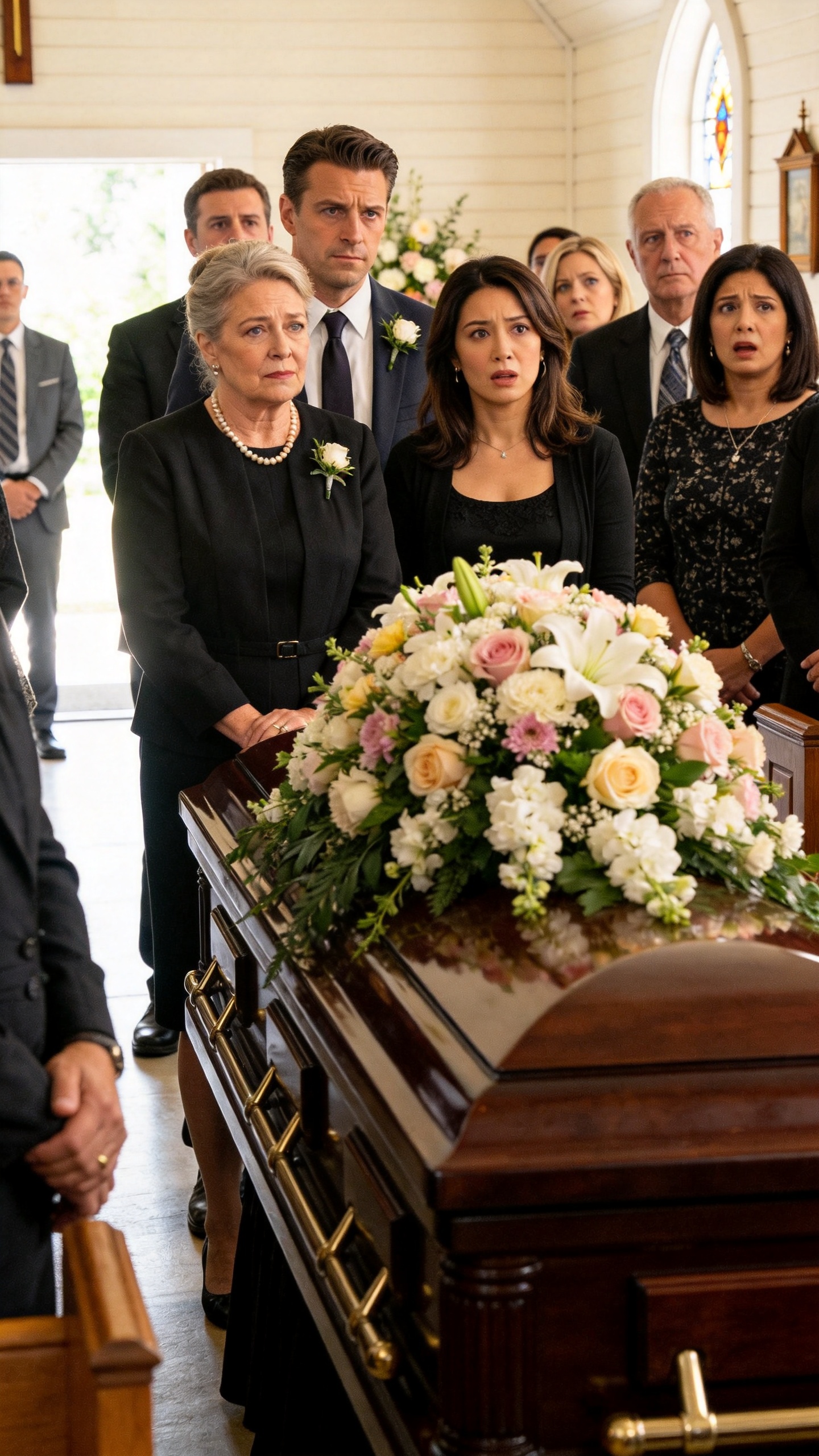
The first court hearing took place in early October. The leaves outside the courthouse had started turning red and gold, and the air smelled like rain on pavement.
Daniel wore a navy suit. I wore a gray dress and flats because I wanted to feel steady.
Margaret arrived with Richard and a lawyer.
She looked smaller than usual, but not weaker.
Her hair was sprayed perfectly.
Her pearls rested neatly against her throat.
When she saw Daniel, her face collapsed.
"My son," she whispered.
Daniel did not step toward her. Her expression hardened for half a second before she remembered where she was.
Then she started crying again.
The prosecutor presented the evidence: unlawful surveillance, attempted invasion of privacy, use of an electronic device to intercept audio, and the aggravating factor that the target was a minor inside a private home.
We Locked The Door For Good
The exact charges depended on state statutes, the prosecutor explained, but the court understood the seriousness.
Margaret's lawyer argued that no footage had been captured inside our home, that the device had never successfully recorded Lily in her bedroom, and that Margaret had acted out of "misguided concern." The judge looked down over her glasses. "Misguided concern does not require hidden recording equipment," she said.
I remember that clearly. I also remember Margaret turning her head to stare at me after the judge said it, as if I had somehow put those words into the judge's mouth.
A protective order was issued that day. Margaret and Richard were forbidden from contacting us directly or indirectly.
No calls.
No letters.
No gifts.
No messages through relatives. No showing up at Lily's school, our home, Daniel's workplace, or any of Lily's activities. When the order was read aloud, Margaret made a small sound, like an injured animal.
Daniel closed his eyes.
I wanted to feel victorious.
I did not.
I felt exhausted.
The family fallout arrived fast.
Daniel's aunt Patricia called first. She left a voicemail saying, "Your mother is devastated, and Claire needs to stop escalating this." Daniel deleted it. Then his cousin Mark texted: "Was it really necessary to involve police? They're old. They made a mistake. " Daniel answered with one sentence: "They hid a camera in my daughter's teddy bear." Mark did not respond. For weeks, relatives tried to shrink the crime by making Margaret seem delicate. They talked about her loneliness, her anxiety, her fear of losing her granddaughter.
They mentioned Richard's heart medication. They spoke of forgiveness as if forgiveness meant pretending evidence did not exist.
But Daniel did not bend. One evening, after another cousin sent a message suggesting a "family meeting," he typed a reply and showed it to me before sending. "My daughter's privacy and safety are not family discussion topics. Anyone who minimizes what happened will not have access to us. " He stared at the screen for a long time after he sent it.
"That sounded harsh," he said.
"It sounded like a father," I replied.
The case did not become a dramatic trial.
Margaret and Richard eventually accepted a plea agreement.
They avoided jail time, which angered me at first, but the conditions were strict: probation, fines, mandatory counseling, surrender of surveillance equipment, no contact with us, and a permanent record tied to what they had done.
The judge also extended the protective order.
Margaret tried to speak at sentencing. She stood with a folded tissue in both hands and said she had only wanted to make sure Lily was safe.
The judge asked whether she understood why hiding a camera inside a child's toy was a violation.
Margaret hesitated.
That hesitation answered the question.
Richard spoke next.
His voice was low.
"I should have stopped it. " Daniel, sitting beside me, whispered, "Yes, you should have. " Richard looked toward him, but Daniel stared straight ahead. After court, Margaret attempted one last scene in the hallway.
She stepped toward us, forgetting or ignoring the order, and said, "Danny, please. I'm your mother. " Detective Hollis, who had attended the hearing, immediately moved between them.
"Mrs. Whitmore," he said, "step back." Her face flushed.
"I just want to talk to my son." Daniel finally looked at her.
"No," he said.
"You wanted access. That's different." For once, Margaret had nothing to say.
Life did not return to normal quickly.
It came back in pieces. We changed locks, passwords, school pickup permissions, pediatrician privacy settings, and every emergency contact form. We checked smoke detectors, nightlights, stuffed animals, and picture frames.
I hated that we did. I hated that every innocent object looked suspicious for a while.
Lily began asking before accepting gifts.
"Who sent it?" "Did you check it?" "Can it see me?" Every question cut into me.
But little by little, she asked less often.
Children heal unevenly. One day she refused to sleep with any stuffed animals. A month later, she carried a purple rabbit everywhere and named it Waffles.
Daniel started therapy. Not because he was broken, but because he finally understood that growing up with Margaret had trained him to question his own boundaries. He learned to say out loud the things he used to bury.
"My mother confuses love with possession." "My father enables harm by staying quiet. " "I don't owe access to people who hurt my family." Those sentences changed him.
Not instantly, but steadily. As for me, I stopped replaying Lily's birthday quite so often.
For a while, I kept seeing the bear's left eye, that tiny black circle staring out from a toy meant to be pressed against my daughter's chest.
I kept wondering what might have happened if Lily had not noticed something strange.
But she had.
That mattered. Lily had seen what the adults tried to hide. On her seventh birthday, she asked for a backyard party with cupcakes, bubbles, and a bounce house shaped like a castle.
We invited her classmates, our neighbors, my brother Aaron, and Daniel's aunt Patricia was not included. Near the end of the party, Lily opened presents at the picnic table while Daniel and I stood close by.
There were art supplies, books, a glittery backpack, and a box with a stuffed fox inside. Lily lifted it, studied its face, then looked at me.
"Mommy?" I stepped closer.
"Want me to check it?" She nodded. I checked the seams, the eyes, the tag, and the battery compartment that did not exist.
Then I handed it back.
"All clear." She hugged the fox. For the first time in a year, I watched her hold a stuffed animal without fear passing across her face.
Daniel took my hand under the table. Across the yard, children screamed with laughter as bubbles drifted above the grass. The late afternoon sun turned everything warm and golden.
Lily ran toward the bounce house with the fox tucked under one arm, her ponytail swinging behind her.
Daniel squeezed my hand.
"I think we're okay," he said. I watched our daughter climb into the castle and vanish among laughing children.
"No," I said softly.
"We're better than okay. " Because the truth was, the teddy bear had not destroyed our family. It had revealed the part of it that had already been dangerous. And once we saw it clearly, we finally locked the door.