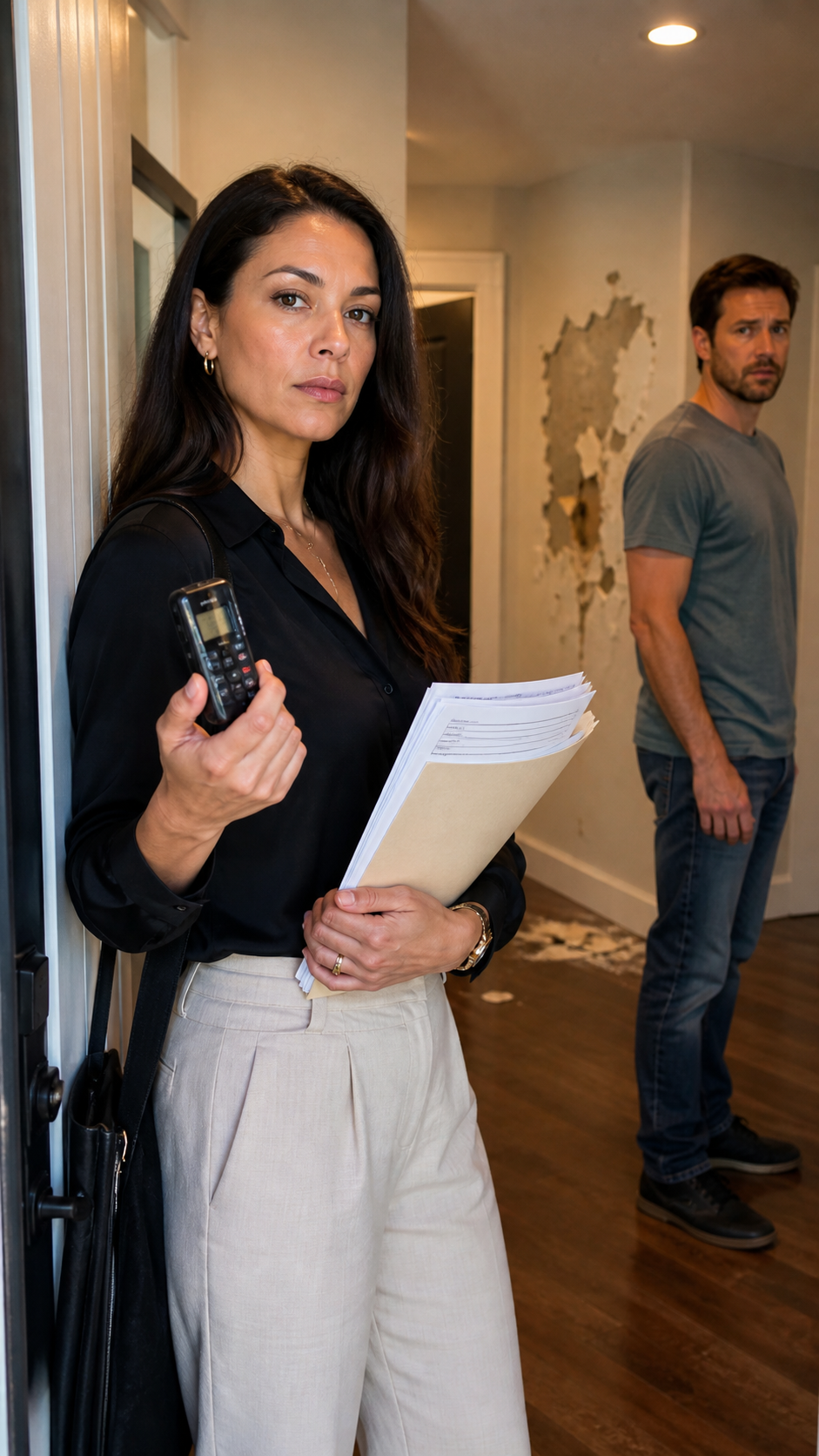
She Signed The Divorce Papers Without Crying While Her Husband Tossed Her A Credit Card And Said, "This Should Cover A Cheap Room." Nobody In That Boardroom Knew Her Billionaire Father Was Watching
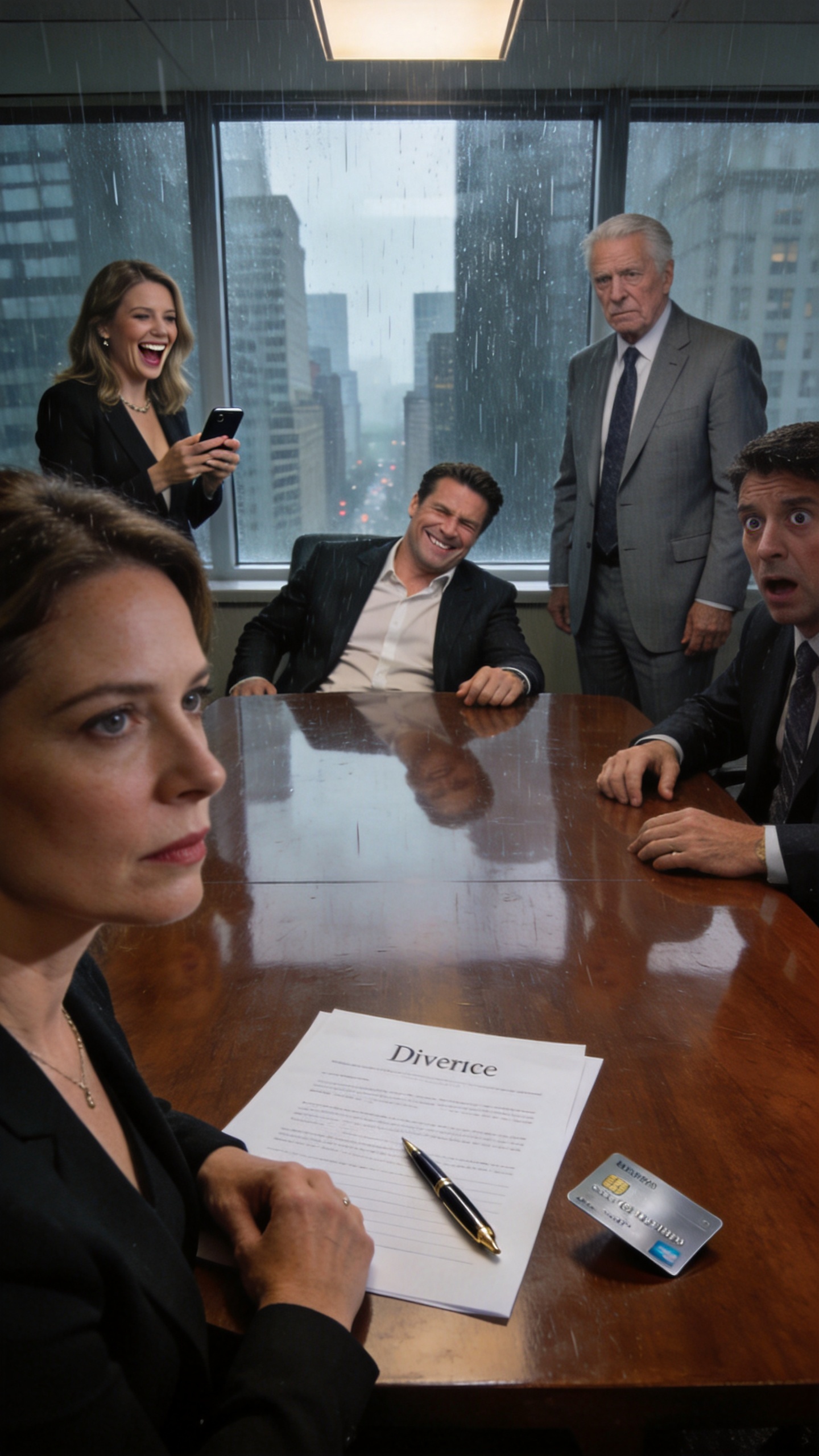
The divorce papers were still warm from the printer.
My husband flicked a platinum credit card across the boardroom table.
It stopped inches from my hand.
Damon Whitaker smiled like he had just fed a stray dog.
No one spoke.
Not because they were shocked.
They were waiting for the humiliation to become entertainment.
"Go ahead and take it, Mara," Damon said.
"This should cover a cheap room for a month. Maybe somewhere with bars on the windows, where you belong."
Serena laughed from the window ledge.
She did not even bother to hide it.
"I think she is in complete shock," she said, still looking at her phone.
"The poor thing probably thought crying quietly in the kitchen would save a marriage like this."
That alone had made him instantly obsessed. Men like Damon are not attracted to mystery so much as they are deeply offended by it.
The moment they cannot read a woman instantly, they assume she must be hiding admiration, so he started lingering after meetings just to buy coffee he didn’t even want.
He asked questions that were too polished to sound sincere. He laughed entirely too hard at his own jokes while watching my reactions like a day trader watching a volatile stock ticker.
At first, I found him completely exhausting. Then, against my better judgment, I found him charming in brief, flickering flashes. He was energetic, ambitious, and almost disarmingly open about the future empire he intended to build.
His tech firm, VisionCore, was still climbing at that time, not yet a giant but rising fast.
He spoke about innovation and market disruption the way some men speak about religion, radiating a level of certainty that felt like safety when you have spent your whole life surrounded by complex secrets.
I should have known better, and my father certainly did.
When I first mentioned Damon to him over breakfast on the terrace of our family estate in the hills, he looked at me and said, “A man who introduces himself with his net worth is either insecure, dangerous, or quite often both. ”
I had laughed it off and called him overly dramatic. My father, Nolan Sherman, had built half the city’s skyline that Damon currently worshipped. Not literally, though it sometimes felt that way.
Real estate, infrastructure, hospitality, and private equity were his domains, and the Sherman name moved silently through the machinery of the upper business circles like a current beneath dark water.
My father preferred control to publicity. He rarely gave interviews. Because he believed that wealth was strongest when it didn’t need to ask for applause.
I was his only child, though the public did not know that.
That secret had begun after my mother died when I was young, not in childbirth as Damon believed. But in a private plane crash that the tabloids had tried to turn into a grotesque carnival.
My father had looked at what public attention did to our grief and made a firm decision to withdraw me from the spotlight.
The Credit Card Landed Like An Insult
I attended new schools under different names, lived in apartments instead of palaces, and had security so discreet I barely noticed it until I was old enough to recognize the patterns.
By the time I turned eighteen, I could move through most of the city unrecognized if I dressed simply and kept my head down. I chose to keep living that way even after college began. Because it gave me something my father’s world never could. It was the truth.
When men met me without knowing my last name, they revealed their true colors very quickly.
Some became patronizing, some flirted with the thrill of saving an ordinary girl, and some ignored me entirely. But a rare few actually treated me like a human being.
My father never interfered, though he watched everything closely because he considered it a necessary education.
My father investigated him before our second date, as he always did.
He found the usual things: aggression mistaken for leadership, debt hidden behind growth projections, and a talent for seducing investors with vision decks and carefully ironed confidence.
There was nothing criminal, nothing disqualifying enough to forbid me from seeing him. But there was just enough to make my father’s jaw tighten whenever I defended him.
“He is not perfect,” I said once over a tense dinner.
“Neither is a loaded gun,” my father replied dryly. “That does not make it a decorative item.”
Still, he let me choose my own path. That was the bargain between us.
He had spent years shielding me from the predators who circled our wealth, but in exchange, he refused to turn protection into a prison.
If I wanted to live under another name and test the sincerity of the world, that was my right.
If I wanted to date a man who mistook my simplicity for a lack of options, that was also my right. He would advise. He would watch. But he would not control.
So, I married Damon quietly, legally, and without revealing who I was. He loved that version of the story. The startup prince marrying the modest, grateful woman who had nothing but heart.
For the first six months, he played devotion quite convincingly.
He bought me flowers, called me his grounding force, and told his friends that I was the best decision he had ever made. Because I wasn’t like those social climbing women he knew.
Every compliment carried a tiny insult directed at some imaginary class of women he resented, and at the time, I foolishly mistook that for vulnerability.
The worst part was not the card.
It was the way everyone waited to see whether I would pick it up.
Damon's attorney kept his pen ready above the signature tab, pretending not to watch my face.
The junior associate lowered her eyes to the table.
Serena tapped one manicured finger against her phone case, already bored by pain she had helped create.
And the man in the gray suit near the credenza did not move at all.
He had not introduced himself.
Damon had not asked.
That was Damon at his purest. If a person did not arrive with a headline, a logo, or a number attached to his name, Damon decided that person did not matter.
They Mistook My Silence For Surrender
I had learned that lesson in small humiliations long before the divorce papers appeared.
He corrected how I spoke at dinners.
He laughed when I asked questions about contracts.
He told his friends I was sweet but simple, the kind of woman who made a house feel warm and a man look generous.
Serena had heard him say it.
She had smiled then too.
So I let them enjoy this final performance.
I let Damon believe the card was mercy.
I let Serena believe the room belonged to her.
I let the attorney believe the divorce was already finished.
Only the man in the gray suit knew why my hand did not shake when I reached for the pen.
He had watched Damon arrive fifteen minutes late.
He had watched Serena sit in the room as though my marriage were already an office she had rented.
He had watched the attorney slide page after page toward me without once asking whether I understood what was being demanded.