My Arrogant Mother-in-Law Shoved My Face Into a Luxury Cake - Until I Bought the Entire Mansion She Used to Humiliate Me
He watched as Natalie walked into the mansion, her steps confident and purposeful.
Inside, Natalie began to take charge. She rehired the staff who had been loyal to her during her difficult times. The butler, Mr. Thompson, who had always treated her with kindness, was overjoyed to be back in his position.
"I knew you had it in you, Miss Natalie," he said with a warm smile.
The maids and gardeners, who had witnessed Natalie's humiliation firsthand, were also happy to see her in control. They had endured Margaret's harsh words and demands for years, and now they looked forward to a more respectful working environment.
Natalie wasted no time in making changes. She started by having the luxurious cake that Margaret had once shoved her face into removed from the display in the dining room. It was a symbol of the pain and humiliation she had endured, and she wanted it gone.
As the news of the ownership reversal spread, the town's gossip mill went into overdrive. People who had once looked down on Natalie now whispered about her new-found power and success. The public pressure was now on the former in-laws.
They were the talk of the town, but not in a good way.
The old-money families, who had once shunned Natalie, were now forced to reevaluate their opinions. They realized that money and status could change hands overnight, and that arrogance could lead to a downfall.
Natalie's final act of dignity came when she held a small party at the mansion. She invited the townspeople, including her former in-laws. The atmosphere was tense as Margaret and Ryan entered the room.
Everyone's eyes were on them, waiting to see how the situation would unfold.
Natalie stood at the center of the room, dressed in an elegant gown. She greeted her guests with grace and poise. When Margaret approached her, Natalie looked her in the eye and said, "I hope you've learned a lesson about humility.
This mansion is no longer a symbol of your superiority, but a reminder that kindness and hard work will always prevail."
Margaret's face turned red with anger, but she could say nothing. She knew that she had been defeated, and that the power dynamics had shifted forever.
Ryan, on the other hand, tried to apologize. "Natalie, I'm so sorry for what I did. I was wrong to listen to my mother," he said, his voice filled with regret.
Natalie smiled, but it was a cold smile. "It's too late for apologies, Ryan. You made your choice, and now you have to live with the consequences."
As the night went on, the party became a celebration of Natalie's victory. She had turned the tables on those who had wronged her, and she had done it with class and dignity.
The old-money illusion that had once seemed so solid was now in ruins, and Natalie was the new force to be reckoned with in the town.
The mansion, once a symbol of oppression, now stood as a testament to Natalie's resilience and determination.
She had come full circle, from a humiliated woman on the verge of a broken engagement to the proud owner of the very estate that had been used against her.
And as she looked out at the guests, she knew that she had finally found her place in the world.
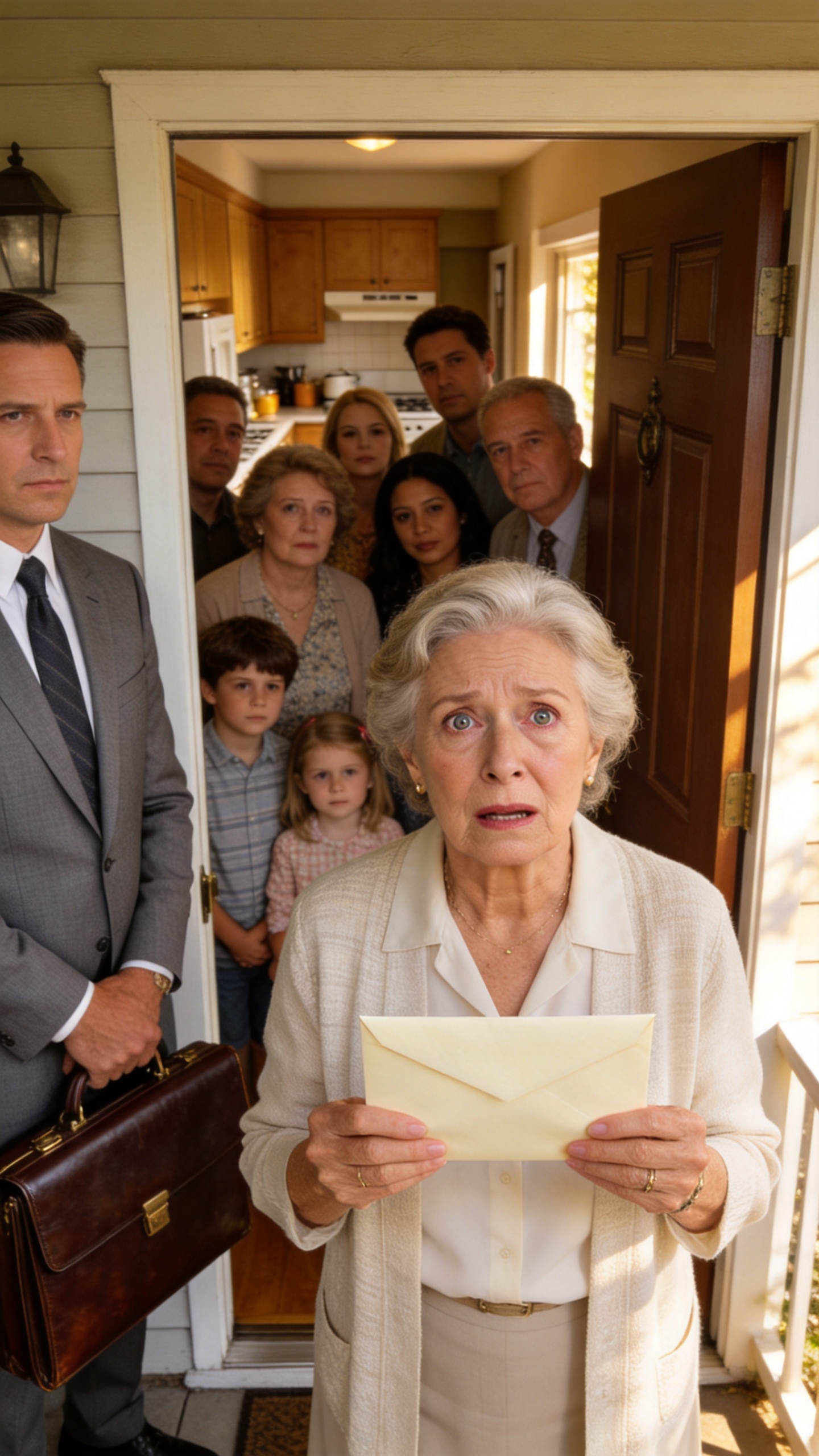
The lawyer did not raise his voice. He did not need to. He placed the purchase agreement on the polished dining table, far enough from the ruined cake that the frosting could not touch it, and asked Beatrice to read the buyer's name aloud.
She refused.
Preston grabbed for the folder, but my attorney closed one hand over it before he could lift a page. "The transfer is complete," he said.
"The estate, the guest cottages, the marina rights, the artwork listed as collateral, and the staff housing have all moved under Ms. Cole's holding company. Your family was notified through counsel this morning."
The room changed after that sentence. A minute earlier, people had been looking at the frosting in my hair. Now they were looking at the woman who had pushed me into it.
Beatrice tried to laugh, but the sound broke halfway through. "This is a trick."
"No," I said, wiping cake from my cheek with the linen napkin she had refused to offer me. "The trick was convincing everyone this house still belonged to you."
Preston's uncle demanded to know how an outsider could buy a Bellamy property. My attorney answered before I could.
The estate had been pledged against three private loans, two renovation lines, and a bridge note that had expired ninety days earlier. The Bellamy name had survived because lenders liked old photographs and quiet signatures.
The Bellamy money had not.
I had found that out by accident at first. A subcontractor from one of my own data centers mentioned that an old Newport estate had stopped paying invoices. Then another vendor mentioned the same surname.
By the time Preston brought me home to meet his mother, I already knew the marble hallway was hiding unpaid bills behind every flower arrangement.
That was why Beatrice's performance did not surprise me. The cake, the insult, the way she waited until the staff and cousins could watch, all of it came from the same fear. She needed me humiliated before I could notice she was broke.
"You came here under false pretenses," she said.
"I came here engaged to your son," I answered. "You chose to turn dinner into an audit."
The household manager, a gray-haired woman named Mrs. Price, stepped forward with shaking hands. She had served the Bellamys for twenty-seven years and had been ordered to keep smiling even after payroll bounced twice.
When my attorney handed her the staff protection letter, she read the first paragraph twice before her eyes filled.
"All current employees will be retained?" she asked.
"If they want to stay," I said. "At full back pay."
That was when the staff stopped pretending not to listen. The gardener at the terrace door lowered his eyes. One of the servers pressed a hand over her mouth.
Beatrice noticed and snapped at them to leave the room, but no one moved until Mrs. Price looked at me.
"You may stay," I told them.
It was a small sentence, but it landed harder than any insult Beatrice had thrown. For the first time that evening, authority in that house did not come from her.
Preston tried to pull me aside. His voice softened into the tone he used when he wanted me to remember our best days instead of the present damage.
He said his mother had gone too far, that he could explain the debt, that we could still marry and "manage this together."
I looked at him with cake drying at my collarbone. "When she shoved my face into that cake, you laughed."
His mouth opened, then closed.
"That was your explanation."
The guests at the table heard it. His cousins heard it. The staff heard it. No one rescued him from the silence.
My second attorney arrived with the debt schedule. It listed every quiet disaster Beatrice had hidden behind monogrammed napkins: the unpaid tax assessment, the jewelry loan secured against heirloom diamonds,
the foundation donation that had been promised but never funded, and the emergency mortgage taken out under the name of a family trust that no longer had enough assets to support it.
Beatrice turned white at the foundation line. That was the one she had expected to remain invisible.
For years, she had hosted charity luncheons in rooms she could not afford, praising herself for generosity while moving pledged money back into household accounts.
"Those are private matters," she whispered.
"So was my dignity," I said. "You made that public first."
The old money guests began to calculate distance. A woman who had laughed when Beatrice called me unsuitable suddenly found the chandelier fascinating. Preston's godfather asked whether the yacht club sponsorship was affected.
Someone else asked if the art on the walls was still insured. It was not concern. It was self-preservation dressed in linen.
My attorney answered only the questions that mattered. The estate would remain open for thirty days while personal belongings were inventoried. Staff wages would be paid immediately.
Any attempt to remove pledged artwork, vehicles, or financial records would be treated as theft. The Bellamys could contest the transfer if they wanted, but the default notices, lender approvals, and sale documents were already filed.
Beatrice finally looked at me as if I had become real.
"You planned this," she said.
"I prepared for what your family kept showing me," I replied.
There was a difference.
I had not bought the mansion because I wanted revenge at first. I bought the debt because every meeting with Preston's family revealed another person being squeezed to preserve their image. Vendors were unpaid. Staff were threatened.
Smaller relatives were bullied into silence. And when Beatrice decided that humiliating me would prove I was beneath her, she gave me the final reason to stop negotiating quietly.
The police arrived after Mrs. Price called them about the shove. Beatrice tried to greet them with her old social voice, the one that made donors open checkbooks and trustees forgive delays.
It did not work on a woman in uniform staring at frosting on my face and a bruise blooming near my temple.
I gave my statement in the front hall under a portrait of Preston's great-grandfather. My voice stayed level. I described the dinner, the insult, the push, and the witnesses. Preston stood ten feet away, looking smaller than I had ever seen him.
When the officer asked whether I wanted medical attention, I said yes. Not because I was badly hurt, but because Beatrice needed to learn that evidence did not disappear because a room was expensive.
By eleven that night, the guests were gone. Beatrice sat alone at the table where she had tried to make me bow. Preston followed me to the portico and begged me not to end the engagement in anger.
"I'm not ending it in anger," I told him. "I'm ending it with clear title."
The next morning, the eviction notices were served with copies of the occupancy agreement my company had prepared. Beatrice could remain in the east cottage for thirty days under supervision while her legal team reviewed options.
The main house was closed for inventory. The staff entrance was unlocked, the payroll transfers cleared, and Mrs. Price sent me a text with only two words: Thank you.
I stood in the dining room after the cleaners removed the cake. The table still smelled faintly of sugar and old flowers. The chair where I had sat was stained beyond saving, and I asked that it be taken away.
Not restored. Not hidden.
Removed.
Some things did not deserve polish.
Preston called seven times before noon. I answered only once, with my attorney on the line. He said his mother was humiliated, his family was ruined, and people were saying terrible things. I listened until he ran out of breath.
"Now you know what a room can do when everyone watches and no one helps," I said.
Then I hung up.
In the weeks that followed, the Bellamy name became a cautionary story instead of an invitation. Lenders cooperated because the documents were clean. Former vendors came forward because someone finally answered their calls.
The charity board opened an investigation into the missing pledge money, and Beatrice learned that reputation could not refinance fraud forever.
I did not move into the mansion immediately.
I let the staff repair it first, not the marble or the chandeliers, but the parts of the house the Bellamys had ignored: the kitchen vents, the laundry room ceiling, the staff lockers, the cottage heating system.
A home that required invisible people to suffer for visible elegance was not elegance. It was rot with flowers on top.
When I finally returned, the dining room looked different. The portraits were down for appraisal. The long table had been shortened. Sunlight reached the far wall for the first time because Mrs.
Price opened curtains Beatrice had kept closed to protect fading silk.
I stood where Beatrice had shoved me and felt nothing like shame.
The mansion was mine, yes.
But the better victory was this: the room no longer belonged to people who confused cruelty with class.
Three days later, Beatrice's attorney filed an emergency motion claiming I had exploited an old family's temporary embarrassment. The judge did not enjoy that phrase.
Temporary embarrassment did not explain six missed lender notices, two forged board consents, and a security video of Beatrice using violence because a guest would not accept humiliation as etiquette.
My attorney brought the vendor ledger. The florist had been paid with a check that bounced after Beatrice hosted a luncheon about generosity. The caterer had been promised exposure instead of money.
The electrician who repaired the west wing had waited fourteen months while the Bellamys posed for magazine photographs under lights he had installed.
The judge looked at Preston and asked whether he disputed the debt.
He looked at his mother first.
That told the whole room who had trained him to fear truth more than ruin.
The motion was denied before lunch. The transfer stayed in force, the inventory order expanded, and Beatrice was warned not to contact staff except through counsel.
She walked out of court without cameras waiting for her, which seemed to wound her more than any legal loss. She had spent her life performing for rooms. Now the room had stopped clapping.
I used the first month to turn the estate into something honest. The charity funds were repaid. The staff cottages were repaired. The ballroom reopened only after every unpaid invoice connected to it was settled. When Mrs.
Price asked what name should appear on the new brass plaque by the front door, I told her not to use mine.
"Put the house name," I said. "No family owns dignity."
The day the plaque went up, Preston sent one last message. He wrote that I had destroyed his inheritance.
I almost deleted it without answering, but then I thought about the cake, the laughter, and the way he had watched his mother press my face into sugar as if cruelty were a family tradition.
I wrote back only once.
"I did not destroy your inheritance. I exposed what was already empty."
After that, the mansion finally grew quiet.
Quiet did not mean empty. It meant the house could hear the people who had kept it alive. The cooks laughed without checking the hallway first. The gardeners submitted real budgets instead of apologies. Mrs.
Price unlocked the front doors every morning with a steadier hand.
I never framed the photograph from that dinner, though reporters asked for it. I did not need my humiliation on a wall to remember what it had taught me. Beatrice had wanted a spectacle of my poverty. She created a record of her own collapse.
And every signed document kept proving it long after the frosting was gone.